
A bipartisan panel of prominent New Yorkers is wrapping up a report examining the treatment of Black families in the state’s child welfare system. So far, pending drafts list over 130 pages of findings and recommendations.
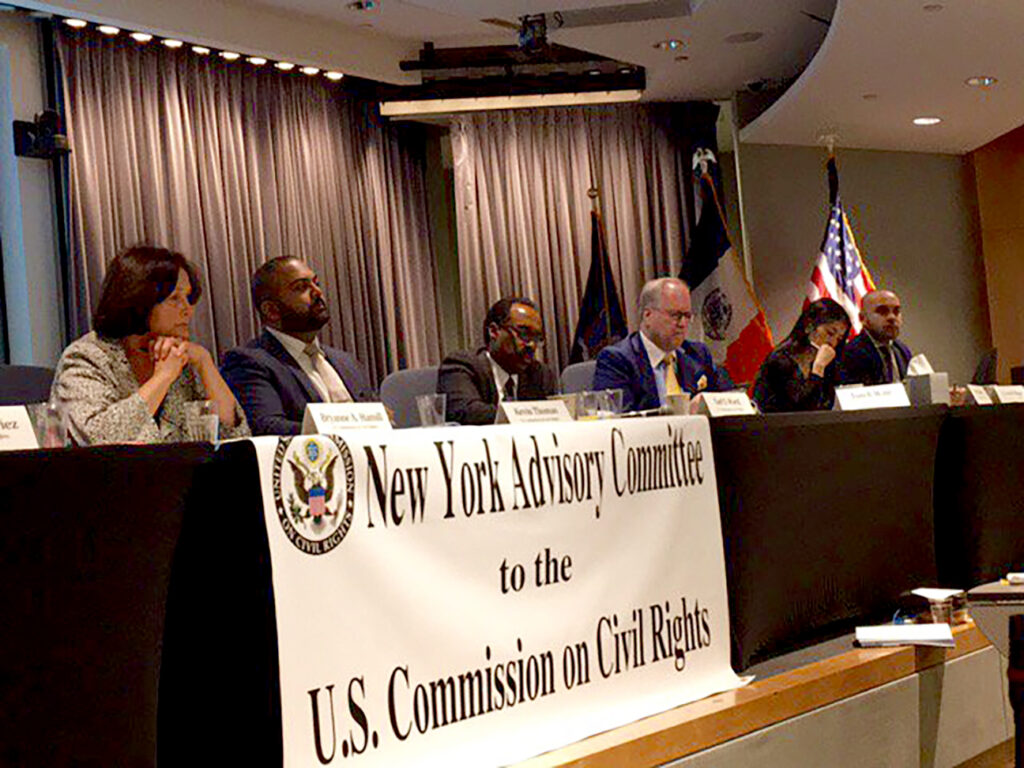
But after nearly two years of emotional and at times contentious public meetings, the sharply polarized volunteer board reporting to the U.S. Commission on Civil Rights has lost its chair, and members warn they may run out of time to finish the work.
At a tense meeting on March 15, a resignation letter written by retired New York City family court judge Bryanne Hamill was read aloud. Hamill — who has led the advisory committee for the past eight years — stated that her work had become “untenable,” amid disagreements over how to reform the child welfare system.
Members have been divided about everything from whether to eliminate the mandated reporting of child abuse and neglect to characterizations of the role racism plays in foster care disparities.
Hamill said she remains committed to her panel’s civil rights mission to tackle “the grave injustices to Black children, families, and communities, whether it be child welfare, housing, education, funding, or policing.” But she had decided she could no longer continue in her volunteer role for the current group and topic.

“I have been personally and professionally accused of operating in bad faith, being part of the problem as an insider, not caring about Black children and supporting this project as a PR stunt,” Hamill’s letter stated. “Although I dispute these accusations, I am sad to say that I feel bullied and can no longer participate in this process.”
Last week, the committee received letters of support for Hamill from leaders of the nonprofit Children’s Rights, and a racial justice advocacy program at New York Law School.
Deadline for consensus
The New York committee is overseen by the United States Commission on Civil Rights in Washington, D.C., a bipartisan agency led by presidential and congressional appointees who examine discrimination issues ranging from voting rights to police brutality.
Commissioners appoint volunteer community leaders to dozens of state advisory committees across the country, which serve as the D.C. office’s “eyes and ears” on ground-level civil rights issues. In New York, the local committee’s work has been credited recently with galvanizing the movement to eliminate solitary confinement.
In 2022, the group finalized plans to examine “racial disproportionalities and disparities” impacting Black children and families in the state’s child welfare system. Public meetings, held virtually, have attracted dozens of attendees, many of whom delivered fiery testimony on injustices they experienced as a result of CPS investigations.
According to federal regulations, panels receiving such testimony must include “conservative, libertarian, moderate, liberal, and progressive” members. Vigorous debate is encouraged, and a certain amount of conflict is expected for these advisory panels to the country’s leading civil rights watchdog. In New York, nine people have met monthly over the past two years, representing a wide array of interests and ideologies. Members include corporate attorneys, a charter school leader, leading human rights advocates and affiliates of the conservative Federalist Society.
At the March 15 meeting, some noted that the time for objections had passed, and with their terms ending in June, the report may never be delivered to the full Commission in Washington D.C. if it cannot get final votes.
“If we don’t get it done today, there’s a huge risk of that,” said Iris Chen, the leader of a New York City charter school who has been on the committee for nearly 12 years.
Only one of three planned votes were completed that day.
Centering Black families
The stakes are high for Black families in New York. Government data shows that in New York City and statewide, communities with the highest concentration of Black and Latino residents are the most likely to be investigated for child maltreatment. In New York City, these two demographic groups account for more than 80% of CPS investigations, despite making up 60% of the child population.
Draft versions of the final report have been posted online after meetings, incorporating academic literature and public testimony from outside experts, former top child welfare officials, parents and advocates.
The latest draft has eight recommendations, in a section that was resolved at the last meeting after lengthy debate. They include proposals that the state and federal government conduct further investigation into systemic racial bias in the child welfare system, expand the social safety net for low-income families at risk of foster care removals, and amend mandated reporting to minimize false or “unindicated” reports.
Tim Ross, a managing partner at Action Research who has extensive experience in child welfare research, is among those who testified before the committee.
Along with others, he focused on the “front door” of the child welfare system: the investigation stage. These visits can cause terror within investigated households, as described in an ongoing class-action lawsuit.
One proposed solution has been particularly controversial — an initial recommendation that New York eliminate mandated reporting of child abuse and neglect. Some advocates for families argue the legal requirement for professionals to call a state hotline with any suspicion of harm to a child is too broad and subjective, roping far too many kids of color into the foster care system due to poverty and discrimination.
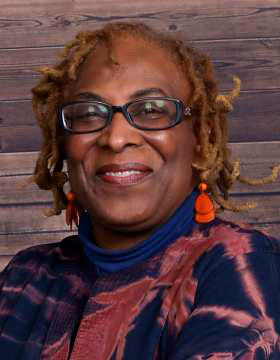
University of Buffalo law professor Athena Mutua, the vice chair of the advisory committee, is among the critics of the current practice.
Social workers “spend so much time on trivial or misreported cases that they almost don’t have time to deal with the serious cases,” Mutua said. “So it both overwhelms the system and subjects a large population of people to this wrongful kind of trauma.”
Other committee members declined to comment before the report secures final approval, but in public meetings have been hesitant to abolish, rather than reform, the reporting system.
“The goal might be to shoot for the fences and see what lands,” Touro Law Center professor Tiffany Graham said at a virtual meeting last November. “But from the standpoint of mandatory reporting, I think that’s one of those issues where we have to be real, because if we want the state Legislature to take up our recommendations, and move, do something, make this better — we can’t go to them and say, ‘Get rid of mandatory reporting.’ That’s not going to fly.”
The latest draft of the report recommends that anonymous reports be barred and criminal penalties for not reporting child abuse or neglect be reduced.
Member opposition
Yet the discord among committee members has stalled final agreements on a host of other issues.
In her resignation letter, Hamill recounted her prior reassurances to fellow committee members “that we would do our best to protect us all,” from personal and professional attacks received from the public. But, she added: “I did not expect and can no longer weather the attacks from our vice chair.”
Vice Chair Mutua, as well as Hamill and other board members, declined The Imprint’s requests to elaborate on the dispute. They explained that they preferred the public focus be centered on the report and its important content.
Meanwhile, other controversies simmered at the group’s meeting earlier this month — the first after Hamill’s resignation. Two members logged off repeatedly from the virtual meeting, in what member Tiffany Graham called a “transparent effort to filibuster” planned votes on draft language. Some members also opposed language that assumed as fact that there are inherent racial biases in New York’s child welfare system.
Committee member Robert Klump, a political science professor at Canisius University was among the opponents. He said too much of the testimony from experts and government experts focused on “the assumption that the entire system is rife with systemic racism — that the objective of the system is to simply discriminate against people of color.”
Klump further stated: “I think that the almost solitary focus on that at times really detracts from what ought to be the emphasis of the study, which is the welfare of children.”
Rafael Mangual, a fellow at the conservative Manhattan Institute think tank, even questioned the integrity of the draft final report. He pointed to its similarities with the committee’s original proposal to study the child welfare system, well before any briefings or research had begun.
Mangual dismissed the idea that all members were given equal opportunity to shape the report’s content.
“The idea that a generic invitation to the entire committee to participate in a working group on people’s limited time constituted some real opportunity to shape the substance of the report is nonsense. Utter and complete nonsense.”
During one public comment period, parent advocate Tanesha Grant criticized the delays in releasing the final report and voiced support for its conclusions.
“I am happy to see some of the recommendations that were made by this commission,” said Grant. Speaking from experience about the importance of the work as a Black woman who was placed into foster care soon after her birth — she said she did not learn about her biological family until recently.
“It has been a long-fought battle for people like me to express that the people who have been harmed by this system are the best ones to educate on the system.”