
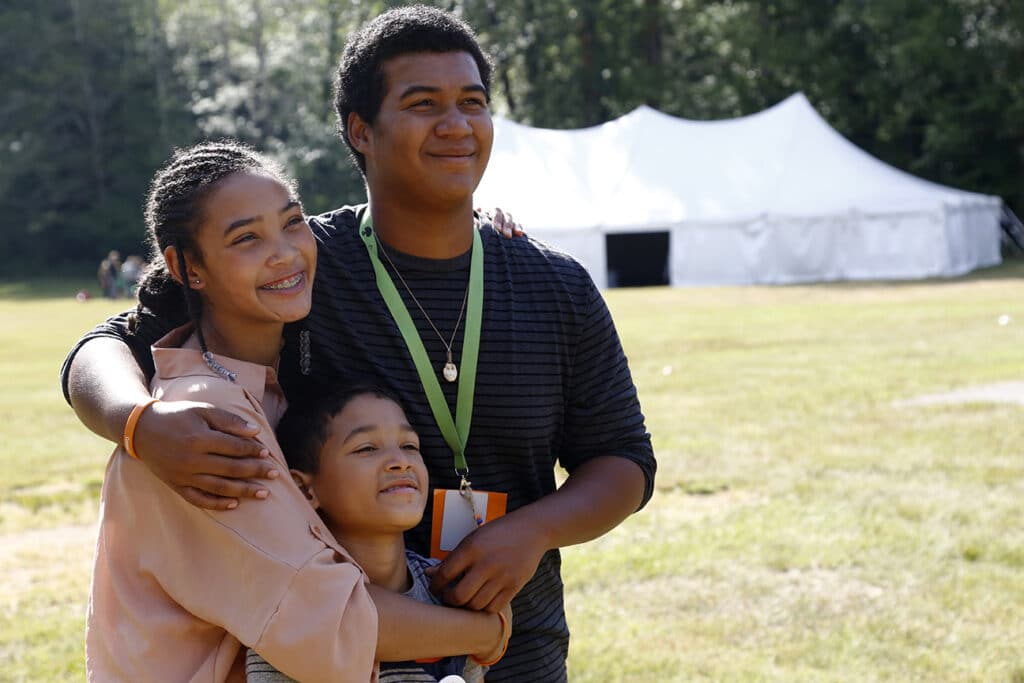
Eighteen-year-old Maddie Slocum has attended the same summer camp on the shores of Washington’s Horseshoe Lake for eight years. If she were to ever skip it, she said, “that’s probably going to be the worst year of my life.”
The five precious days at Sibling Strong camp might be the only time all year she sees her little sister, Ali Allpress. Splashing together in the sparkling lake, daring each other on the high-flying rope swing and learning archery help make up for the long months spent apart, with little more contact than swapping memes on social media.
Maddie and Ali, 16, are among thousands of children in Washington separated by foster care or adoption. The sisters were adopted into different homes when they were toddlers and now live hundreds of miles apart.
But at the Sibling Strong camp each summer, they have a rare opportunity to live side by side, as sisters.
“It’s basically the only place that I really talk to her,” Maddie said. “It’s the one place that I can really get to know her.”
Giving children the space to reconnect and nurture these fractured bonds is the goal of Sibling Strong, a volunteer-run camp serving roughly 100 children each year through sleepaway summers and day trips throughout the year. This year’s camp will be held June 24-29.
“This is where kids are building relationships and creating a positive memory in their childhood instead of a bunch of negative memories about being in care,” said executive director Deb Kennedy. “There’s many sad stories and so many just hard circumstances — but we’re really excited that we get to be part of the solution.”
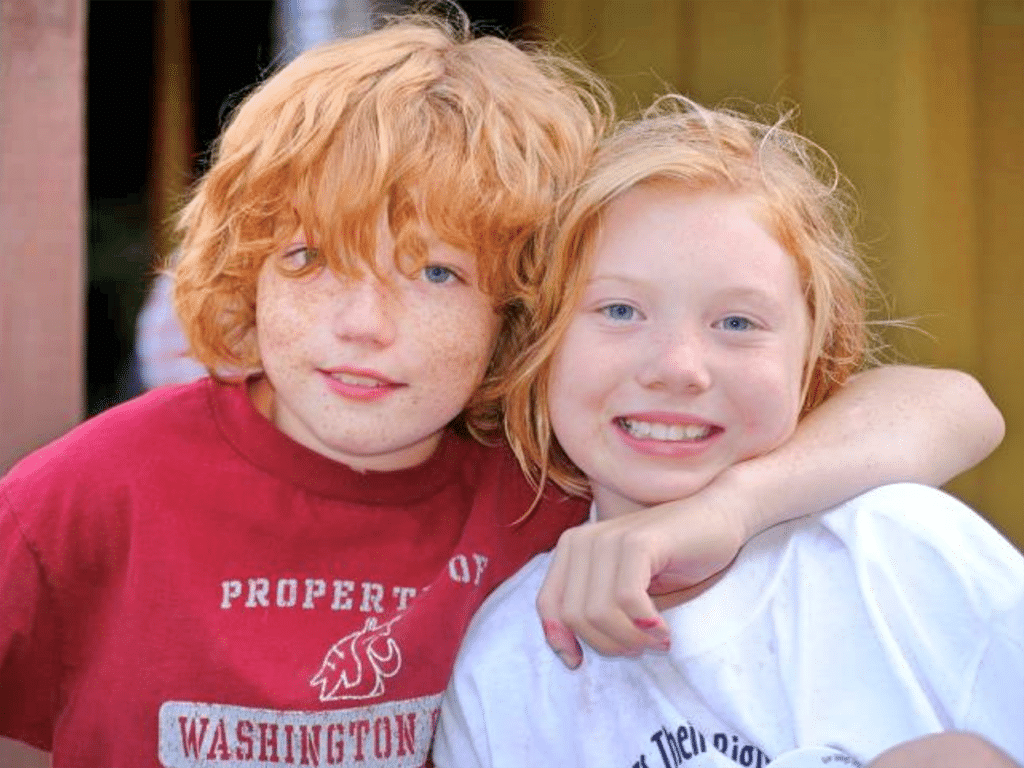
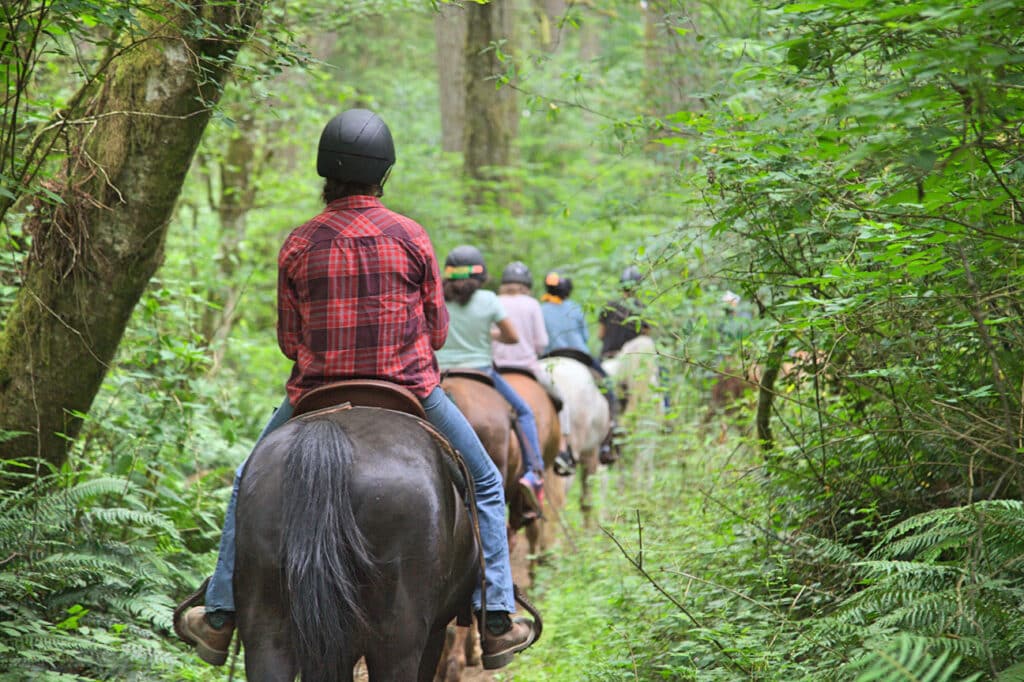
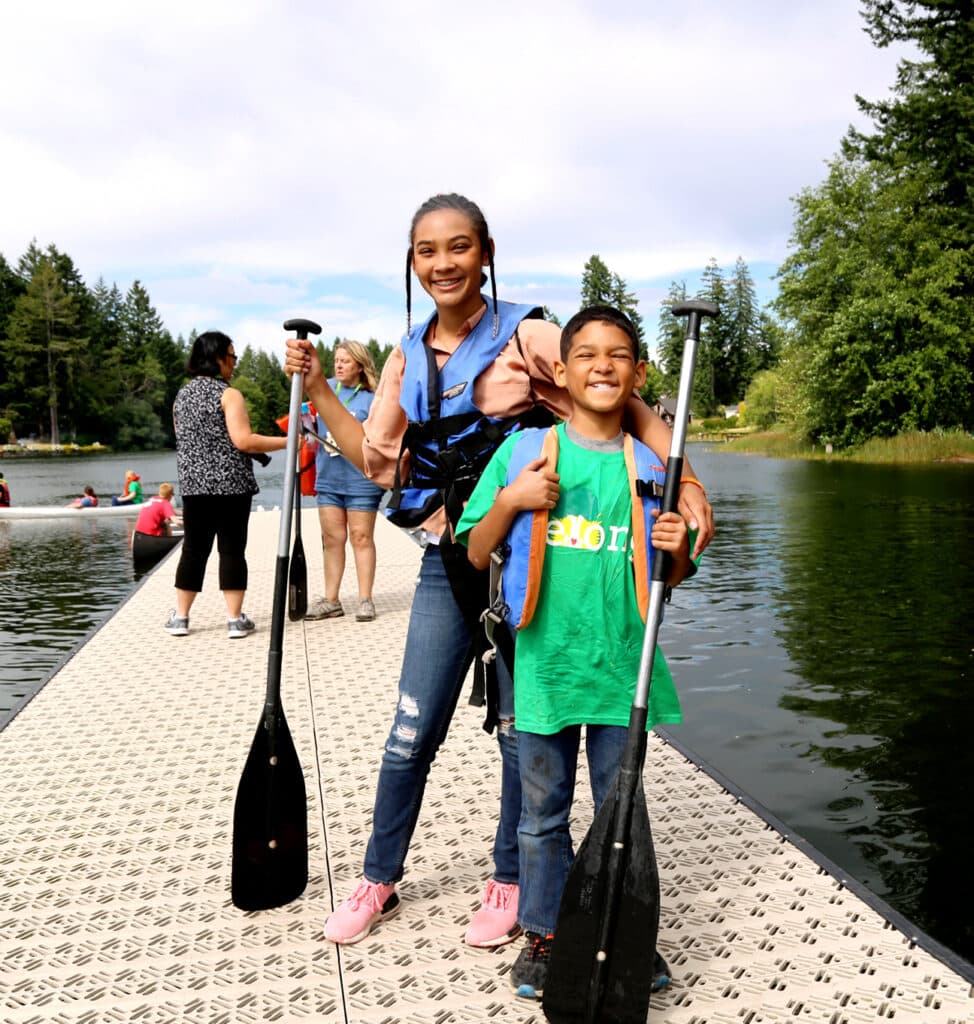
Sibling Strong is now in its 15th year. Its home base is as classic as a summer camp can get: bunk beds in log cabins, overgrown hiking trails weaving through dense pine forest, horse stables and a lake with a dock, canoes and a waterslide.
Centering the reunions around fun and adventure creates a low-pressure environment for siblings to reconnect and enjoy each other’s company — and helping to make up for time spent apart.
“Whenever my sister and I would see each other, we would always be so happy,” Ali said. She lives in Arizona, adopted into a different family home than Maddie and their two brothers, who live in Washington.
Each summer, that painful separation ends.
“We are inseparable at camp,” Ali said. “We’re always together.”
“Your siblings are where you get to make connections and figure out how relationships work within a world. If you can’t argue with your sibling — your safe person who’s gonna love you at the end of the day — Who can you speak up to?”
— Camp counselor Katie Buxton
Special events and activities are geared toward promoting connection and catching up on missed time: a carnival complete with bouncy houses, face painting and a dunk tank. During formal night, campers glam up in glitzy dresses and blazers, dining and dancing in a mess hall transformed into an upscale restaurant.
A favorite event is the massive joint birthday party thrown each year, giving brothers and sisters the chance to recreate celebrations they’ve missed. To select gifts for their siblings, campers choose from a donated stash of brand new items — everything from soccer balls to makeup sets. Since many don’t know each other’s interests and dislikes, they “shop” together, sharing hints. Afterward, each camper makes a secret selection and wraps it in shiny paper with ribbons. All 100 campers unwrap the presents together amid clusters of balloons and tables topped with sprinkled cupcakes.
“We’re always looking for ways for the kids to have fun with each other and to keep that bond going,” said Bob Partlow, who founded the camp while working at the state Department of Children, Youth and Families.
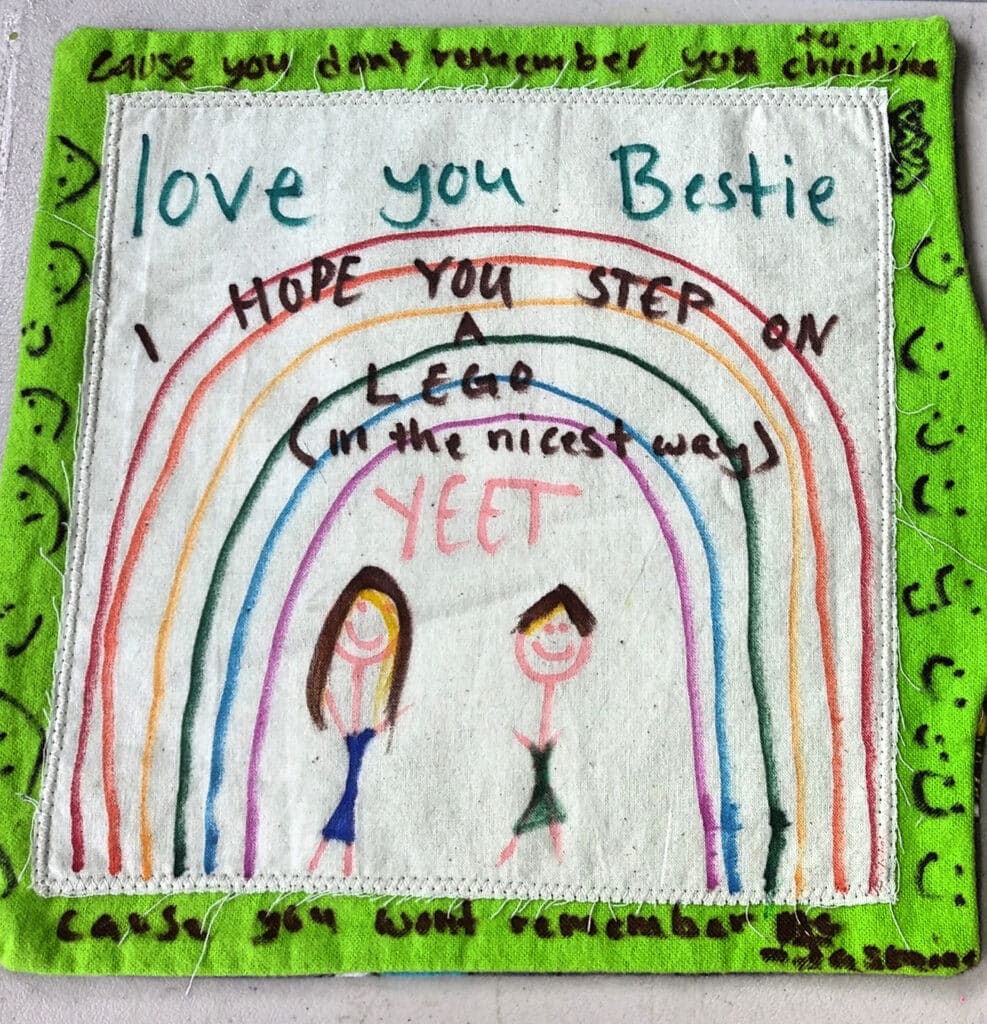
Throughout their stay, children craft keepsakes to remind them of the experience. Each makes a memory quilt or pillow for their sibling, drawing pictures in colored fabric pens or writing notes or inside jokes on the patchwork squares. They compile scrapbooks from professional photos taken at camp — both sibling portraits and candid shots of their summer shenanigans.
As Maddie flipped through the stack of scrapbooks she’s made over the years during a recent interview, she reminisced about the memories captured in each photo. Making a popsicle-stick rocket with Ali and their younger brother Josh. Pranking someone with a whipped-cream pie to the face. Playing foosball and air hockey in the game room during down time.
“It’s really sweet to see everybody so happy, you know, because that’s what we’re there for,” Maddie said. “That place is the most amazing place ever, and I love it so much.”
For counselor Katie Buxton, it’s the mundane moments between activities where the magic of connection really lies — even the bullying and bickering that inevitably occurs between siblings.
Arguing and fighting is an important part of a deeply secure sibling relationship, Buxton said.
During supervised, formal sibling visitations arranged by social workers within the foster care system, “you don’t get to just be yourself with your siblings, everything is niceties.” And with professionals listening in, having a private conversation can be impossible.
Buxton was initially separated from four younger siblings through foster care and adoptions. But she eventually took them in as their guardian. She’s now 26 and the operations manager for the foster care advocacy group Think of Us. Buxton volunteers at Sibling Strong’s camp and at daylong events throughout the year because she knows firsthand how vital these relationships are.
“Your siblings are where you get to make connections and figure out how relationships work within a world,” she said. “If you can’t argue with your sibling — your safe person who’s gonna love you at the end of the day — who can you speak up to? Who can you fight with, who can you figure out those dynamics with?”
Executive Director Kennedy echoed the sentiment. She recalled watching one sibling group argue all week. When Thursday rolled around and camp was winding down, she caught them sitting in a field together — peacefully picking at the grass, chatting and giggling.
“They finally were strong enough to let those walls down,” Kennedy said, “and talk like siblings.”
For many, the last time campers may have seen each other was during traumatic incidents, like social workers or police removing them from their homes. “There’s a lot of accusation between brothers and sisters of whose fault it is, and camp really gives them the chance to talk it through,” she said. “When kids are getting a chance to have a hard conversation and just speak the truth to each other, that’s healing.”
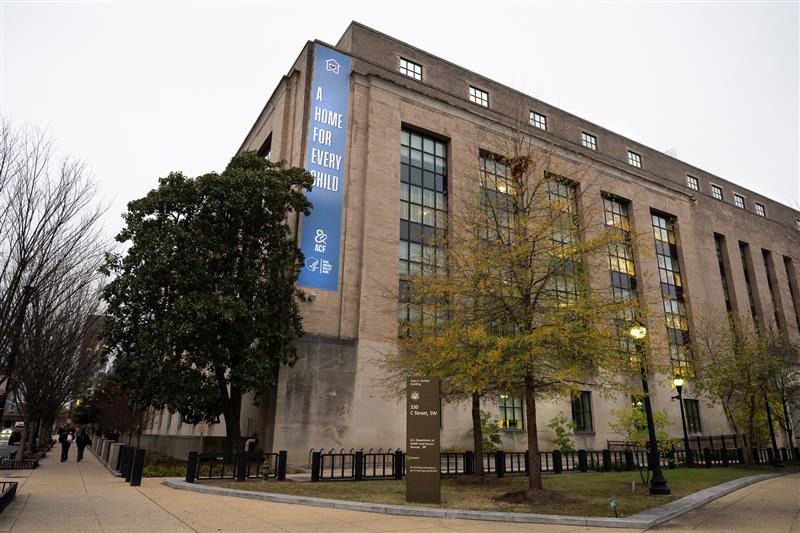
Federal law requires child welfare agencies to make “reasonable efforts” to keep foster children with their siblings, and urges states to facilitate visitation or another form of continued contact when in-person visits are not possible. That is all too often the case.
The vast majority of children who enter foster care have siblings. According to a 2020 Casey Family Programs brief, between 53% and 80% of foster children have been separated from at least one brother or sister.
As a result, the trauma of sibling separation runs deep. A 2005 study found that children separated from their siblings in foster care are more likely to struggle integrating into new foster homes, tend to have more behavioral problems and are less likely to achieve permanency than those who are able to stay with their siblings.
Washington’s Department of Children and Family Services has used Sibling Strong to help preserve the bonds between children they are unable to keep together. The state agency launched the camp program in 2009 with Nevada-based nonprofit Camp to Belong, after sending Washington youth to their Idaho location for a few years. Sibling Strong has since become its own nonprofit.
“It supports them in staying in touch with their brothers and sisters which can be difficult in out-of-home care,” a spokesperson for the agency said in an email. “The research we’ve seen shows that positive mental health outcomes occur when children and youth are with loved ones, Sibling Camp is one of the ways we can achieve that.”
“We are inseparable at camp. We’re always together.”
— Ali Allpress, 16, whose sister lives hundreds of miles away
While the state agency no longer runs the program, it pays for all campers who attend, at roughly $1,000 per kid, and sends several caseworkers to volunteer as support staff. Since 2009, 1,150 Washington siblings have been reunited at the camp, according to state data.
More recently, Sibling Strong expanded to include reunion events throughout the year. Every month, kids visit amusement parks, ride water slides or catch a Seattle Mariners game. The outings are “things that a lot of kids in care aren’t afforded the opportunity to do because they’re in the system,” director Kennedy said. “We want it to be something that they’re going to hold on to and remember.”
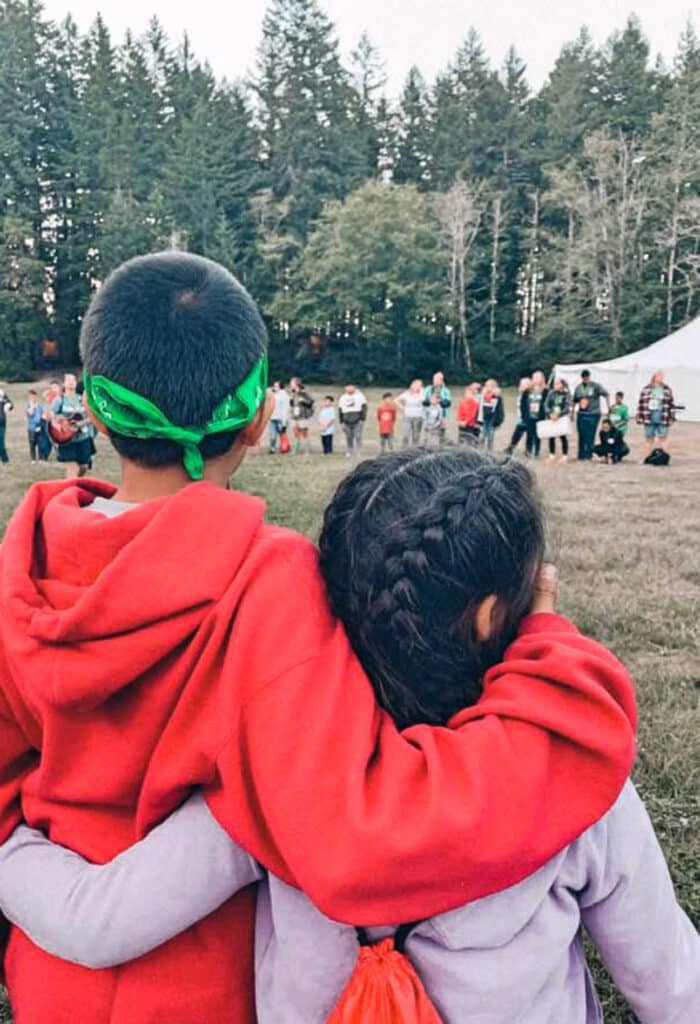
Being part of this group has offered Ali and Maddie more than just an annual reunion, bestowing a lesson they carry year round.
“We’re not alone,” Ali said. “If we feel different because we don’t live with our birth parents or our siblings, it’s not just us. Other people go through the same thing that we’re going through.”
The sisters will both be back at camp in a few days, but they’ll be in different groups. Both counselors in training this year, they’ll lead their own groups and support other kids through the trepidation and joy of reuniting with siblings.
“I’m gonna miss her being in my group,” Maddie said. “But it will also be cool to see what she can do and see how she’s gonna be able to be a role model to the kids.”
One thing will remain the same: The sisters made sure they’d still be assigned to be in the same cabin. Since their very first summer at camp, they’ve swapped bunks yearly, taking turns so they don’t have to fight over who’s stuck on the bottom. They’re looking forward to this one tradition continuing:
This year, Maddie gets the top bunk.

Stories like these take time and many resources to produce. We can’t do this without support from our community. Donate today – any amount makes a difference.