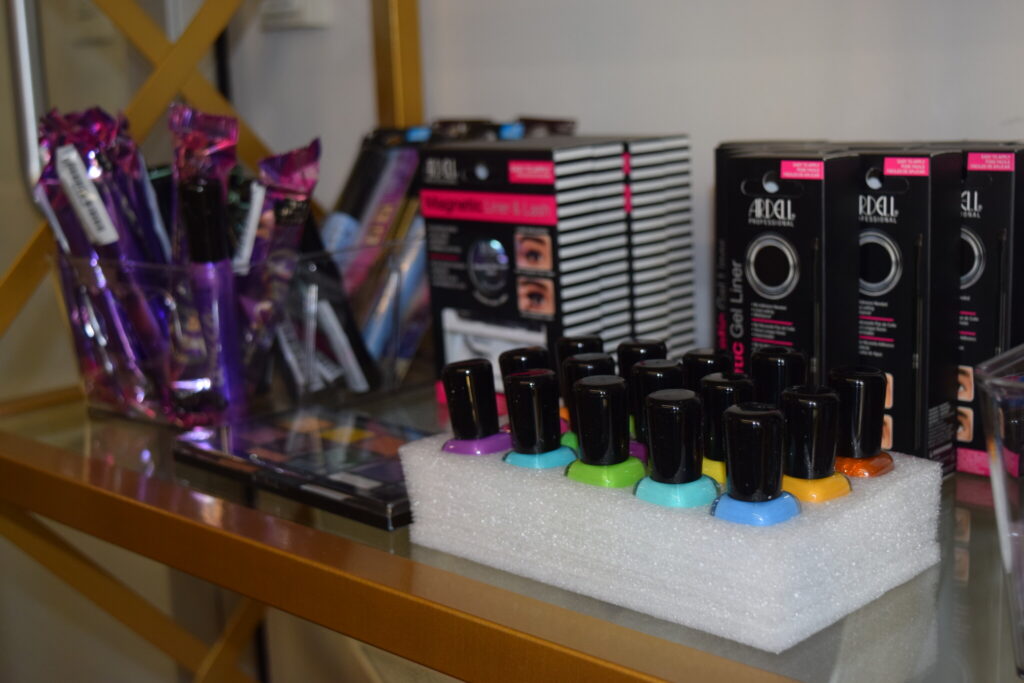
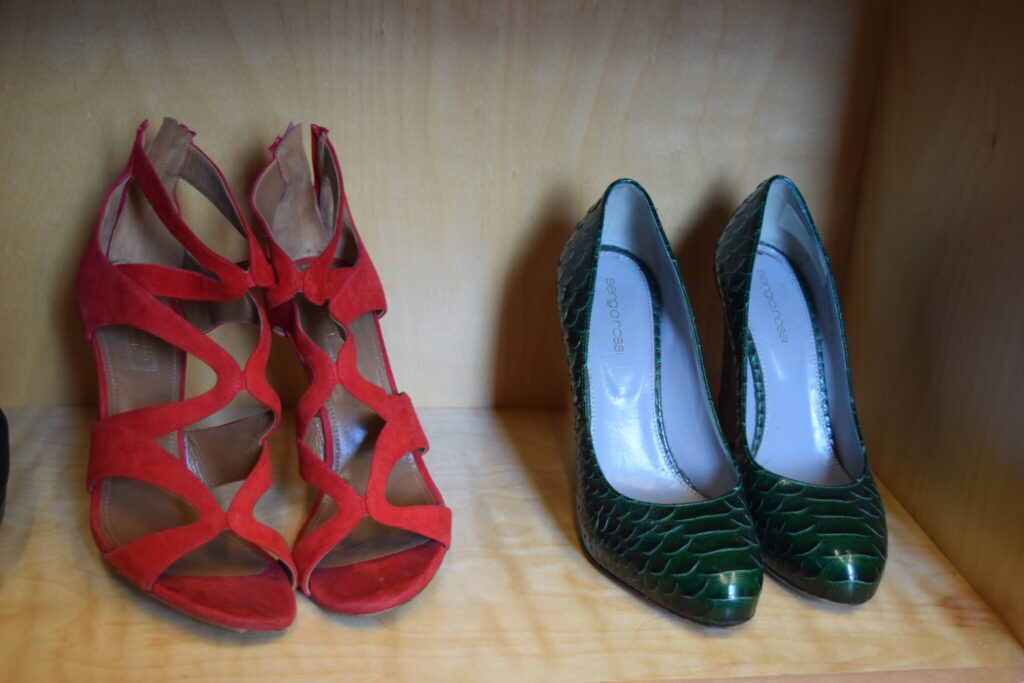
Sergio Rossi green alligator skin pumps in Italian leather. Tight-fitting, but comfortable binders. Fashionable gender-neutral tops by L.A. Apparel.
This is the wardrobe transgender and nonbinary foster youth across Los Angeles County can now select from, free of charge, in a network of Rainbow Resource Rooms that opened in April. The offerings represent a range of needs and some items not typically affordable or accessible — from donated designer handbags and a pastel-rich array of nail polish to toiletries such as shaving cream, razors and deodorant for young people forced out on the streets.
Social workers and therapists refer young people to these centers as part of the county’s effort to provide LGBTQ+ foster youth and homeless youth with stability and better health outcomes. As the national climate has become more hostile, the four new Rainbow Resource Rooms welcome one and all.
“We didn’t want to have a place that was like a thrift store where they might get overwhelmed and not really know where to start,” said Jay-Riley Small, mental health program director of the Alexis Project, which runs the Alexis Rainbow Dream Qloset on Griffin Ave. “We want it to be a really pleasant and joyful experience.” Visually appealing and filled with LGBTQ+-friendly brands, Small called it “a place that you would want to go and shop and spend time at.”
The idea is not simply that foster youth can come in and grab some gender-affirming shapewear or eyeshadow, but that they discover a safe space and a support network, getting connected with resources for all types of situations they may encounter: foster parents who refuse to use proper pronouns, or a wardrobe provided by social workers that doesn’t allow them to live fully and comfortably.
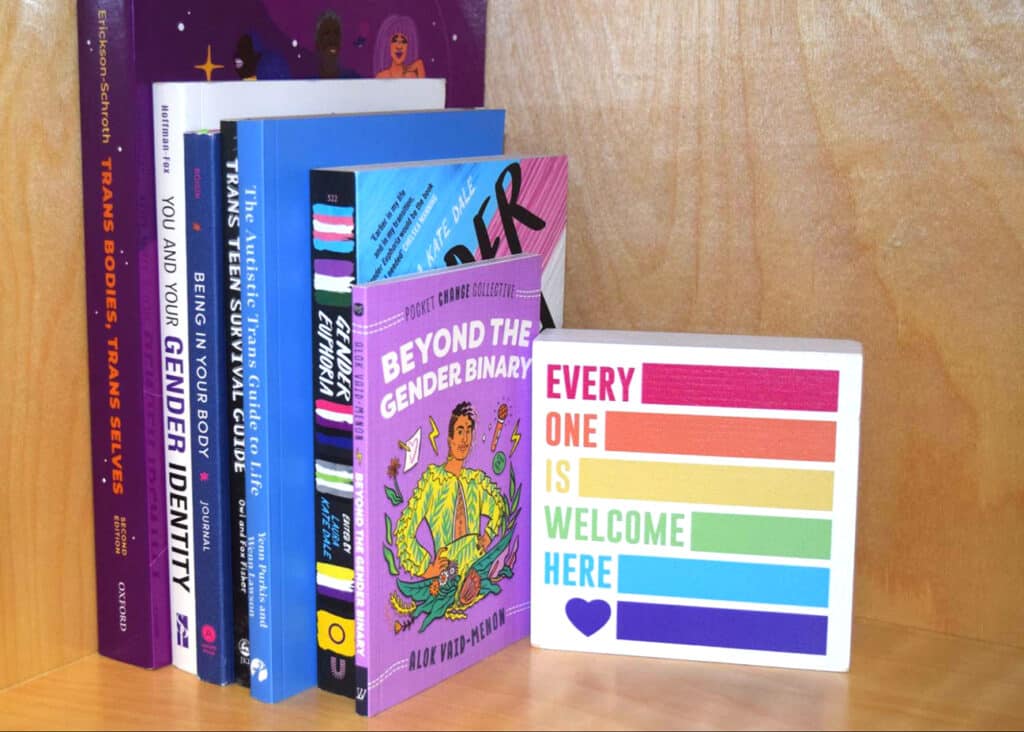
Visitors to the four sites located throughout Los Angeles County are greeted by LGBTQ+ “youth ambassadors,” who recommend ways to connect to community, health care and mental health support. At the downtown Los Angeles site run by the Alexis Project nonprofit, there are also adult coloring books, colorful plushies and shelves lined with books like the “Trans Teen Survival Guide,” “Beyond the Gender Binary” and young adult novels centered on queer characters. The titles are bookended with a bold message: “Every One Is Welcome Here.”
“The aim of the Rainbow Resource Closet is to be a beacon of hope,” Small said.
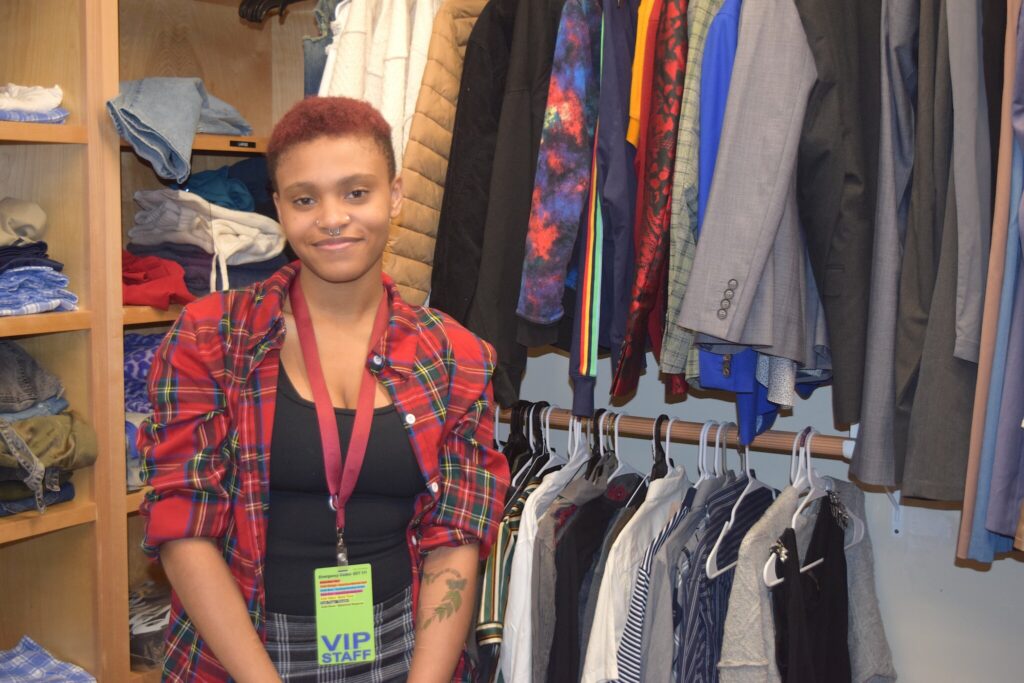
When LGBTQ+ foster youth come by the Rainbow Dream Qloset, located in an industrial area near downtown Los Angeles, they can be scared or uncertain. Youth ambassador Pheonix Ajegbo, a 19-year-old foster youth living in transitional housing, greets them.
“A smile can make so much difference in their day,” said Ajegbo, who grew up in homes that didn’t accept her nonbinary identity. “I know what it’s like to navigate a world that’s not made for you, that doesn’t recognize you.”
Ajegbo said undergarments known as tucking kits have been the most popular items in the first few days after the closet opened on the second floor of a secure office building. They are just some of the offerings that could be “life-saving” for young people fleeing rejection and abuse, only to find a child welfare system that may not adequately support them.
“It’s so rewarding to see people’s faces light up when they see something they like in a place where they don’t feel judged and they don’t feel like they have to change who they are,” Ajegbo said.
Twenty-six-year-old Isla Lima also speaks to the importance of these new offerings in Los Angeles County.
Growing up in a low-income immigrant family, Lima said she never had much space to be herself. As a queer teenager, she had to hide her gender identity from her family, and she felt a county social worker wasn’t supportive, disapproving of her clothing and piercings. It was hard to get her hands on makeup, and the few things she was able to find had to be carefully concealed for rare moments of exploration when no one else was home.
It can be “lonesome” to be a transgender youth amid worries about physical safety and who you can trust to be honest and open with, Lima said. But ProjectQ, the East Hollywood-based nonprofit that hosts a resource closet where she now works as a youth ambassador, has the potential to change that dynamic.
“It’s an affirmation that you’re going to be OK,” Lima said, “and here are the tools to make that possible.”
In foster care, LGBTQ+ youth face unique challenges, including a higher number of placement changes compared to their peers and a higher likelihood of substance use, hospitalization and homelessness, according to the advocacy group Children’s Rights.
Los Angeles County’s efforts to support these vulnerable youth stands in glaring contrast with harsh directives issued in the first months of President Donald Trump’s second term.
In his inauguration address in January he made clear his direction: that his administration would recognize only “two genders, male and female.” And on his first day in office, Trump signed an executive order that rescinded protections for transgender people, followed by another one about a week later that banned gender-affirming health care for people under 19. While a federal judge temporarily blocked the health care restriction, hospitals, clinics and medical schools that offer gender-affirming care in some states have stopped some services because of the risk of losing federal funding.
The foster care system was targeted as well. In January, the Trump Administration shuttered the Child Welfare Sexual Orientation and Gender Identity Expression Institute, a federal effort meant to improve “the services and well-being of the LGBTQI+ foster care community,” that included the compiling of key data. The federal government has also removed references to transgender people from government websites, grants and emails.
Azucena Saldana, an LGBTQ+ community engagement specialist at Village Family Services in the San Fernando Valley, said while California Attorney General Rob Bonta has pushed back on some Trump directives, trans youth in the state are living in a heightened level of uncertainty and fear. Recently, Saldana has had to tell some young adults who rely on their universities for gender-affirming health care that such services soon may no longer be available.
In stark contrast, the Rainbow Resource Rooms provide affirmation and a sense of community to queer foster youth. Nonetheless, she said that it can take as many as a dozen initial meetings for outreach workers to convince young people to stop by.
“It’s become significantly more challenging to build rapport with youth because they’re not sure they can be anonymous anymore,” she said.
The network of resource centers began with a motion by the Los Angeles County Board of Supervisors last June that was authored by Supervisors Lindsey Horvath and Hilda Solis.
“We can and must do better to support our young people in foster care,” the proposal for gender-affirming resource closets stated. “We must listen to what they tell us they need, and take action to ensure they feel heard, supported, and secure.”
“It’s an affirmation that you’re going to be OK, and here are the tools to make that possible.”
— Isla Lima, youth ambassador
The motion cited a 2019 report by the Williams Institute at UCLA found about 30% of foster youth in California identify as LGBTQ+, a rate three times greater than the share of LGBTQ+ young people in the broader population. A 2021 Trevor Project survey found 40% of transgender and nonbinary foster youth were kicked out, abandoned or ran away due to treatment at home, more than two times the rate for other LGBTQ+ young people in government care.
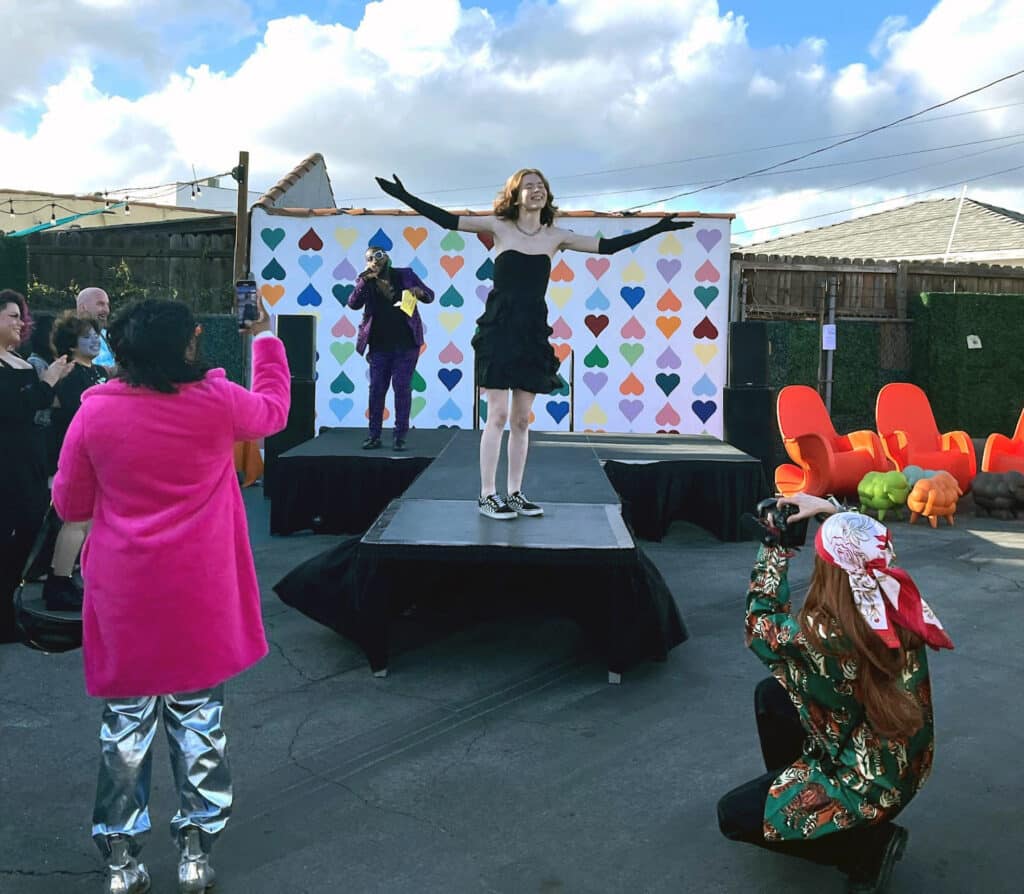
Los Angeles County’s efforts to “help reduce self-harm and mental health challenges,” was on display in March when several dozen advocates, child welfare officials and young people gathered on a windswept afternoon to celebrate the opening of the resource closets. Wearing a glittering purple suit, Byron Keaton, a veteran host from the Los Angeles ballroom scene who represents the houses of Juicy Couture and Miyake-Mugler, livened up the audience with witty banter.
DJ Sidney Perry served up a soundtrack of house and disco sounds as Keaton was joined by young people whose hair and makeup had been done by professionals during the event. Keaton invited them to the stage, calling them “real stars,” as the crowd applauded.
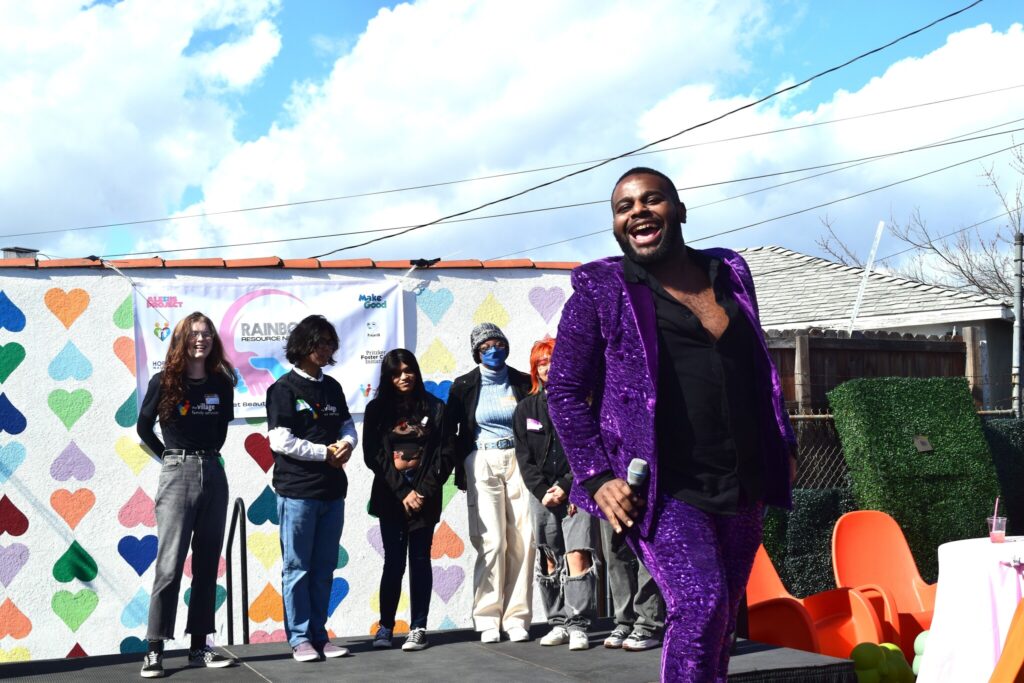
Corinna Kirby, a 23-year-old youth ambassador from Village Family Services, let her brown hair flow to her shoulders and wore a strapless black cocktail dress as she sashayed down a catwalk amid enthusiastic cheers and whistles. That environment of unabashed joy and inclusion is key to building connections to young people like herself at a time where fear is so prevalent in the LGBTQ+ community, she said.
“If you don’t feel at home where you live, you look to find home somewhere else,” Kirby said. “Hopefully, Rainbow Resource Rooms show there is home out there for people like us.”
Initial funding for the first year of these centers was provided by the Pritzker Foster Care Initiative and Casey Family Programs, but supporters hope the county will pick up the funding and expand the offerings in the future. A forthcoming evaluation of the project will also be funded by the philanthropies.
The effort is needed now more than ever, emphasized a county supervisor backing the plan.
“At a time when the federal government is escalating attacks on LGBTQ+ rights, especially targeting trans and gender-diverse youth, it is more important than ever for local governments to lead with compassion, equity, and courage,” Supervisor Solis said in a statement. “Access to gender-affirming clothing and products is not a luxury; it is a form of essential care that upholds their identity, dignity, and fundamental right to exist as who they are.”