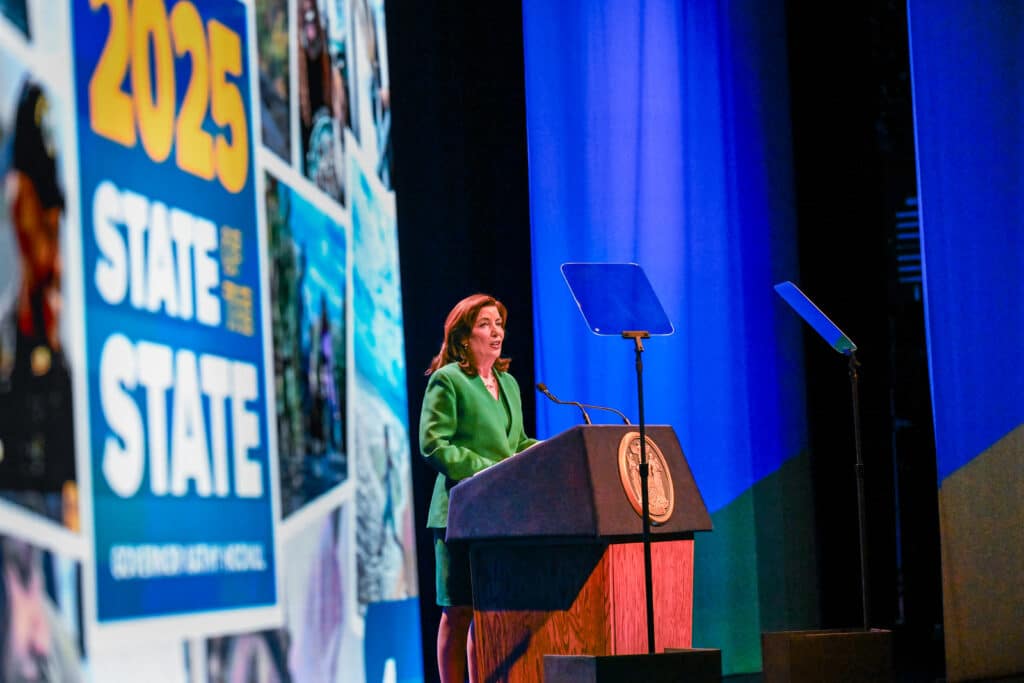
New York Gov. Kathy Hochul has proposed significant new benefits for millions of the state’s low-income families with children, including a historic boost of the child tax credit, universal free school meals, a boost to subsidized child care and payments for pregnant and new moms.
“Families with children need additional relief,” Hochul said at Tuesday afternoon’s annual State of the State address in Albany. “And as New York’s first Mom Governor, I know personally that the earliest years are the most expensive: diapers, formula, clothes that are outgrown every three months.”
If approved by a state legislature that remains firmly in the hands of her fellow Democrats, Hochul’s plan would increase the state’s Child Tax Credit for families with older children until they turn 16 — from the current $330 to $500. Most significantly, the plan would triple the maximum benefit to $1,000 for children up to age 4. These roughly 600,000 younger children were “previously excluded from the tax benefit,” as were middle class families whose higher incomes excluded them from eligibility.
Hochul says she has been fighting to lower the age of eligibility since 2023, and extending a financial lifeline” to families with the youngest children.
“It made zero sense to me that this credit only started when kids were almost in kindergarten,” she noted.
The Child Tax Credit expansion would amount to about $5,000 in annual savings for a family of four, Hochul stated, but details on how the savings would be financed and when they would take effect have not been clarified.
In addition to investments in children and families, the governor vowed to tackle housing affordability, fight crime with a focus on New York City subways, and better manage what she called a “mental health crisis” too often playing out in public — among other priorities.
“As New York’s first Mom Governor, I know personally that the earliest years are the most expensive: diapers, formula, clothes that are outgrown every three months.”
— NEW YORK GOV. KATHY HOCHUL
Her spending proposals will be part of broader upcoming budget negotiations, which must be concluded by April 1. And they are not guaranteed.
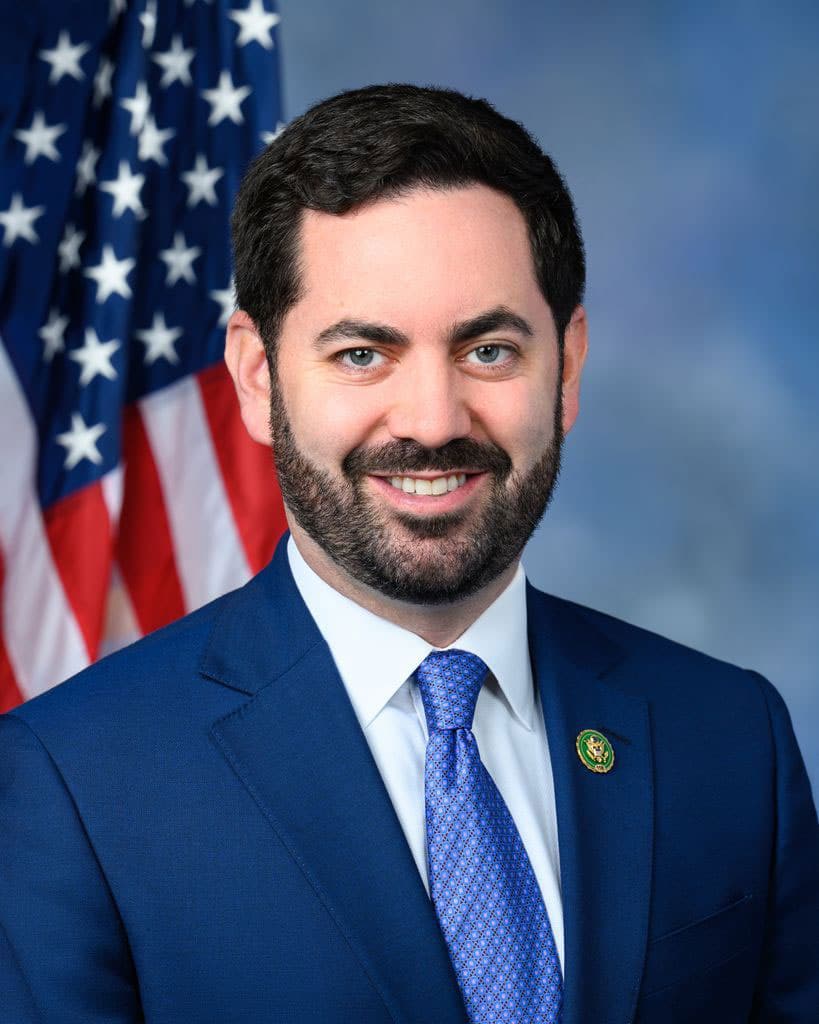
U.S. Rep. Mike Lawler — a Hudson Valley Republican and outspoken potential challenger to the governor’s reelection bid next year, attended Tuesday’s State of the State address, and quickly slammed Hochul’s overall vision and ability to lead the state. Lawler criticized her policies as “spending and mismanaging New York into oblivion.”
Hochul’s proposals for investing more heavily in the working poor include committing taxpayer funds to free breakfasts and lunches for all school children, regardless of family income. In New York, that would cover more than 2.76 million kids and save parents and caregivers the time and expense of packing food each morning in the rush to school.
In Minnesota, Gov. Tim Walz enacted a similar plan in 2023, serving 150 million meals in its first year that saved individual families $1,000 per student.
Although praising Hochul’s efforts overall, Kim Sweet, executive director of Advocates for Children of New York, said free school meals weren’t enough. She warned of lacking resources for New York City’s record-high numbers of homeless students.
Sweet criticized New York’s current formula for calculating how much state education funding school districts need, arguing that schools serving low-income students need additional resources beyond school meals for all.
“With more than 146,000 students in NYC schools experiencing homelessness last year, it is time for the State to add a weight to the Foundation Aid formula for students who are homeless and students in foster care to help schools address the unique barriers they face,” Sweet said in a statement.
The impetus behind the child tax credit, one of Hochul’s key proposals, comes from a panel she created four years ago. The Child Poverty Reduction Advisory Council stressed the impact of this method in their recommendations. Prior to Hochul’s address, Council co-chair and New York State Office of Temporary and Disability Assistance Commissioner Barbara Guinn said it would “provide a much-needed boost to their household budgets.
“We know the evidence is clear that reducing childhood poverty will result in improved physical and mental health for families and lead to significantly improved educational and employment outcomes for children,” Guinn stated in a press release earlier this month.
Children’s advocates, economists and social scientists have also weighed in — touting increased child tax credits as one of the most effective tools for tackling childhood poverty. Federal pandemic relief given in 2021 in the form of child tax credits gave a huge boost to families experiencing economic hardship — particularly Latino, Black and other marginalized populations — by 11%, according to a 2024 study.
“When my kids were young I had to leave my job because I couldn’t find accessible, affordable daycare. Everything I had worked for was derailed… And I know that so many moms across New York can tell the same story.”
— NEW YORK GOV. KATHY HOCHUL
Experts estimate that the expanded tax credit could reduce poverty among children in New York by more than 8%. Researchers at Columbia University found that the value to society would be significant. They estimated a $2.7 billion cost generating about $26.2 billion in societal benefits — including increasing children’s health, education, and future earnings and decreasing health, child protection and criminal justice costs.
In 2006, New York was the first state to introduce its permanent, fully refundable Empire State Child Tax Credit. But despite leading such efforts earlier, it may since have fallen behind. A 2023 study conducted by The Niskanen Center think tank focused on 10 states and found New York to have the lowest child tax credit for families reporting no income, compared to states such as New Jersey and Minnesota that gave out more than $1,000.
With this proposal, Hochul could improve on that status. In an analysis released in 2023, the Niskanen Center called similar fixes proposed by legislators in New York the “boldest state proposal we have seen” since the 2006 program, almost two decades ago.
If approved by lawmakers, the child tax credit would be phased in over two years, working as a refundable credit, either by helping to offset taxes or paid directly to taxpayers.
In Tuesday’s State of the State Address, the governor also pitched other ways to reduce financial burdens on families, including a unique legislative proposal to improve maternal and infant health: the New York State Baby Benefit. This benefit would give parents who receive public assistance an allowance of $100 per month during pregnancy and a $1,200 one-time payment once they give birth.
In making the case for increased spending on subsidized child care, Hochul drew on her personal experience. She proposes to spend $110 million to renovate and build new child care centers, and to establish “a corps of substitute child care professionals so someone’s always on call.”
“I know how hard it is to make life work without childcare because I lived it,” Hochul told fellow lawmakers and audience members gathered at the Hart Theatre in the state’s capital, known as “The Egg.” “When my kids were young I had to leave my job because I couldn’t find accessible, affordable daycare. Everything I had worked for was derailed. I didn’t know how I’d get my career back on track. And I know that so many moms across New York can tell the same story.”