
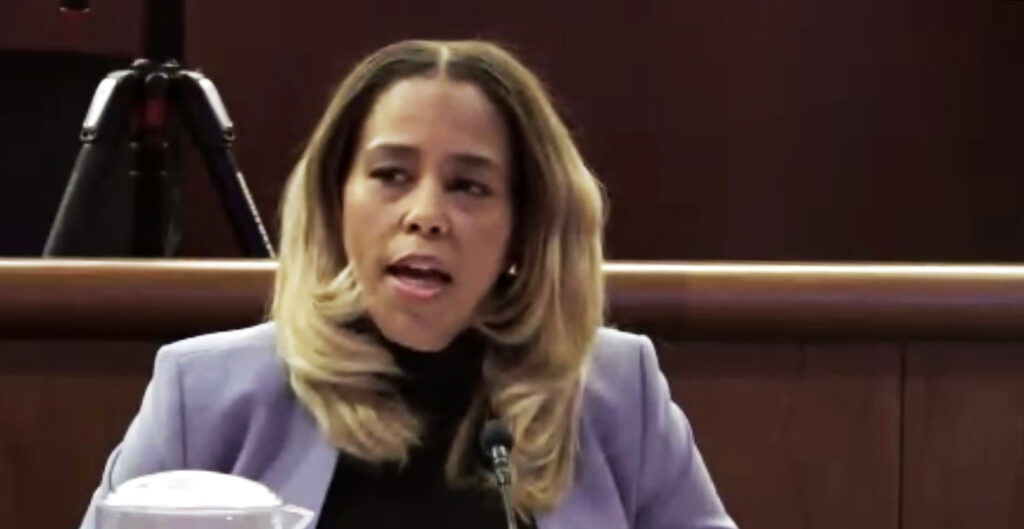
Amid growing accounts of extended isolation in cells inside New York’s youth detention facilities, lawmakers pushed the head of New York State’s child welfare agency on her plans to improve conditions in a public hearing Thursday.
“At times, there are circumstances where young people are not moving as much as we would like, but we definitely do not condone solitary confinement,” Office of Children and Families Commissioner DaMia Harris-Madden told members of the state legislature.
According to a lawsuit filed last month against Harris-Madden’s agency, the chronic understaffing that plagues state-run facilities has resulted in some youth spending weeks and months in solitary confinement, with just one hour a day out of their cells. Court records describe young people forced to relieve themselves in buckets or food containers when their calls were ignored by staff. One plaintiff said he experienced better conditions while jailed at Rikers Island.
Harris-Madden acknowledged chronic staffing and retention problems exist at the facilities serving youth aged 12 to 21 who have committed serious or violent crimes. Data included in the lawsuit and a letter union leaders sent to lawmakers last summer reveal some facilities have hundreds of vacancies.
The result is underscored by the facility staff themselves.
In a story published Wednesday by New York Focus, anonymous staffers at a youth prison complex near Rochester described “controlled chaos.”
They said they are often ordered to work overtime and have no option but to lock youth up when there aren’t enough support staff. Some have sustained serious injuries from overwhelmed residents. Those interviewed also described youth breaking down while in isolation, smearing feces on walls and urinating into hallways.
The staff spoke to the outlet in the hopes that lawmakers would take action, they said.
“Why are we here? We are part of the problem,” one employee said amid tears. Another said they felt like “a human rights violator.”
“We do have a staffing shortage, and I think we should address it before we have more serious circumstances.”
— Assemblymember Andrew Hevesi
At Thursday’s budget hearing, lawmakers attending the Assembly Children and Families Committee hearing acknowledged that the staffing crisis has worsened.
They cited several reasons, among them prison workers leaving their jobs during the pandemic and not returning, and the 2017 Raise the Age law that shifted most 16- and 17-year-olds out of adult prisons. That law is said to have increased the population in some youth facilities by almost 74%.

“We do have a staffing shortage, and I think we should address it before we have more serious circumstances,” said committee chair Andrew Hevesi.
Harris-Madden defended her agency’s efforts to combat understaffing. She said over 400 new staff were hired last year. She pointed to several workforce development initiatives the agency has introduced, such as re-educating staff through a “trauma-informed lens” and introducing a mentoring program for new hires.
Still, she added that the attrition rate remains high in a field where employees face unique challenges and youth can act out violently.
Harris-Madden made the case for allowing body scanners at facility entrances to ensure safety and encourage staff to stay longer in their jobs, and noted a significant increase in ceramic blades and other items that can be used as weapons entering the facilities. A bill introduced last year would authorize the use of these full-body scanners in certain state-run juvenile facilities, to prevent visitors smuggling in drugs, weapons and other contraband.
“We have about 78% of our young people that have mental health challenges, sexualized health, sexualized behaviors, gang involvement,” she told lawmakers. “Unfortunately, while we’re trying to instill hope, we still have some of the trauma that they’ve experienced. And so at times they see opportunities and may become violent.”
Last October, Harris-Madden’s agency invited a group of state lawmakers, including Hevesi and Sen. Robert Rolison, to tour the Goshen Secure Center in Orange County. They were joined by representatives from the state juvenile justice division and members of the union representing prison staff.
At the Thursday hearing, Rolison said the October trip prompted “very good, engaging conversation.”
But when he asked Harris-Madden for an update on the staffing shortage since last fall, she responded: “The situation has not improved, although there have been significant strides.”