
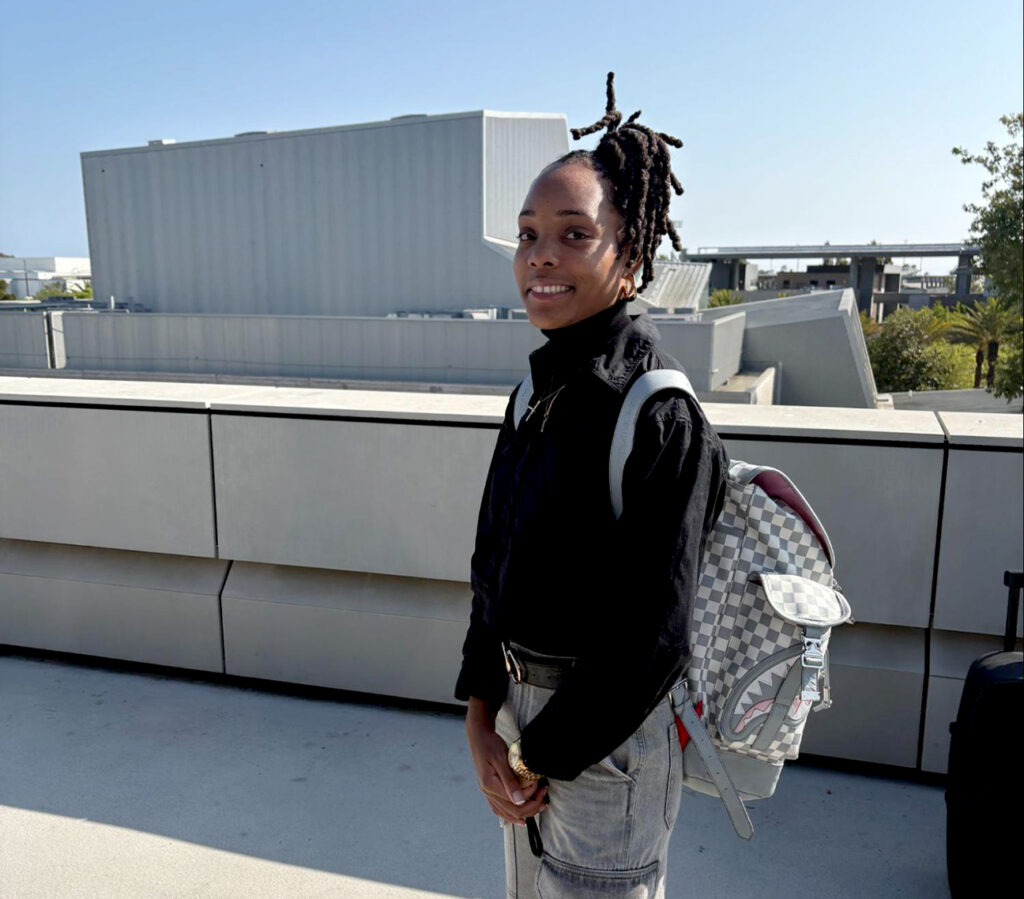
As a high school sophomore in Los Angeles, former foster youth Kyshawna Johnson started flushing her psychotropic drugs down the toilet. She’d been told to take them since age 6. But they made her feel drowsy and emotionally “shut down.” They didn’t help soothe her feelings of grief and loss, or treat the trauma of childhood abuse and family separation she experienced in foster care.
“You lose yourself when you take these medications,” Johnson said in an interview. “You don’t know who you really are.”
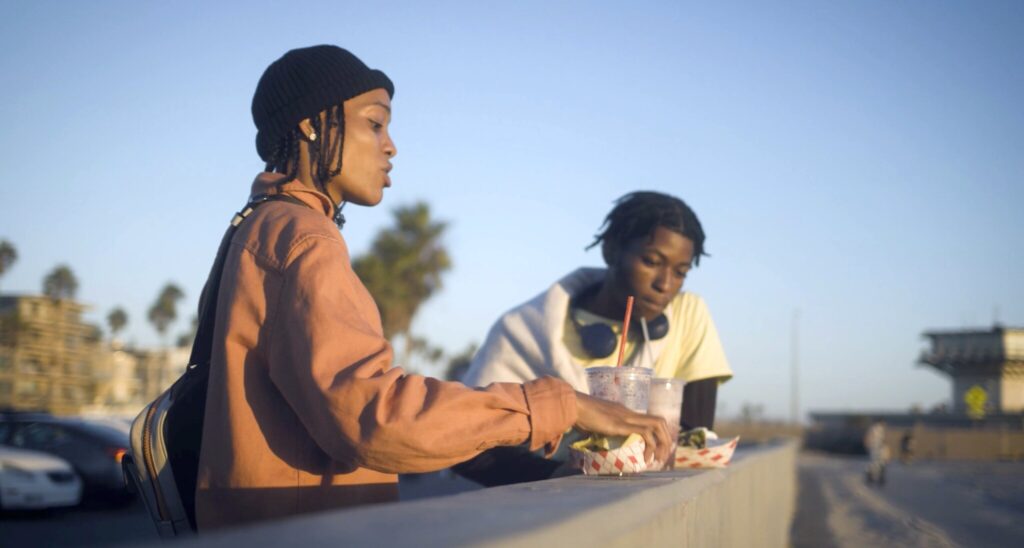
Johnson’s experiences are one of several similar stories told in the feature-length documentary “Recovering Innocence,” that premiered publicly on May 29 in Santa Monica. The 101-minute film — exploring both the harm caused by the drugs as well as alternative ways to heal — was made almost entirely by foster youth, and produced by the Los Angeles nonprofit Kids in the Spotlight.
In the new documentary, Johnson and two other former foster youth, Nathaniel Patterson and Daniel Williams, serve as guides to a complex issue. The trio dig up data on the use of psychiatric drugs in foster care; talk to experts and advocates; seek to understand how and why doctors and social workers rely on these drugs; and listen to other foster youth about how these medications have affected childhoods disrupted by addiction, homelessness and family separation.
Nagi Moore, a foster youth from South Los Angeles, recounts how the medications he was prescribed made him gain weight, leading to embarrassment during showers after basketball practice. Athena Garcia-Gunn describes how taking psychotropic drugs as a teenager made her feel disconnected from her emotions and unable to process the trauma of abuse and the loss of sibling relationships. Other young adults detail how medications made focusing on schoolwork harder and hampered personal relationships.
If you have tips or experiences you want to share about California’s child welfare system, please email jloud@imprintnews.org.
Johnson and others believe their treatment with medication was too focused on solving behavioral issues. Left unaddressed was childhood trauma, abuse and grief following the death of family members.
Johnson said she obtained her old school records during the making of “Recovering Innocence,” which gave her insight into medications that made her childhood hazy. She now believes she was overmedicated and that she had little help to address issues.
“Looking back, I find out that being on these drugs was about paying attention in school,” Johnson said. “But I was going through abuse, going through a lot at home, and dealing with the death of a parent.”
“You lose yourself when you take these medications. You don’t know who you really are.”
— former foster youth Kyshawna Johnson
In California and nationwide, foster youth are prescribed psychotropic medications at two to four times the rate of other children, studies show.
Stimulants, mood stabilizers, antidepressants, anti-anxiety meds and antipsychotics can soothe children and teens in crisis. But the effectiveness of the medications as treatment for trauma is negligible. And some of the more powerful mood-altering medications such as antipsychotics can have severe side effects, including obesity, uncontrollable tremors and diabetes.

The Imprint’s six-part series, Medicated in Foster Care: Who’s Looking Out?, revealed states across the country where child welfare protocols fail to protect these children from overprescribing. Nationwide, there are at least four ongoing class-action lawsuits and settlements alleging such harm, involving more than 18,000 foster youth.
The Los Angeles filmmakers suggest alternative pathways to psychiatric drug treatment for foster youth in emotional pain. For Garcia-Gunn and others, it was writing their experiences down in autobiographies or journals. For others it was basketball or music. Some found healing in advocating for other foster youth.
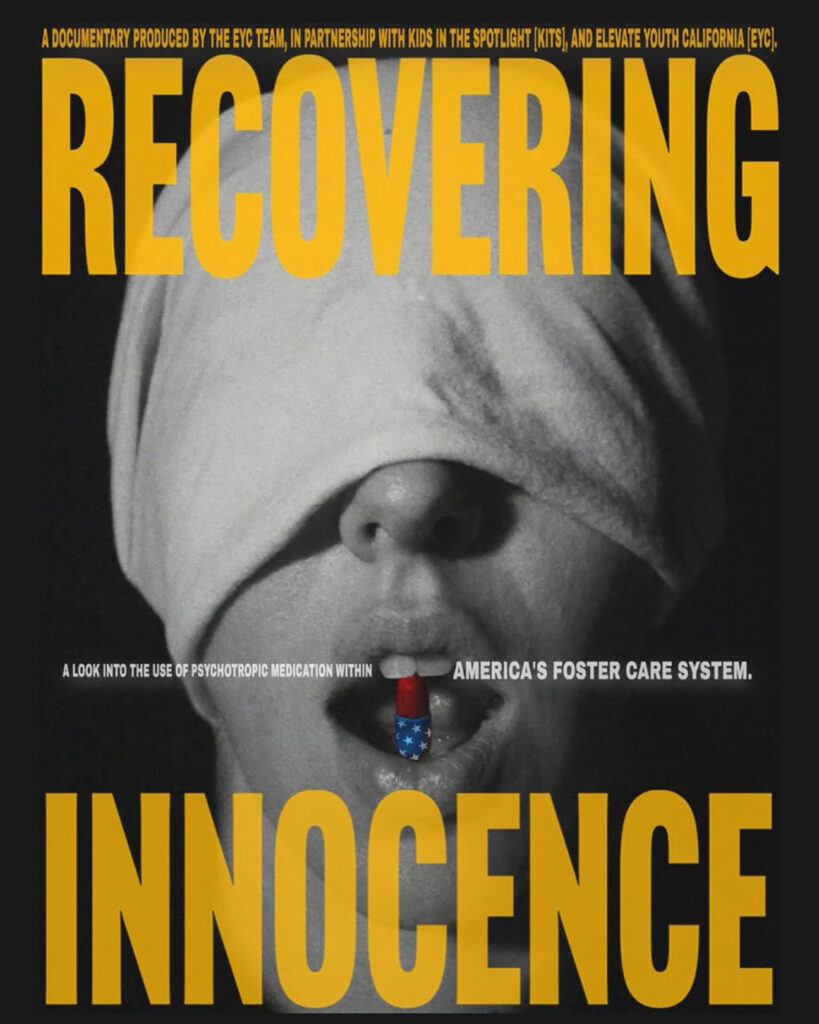
The “Recovering Innocence” documentary was produced through a grant from Elevate Youth California, a state Department of Health Care Services program that disperses tax revenue from legal cannabis sales. The movie is the first full-length feature produced by Kids in the Spotlight. The 16-year-old Van Nuys-based nonprofit trains young people to write a script, cast actors, and shoot a short film during its 10-week-program. Kids in the Spotlight also works to find jobs in the entertainment industry for its alumni, and some have gone on to achieve acclaim, including commercial director DayDay.
Over nearly three years of production, three former foster youth featured in “Recovering Innocence” worked on it full-time. They were later joined by three other producers. With the exception of an editor, the movie was researched, written, filmed and produced by young people who grew up in the system
Joseph Roa, a 25-year-old aspiring filmmaker from East L.A., worked for nine months as a producer. He called the experience “transformative.”
Roa, an alumni of Kids in the Spotlight who said he has worked on projects with NBC Universal and silver screen star Michael B. Jordan, said he and other filmmakers wanted to be “good stewards” of the experiences of other youth recorded in the documentary. At times, however, the material became too much.
“It was very heavy but also empowering,” Roa said. “It’s been an honor to be a liaison, to make sure that these voices are heard, and passed on to the next generation.”