
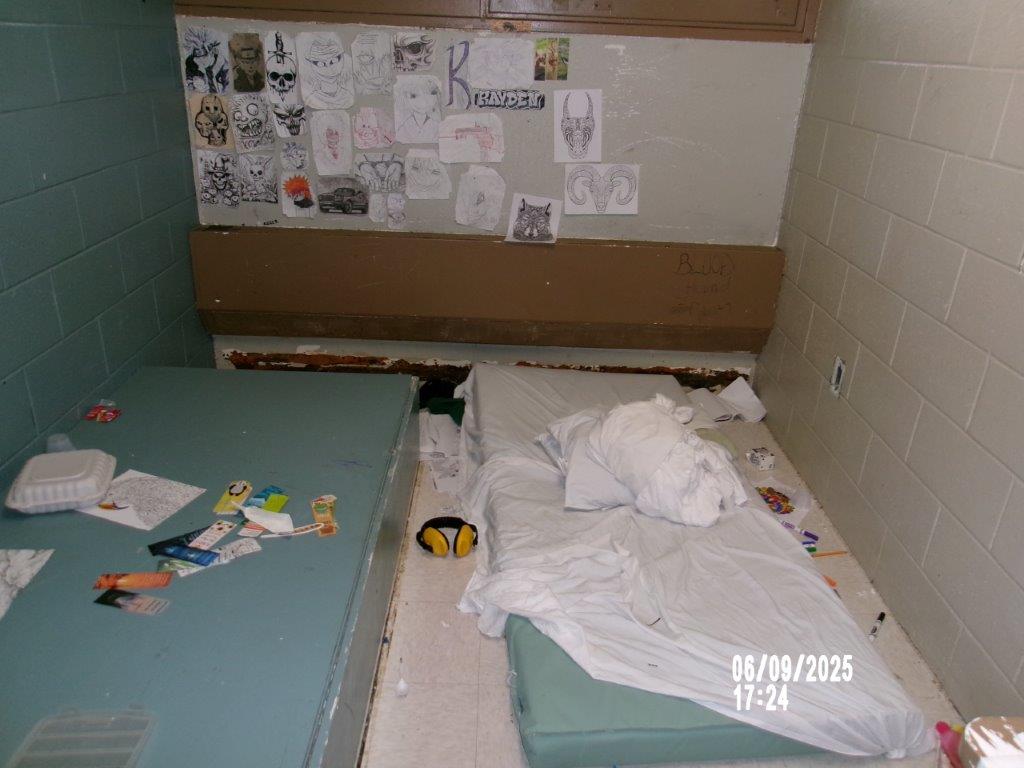
Youth sentenced to serve time in New York detention centers are being held in solitary confinement for days, weeks or months in abusive conditions, a lawsuit filed in a Manhattan federal court alleges. They sleep in “small and stark” cells, barren and sometimes windowless, with a “single mattress and table” on a concrete floor. While in isolation, youth report they do not see teachers, some have limited access to drinking water and rely on “garbage pails, water bottles, food containers, or buckets to relieve themselves,” when staff can’t escort them to a bathroom, the suit against the state’s juvenile justice agency claims.
As a result, detained youth bang on doors and yell for help for hours. And their relatives’ pleas to staff and state lawmakers have been ignored, according to the suit filed Thursday by the Legal Aid Society and corporate co-counsel Jenner & Block.
State rules sharply restrict the use of solitary confinement, and prohibit it for punitive purposes in the five secure Office of Children and Family Services-run juvenile facilities spread hundreds of miles across New York.
“Unfortunately in practice, as alleged in the lawsuit, that’s not what’s happening,” said Kate Wood, a staff attorney with Legal Aid, of her firm’s suit against the agency. “They are both violating their own regulations and policies that they have created, and they’re also exploiting a lot of the vagueness and loopholes that are written into these regulations and policies.”
Wood said as a result, young people are being subjected not only to isolation as a form of punishment, “but to isolation as a means of operating these facilities with dangerously low staffing levels.”
The facilities overseen by the Office of Children and Family Services (OCFS) house young people ages 12 to 21 who have committed more serious or violent offenses. A spokesperson for the office, which typically does not comment on active litigation, said the new complaint “will be thoroughly examined and we will respond through the appropriate legal process.”
“OCFS does not endorse or condone the use of isolation for punishment. We have clear protocols that are designed to ensure the safety of youth, and staff, while incorporating trauma-informed and mental health–responsive practices,” said spokesperson Jennifer Whitson. “We will continue to work diligently to ensure the safety and well-being of all those under care of our facilities.”
Yet the Legal Aid lawsuit alleges the state agency has violated the constitutional rights of hundreds of incarcerated youth, and, for those with disabilities, their rights under the Americans with Disabilities Act. Plaintiffs seek sweeping changes to “policies, procedures, training, supervision, and monitoring” of the five state-run secure facilities.
Marcus F., a Bronx-born 18-year-old, is the first named plaintiff.
While held in pretrial detention in New York City, he received praise from staff on his yoga practice and academic achievements. They described a “remarkable level of respect and cooperation,” “maturity,” involvement in conflict resolution, and a willingness to show “vulnerability.” But now, after months of frequent isolation in state custody far from the city, he “suffers mental anguish and distress, which only worsens with each subsequent period of solitary confinement,” according to the lawsuit.
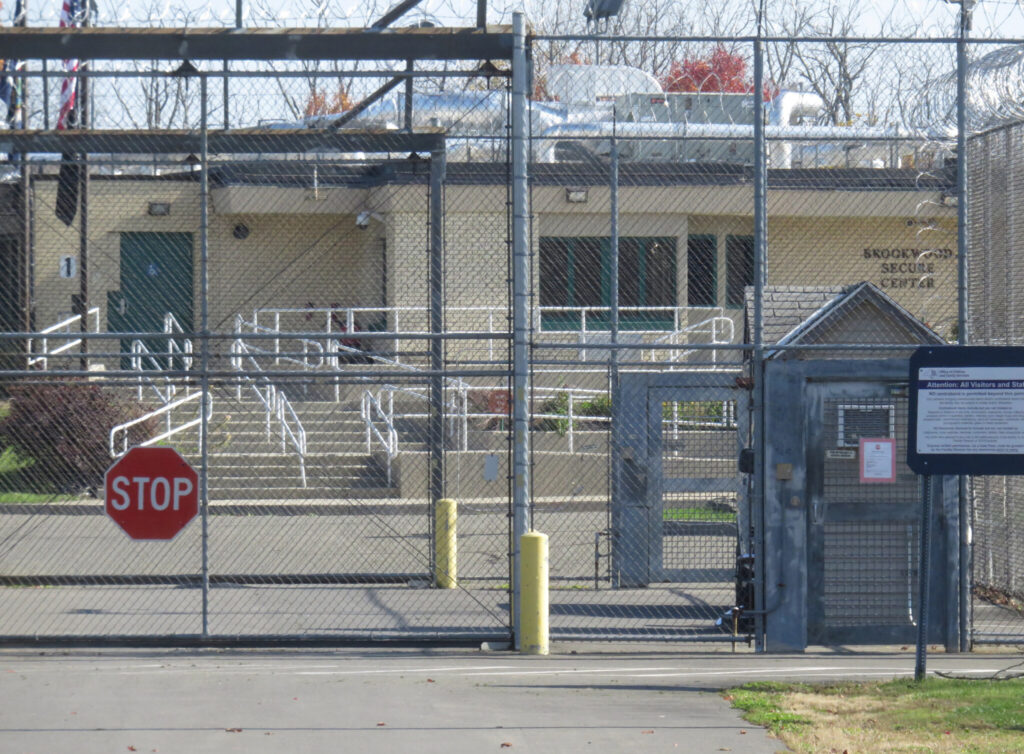
Since being convicted in late 2024 for an unidentified felony — his first — and sentenced to state custody, he’s been left by himself for weeks at a time. In Wing 11 of the upstate Brookwood Secure Center for Youth, known as “the Morgue” or “the box,” he spent as many as 23 hours a day for weeks in isolation, court documents state. Marcus F. has also been isolated in another locked facility more than 200 miles away in rural Tompkins County, the MacCormick Secure Center.
Garrett M., a 16-year-old Brooklyn boy and “Harry Potter” fan, claims he was left in a cell with a nosebleed during one of Industry Residential Center’s frequent unit-wide lockdowns, and that he and his peers have been “forced to urinate and defecate in food containers or in bottles when staff fail to respond to their requests for bathroom access.” He has spent a cumulative four months in isolation.
Another plaintiff, a 20-year-old identified as Christopher M., said he experienced better conditions while jailed in the Robert N. Davoren Center for young adults on the notorious Rikers Island pretrial detention complex run by New York City’s Department of Corrections. He and his mother have pleaded for him to be moved back into an adult facility’s custody, despite well-documented risks to youth in those settings.
Numerous experts — including the American Psychological Association and American Academy of Pediatrics — have condemned the use of solitary confinement for incarcerated people of all ages, citing psychological and physical harm. And in recent years, dozens of states, including New York, have banned or limited its use in juvenile facilities.
“No child in New York’s care should ever be subjected to isolation that deprives them of education, human connection, or basic dignity. Secure placement is meant to provide safety and rehabilitation — not punishment that compounds trauma. If these practices are occurring, they merit careful review and appropriate action.”
—New York State Assemblymember Andrew Hevesi
Yet the new lawsuit claims young people have been subjected to isolation for perceived misbehavior, and often because there simply aren’t enough adult professionals to supervise them in facilities that have been severely understaffed for years. Some facilities have hundreds of vacancies, according to data included in the lawsuit and in a letter a staff union sent to lawmakers last summer.
Jenner & Block’s attorneys on the case include Jeremy Creelan, a one-time ethics advisor to former Gov. Andrew Cuomo, and Damian Williams, the former federal prosecutor who indicted former New York City mayor Eric Adams. The lawsuit, filed in the United States District Court for the Southern District of New York, names as defendants Office of Children and Family Services Commissioner DaMia Harris-Madden, and the Deputy Commissioner for her agency’s Division of Juvenile Justice and Opportunities for Youth, Norman Hall.
One New York City mother, who asked to be identified as Ms. Y to protect her son’s anonymity, said in an interview Monday that she’s spoken to her 17-year-old son who is named in the suit almost every day since he arrived at Goshen Secure Center in Orange County.
“I told my son, until I can get hold of somebody, think about me. Hear my voice. Think about the letters I sent you, the affirmations and prayers I sent you, the scriptures,” she said.
As to the inability to hire sufficient facility workers, she added: “Being short-staffed is not my problem. It’s not my son’s problem.”
State Comptroller Thomas DiNapoli has also weighed in. In an audit published in 2024, he found a 100% increase in self-harm incidents and a 667% increase in suicidal expressions or gestures from 2018 to 2023 in the same state-run facilities now targeted by litigation.
As of December 2024, nearly all the incarcerated youth statewide were male. While only 16% of the youth population in New York State is Black, 63% of youth in secure placement are Black and 28% are Latino, according to the lawsuit. All of the four named plaintiffs in the case are Black.
The New York State Legislature began its annual session last week and will be negotiating the budget for the Office of Children and Family Services and all other state agencies. Asked if lawmakers have any plans to address the staff issues or possible policy violations identified in the new lawsuit, Queens’ Assembly Democrat Andrew Hevesi — chair of the Assembly’s Children and Families Committee — indicated it may be up for consideration.
“No child in New York’s care should ever be subjected to isolation that deprives them of education, human connection, or basic dignity. Secure placement is meant to provide safety and rehabilitation — not punishment that compounds trauma,” he said in a statement emailed by a spokesperson. “If these practices are occurring, they merit careful review and appropriate action. The Legislature has a responsibility to ensure that our laws are being followed and that young people in state custody are treated in a way that reflects our values and our obligations to them.”