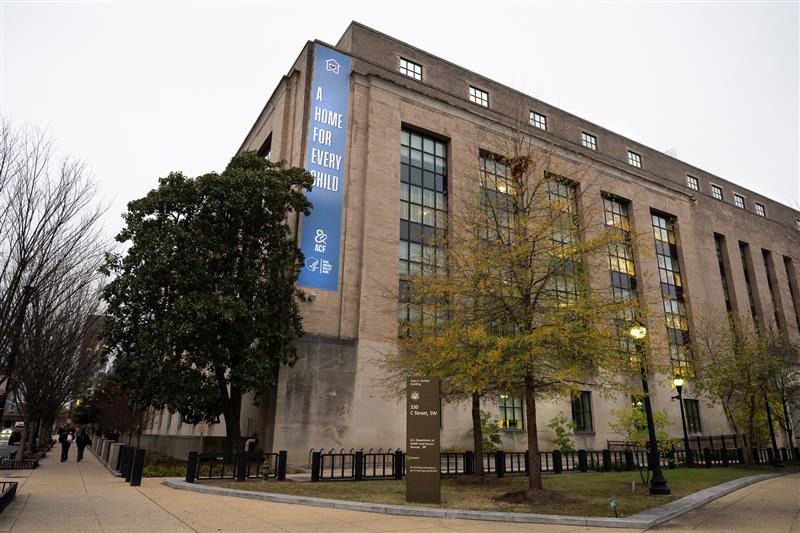

Nearly seven decades ago, Hilda Onley was confined to the Hudson Training School for Girls. She has sought justice for sexual abuse at the facility under New York’s Child Victims Act.
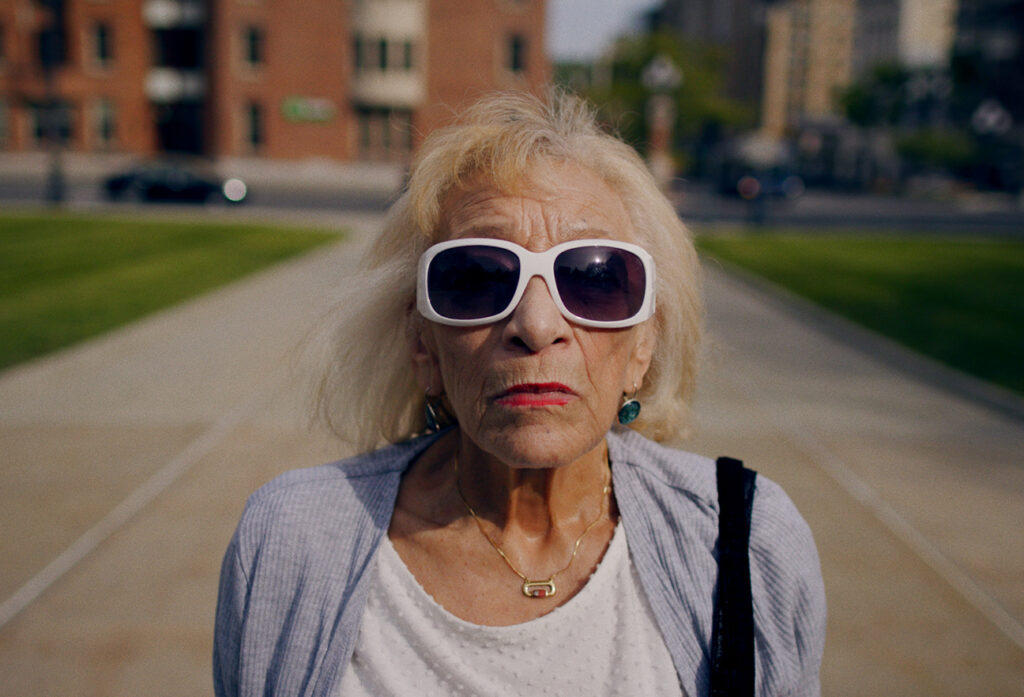
Hilda Onley has built a life rich in color on Florida’s Treasure Coast: There are hibiscus, mango trees and clear blue waters outside her condo. Inside, she’s covered her canary-yellow walls with ornate crucifixes, and framed her bed and doors with dried flowers. The 83-year-old great grandmother feels safe here, she says, enjoying days by the pool, cooking for loved ones, and nightly prayer.
But Onley keeps her windows clamped shut, no matter the weather. Her doors stay locked. And there’s a knife with a marbled wooden handle on her bedside table.
In the late 1950s, after she gave birth as a teenager, Onley was separated from her newborn and confined to the Hudson Training School for Girls in upstate New York. Her memories of being sexually abused there by a staff member still cause her night terrors.
In recent years, she’s been flying more than 1,300 miles to her chillier home state to pursue justice through the courts. She is one among thousands of other current and former New Yorkers making similar claims since 2019, when Albany lawmakers temporarily lifted the state’s statute of limitations on civil suits for childhood sexual abuse.
Lawyers familiar with these cases say her claim is among the oldest brought to court. It may also be one of the most arduous for the plaintiff to win: She’s filed her case against the state, instead of against a private institution, and must overcome unique legal protections afforded to governments.
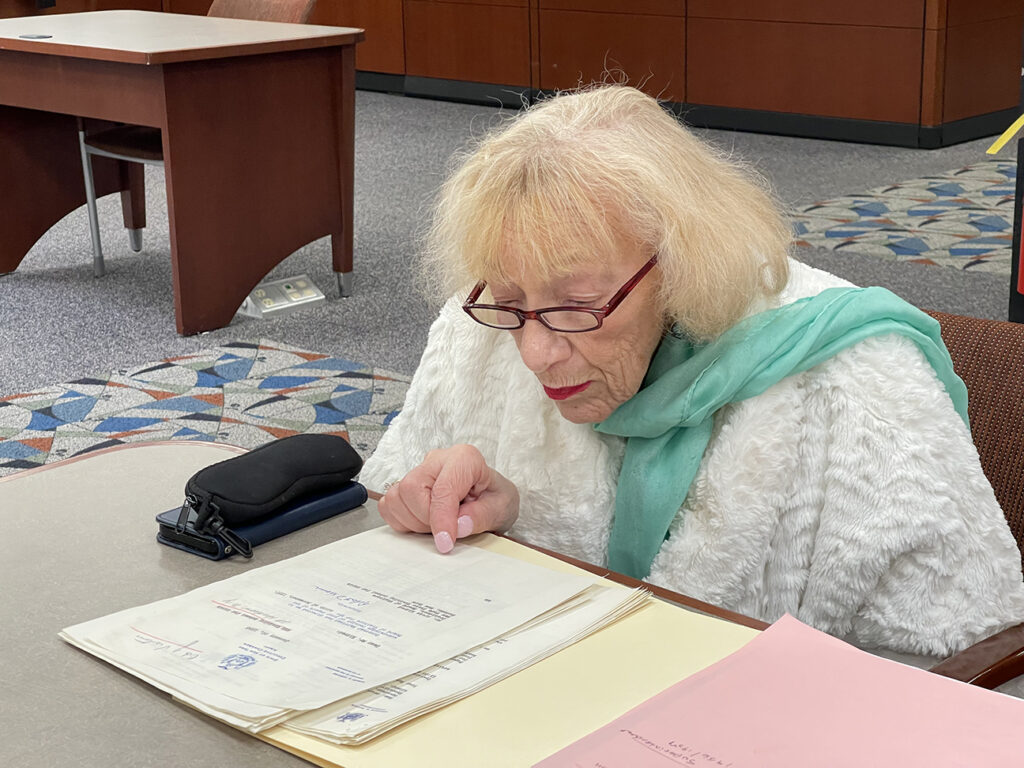
There are also few surviving records or corroborating witnesses, and the alleged assailant’s name has yet to be confirmed.
Onley’s lawyers warned her it would be a difficult case. But she persisted, adamant about the severity of the abuse she says she experienced. And despite frustrations over a five-year-long court process about alleged assaults that date back roughly 67 years, she’s made her story public through speaking engagements and a collaboration with documentary filmmakers. “Hilda O. Vs. The State of New York,” created by Alison Cornyn and Heather Greer, debuted at a London film festival on June 26.
The goal is “justice for a lot of other girls and boys, and for me,” Onley said in a series of interviews. But as she ages, and recovers from a recent fall and hospitalization, finding peace with her past remains elusive. Government lawyers have argued Onley has not proven that the state failed to protect her from harm at the Hudson Training School for Girls, and denied any knowledge of the attacks she alleges.
“Maybe it’ll help a little bit with healing.” she told The Imprint about her case. “But real healing, no, I don’t think so. Because you know why? This abuse still happens, and the courts don’t do enough.”
Long journey
Onley grew up as a north Brooklyn girl of the Eisenhower era. Her nickname was “Goldilocks.” She lived in a dark basement with her mother in the Greenpoint neighborhood’s refugee Jewish community, long before the hipsters and high-rises arrived. She did odd jobs for shopkeepers on the weekends.
“They would give me a dollar every Saturday for me to keep watch, to make sure nobody would steal,” she said. “And then they would call me in and they would feed me tuna fish knish.”
Onley said her mother struggled with severe mental illness and frequently beat her. At 14, on the run from home, she became pregnant while staying with a teenaged boy who took her in and “protected” her for a few months.
“I feel a little proud. I’m telling the truth. I had no fear whatsoever.”
— Hilda Onley
But after their daughter was born, he disappeared, and Onley’s mother abandoned her. One night, Onley recalls sleeping with her newborn in a public stairwell. Not long after, her mother took her to a King County Family Court, where a judge escorted her through a back door and onto a bus, without her daughter. It took her to the girls facility up the river, in Hudson.
Between roughly 1957 and 1959, Onley was incarcerated at the now-shuttered Hudson Training School for Girls. Built five decades prior, the 360-bed reformatory was by far the largest institution of its kind. Its campus had grassy quads with crosswalks, trees, a large chapel, a gymnasium, and a cottage house system. Residents were placed under the care of “house mothers” and “house fathers” in modest brick dormitories.
“You had your breakfast, then you had chores to do,” Onley recalled. “I used to have to get on my hands and knees with a big thick piece of wood wrapped with a towel, and buff the hallways.”
Staff were violent at times. Onley recalls her house mother pulling her hair and punching her.
And although the King County judge had said she could see her newborn daughter whenever she wanted, her requests went nowhere. “I cried every single weekend to the house mother and father and said: ‘The judge promised, the judge promised!’”
Number of delinquent children ‘skyrocketed’
While Hilda doesn’t recall being given a reason for her incarceration, she assumes it had to do with her being a white teenager with a Black baby — a circumstance amid the racism of the 1950s that landed girls in state institutions housing deep misery.
Hudson training school records from the late 1950s note daily activities including basketball, sewing stoles for the holidays, and even dances with the boys at the nearby Otisville Training School. But they also describe concerns about runaways, and two new annexes built for girls described as “withdrawn,” “neurotic,” “aggressive” and “pre-psychotic.”
Months before Onley’s early 1958 arrival, the Columbia University social work scholar and child welfare watchdog Alfred J. Kahn issued a report calling the situation at Hudson “desperate.”
“The number of delinquent children placed in institutions has skyrocketed in the past 13 years,” notes one state agency report from 1962.
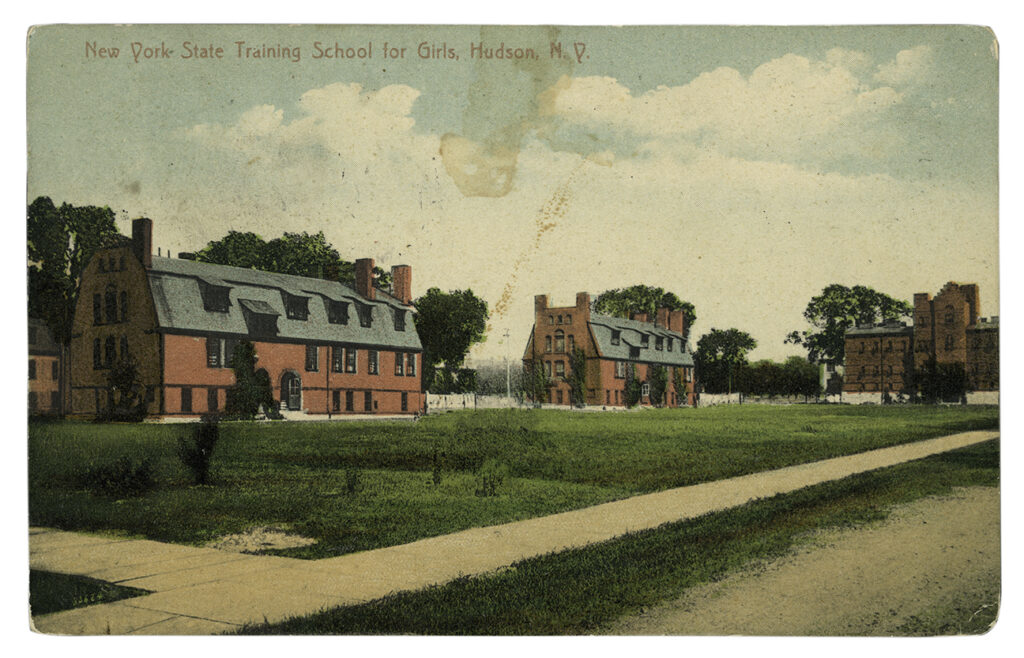
Like many other residents, Onley had committed no crime. But at Hudson, her lawsuit alleges, she became the victim of a crime. She says her house father snuck into her room at night numerous times, took her to his dorm, pinned her to the ground, and raped her.
“They put you in bed early. The sun would still be out when they’d be locking our doors from the outside. But the sun wasn’t out whenever he would come,” she recalled. “I don’t know if his wife was in the same apartment, or if she would go out and he would take his chances. I can’t tell you how many times he would do that.”
Seeking justice through the courts
Onley was also devastated by the time apart from her newborn daughter, who was placed in foster care during her time at Hudson. She remembers saving money for months after, while living in a foster home herself and hoping to buy the toddler a pretty dress and shoes. They permanently reunited only after she got married at age 19.
Nationwide, 33 laws similar to New York’s Child Victims Act have extended the statutes of limitation on legal claims of childhood sexual abuse. New York’s version temporarily eliminated those deadlines entirely from 2019 to 2021, and since then has expanded those eligible to include anyone 55 or younger. The reforms are an acknowledgement that abuse victims often may not be able to come forward for decades — and Onley fits that pattern.
Twelve years ago, a close friend urged her to seek therapy, and to work on her temper and unstable relationships. Onley followed her advice, and for the first time talked about sexual abuse at Hudson. She didn’t recall her attacker’s name, but he was possibly called “Mr. D.”

Documenting as many details as she could recall in an 11-page filing, she sued the entity that employed her alleged assailant: New York State. Her complaint argues the state practiced “negligence in operating New York Training School for Girls (NYSTSG), negligent retention, negligent hiring and negligent supervision.” Out of nearly 11,000 Child Victims Act cases, according to state court officials, she’s one of just 281 who sued the state as opposed to private groups such as churches or nonprofit foster care agencies.
“New York State knew that girls at the NYSTSG felt uncomfortable with the presence of men in the cottages, that house fathers exercised unrestrained physical control over the girls, and that the institution actively fostered intimacy between house parents — including house fathers — and the girls,” Onley’s attorneys argued in an early settlement request letter to the state. “New York State should have easily foreseen that male employees living in the cottages would take advantage of the vulnerable young women in their care.”

But suing the state has proved to be a particular challenge for those nearly 300 plaintiffs who have gone through the Court of Claims instead of New York’s general-purpose Supreme Courts. The Court of Claims is the exclusive forum for civil litigation seeking damages against the State of New York. Lawsuits it hears must overcome the “sovereign immunity” of government entities, by providing “a sufficiently detailed description of the particulars” — a time and a place, injuries itemized, and other specifics, as Judge Catherine Leahy-Scott has said in Onley’s case.
“It is much harder to sue — the law protects municipal organizations and gives them a lot of rights other people do not have,” said attorney Cynthia LaFave, whose firm is representing Onley and hundreds of other Child Victims Act claimants. “It is very tough because they have immunities written into law.”
In March, New York’s highest court tossed another Child Victims Act lawsuit against the state, on the grounds that the alleged victim did not identify all the necessary “particulars.” A group of lawmakers who helped pass the Child Victims Act expressed “anguish” over the decision to Spectrum News, and pledged “to look at the rules and try to remedy this inequitable situation.”
Nevertheless, Judge Leahy-Scott saw enough specificity in Onley’s case to move it forward, and she rejected the state’s motion to dismiss in 2022. Onley had a close-enough memory of the timeframe when she was sexually abused, the judge determined, and she accepted her lawyers’ argument that the alleged attacker could likely be identified by digging through decades-old archival state records.
Onley’s yearslong legal limbo is not unique: Out of nearly 11,000 Child Victims Act lawsuits filed from 2019 to 2021, 7,701 have reached a judge, and 2,378 “have been settled or otherwise disposed,” a spokesperson for the Office of Court Administration said. Just 16 out of 281 Court of Claims suits against the state have been settled or resolved by court order. The rest are still pending, or have been dismissed or otherwise closed.
Onley’s resolve was evident in a recent conversation.
“I am telling the truth to everything that I said that happened to me in that home,” she said. “And believe it or not, I have an excellent, excellent memory. I have an excellent memory from when I was 2 years old.”
Speaking out, seeking acknowledgement
A new short film, quiet and symbol-laden, offers a glimpse of Onley’s journey through the courts. In “Hilda O. Vs. The State of New York,” the octogenarian takes slow, steady steps through airports and hotels on her way to her legal deposition in Albany in 2022 to testify about her horrific memories.

One of its co-directors, the artist and educator Cornyn, became captivated with the Hudson School for Girls after an acquaintance gave her a box found at a yard sale with old black and white photos and other documents. The pictures of residents at the school inspired her to launch an ambitious archival art project called “Incorrigibles” — a reference to an antiquated legal term for incarcerated youth.
Cornyn began hearing from Hudson alumni, including Hilda, and helped some of them track down records and file Child Victims Act lawsuits.
Recently, she hosted a memorial service for girls who were buried at Hudson a century ago, which Onley attended.
In describing her commitment to honoring the site and the girls who lived there, Cornyn cites the Polish poet Zbigniew Herbert, who was a survivor of Nazi and Soviet occupations. His postmodern verse demanded that remembrance of the dead be as precise as the mapping of the heavens.
“To have anybody lost to history is just unthinkable,” Cornyn said.
In the “Hilda O.” film, Onley is mindful of her own impression, carefully strategizing appropriate court attire. Ultimately, she chooses a long houndstooth skirt and a black blouse. She’s captured on camera striding confidently across the marble plazas of the New York State Capitol complex, en route to relive her past.
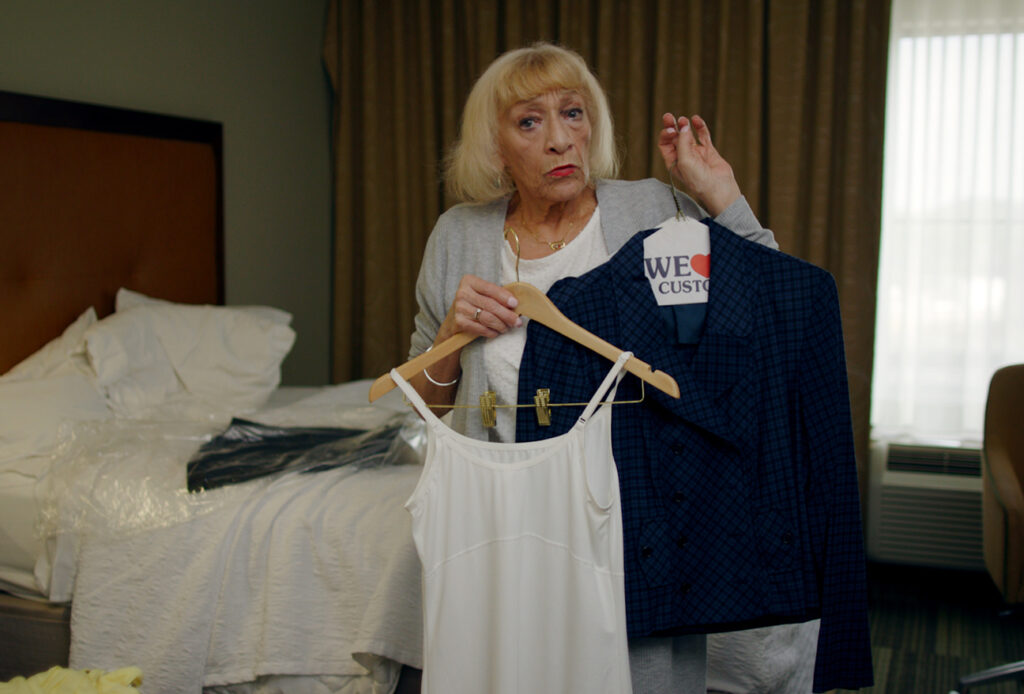
“We were all locked in at night. The only way you could get out of there was for the house father to come and open the door. You’re always hearing that click of the lock. Click of the lock,” she says in the film. “I don’t know anybody else’s feeling, but my feeling is it’s a miracle of God that they allowed one year for you to go to court, get a lawyer, and sue the state.”
But for Onley, justice isn’t just about the money.
“It just seems like I was never believed,” she says in the documentary. “If I were to win the case, it would mean they believe me, and that would mean everything to me.”
Onley’s attorneys say her case could have been doomed by the March high court ruling requiring far more specificity about old abuse claims than many plaintiffs could recall. But hours before that decision came down, the state offered Lafave’s firm something more like a win: a six-figure settlement, which Onley has accepted.
The state’s attorney general’s office declined to comment, but a spokesperson confirmed the settlement had been agreed upon without an acknowledgement of wrongdoing by the state. The victory has left Onley feeling hollow.

Today, at age 83, she can’t afford her condo anymore, and after the lawyer’s fees are paid, the money to move will take a big hit. She’s recovering from a fracture in her back.
Still, there’s some sense of triumph.
“I feel a little proud. I’m telling the truth,” she said. “I had no fear whatsoever.”