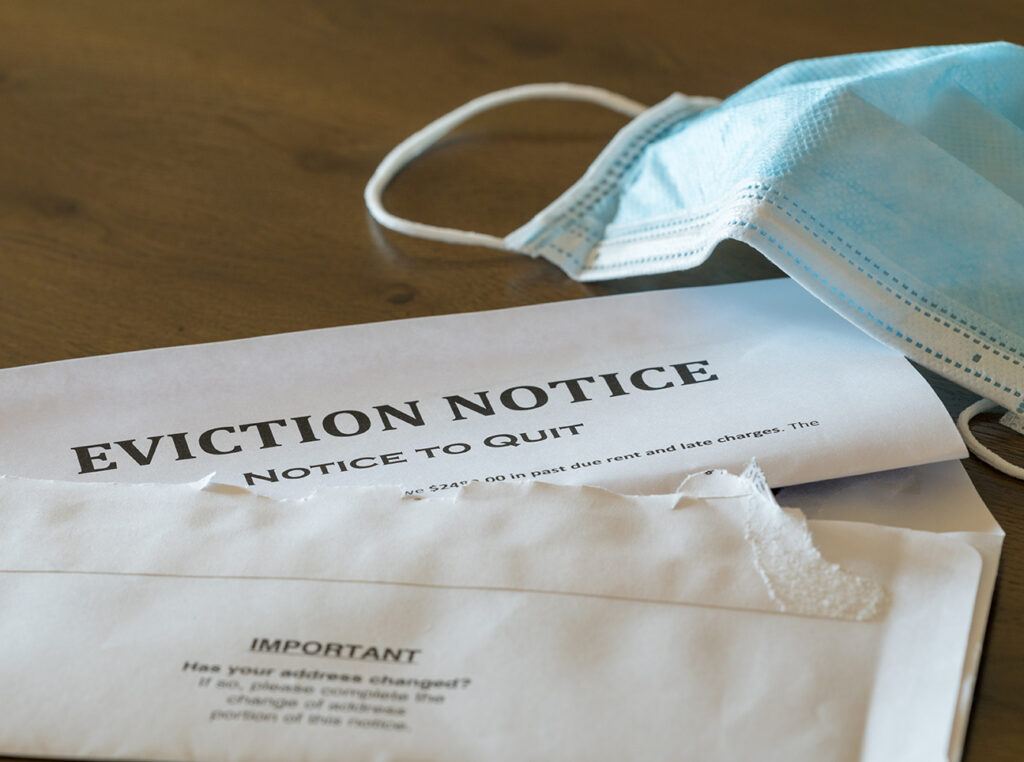
Temporary eviction bans during the COVID-19 pandemic didn’t just keep families in their homes. They may have kept children safer, too, according to a national study.
The study, published in May in the peer-reviewed journal Pediatrics, analyzed biweekly maltreatment child abuse and neglect reports in 318 counties across 16 states and Washington, D.C.
Counties in 10 states with an eviction moratorium in place between January 2019 and August 2022 were compared with those in seven states that never enacted protections.
The conclusion: Fewer cases of kids suffering abuse or neglect were reported in counties that had eviction bans. Physical abuse reports declined by 16% and neglect reports by 12%.

“This study actually helped confirm that if we support families with housing, we could possibly prevent child maltreatment,” said Liwei Zhang, an assistant professor in the University of Georgia’s School of Social Work, who led the study. Researchers from City University of New York and the University of Wisconsin-Madison were also involved.
Researchers say the study was possible because the pandemic created a rare, natural experiment of sorts, where millions of families across the country were temporarily spared the threat of losing their housing as protective federal and state policies took hold.
The unprecedented reprieve allowed Zhang and her coauthors to get closer than earlier studies to establishing a causal relationship between access to basic needs and reducing child maltreatment — in this case, housing stability.
Along with eviction bans, other pandemic-related aid, such as expanded child tax credits, unemployment benefits and food assistance, may also have contributed to fewer abuse and neglect reports, the study notes.

In Zhang’s study, sexual abuse reports saw the most dramatic decrease when an eviction moratorium had been enacted — a 21% decline from a period of time prior to the pandemic when there was no moratorium in place. Co-author Lawrence Berger, a social work professor at the University of Wisconsin-Madison, speculated that figure may have to do with the vulnerability families often experience when they’re kicked out of their homes and thrust into unknown, potentially dangerous living situations.
“It could be children’s exposure to potential sexual abusers. You get evicted, you have to go crash with people. There may be some risk in that,” Berger said. “Shelters are also of varying quality. But that’s a guess — a hypothesis.”
According to recent federal statistics referenced in the paper, inadequate housing was associated with 8% of substantiated child maltreatment cases and 11% of child removals in 2022.
When living out of cars, couch-surfing or cycling through shelters, the stress can quickly overwhelm anyone, said Sarah Winograd, who writes op-eds for The Imprint and assists unhoused families through her Georgia nonprofit Together with Families. The experience of homelessness can often trigger or worsen feelings of anxiety, fear, paranoia and depression.
“It’s that compounding stress that leads to the issues with child abuse and neglect, which leads to child welfare involvement,” she said.
“You have six kids sleeping in a car that doesn’t work, in the heat, you haven’t drunk water all day, or haven’t eaten in a whole day,” she continued. “That can lead you to unintentionally neglecting your children’s needs, or doing something you wouldn’t have done on a normal basis. Not because you’re intending to do it, but because of the circumstances you’re in.”
Temporary help, temporary gain
During the pandemic, 43 states instituted some form of eviction moratorium to help families stay housed as widespread economic upheaval and job losses made it harder for some to pay rent.
The typical moratorium was put in place for a median of about 144 days. The longest ran for roughly three years in Washington, D.C., while North Dakota’s lasted a month.
The pandemic-related safety net only stretched so far, the study’s researchers found.
“It only delayed the evictions,” Zhang said. “It didn’t stop them.”
“You can’t teach someone to swim while they’re drowning. If you are struggling and can’t find a place to sleep, you’re not going to be your best parent.
— Sarah Winograd, Together with Families
Winograd said that’s why temporary eviction bans haven’t always helped families achieve stability over time.
Georgia was among the states in Zhang’s study that did not have a statewide eviction ban during the pandemic, but there were cities, including Atlanta, that established their own temporary bans.
Once those protections expired, however, many families still needed housing help, Winograd said, but by then, COVID-related emergency rental assistance programs had dried up.
Will Schneider, an associate professor of social work at the University of Illinois, called the findings from Zhang’s study “really powerful,’’ and pointed to one program in his state that could serve as a model for addressing the connection between housing instability and family involvement in the child welfare system. Schneider was not involved in Zhang’s study, but conducts related research.
The Norman Fund was established in Illinois three decades ago, after a consent decree resulting from a landmark class action lawsuit required the state to devote millions of dollars to financial assistance for families most at risk of poverty-related child removals. Typically, the fund provides one-time stipends of roughly $1000 for rental assistance to families under CPS investigation.
But some critics assert that an expanded social safety net would not significantly reduce child maltreatment and CPS intervention. A recent op-ed published by The Imprint called the evidence for such cash interventions “weak.”
For Winograd, securing housing is the most important step in stabilizing a family and avoiding child protective services involvement.
“You can’t teach someone to swim while they’re drowning,” she said. “If you are struggling and can’t find a place to sleep, you’re not going to be your best parent. They need to be stable before they can process information to improve their mental health and be a better parent.”