Facing weaker tax revenue and the end of pandemic-era emergency cash infusions from the federal government, state governors’ spending plans for vulnerable children and families in the coming year are appearing to be modest, according to public addresses this week by New York Gov. Kathy Hochul and California Gov. Gavin Newsom.
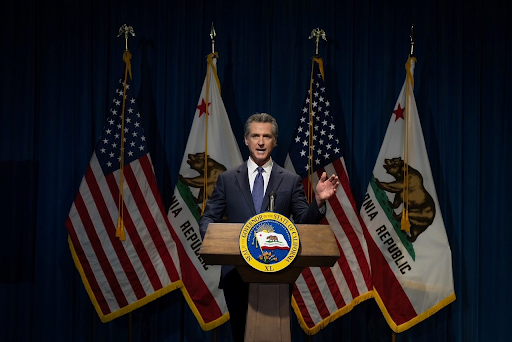
At a press conference today, Newsom, a Democrat, called for reduced spending on several key child welfare programs, including housing for young adults in foster care, a hotline designed to de-escalate disruptive incidents involving foster children and public health nurses serving kids in the system.
In a two-hour budget address, he presented a $292 billion budget to the California Legislature — the first step in a six-month negotiation process with state legislators. But much of his presentation focused on how the state would make up a nearly $38 billion shortfall caused by delayed tax receipts and decreased revenue from the state’s wealthiest residents.
“Thanks to the record reserves we have built up and a commitment to fiscal discipline over the years, our state is in a strong position to close this shortfall while protecting key priorities and programs that millions of Californians rely on,” Newsom said, defending his record in a press statement accompanying the release of his 2024-2025 budget.
A balanced budget must be approved by the governor and state legislators before the end of June.
The governor aims to draw on reserves to cover portions of the deficit, and vows to delay spending on public transit. But he is nonetheless calling for social spending cuts that will be felt among those reliant on child welfare services. Among them are two previously approved initiatives that provide housing to young adults in foster care and those who recently left the system.
Last year, Newsom approved an annual $19 million to increase the amount older foster youth receive for independent living arrangements. Distributed in monthly payments, the additional funds aimed to combat homelessness in this high-cost state in a population without family support networks to rely on. The payments were set to become available in 2025.
Assemblymember Phil Ting, who helped steer the proposal through the California Legislature last year, said in a statement that without such assistance, foster youth “are at high risk of falling into homelessness and deep poverty.” He called on advocates to “keep fighting for our vulnerable youth and ensure they have a safe place to call home.”
The governor’s recent budget plan reneges on the earlier commitment, canceling increases of up to $1,300 per month for youth living in the most expensive corners of the state.
Another effort to house foster youth is also at risk under Newsom’s plan. His spending plan calls for eliminating $13.7 million in annual funding for “housing navigators,” who help connect foster youth to Section 8 vouchers provided by the federal government.
Through a combination of federal and state dollars, housing vouchers for foster youth have been used thousands of times in 35 counties in the state, said John Burton Advocates for Youth Executive Director Amy Lemley. The vouchers, which provide young adults up to age 25 housing for 36 months, are like “golden tickets for foster youth,” she said.
From 2021 through last year, California counties increased the use of those vouchers by 54%, largely due to the state-funded housing navigator program, a report by Lemley’s group found.
“We’re very concerned that reducing access to those federal housing vouchers is going to increase homelessness among youth aging out of care,” she said in an interview today.
Other notable child welfare-related spending cuts include the elimination of the state’s Family Urgent Response System, which had been budgeted at $30 million a year. The program includes a 24/7 hotline that foster youth, caregivers and social workers can call to de-escalate conflicts and difficult behaviors. The aim is to avoid law enforcement involvement and placement disruption.
Newsom also called on legislators to cut $8.3 million from a program that uses public health nurses in Los Angeles County’s child welfare system to help coordinate medical, dental and mental health care of foster children.
New York is also facing a budget shortfall, with lower tax revenues than in the recent past — driving a gap that could reach $4.3 billion this year.
Gov. Kathy Hochul, a Democrat from Buffalo, delivered her 2024 State of the State address on Tuesday before the Legislature in Albany. Among her central priorities are crime prevention, affordable housing and addressing climate change. She also emphasized the need to expand “high quality health care” for the youngest children in the public health system, feed hungry kids during the summer, and increase access to day care through assistance grants and provider incentives.
As in years past, this annual speech by the governor failed to specifically address child welfare and juvenile justice systems.
But initiatives outlined in her 2024 State of the State briefing book included a $50 million investment in anti-poverty initiatives in upstate cities, parts of the state and nation with the highest child poverty rates. More than half of children in these New York zip codes live in families below the federal poverty line. Hochul also stated that struggling New York families will benefit from the U.S. Department of Agriculture’s electronic benefit program, which helps feed school children when school is out during the summer. The program will provide $200 million in federal benefits for an estimated 2 million children in the state, the governor announced, helping offset grocery costs for families with children who are eligible for free or reduced-price school meals.
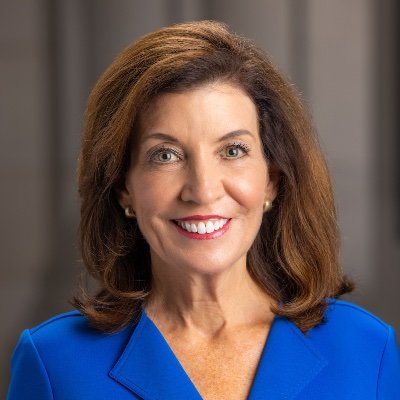
“As New York’s first mom Governor, I know firsthand how challenging it can be to raise a family,” Hochul stated. “In response to the concerns I’ve heard from moms, dads and families across New York, we are taking major steps to reduce the financial burdens families too often face, while ensuring our kids have access to the critical care they need, and increasing access to child care and other vital resources for families across the state.”
She also focused on better addressing children’s mental health needs through school-based programs, early intervention with toddlers, programs for children with special needs and a larger number of inpatient psychiatric beds.
“Focusing on our kids is everything — it’s critical because they are our most precious resource,” Hochul said early in her speech. “Investing in mental health services when they’re young means they won’t be relegated to a lifetime of needing care later on.”
On the juvenile justice front, Gov. Hochul proposed increased funding to the state’s Supervision and Treatment Services for Juveniles Program. The crime-reduction program administered by the Office of Children and Family Services aims “to intervene more quickly and prevent escalating behavior, and to ensure young people have access to appropriate services and supervision.” Services for youth accused of, or at-risk of, committing crimes include intensive, “wraparound” case management.
Advocates praised this move but say it falls short. New York City’s Legal Aid Society called on the governor to enact the pending #Right2RemainSilent legislation, ensuring that all youth under 18 have access to an attorney before being interrogated by police. They also want increased confidentiality and expungement of juvenile delinquency records.
Youth advocates with the statewide Raise the Age NY Coalition — a group who fought to move more teenagers out of the adult criminal justice system — commended the governor for covering “a number of important topics” in her 2024 agenda, but stated that her plans don’t go far enough to address a shortcoming: hundreds of millions of dollars that have been appropriated but not delivered to counties. “Releasing this funding will provide access to critical programming for the still too many young New Yorkers impacted by gun violence,” the group stated in a press release.
The Council of Family and Child Caring Agencies — representing nonprofit foster care, adoption, family preservation and juvenile justice groups in New York state — applauded the governor for her efforts to tackle child poverty and her “continued strong commitment to supporting New Yorkers’ mental health needs.
“The Governor and her administration have invested time and effort into listening to young people across New York over the past year share their needs and their perspectives, and the Governor’s passion for change and improvement in service delivery shines through her remarks,” the council’s Jan. 9 press release stated. The group also called for stepped-up investments to meet the great needs — specifically, a 3.2% human services cost of living adjustment. “The child welfare and juvenile justice systems are key systems serving New York’s young people in navigating mental health every day and these systems, and their workforce, must be included in state initiatives to support young people’s mental health.”
Michael Fitzgerald contributed to this report.