
It was 3 a.m. when they got the call.
Staff at the Altadena foster care facility had been monitoring the Eaton Fire since it sparked earlier that evening. But the growing flames looked to be moving in the opposite direction, and their location remained well outside the evacuation zone.
Last Tuesday, amid 100-mph gusts of Santa Ana winds, that changed in a flash. Suddenly, the flames were nearly upon the facility, a therapy program for youth in need of intensive, short-term therapeutic care. Three staff members rushed to wake 10 teenage boys and hustle them through thick, choking smoke into transport vans. No time to pack electronics, clothes, family photos.
Getting residents swiftly evacuated from El Nido was challenging, staff recounted. Some teens were sedated by medications that made them difficult to rouse from sleep. Each had lived through upsetting displacements from their homes, and the emotional aftermath of those disruptions: a familiar sense of agitation, instability and fear. In yet another moment of crisis last week, reactions to new instability and uncertainty quickly resurfaced.
“Our boys, they’ve already experienced a lot of trauma,” said Joe Ford, the chief program officer for Sycamores, the nonprofit that operates the center. “So anything that’s unpredictable and all-of-a-sudden, it’s very hard to get them to comply. They just have a lot of anxiety over what could happen.”
Ford and his wife had rushed from their home less than a mile down the road to help with the evacuation. He said that at first, the teens “tried to have bravado.” But their panic spiked when they headed out to the vans and saw embers flying through the eerily orange pre-dawn sky.
Embers ‘like boulders’ overhead
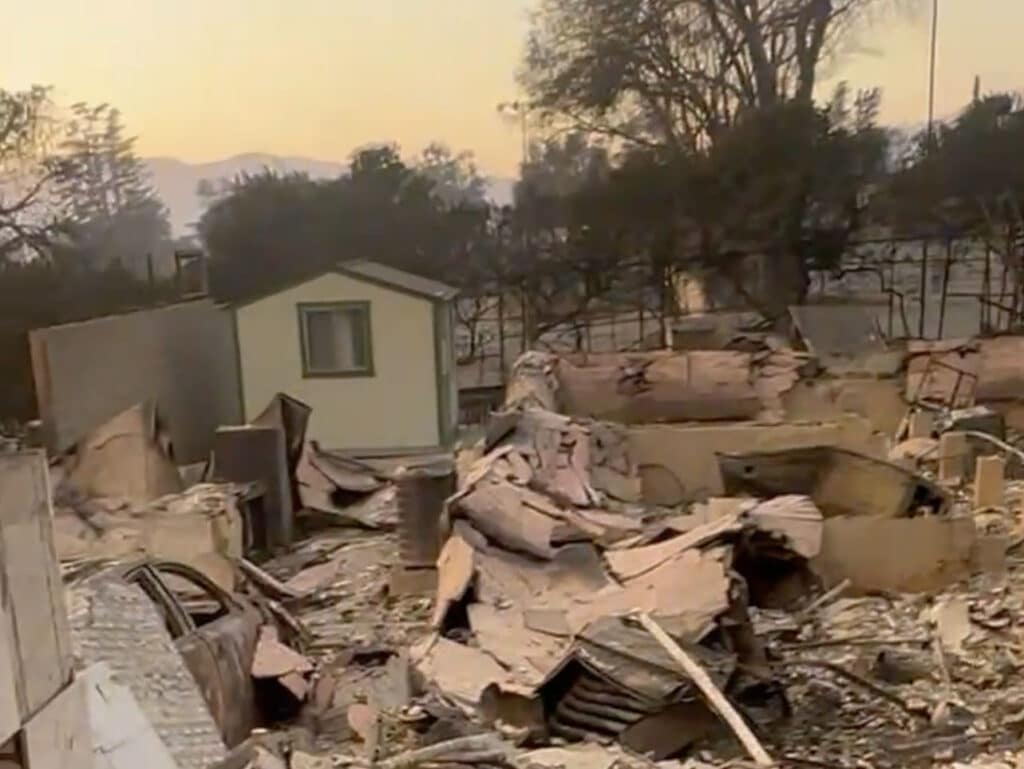
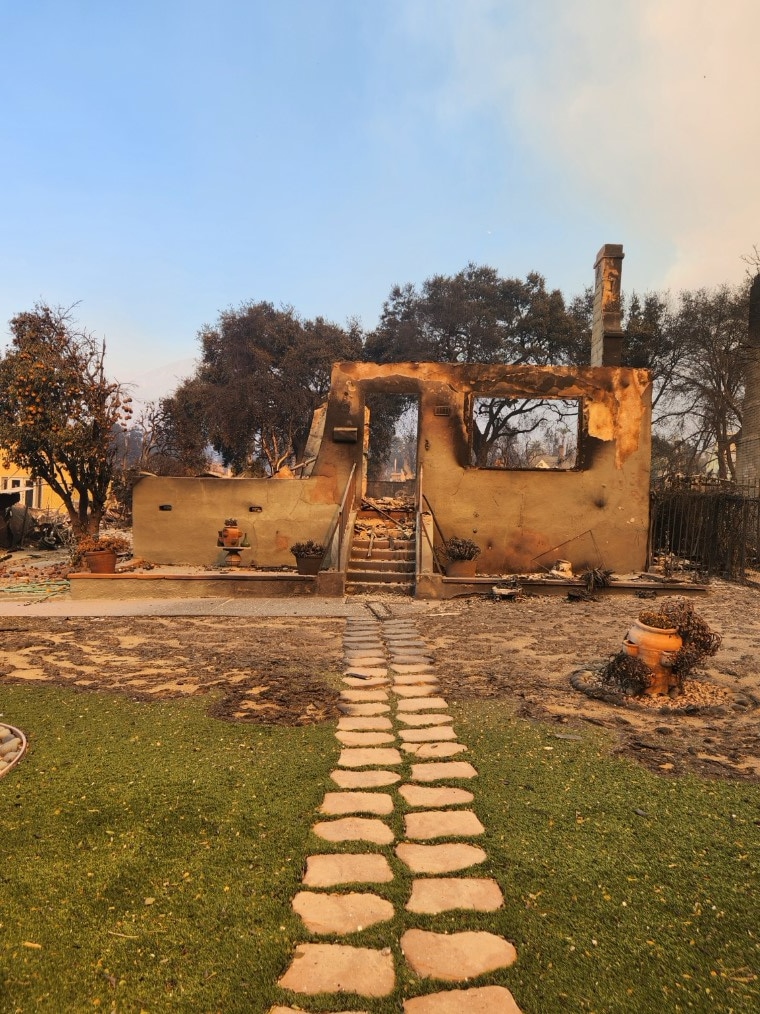
Between the Eaton Fire, the Palisades Fire to the west and several other smaller blazes that have ignited over the past week, more than 200,000 Los Angeles residents have been forced from their homes since the wildfires broke out on Jan. 7. According to fire officials, at least 12,000 structures have burned so far, reducing entire neighborhoods to ash. As of today, 24 people have died, amid warnings that number will likely rise.
The devastation and disaster is unprecedented, even in a region well accustomed to wildfires and fully informed on the widely documented impacts of climate change. The fires have wrecked homes in wide swaths of Los Angeles County — from multimillion-dollar mansions in the posh seaside community of Pacific Palisades to the homes of third-generation Altadena residents who bought in more affordable times and passed the home down through the family. Among the deceased are disabled people and their caregivers who weren’t reached by first responders in time and a 95-year-old grandmother.
One of the many celebrities who lost their homes in the Palisades Fire is Paris Hilton, a celebrity entrepreneur-turned-advocate who has championed state and federal legislation to better protect foster youth in residential treatment centers.
The Eaton Fire has pillaged the diverse community of Altadena, which is nestled at the outskirts of the Angeles National Forest. It continues to threaten surrounding communities, including Pasadena and Sierra Madre.
Staff and youth at El Nido have been displaced by the Eaton Fire, and Ford is among those who lost a home in Altadena. His father purchased the property on Mariposa Street in 1964 for $15,500 and he has raised his children there — a multigenerational story not uncommon in the foothill community. Ford and his wife, Lerna, left everything behind as they rushed to help treatment center staff get the boys to safety, and then took three trips back into the flames to help staff save their cars. When they finally got back home, they were too late.
“We were driving down our street, and houses were on fire,” he said. “The embers were almost like boulders just being blown and dropped.”
Dozens of youth in treatment centers impacted
El Nido was one of multiple residential therapeutic programs for foster youth that have been forced to evacuate amid the 14,000-acre wildfire that continues to rage, with a 35% containment rate. Although all the cottages on its campus are still standing, they remain uninhabitable due to smoke damage and toxic pollutants coating surfaces, staff say. The boys, who had mere moments to prepare, lost the majority of their belongings — including Christmas gifts they’d recently received from donors in the community who wanted to make sure the children experienced some holiday magic.
At least one other similar treatment facility has been entirely destroyed — a girls’ home in Altadena operated by Bourne Family Services that burned to the ground.
“It’s tragic, especially for the girls — they lost a lot of stuff that they won’t be able to get back,” said CEO Tim Tucker. “Memories from already broken families. You can only imagine if there was a picture of a daughter with her mother and now that’s gone — how tragic that would be.”
Famed child actress Mara Wilson, known for her roles in the classic ’90s films “Matilda” and “Mrs. Doubtfire,” shared that news on the social media site Bluesky after hearing about it from a friend who worked there.
“They had no time to pack, and everything is lost,” wrote Wilson. “These children and teens were ALREADY vulnerable before the fires.” She shared a GoFundMe campaign seeking $12,000 to support the impacted young people. Roughly $9,600 had been raised by Tuesday afternoon.
The facility was one of four sites operated by Bourne Family Services, which provides residential treatment and emergency shelter to children in the county’s foster care and juvenile justice systems, ranging in age from 6 to 18. A boys’ campus in Pasadena was also evacuated.
Staff at those homes described loading the children into eight-seater vans to ferry them out of harm’s way to a hotel several miles south. Out the windows, the children watched flames coursing across the foothills of the San Gabriel Mountains.
But the situation remains touch-and-go, continuing the foster youths’ patterns of displacement. Bourne Family Services’ home for boys in Pasadena has so far continued to remain safe from the flames and smoke, and so its four residents returned earlier this week.
A few of the five girls who fled the Altadena facility are now living in a facility in Inglewood, roughly an hour across the county. New placements are still being sought for others, according to the Department of Children and Family Services.
An uncertain path forward
The boys from El Nido have been camped out in a Sycamores office building since the evacuation, which presents its own challenges amid an already scary time.
“It’s not been easy, this is not a typical place for the boys,” said Shannon Boalt, the organization’s chief advancement officer. “They had to leave all their electronics, all their personal items.”
Mental health clinicians are on hand and providing counseling, but staff say the boys have lost access to some of the therapeutic activities they relied on at the El Nido site, like spending time in the garden on campus or finding a creative outlet in the music room.
And there is no timeline yet on returning to the treatment center, Boalt said. While they haven’t been able to assess the level of smoke damage, it’s expected that the interior will need replacing and professional help will be needed to address toxic contaminants.
Far-reaching impacts foreseen
A great many Angelenos now worry about the long-term physical and mental health impacts of living through a natural disaster of this magnitude, and risks are even higher for children living with traumatic pasts.
In the meantime, treatment staff members have been striving to keep the kids engaged and their anxiety at bay. At the Sycamores office building, the facility chef showed up at 3:30 a.m. to comfort the frightened boys with warm food after they fled their beds. Family visits have been arranged so the boys can hug their mothers and be reassured their families are safe. The Bourne Family Services staff surprised the youth with a trip to ride roller coasters at Knott’s Berry Farm and special outings to the movies.
“Staff did a phenomenal job of making sure that they were distracted in a positive way, so they weren’t thinking about the fire,” Tucker said.
Still, Jodi Kurata, CEO of the Association of Community Human Service Agencies, which represents 86 child welfare, mental health and juvenile justice providers including Sycamores, said the “magnitude of destruction and disruption” remains uncertain for members in fire-affected parts of the county.
“The extent of loss is significantly greater than the physical sites themselves,” Kurata said in an email. “So many staff members and their families in the impacted communities have lost their homes. The road to recovery will be difficult and long.”