
In a scene becoming familiar across the country this week, the line for free food outside a stately brick YWCA building in Yonkers, New York, was longer than usual on Wednesday. It looped twice around a parking lot behind the building. Mothers pushed children in strollers. Bundled-up seniors leaned against their empty steel grocery carts, complaining of joint pain from the long wait.
Claudia Florez, 40, joined hundreds of others in line days after the federal government shutdown cut off food stamp benefits for 42 million people.
Florez accepted a dozen eggs, flour and a package of ground chicken for herself and her 4-year-old daughter. But even when she has received her usual $300 monthly benefits from the Supplemental Nutrition Assistance Program, or SNAP, it was barely enough, she said. So she’s worried about relying on food giveaways now that her benefits are missing.
“I’m freaked out deep down,” she said. “But at the same time, I gotta figure out a way.”
Imprint reporters encountered similarly stressed SNAP recipients in Colorado, Minnesota and California: Families of all ages and backgrounds gathered in parking lots, alleys, pantries and tribal reservations. They lined up for groceries in growing numbers as the longest-ever federal government shutdown spiraled into what some social services providers fear will become a crisis for recipients abruptly cut off from the lifeline SNAP entitlement.
Due to overwhelmed food banks in New York City, some Bronx residents who live just over the border have also shown up at the Yonkers YWCA over the last few weeks. As workers handed out the last of the day’s supply of flour, canned soup, beans and tomatoes, manager Felicia Daley tried to placate people who had concerns about what was left. Those who came earlier managed to get more protein options. But the supply dwindled. Some left with only a bag of onions and a packet of lentils.
“It’s chaos today,” Daley said.
Florez did her part. In the spirit of the limited supply, she handed over the bag of chicken she’d just been given to a woman behind her in line who had received only beans and onions. That woman — who was in her late 60s and came to the food bank for the first time after the SNAP benefits she and her son rely on suddenly became unavailable — nodded in thanks.
Concern is growing among lawmakers from both parties and advocates that the pause in SNAP benefits will lead to widespread hunger and hardship.
“Our policymakers are making a choice every day and allowing our children and our families in New York and in the entire United States to go hungry,” said Kate Breslin, president and CEO of the Schuyer Center for Analysis and Advocacy. “They are not incapable of moving those benefits out to families tomorrow.”
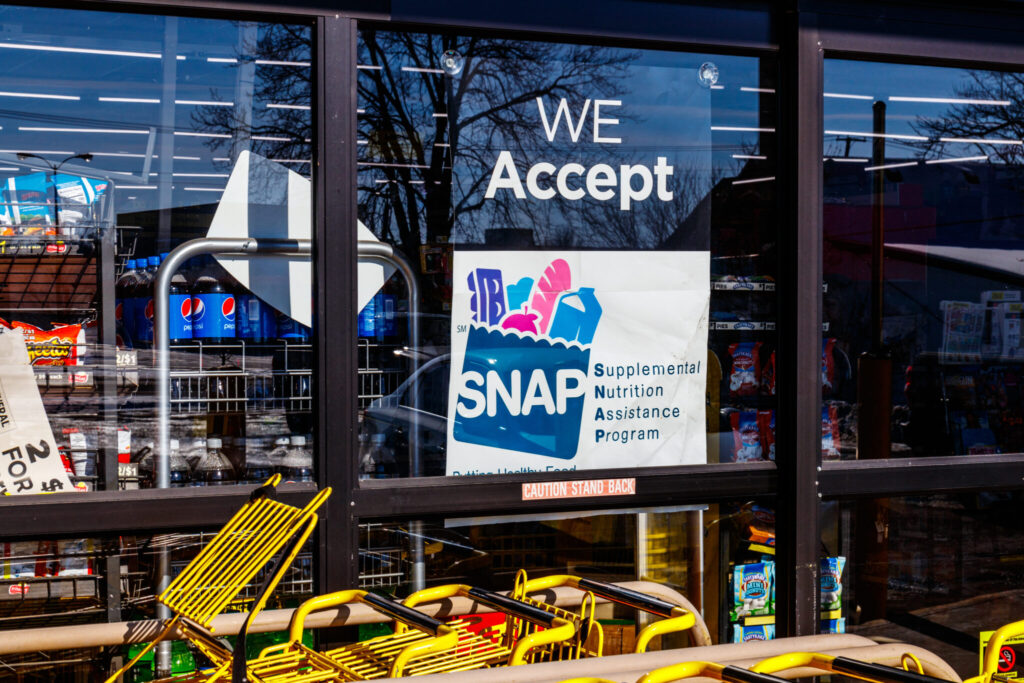
A congressional stalemate that resulted in a partial federal shutdown beginning Oct. 1 launched the crisis. Typically, each month the United States Department of Agriculture delivers food assistance funding to states, which then deposit the money into recipients’ debit card accounts. The average SNAP household receives $332 per month, varying by income and household size. No money has been dispersed this month however, and uncertainty remains about when that might happen.
“Our policymakers are making a choice every day and allowing our children and our families in New York and in the entire United States to go hungry. They are not incapable of moving those benefits out to families tomorrow.”
— Kate Breslin, Schuyer Center for Analysis and Advocacy
The benefit cutoff also coincided with the implementation of new work requirements for SNAP recipients, which is expected to push millions off the food stamp rolls. Enacted as part of this summer’s Republican-backed tax-and-spending bill, the work requirements took effect over the weekend.
Over the past week, court orders and public pressure mounted on the Trump administration to partially fund the food stamps program with a special agriculture department account, tariff revenue or another source. But President Trump and his administration have sent mixed signals in public statements about when and whether they will follow the court orders. Thursday afternoon, a federal judge in Rhode Island said, “This should never happen in America. In fact, it’s likely that SNAP recipients are hungry as we sit here,” and issued a forceful new order that SNAP be fully funded by Friday.
Photos | Growing need, precarious supplies
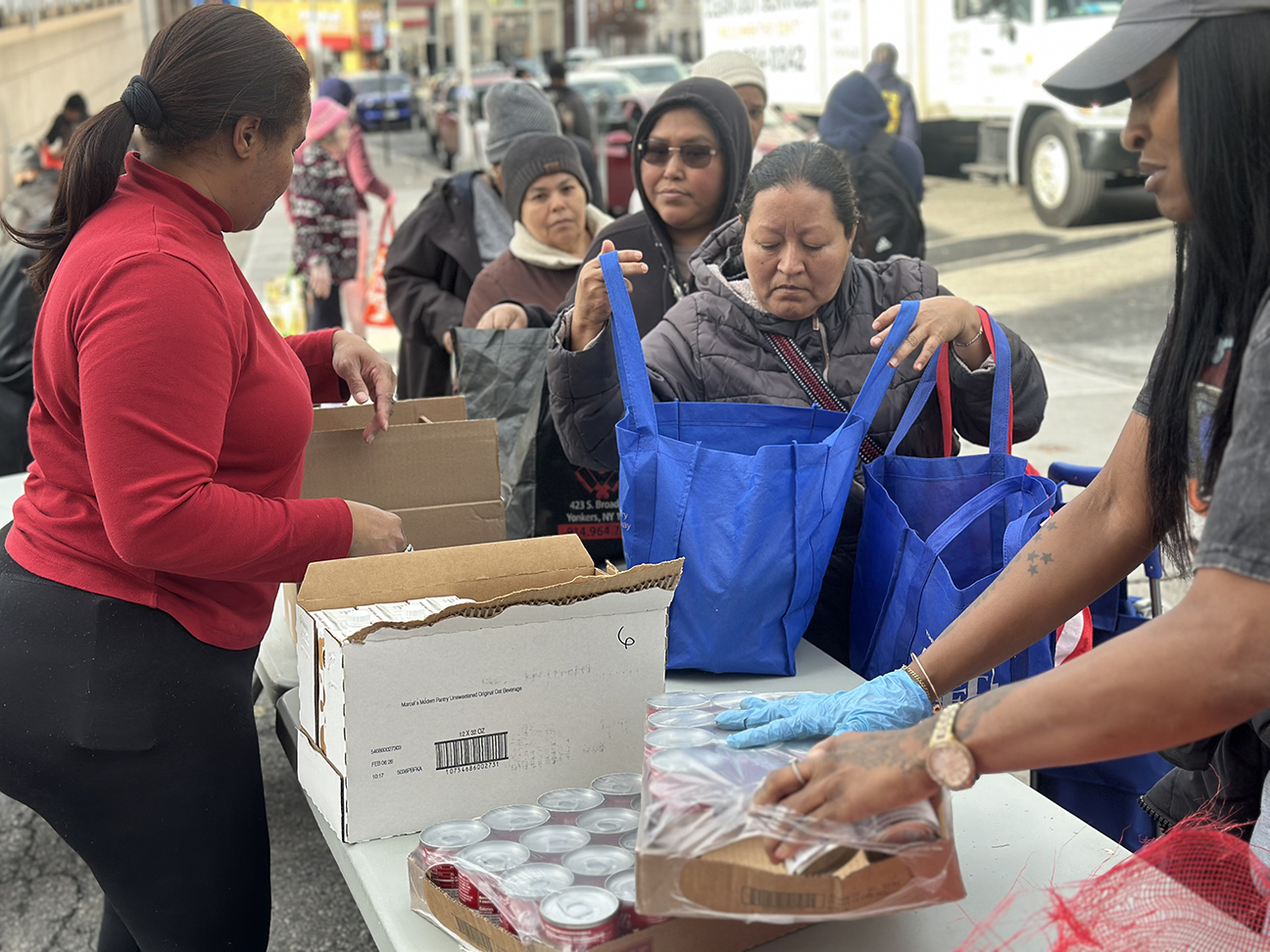
YWCA staff hand out food to Yonkers residents who are no longer getting SNAP benefits. Photo by Susanti Sarkar. 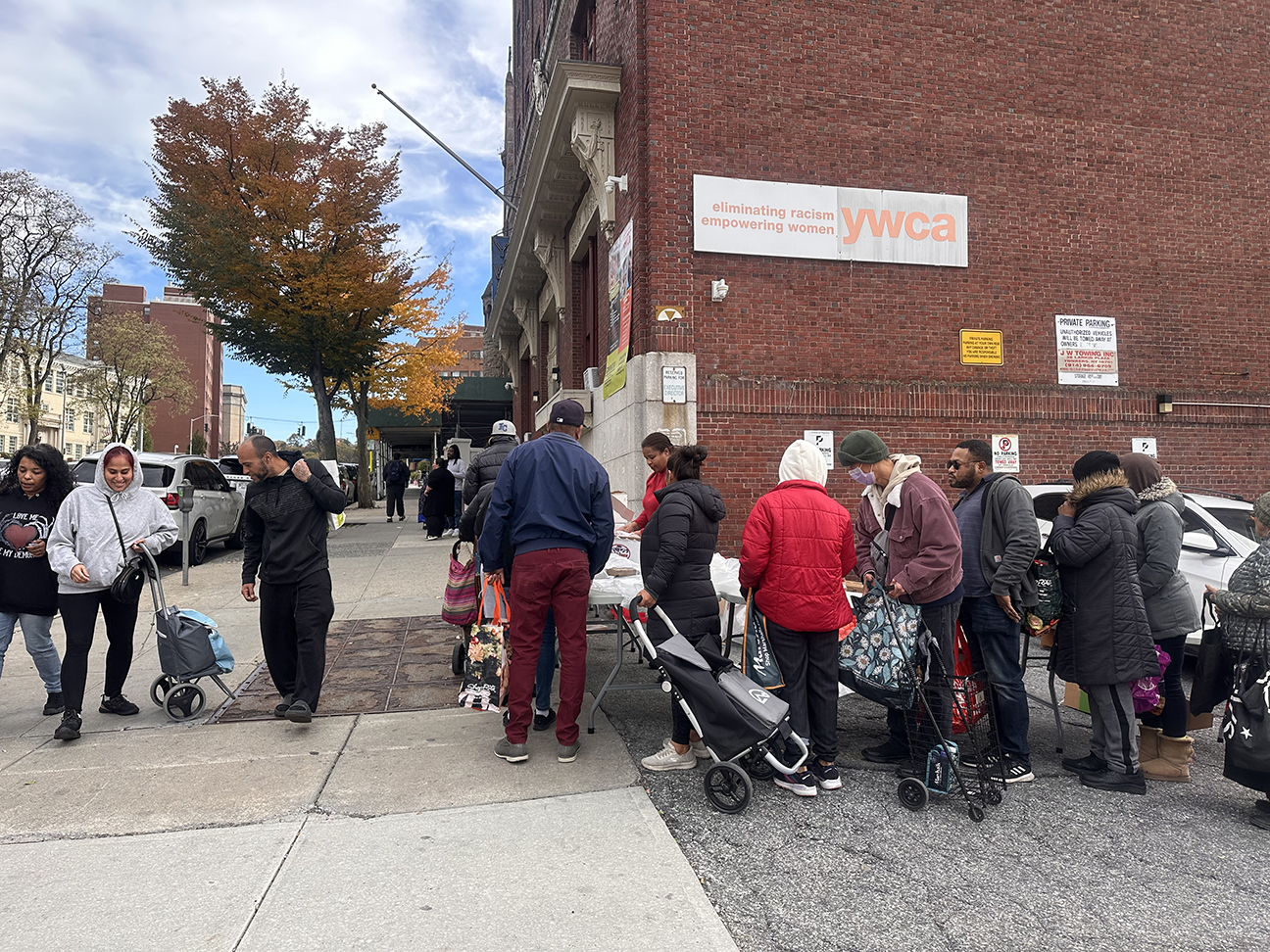
Over 100 Yonkers residents bundled up against the cold as they waited in line for food. Photo by Susanti Sarkar. 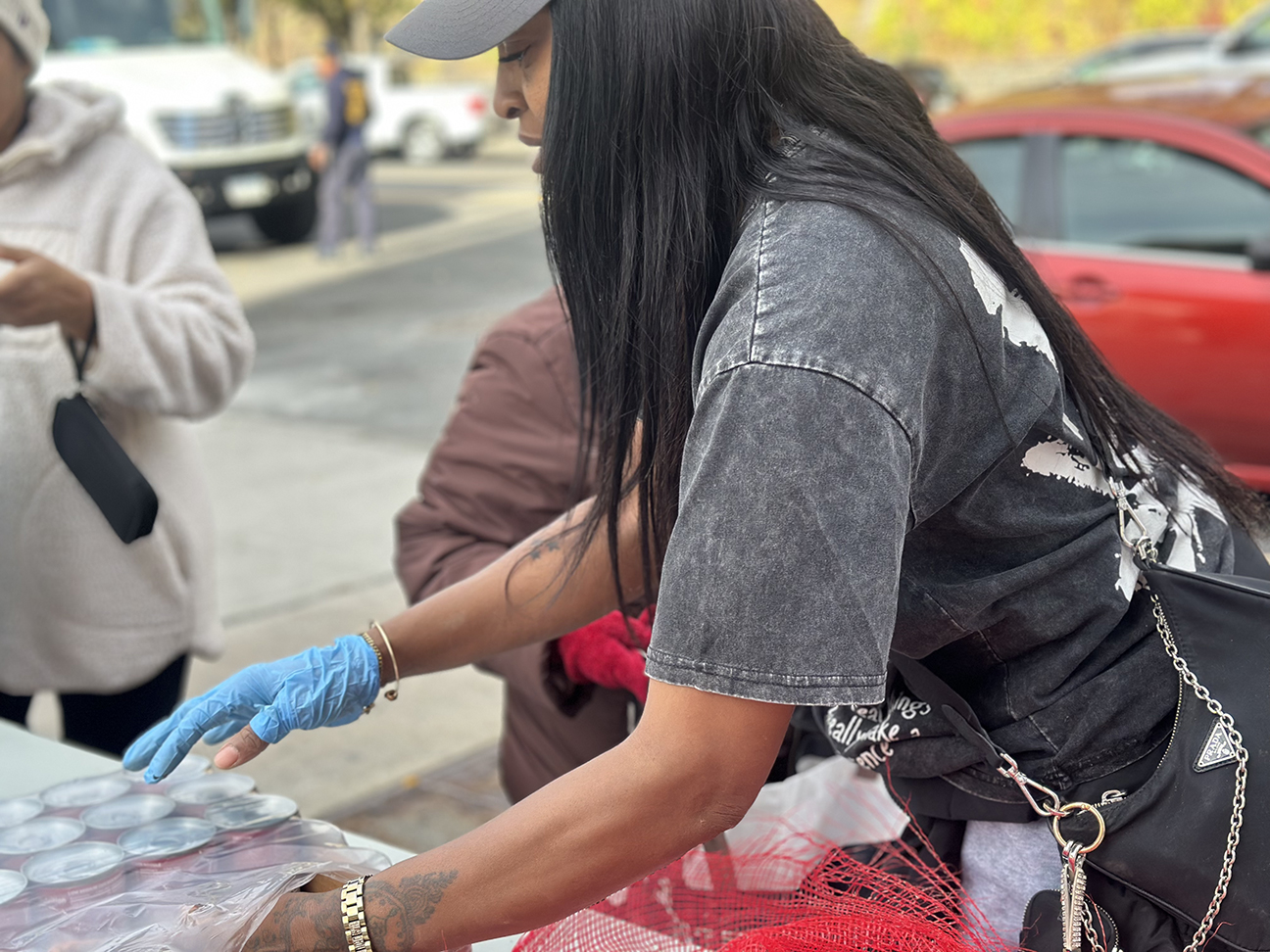
YWCA staff felt overwhelmed with longer-than-usual lines after people have been flooding food banks to make up for missing SNAP benefits. Photo by Susanti Sarkar. 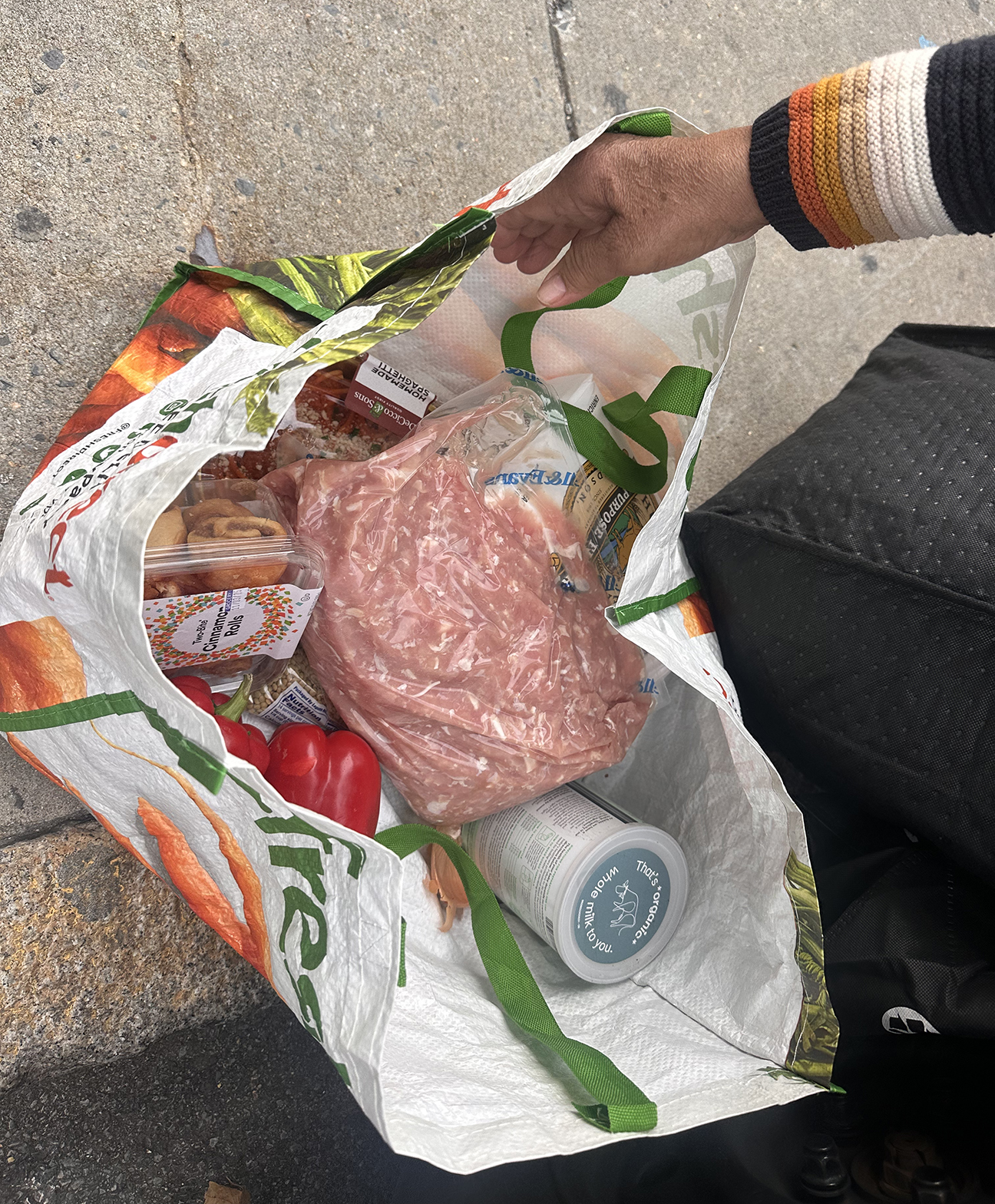
Residents who came earlier in the day received a larger variety of grocery items from the food bank: ground chicken, peppers, milk and cinnamon rolls. Photo by Susanti Sarkar. 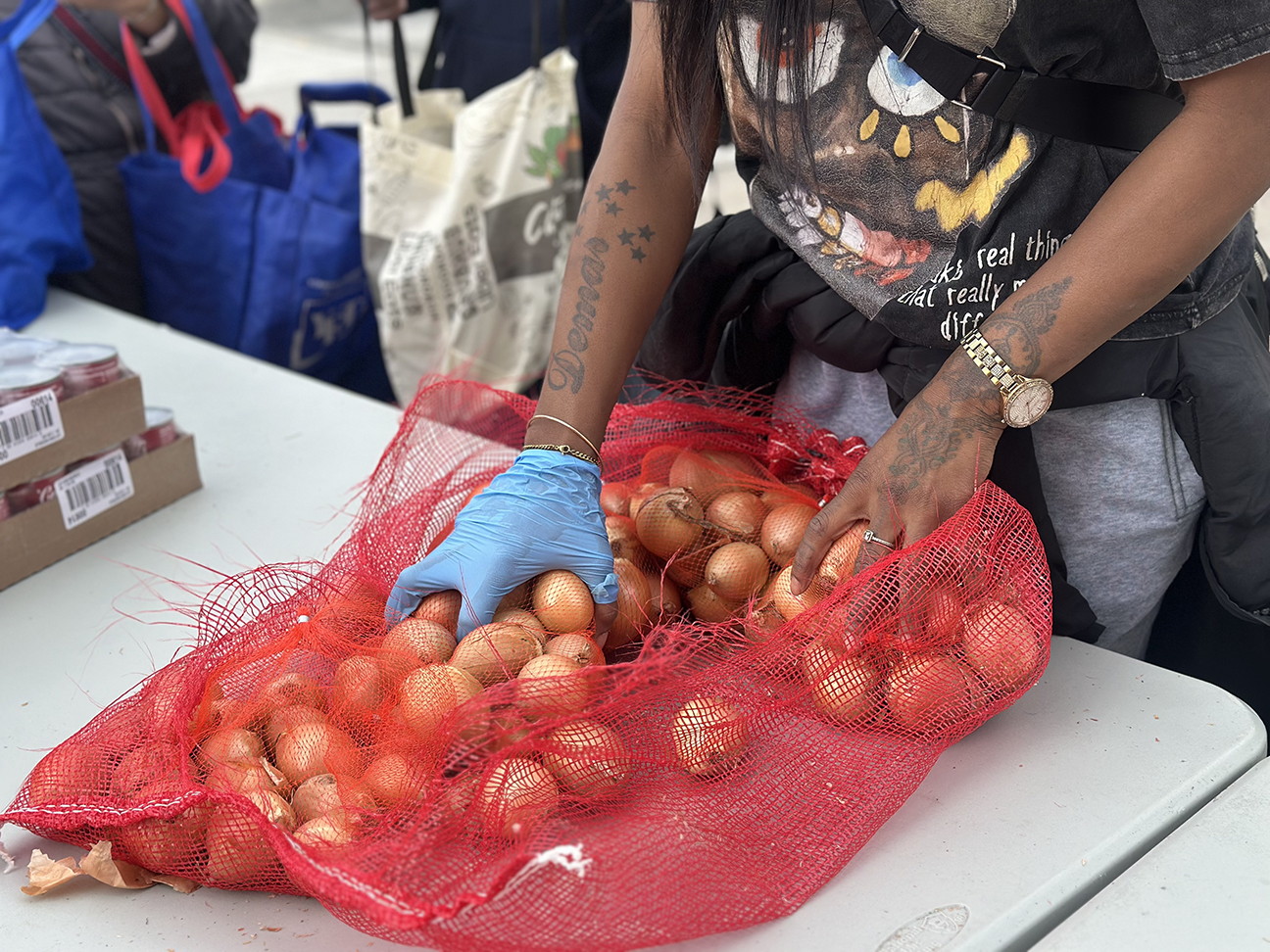
Most of the more nutritious food is gone within a couple of hours, with only onions and canned soup remaining. Photo by Susanti Sarkar. 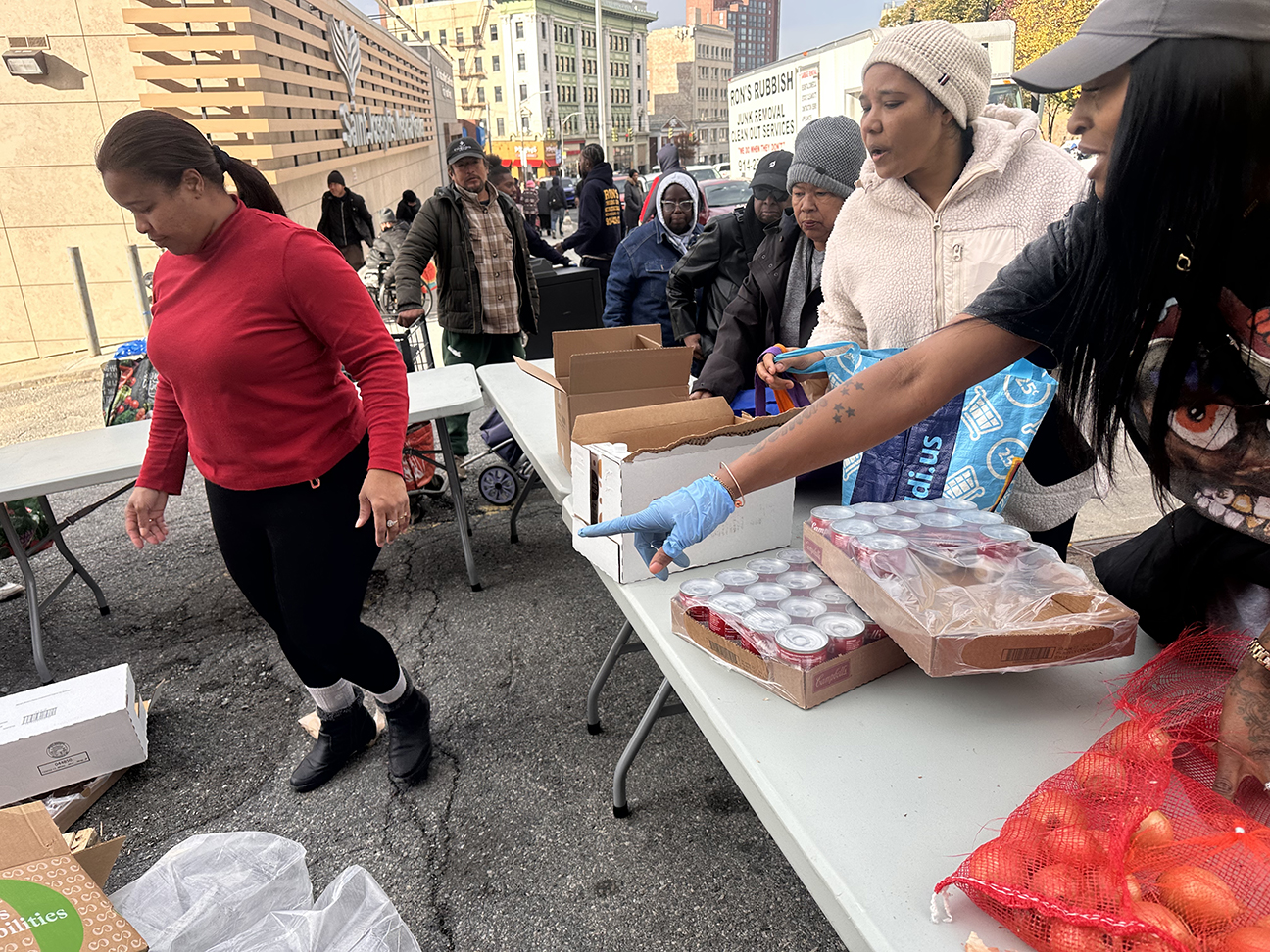
Those last in line must make do with onions, tomatoes and cans of soup after the Yonkers food bank is overflowing with residents who have lost their SNAP funds this month. Photo by Susanti Sarkar. 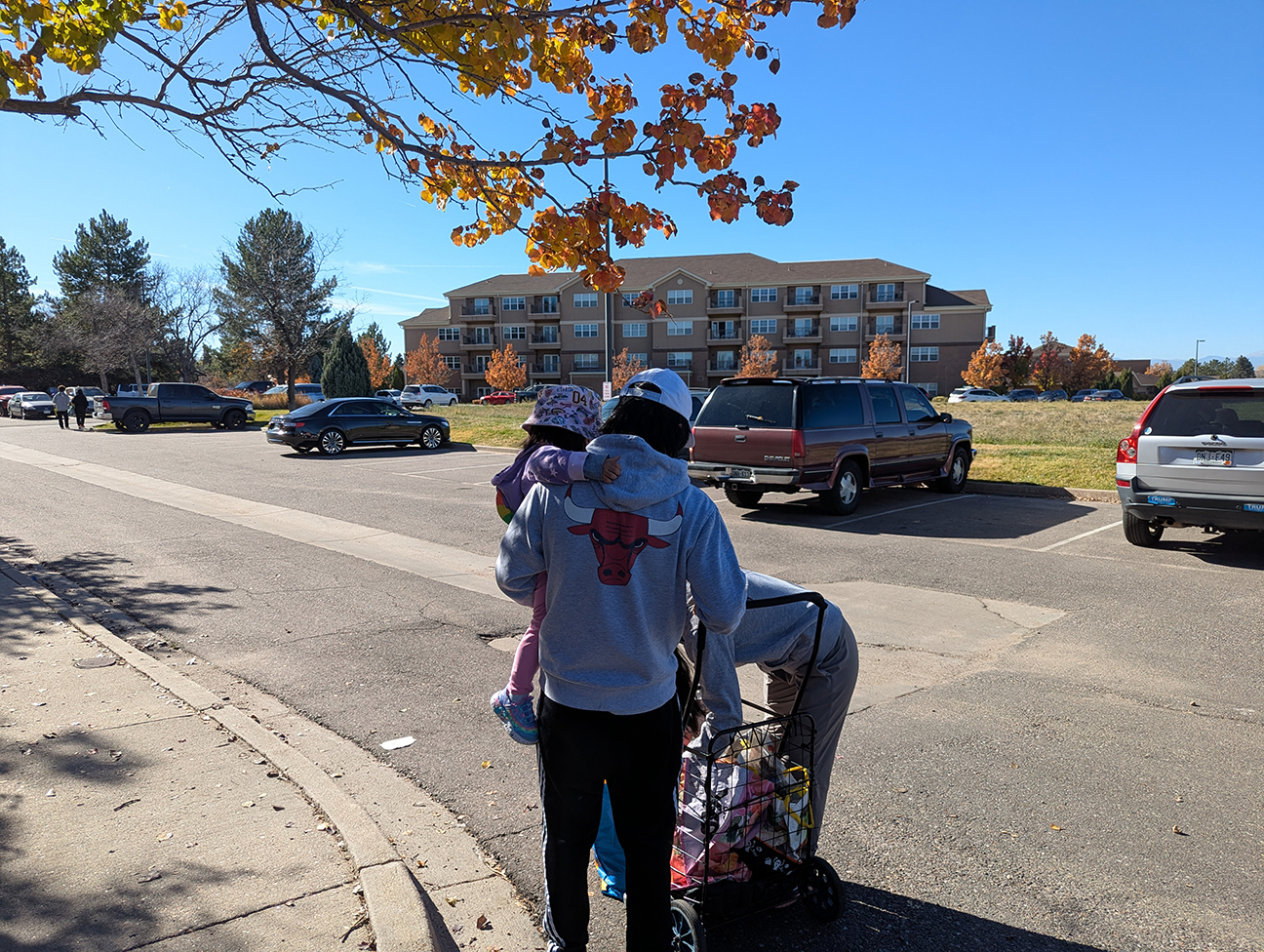
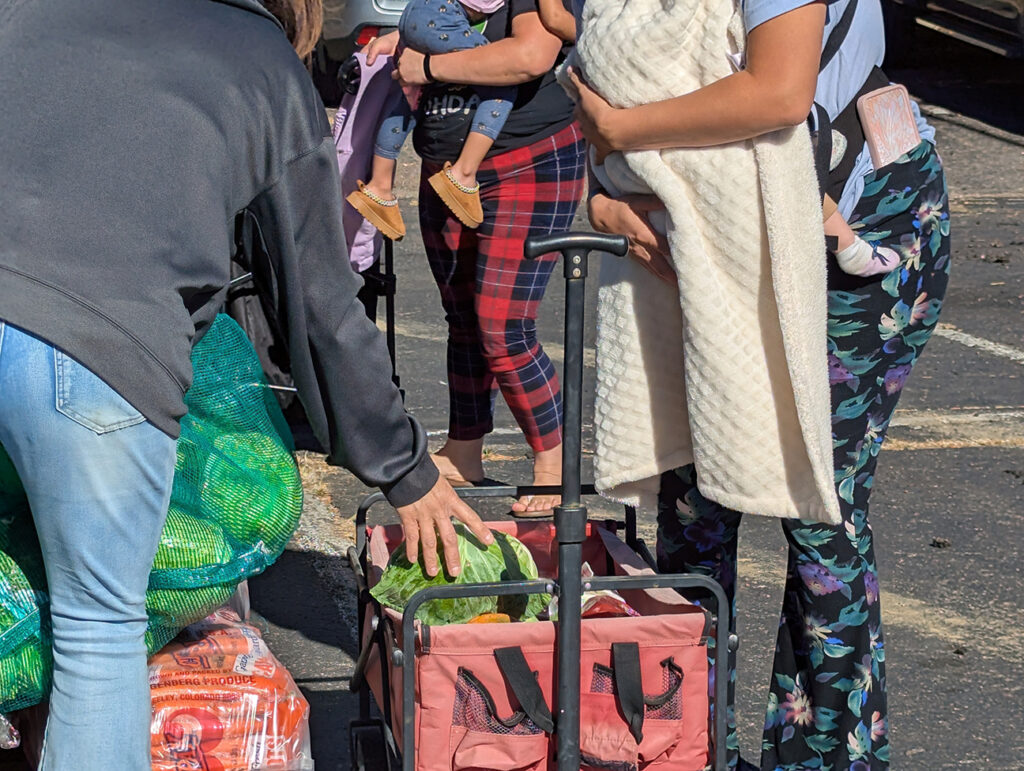
A young family takes home groceries from the Forge Ministries food bank in Aurora, Colorado. Photo by Nancy Marie Spears. 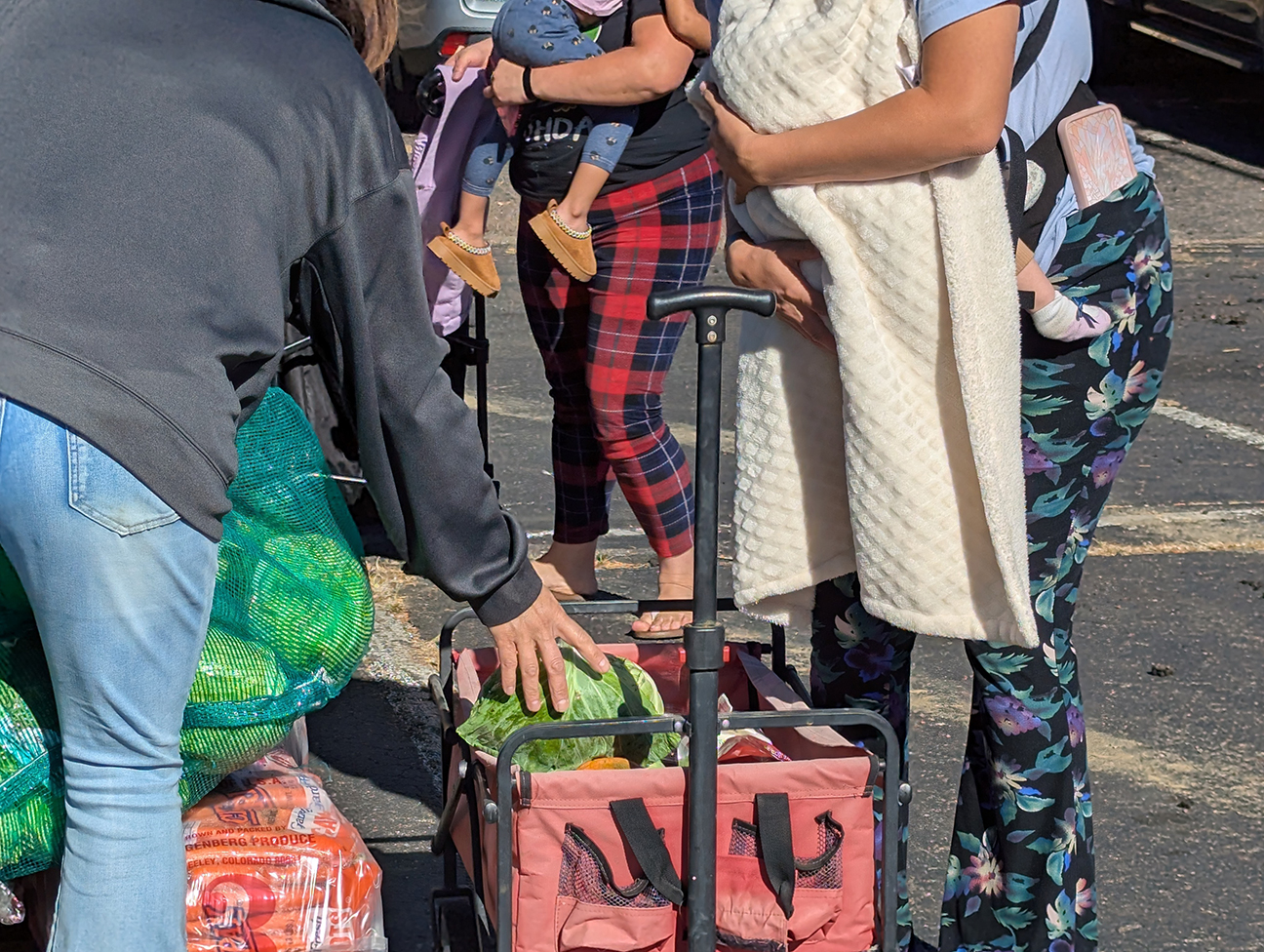
Parents and their children get fresh produce at the Forge Ministries food bank in Aurora, Colorado. Around a half-dozen families were later turned away when volunteers ran out of food. Photo by Nancy Marie Spears.
Meanwhile, in an alley off West Pico Boulevard in Los Angeles on Wednesday, roughly 40 people waited in line for their turn at a food pantry run by Jewish Family Service LA. Many held tight to small carts ready to load up with the nutrient-dense options being doled out, like cans of tuna and jars of peanut butter.
A sign at the head of the queue warned that amid rising need, only 180 households could be served that day. A manager said the number of people turning up at their pantry for help has doubled since SNAP benefits lapsed over the weekend.
To address the crisis, the Los Angeles Unified School District sent out notices this week alerting parents of the half-million students enrolled that their children can be fed three meals a day at all of the more than 1,000 schools across the county. At some schools, PTA leaders began planning to focus annual Thanksgiving food drives on classmates whose families have lost their food stamps.
In Aurora, Colorado, parents brought reusable tote bags and portable chairs, kids in tow, to wait for groceries. A little girl in a red dress grew tired of standing in line, so her mother picked her up. They stepped closer to the More Life Community Center, where produce and canned goods were being distributed and volunteers doled out instructions in English and Spanish. Another toddler with neon green bows and ribbons in her hair pulled out a partially opened “fun-sized” bag of Flamin’ Hot Cheetos while she waited with her parents.
About a half-dozen families were turned away because volunteers ran out of food.
Jay Whisenton is the director of the food bank at Forge Ministries, another provider about three blocks away. She said she didn’t start seeing the impact of the government shutdown until Wednesday. The food bank had been operating business-as-usual since the shutdown started, but now they are feeding three times the amount of people they normally do.
“When I was on food stamps, I was spending it left and right thinking it’s gonna be there next week,” Whisenton said. “And because this is the longest time that the government has been shut down, I think a lot of this response is fear.”
High needs, fewer federal benefits
The most recent federal data shows nearly 20% of children in the United States, nearly 14 million kids, face food insecurity or hunger.
That extends to young adults leaving government care with no family support. In 2020, Think of Us, a research and advocacy organization, surveyed more than 15,000 current or former foster youth 18 to 24 years old, and reported that a quarter reported “high” food insecurity. Roughly 10% reported “It is a struggle to eat everyday.”
SNAP is the nation’s largest anti-hunger program, and has long been seen as one of the most reliable and flexible portions of the nation’s social safety net, and a means for delivering durable developmental benefits for children. A growing number of studies have also demonstrated that the benefits prevent involvement with the child welfare system. According to a 2022 study in JAMA Network Open, for example, states expanding access to SNAP saw 352 fewer investigated CPS reports per 100,000 children.
“For families that are already operating at the margins, it’s an incredibly scary time.”
— Josh Leonard, East Bay Agency for Children
Child welfare agencies are ramping up support for families who are losing their food stamps, stocking their own shelves with groceries and allowing CPS workers to purchase food. In rural Clinton County, New York, Social Services Commissioner Gretchen Crowningshield said her agency is already encountering families without their November benefits.
“We are working with our local food shelves and community meals to refer our families who identify that they are without food,” she said. “Our caseworkers and family support workers work closely to address any barriers to getting access to the food shelves, such as transportation.”
In Minnesota, roughly 440,000 residents rely on federal SNAP benefits each month, including 180,000 children, Tikki Brown, commissioner of the Minnesota Department of Children, Youth and Families said at a Tuesday news conference.
SNAP recipients — whose benefits average about $6 a day — could expect to receive about half of their typical monthly benefits or less, Brown said. But it’s unclear when those funds will arrive as bureaucratic issues pile up.
“We are doing the very best we can to ensure that recipients who are waiting for benefits, who desperately need food, have the best information we can provide to them,” Brown said.
Concerns have also hit hard in the nation’s most populous state of California.
San Francisco is now covering SNAP benefits for all 112,000 residents who qualify.
And at the East Bay Agency for Children in Oakland — which operates six family resource centers that connect families to safety net services — CEO Josh Leonard said his organization has launched a fundraising drive for supermarket gift cards. The nonprofit organization operates several small-scale food pantries, but they’ve been quickly depleted over the past week.
These are among the fast-moving, “cascading implications” of the federal shutdown.
“For families that are already operating at the margins, it’s an incredibly scary time,” Leonard said. “The longer people go without benefits, when people don’t have enough food to eat, the greater likelihood they have to make difficult choices, which is not paying electricity bills or not paying rent.”
Jeremy Loudenback contributed to this story.