
With the federal government shutdown barrelling toward a Nov. 1 “fiscal cliff,” state, local and tribal leaders are issuing increasingly urgent warnings that millions of vulnerable families will soon be unable to meet basic needs.
Absent a breakthrough in Congress, federal funding for food stamps, nutrition benefits for infants and pregnant mothers, and many public preschool and child care centers will run out on Nov. 1, leaving millions of children and parents without benefits they rely on to get by.
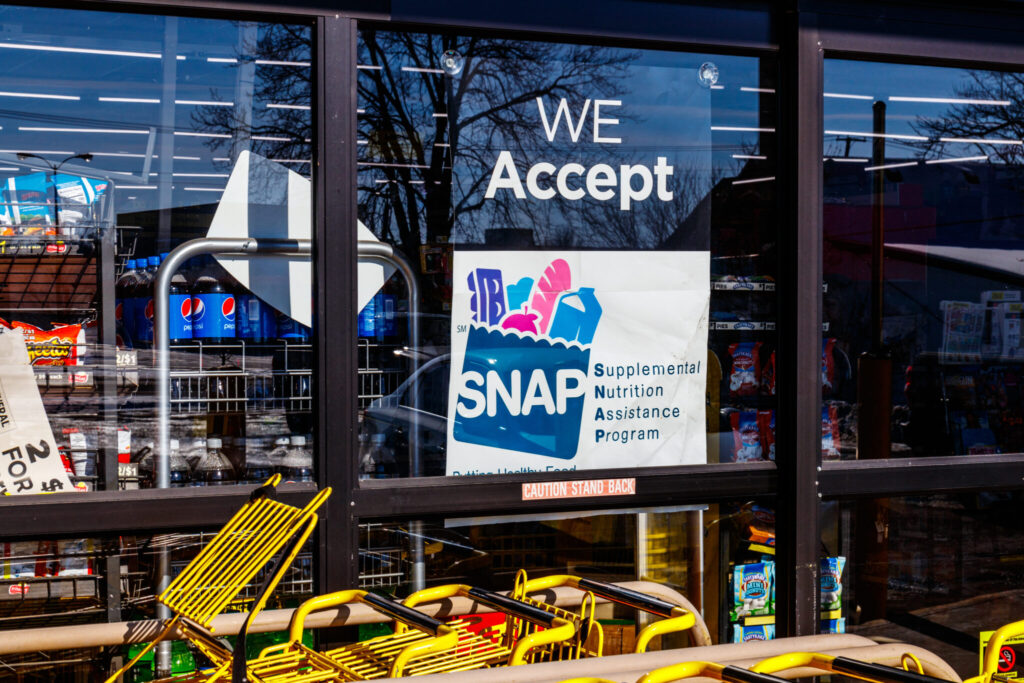
Among the most immediate impacts is loss of food stamps for more than 40 million Americans currently enrolled in the Supplemental Nutrition Assistance Program, referred to as SNAP.
“These vital benefits, that average around $6 a day, are for many families the difference between going hungry and getting by. They’re not an extra benefit. They are incredibly essential to the lives of many, many Minnesotans,” said Tikki Brown, commissioner of the Minnesota Department of Children, Youth, and Families.
Brown warned of widespread impact when this vital food assistance comes to a halt for more than 440,000 SNAP recipients in her state — 40% of whom are children.
Already falling over the cliff: Funding for the nearly 60,000 children in 41 states who attend Head Start programs, providing child care, early education and an array of child care programs supporting working poor families. These have been among the first national programs to buckle under the shutdown pressure. Six programs serving 6,525 children have already lost all federal funding but continue to operate, according to the National Head Start Association, and 134 more will be in the same position come Saturday.
“Without regular access to food, our most vulnerable populations are impacted,” Brown said. “Children, for example, will start behind in school — they’re distracted in school, and they’re much less ready to learn.”
Nearly a month into the partisan standoff, families are starting to feel the fallout.
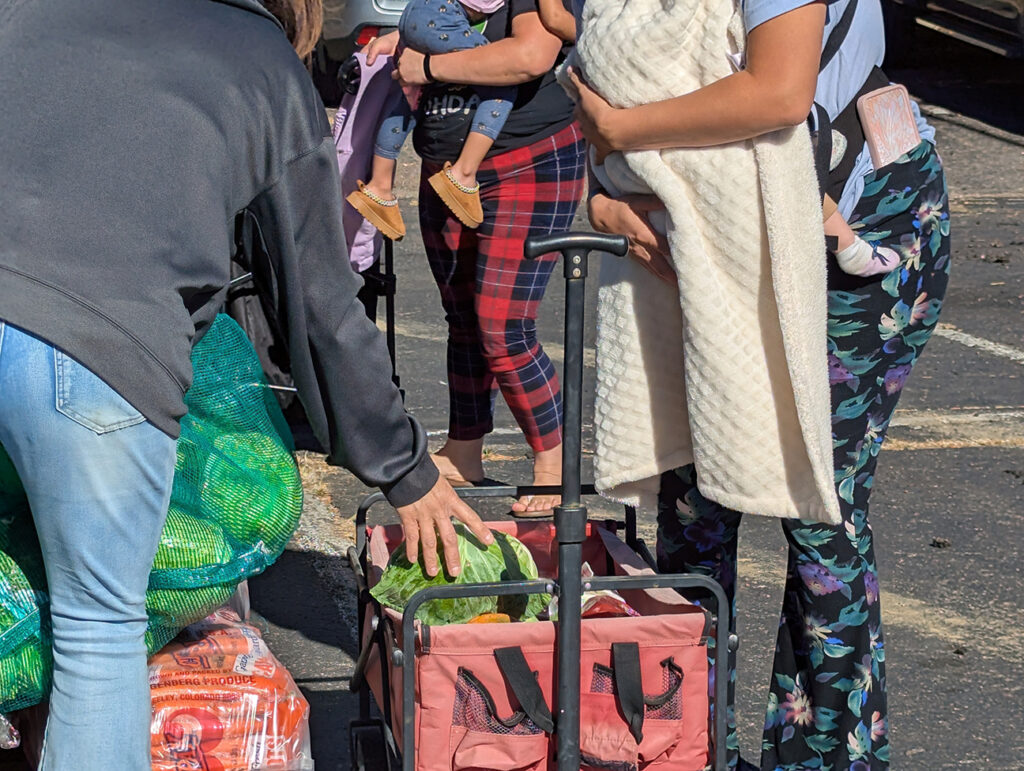
Brittani Lopez, who lives on the Rosebud Sioux Tribe reservation in South Dakota with her toddler said she first felt the effects of the government shutdown about a week ago.
The food bank on her reservation usually gives away lots of free fresh fruits and vegetables, but didn’t have as much produce to offer. The tribal office that provides free nutrition through federal benefits for women, infants and young children is also under-resourced because of the shutdown.
“Just these past two weeks, I’ve been looking at eating differently — we haven’t been snacking, I only bought her juice because it was on sale,” Lopez told The Imprint by phone, while her teething toddler babbled in the background. “We won’t go without, thankfully, because I’m here with my family. But if we lost SNAP, I don’t know — outside of a food bank — how we would make up that difference.”
Lopez said her tribe’s early Head Start program is so understaffed due to the government shutdown that she’s been told her daughter will have to remain on the waiting list longer than expected.
“They cut the programs in half, and they had to let a surplus of certain people go,” Lopez said.
Youth aging out of foster care, many of whom rely on public assistance once they leave the system, are particularly vulnerable to facing food and housing insecurity, said Angel Gray, program and policy manager at Westchester Children’s Association in New York. In her county, as the month draws to a close and residents fear a halt in SNAP benefits, visits to food pantries have already increased.
Funds for certain after-school programs and upstate community centers that foster youth rely on have also been frozen, she added.
“The impact can be very devastating and difficult, because they’re already coming from a place where they may not have the strongest family support or community support, and now they’re aging out and are looking to find a way on their own,” Gray said. “That can also lead to an uptick and involvement in the criminal justice system, because, again, folks are trying to find a way to get by every single day.”
“Just these past two weeks, I’ve been looking at eating differently — we haven’t been snacking, I only bought her juice because it was on sale. We won’t go without, thankfully, because I’m here with my family. But if we lost SNAP, I don’t know — outside of a food bank — how we would make up that difference.”
—Brittani Lopez, Rosebud Sioux Tribe reservation resident and mother
The current shutdown began Oct. 1 amid a partisan battle over health insurance costs.
Congressional Democrats refused to pass a bill to temporarily fund the government unless it included a plan to renew federal subsidies for health insurance plans purchased on the public marketplace. Those discounts are set to expire at the end of the year, a change that would more than double premium costs for many. Under the Republican plan, roughly 4 million Americans would lose their insurance, according to the Center on Budget and Policy Priorities.
The Trump administration has acknowledged the “well has run dry” as of Nov. 1, but blames Democrats in an announcement posted to the Department of Agriculture’s website on Oct. 25.
“We are approaching an inflection point for Senate Democrats,” it stated. “They can continue to hold out for health care for illegal aliens and gender mutilation procedures or reopen the government so mothers, babies, and the most vulnerable among us can receive critical nutrition assistance.”
In California, 5.5 million people use CalFresh, the state’s SNAP program, to fill their grocery carts. Gov. Gavin Newsom has pledged up to $80 million in state funds to help weather the crisis, and deployed members of the state National Guard to distribute free groceries at a food bank in Los Angeles.
“Trump’s failure isn’t abstract — it’s literally taking food out of people’s mouths. This is serious, this is urgent — and requires immediate action,” Newsom said in a press statement. “Millions of Americans rely on food benefits to feed their families, and while Republicans in Washington drag their feet, California is stepping up once again to fill in the gaps.”
Los Angeles County Supervisor Kathryn Barger has warned of “unimaginable hardship beginning November 1.” She pointed out that local governments picking up the slack is not sustainable. Many counties and states, including Los Angeles, are in financial straits and ill-prepared to cover the costs of federal safety-net programs.
During an Oct. 14 presentation, county officials underscored that statement. The county’s Department of Public Social Services — which relies on $120 million from the feds per week to administer food stamps and CalWORKS, the state’s version of the federal Temporary Assistance to Needy Families — said the lost revenue is “too great for the county to backstop.”
If the shutdown continues, public health, welfare and housing programs will also be at risk of “significant impact,” according to the presentation.
“Research shows that a family’s participation in food assistance programs is associated with lower risk for child welfare system involvement.”
—Alana Barr, Policy Analyst, Chapin Hall
Politicians and nonprofit leaders in New York state are scrambling to counter the effects for nearly 3 million residents who could lose food aid within days. Like Newsom, Gov. Kathy Hochul announced an emergency fund of $30 million to support the distribution of over 16 million meals to New Yorkers, in addition to $11 million for emergency food banks.
“While I’ve said repeatedly that no state can backfill these devastating cuts, I am committed to ensuring New Yorkers do not go hungry this holiday season and am taking action to support the families suffering the consequences of Republicans’ cruelty,” Hochul said in a press release.
Brown of Minnesota said her state is unable to backfill the nearly $73 million in federal money that comes in each month to provide food assistance for state residents. She called on Congress to take action so that Minnesotans who rely on SNAP benefits can eat next month.
“It’s not that all of a sudden we will have an extreme hunger crisis on our hands,” Floyd said. “What we’re likely to see is fewer parents getting enough to eat because they want to make sure their kids are eating.”
—Ife Finch Floyd, director of economic justice, Georgia Budget and Policy Institute
For some families, losing food stamps and subsidies for Women, Infants and Children (WIC), even temporarily, could lead to consequences even after the government eventually reopens: heightened risk of CPS investigations and more children entering foster care.
“Research shows that a family’s participation in food assistance programs is associated with lower risk for child welfare system involvement,” Alana Barr, a policy analyst at the child welfare research hub Chapin Hall, told The Imprint. She pointed to a 2022 study that found states that expanded SNAP saw large reductions on screened-in CPS reports and foster care caseloads.
“This is why the current threats to funding these programs are deeply concerning,” Barr said. “The evidence is clear that reductions in access to SNAP and WIC would undermine the protective buffer these programs provide to children, youth and their families.”
Forty-four national organizations serving children’s health are urging the White House to provide $300 million in emergency funding for WIC programs.
“With no end in sight for this government shutdown, the White House must act to ensure that families and children do not become casualties of congressional inaction,” the group stated in a Friday letter.
The nonprofit First Focus on Children warned that a gap in basic needs can undo gains in health, development and stability that assistance programs may have provided.
“The uncertainty caused by shutdowns not only can disrupt daily life for families, but also undermine the long-term progress these programs are designed to achieve,” the group stated.
In Georgia, the Department of Human Services initially posted on its website that electronic-benefit transfer cards used for SNAP benefits may no longer work on Nov. 1. But late last week, that guidance was updated to clarify that any unused money could still be spent past that date, noted Ife Finch Floyd, director of economic justice at the Georgia Budget and Policy Institute.
There are 1.4 million Georgians on food stamps — nearly 70% are households with children, according to the institute.
“That is a really important distinction for people who just got their benefits last week,” she said. “They might still have $50 or $100 come November and they should be able to utilize those.”
If the shutdown continues, families will be forced to make hard choices if their SNAP funds run dry. But the effects may not be obvious at first.
“It’s not that all of a sudden we will have an extreme hunger crisis on our hands,” Floyd said. “What we’re likely to see is fewer parents getting enough to eat because they want to make sure their kids are eating. We’re going to see people not paying bills. But that’s not sustainable.”