
Strengthening Prevention and Permanency

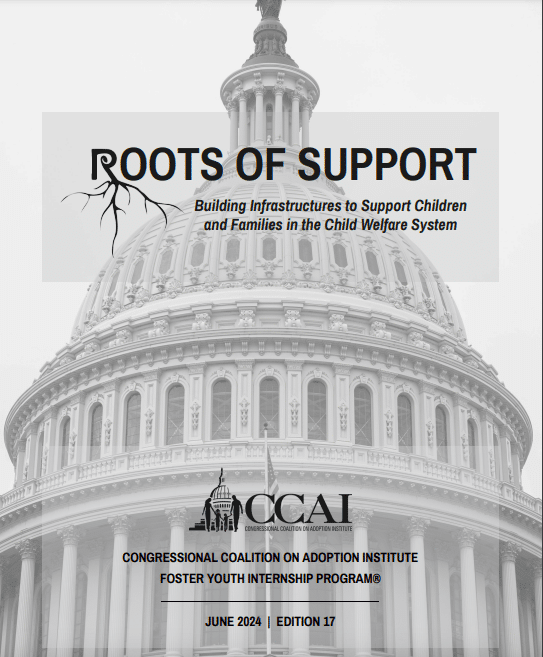
The Imprint is highlighting each of the policy recommendations made this year by the participants of the Foster Youth Internship Program, a group of eight former foster youth who have completed congressional internships.
The annual program is overseen by the Congressional Coalition on Adoption Institute, a Washington, D.C.-based nonprofit that raises awareness about the needs of children without families. Each of the participants crafted a policy recommendation during their time in Washington, D.C.
Today we highlight the recommendation from Dylan Evans, a junior at the University of North Carolina at Asheville.
The Proposal
Evans proposes that Congress make more money available for efforts to prevent substance abuse disorders leading to child welfare involvement, and to better support kinship caregivers. He would open up federal Title IV-B funding to pay for “economic and concrete support” to kinship caregivers, and increase the amount of money in the Regional Partnership Grant Program (RPG) for substance use disorder programs and strategies.
The Argument
The Family First Prevention Services Act and recent rulemaking by the Biden administration have improved federal support for kinship caregivers, and RPG has forged collaborative approaches to address substance use disorders, Evans writes. But many kinship caregivers need support beyond what is covered in Family First, and the regional partnerships are limited by the small annual budget for the program.
In Their Own Words
“Unfortunately, the gaps in the broken child welfare system continued to follow me when I moved in with my aunt. My aunt had not anticipated the extra costs it would take to care for two extra children. What could have been an idyllic situation turned sour quickly.”
BEFORE YOU GO… If you learned something from this article, pay it forward and contribute to The Imprint. Our work is funded by readers like you who are committed to unbiased journalism that works for you, not for the algorithms.