Preventing the Need for Congregate Care

The Imprint is highlighting each of the policy recommendations made this year by the participants of the Foster Youth Internship Program, a group of eight former foster youth who have completed congressional internships.
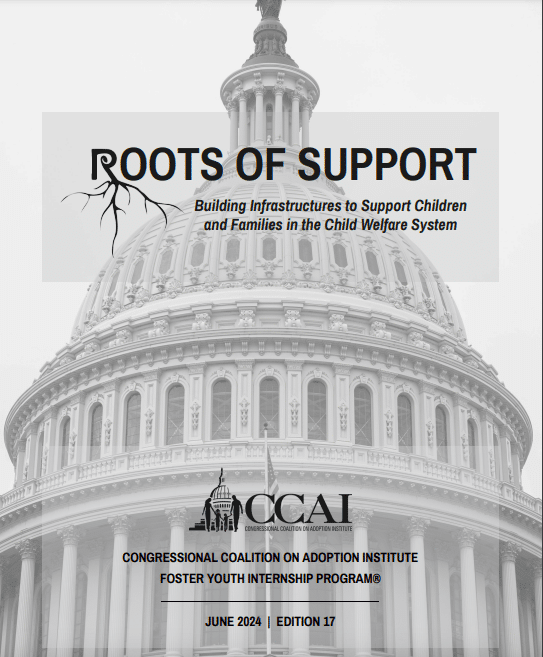
The annual program is overseen by the Congressional Coalition on Adoption Institute, a Washington, D.C.-based nonprofit that raises awareness about the needs of children without families. Each of the participants crafted a policy recommendation during their time in Washington, D.C.
Today we highlight the recommendation from Julia Stumler, a junior at Indiana University.
The Proposal
Stumler calls for Congress to take several steps toward increasing the viability of options other than congregate care for older youth in foster care. Specifically, she proposes that Congress require congregate care facilities to implement and document quarterly plans for maintaining community connections for youth placed in group settings; that states be allowed to fund trauma training for foster and kinship families; and that the SOUL Family model be acknowledged in federal law as a permanency option. SOUL Family is a concept developed by former foster youth that enables transition-age youth to identify different adults who will play a meaningful role in their lives as they enter adulthood; Kansas recently became the first state to officially incorporate SOUL Family into its official options for permanency.
The Argument
For four in 10 youth who are placed in congregate care, Stumler cites, there is no clinical need for them to live in a group facility. And “research consistently shows that children fare best in families, not facilities.” Prioritizing kinship care and independent living pathways over congregate care, she said, “is essential to support the needs of young people.”
In Their Own Words
“Between the ages of 15 through 18, I had 13 placements, 11 in congregate care. The process of constantly uprooting and moving once the ‘emergency’ timeline had run out was burdensome on my education, relationships and mental health. I never felt like I had a say or knew where I would go next.”
BEFORE YOU GO… If you learned something from this article, pay it forward and contribute to The Imprint. Our work is funded by readers like you who are committed to unbiased journalism that works for you, not for the algorithms.