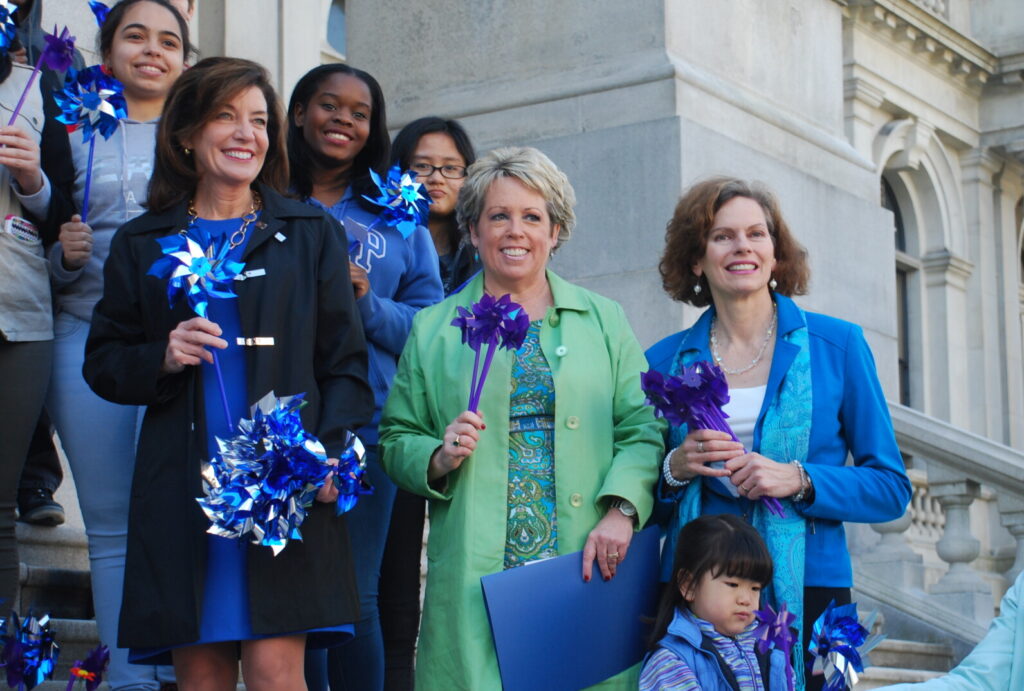
Lt. Gov. Kathy Hochul will soon take over as New York’s first female governor, following the Tuesday resignation of disgraced Gov. Andrew Cuomo, who relented on the eve of impeachment hearings into findings that he sexually harassed and bullied women on his staff.
Hochul is little-known in New York City but has served as a respected statewide Democratic leader who frequently speaks out on issues related to children and families.
During his 10-year tenure, Cuomo — the son of another three-term governor — exercised power like few governors before him. His hold on the governor’s mansion collapsed after a blistering report released last week by the state attorney general, which substantiated allegations of sexual harassment and unwanted fondling leveled by 11 women, mainly current or former state employees.
An attorney who co-authored the public report said at a press conference that they’d found “the co-existence in the executive chamber’s culture of fear and flirtation, intimidation and intimacy, abuse and affection,” which “created a work environment ripe for harassment.”
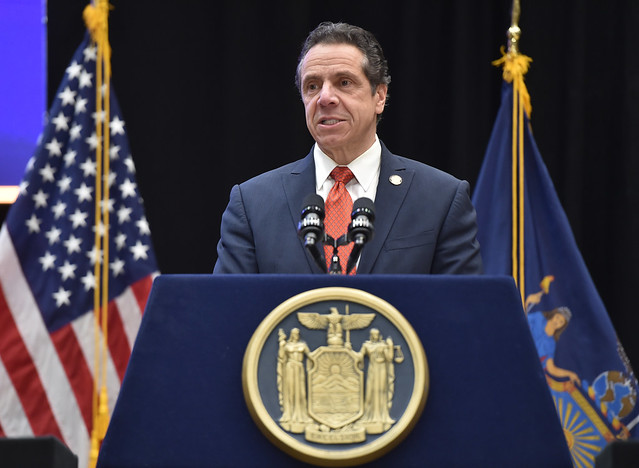
Cuomo has repeatedly denied all accusations that he touched women inappropriately. In a video announcing his resignation aired Tuesday morning, the 63-year-old governor acknowledged only that he had “deeply offended” the women who accused him. Cuomo said he was stepping down to avoid a distracting and expensive impeachment trial — a trial that could also result in his lifetime ban from state office.
Hochul will succeed the departing governor on Aug. 24. The Buffalo-area native has made it a point to visit all 62 counties each year since she was elected in 2014, at the start of Cuomo’s second term, frequently making appearances at ribbon-cuttings and other public events.
In interviews with The Imprint, she received high praise from Buffalo-area colleagues, particularly on the issue of child care-for-all, which the state of New York has championed of late, amid the economic ravages of the pandemic for working poor families.
“Both she and I see child care as economic development, so moms can work and add value to our economy,” said Crystal Peoples-Stokes, a Democratic Assembly member for Buffalo and the majority leader in that house. “As a mother, child care and women’s issues have always been important to her, and I don’t think it’d be any different should she have the opportunity to serve as interim governor.”
Hochul, 62, has 25 years of political experience spanning from Washington, D.C., to western New York to Albany, but was not called on to play a major role during her seven years in the Cuomo administration.
“I agree with Governor Cuomo’s decision to step down,” Hochul said in a statement on Tuesday. “It is the right thing to do and in the best interest of New Yorkers.”
Hochul will be taking over the state at a critical moment for families and workers involved in child welfare and juvenile justice. The COVID-19 pandemic and global protests over the killing of George Floyd by a Minnesota police officer have contributed to renewed concerns over racism and racial equity in the public sector.
In an address commemorating the centennial of women’s suffrage last summer, Hochul called out the pervasiveness of racism in the United States.
“We are experiencing a national movement whose time has come, and with it the long overdue national reckoning, an opportunity to right the wrongs of over 400 years of systemic racial injustice,” she said.
Other long-term challenges await her as well: Beginning this year, the federal Family First Prevention Services Act will require the state to reduce its reliance on group foster care homes and to expand investment in prevention services.
Meanwhile, some of the state’s pre-trial juvenile detention facilities are suffering from increased crowding, according to state data and media reports from western New York.
“We expect very different governing,” said Sheri Scavone, executive director of the Western New York Women’s Foundation, who worked closely with Hochul on the state’s Child Care Availability Task Force launched in 2018. She said that will take place “by kindness and intellect and emotional intelligence, and I hope a collaborative approach to some very audacious problems in this state — including around child care.”
Hochul’s most notable recent public comments on foster care came in May, during a live-streamed event for National Foster Care Month. At the virtual event, she warmly thanked foster parents and frontline staff and touted the historic 33% decline in foster care placements statewide over the past decade.
But, she warned, the pandemic brought new challenges that would require a renewed focus on the threat of child abuse and neglect.
“We have to adapt to these circumstances. An environment that may have been OK before the pandemic may not be OK right now because of additional family stresses that people are going through,” she said at the event, hosted by the Council of Family and Child Caring Agencies, a statewide trade association.

She also defended child welfare workers, pledging to do more for them if and when she has the opportunity.
“You may not be getting the recognition that I think you deserve, but if I can change that, I’m going to make sure you get the resources, the support and the recognition,” she said.
In her May remarks, Hochul also emphasized the importance of finding foster youth permanent homes and suggested the state should “extend the time that young people are in foster care to give them help as they build that critical foundation to having meaningful lives as adults.”
In 2011, Hochul flipped a traditionally Republican congressional seat in a special election but lost the seat just 18 months later. In 2014, she was selected to join Cuomo as he ran for his second term, rounding out his campaign by drawing votes from the state’s second-largest metro area.
Four years later, Cuomo caused a stir by suggesting that Hochul might decide to pursue her old congressional seat rather than running for reelection as lieutenant governor. But she asserted that she wanted to remain in the administration, and a group of female Democratic legislators rallied in her support.
One of six children of Jack and Pat Courtney, Hochul grew up in Buffalo’s southern suburbs in the town of Hamburg, a largely white, working-class town. In a 2017 local news segment, she recalled how she’d grown up looking after her younger siblings. She described waitressing at a local restaurant as a teen, often returning home close to midnight to begin studying.
Hochul went on to earn a degree in political science from Syracuse University, where she served as vice president of student government and helped lead a successful anti-apartheid divestment movement, according to a profile on the university’s website.
She then moved to Washington, D.C., to earn a law degree from the Catholic University of America, beginning a decadelong stint in the nation’s capital. In 1986, Hochul became an aide to another Irish-Catholic New York politician, U.S. Sen. Daniel Moynihan, a towering figure in the state’s history.
While in D.C., Hochul married fellow lawyer Bill Hochul, and the couple welcomed the first of their two children in 1987. Hochul told WGRZ she soon found that the late nights required of Hill staffers were impossible for a new mother without local family who could provide child care, and after two years the couple moved back to the Buffalo area. There, Bill went to work as a prosecutor in the U.S. Attorney’s Office, while Hochul soon entered local politics.
During the pandemic, child care has become a top issue for both advocates and lawmakers, and last week the state began accepting applications to distribute $1.1 billion in federal relief funds to child care providers.
Throughout this year’s budget and legislative session, Scavone said Hochul has been a reliable supporter: “We worked closely with the lieutenant governor to keep child care out front last year when we weren’t necessarily getting support from the governor,” she said. “I expect that she, as a woman and a mother, will lead with an understanding of the really significant role that child care plays.”