

Alex Adams, President Trump’s pick to lead family policy, will likely soon be confirmed by the U.S. Senate. During his confirmation hearing, he said he intends to “spend disproportionate time and my energy” on improving the child welfare system.
We humbly suggest that he prioritize an effort to foster integrated and collaborative approaches to serving system-involved families that start in the communities they live in.
Working with children, youth and families is never simple. For families involved with child welfare, the complexity of their lives often presents unique challenges — not only for them but also for the systems designed to support them. The causes of abuse and neglect can be circuitous and multifaceted. Child welfare agencies alone cannot address the multitude of issues that bring families to their doors.
Heinous acts of maltreatment or sexual abuse frequently result from a complicated web of socioeconomic and behavioral factors. Even less serious situations involving documented neglect require an advanced level of systemic skill and savvy. The social, familial and systemic influences form a layered set of circumstances that place children at risk, and they require us to be alert to the dangers of distractions and the critical value of connections.
There is an exhaustive body of research highlighting the crossover factors contributing to child maltreatment — parental substance use, untreated mental health issues, housing instability, poverty, racism, bureaucratic hurdles to timely and accessible services, and even parents’ own traumatic histories within the child welfare system.
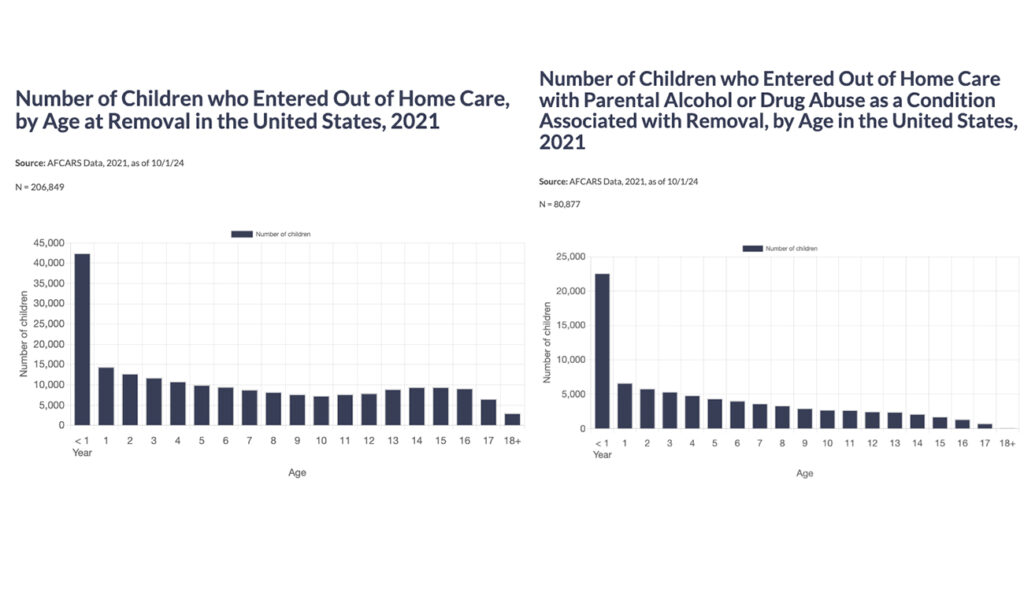
Recent data and research demonstrate clearly the intersection, for example, of child maltreatment and parental substance abuse. The National Adoption and Foster Care Analysis and Reporting System shows that a substantial number of families involved with child welfare are affected by substance use disorder. There is also documented disproportionate impact of parental substance use on infants and toddlers. These families often face co-occurring challenges and need integrated cross-system support.
Another current and critical example is the number of children entering foster care due to mental health needs. In 2023, 17,150 of them entered foster care for behavioral health reasons. There is clearly a need for multi-system collaboration aimed at preventing any child from being separated from their family because a parent simply cannot obtain the necessary mental health services for them.
The time for a shift in culture is overdue. A more effective path forward includes a clearly articulated and intentional family policy that is community-based, integrated and holistic. This means moving beyond reactive systems to proactive, preventative and supportive structures that meet families where they are, before any level of direct government intervention.
These children and families have urgent and significant cross-system and co-occurring services needs. It is incumbent upon all public and private child- and family-serving systems to align their policies and practices to more comprehensively serve these families. Their aim should be to prevent further harm and trauma and strengthen safety and resiliency for these most vulnerable in our communities.
Collaboration is a means, not an end, but in child welfare, partnerships can make the difference in the outcome. Granted, it is neither convenient nor efficient. But in the context of a dedicated family policy, an agency can work with others and solve problems differently — and in this current environment, we need to maximize every advantage. Collaboration often becomes strongest during times of financial hardship, because adversity highlights the value of pooled resources, mutual support and collective problem-solving. These partnerships thrive due to:
- Shared urgency and purpose
- Pooling of resources
- Innovation through necessity
- Stronger relationships and trust
- Risk mitigation and earlier support of families
- Cultural shifts toward cooperation
Child welfare agencies may be tempted to operate independently, designing programs and outcomes in isolation. For example, an agency might build out its own behavioral health services rather than partnering with Medicaid or the state’s behavioral health agency. This siloed approach often leads to mission drift, redundant contracts, fragmented services, and parallel infrastructures that confuse families and dilute impact.
As states and counties brace for significant budget rescissions, the impact will likely emerge during the 2026 legislative sessions for the FY2027 budget. In the current fiscal climate, with federal and state budget cuts likely coming, executive and legislative bodies may turn to department consolidations and administrative cost reductions. But consolidation without a thoughtful integration strategy can harm both staff and the families they serve.
Locally driven integration models promote a whole-family, whole-person approach to prevention, intervention and treatment. The approach supports a “No Wrong Door” model, ensuring that families can access the services they need without navigating a maze of disconnected systems. This approach is more humane, less traumatic and ultimately more effective. Finally, local agencies are closer to the families they serve, better positioned to provide responsive customer service, and more agile in navigating bureaucratic barriers.
Cross-system collaboration also reduces redundancies in care delivery — such as multiple case managers with competing demands — and streamlines administrative processes. It enables integrated workflows, improves staff efficiency, and aligns contracts with services rather than funding sources. In an era of rapid technological advancement, integration also allows agencies to leverage data and digital tools to drive better decision-making, improve service delivery, and enhance outcomes for both clients and systems.
This new federal child welfare leadership team has an opportunity to align its values, ideas and resources and invest in creative, locally driven, common-sense policies and practices that will keep kids safe and families strong. We are mildly optimistic that there will be the political will for this. If so, we believe that investing in integrated and collaborative systems is not just a fiscal necessity — it’s a moral imperative.