
We are at an inflection point when it comes to measuring risk in child welfare. Not simply because new tools are emerging, but because leaders across the country are addressing this issue with new urgency.
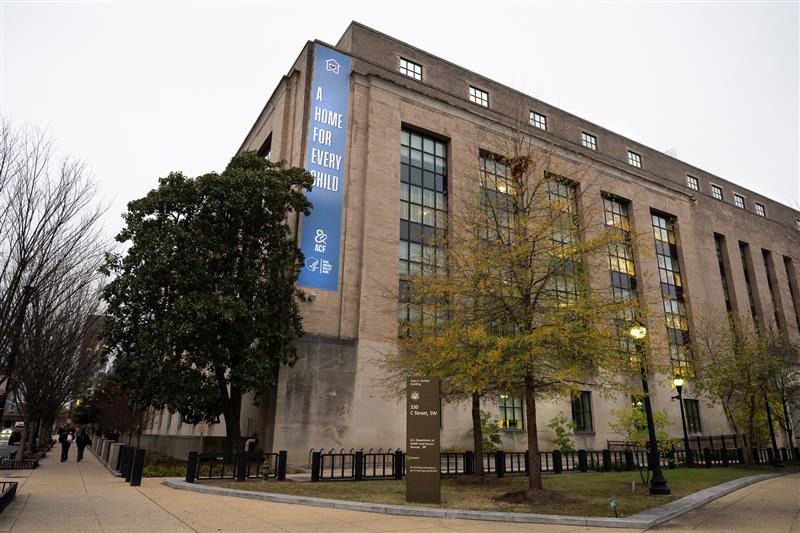
More than two dozen states recently participated in the Administration for Children and Families’ (ACF) policy roundtable on predictive risk modeling, and leaders from blue, purple and red states shared how they are using these models to support the workforce. That level of cross-jurisdiction engagement matters. It shows this is not a partisan project, but an operational response to a real and urgent challenge.
In a recently published issue brief on predictive risk modeling released by ACF, federal leadership took the important step of acknowledging what many in the field know and audits have long shown: The simple, checklist-style risk assessment tools still used by most state child welfare agencies belong to a bygone era, and their continued use can compromise the safety of children.
As the brief notes, “we ask caseworkers to make data-informed decisions,” but the technologies and tools they are given “rarely make it easy or efficient for them to gather the information they need.”
For decades, child welfare agencies have asked frontline workers to make some of the hardest decisions in public service under intense pressure, with too little time and too little support. Which reports of alleged child abuse and neglect get investigated? Which situations signal the greatest risk to a child’s safety? Which families require intensive services, and which can be safely supported without deeper system involvement?
In some cases, workers face more information than any person could reasonably digest in the time available. In others, they must make high-stakes decisions while critical information is missing. Too often, agencies already possess data that could help, but it is fragmented across systems, difficult to locate, or not integrated into real-time decision-making.
Caseloads are high. Workforce turnover remains a persistent challenge. The complexity of family needs continues to grow. In this environment, the consequences of missed risk can be devastating.
As a former caseworker and director of both the Georgia Division of Family and Children Services and the Los Angeles County Department of Children and Family Services, I know these pressures firsthand. After 35 years in human services, there are cases that haunt me — cases in which the system failed and children paid the price. Those tragedies do not leave you. They make clear that responsibly modernizing decision support in child welfare is not just an administrative upgrade, it is a moral obligation.
I also know that asking dedicated professionals to do more with less is not a strategy. If we want better outcomes for children and families — and a more sustainable system for the workforce — we have to give staff better tools to support frontline judgment.
That is why I chose to pilot predictive risk modeling (PRM) during my time in Los Angeles County. From the outset, I believed any use of PRM had to be paired with strong supervision protocols, active stakeholder engagement, and ongoing monitoring for racial disproportionality and disparate impact.
This is not about replacing professional judgment; it is about supporting it. When implemented thoughtfully, predictive risk models can help agencies identify cases that may warrant closer attention, triage scarce resources, and reduce the likelihood that the highest-risk situations are missed in the crush of daily work. In practice, that can mean more targeted supervisory attention, better prioritization of workload, and greater consistency across offices.
Skepticism is warranted whenever government uses predictive tools, especially in systems with a history of racial disproportionality. That is precisely why implementation matters as much as the model itself. Agencies must be transparent about their purpose and safeguards, validate performance and monitor for bias. Strong training, supervision and accountability are essential.
We are also seeing this move from pilot to practice. Los Angeles County, for example, is expanding its tool across all regional offices to focus attention on the highest-risk cases, and it is also piloting a data-driven diversion use case — using the model to identify opportunities for community-based family support outside the formal investigation process.
Scaling like that does not happen by accident. It requires leadership, governance, workforce engagement and implementation discipline.
Predictive risk modeling is not a silver bullet, and it should never be treated as one. But used responsibly, it can be part of a smarter, stronger and more responsive child welfare system. We owe it to children, families and frontline staff to modernize how agencies support high-stakes decisions.
The policy question now is not whether child welfare agencies need better ways to support frontline judgment. It is whether we will modernize responsibly — with transparency, safeguards and the workforce at the center.