
After 17 years of operating under a consent decree, Los Angeles County has reached an agreement to extricate itself from a long-running federal lawsuit that sought to address gaps in mental health care services for children in foster care in California.
The plaintiffs announced the agreement Wednesday in Katie A. v. Bontá, a class-action lawsuit brought in 2002 by a coalition of mental health advocacy groups on behalf of a 14-year-old Los Angeles foster youth, other California youth in the system and those at risk of an out-of-home placements.
The proposed settlement applies to Los Angeles County, but not to the state of California, which left court oversight in 2014 as part of a separate settlement.
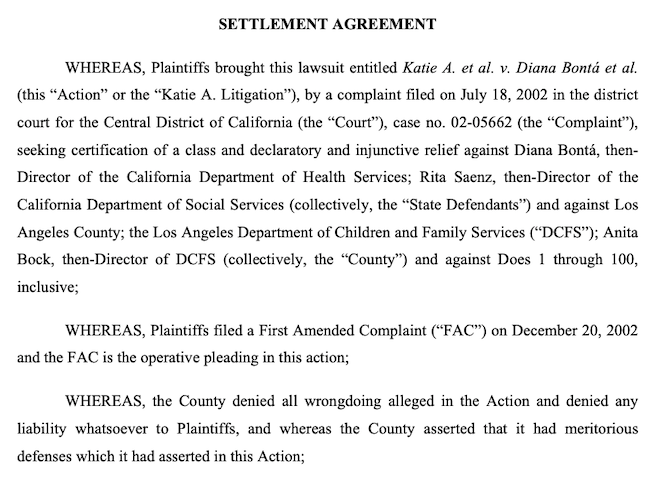
Katie A., the young woman at the center of the lawsuit, experienced 37 different foster care placements, including 19 trips to psychiatric facilities. The suit alleged that foster children had scant opportunities for community-based mental health services and that Los Angeles County failed to develop systems for assessing and delivering those services for foster youth under the federal Early and Periodic Screening, Diagnostic and Treatment (EPSDT) entitlement in California’s Medicaid system.
Under the terms of the original settlement reached in 2003, the county was charged with improving access to intensive home-based mental health services with the goal of preventing placements in institutional facilities like group homes. The landmark suit also sought to increase collaboration between the county’s child welfare and mental health systems. In order to meet those goals, the county was overseen by an advisory panel, which monitored its progress.
Under the new terms, the county has agreed to significantly increase the use of intensive home and community-based mental health services for children who’ve been repeatedly displaced, sent to psychiatric hospitals and moved into group care facilities, such as short-term residential treatment programs.
Plaintiffs’ attorneys seemed satisfied that the long years of litigation against the county had accomplished significant reforms.
“The county has agreed to implement several new initiatives to ensure that foster children can remain in their current homes and communities,” Robert Newman, an attorney for the Western Center on Law & Poverty, stated in a news release.
“We have worked on this case for many years because it was clear that foster youth in L.A. County, especially those with serious mental disorders, were not getting the services they needed,” wrote Melinda Bird, senior litigation counsel at Disability Rights California, another plaintiff. “We had to keep fighting.”
If approved by a federal judge, the case against the largest county in the U.S. would be dismissed.