
A Georgia nonprofit has unveiled its transformation of an apartment complex designed to help foster youth transition into adulthood.
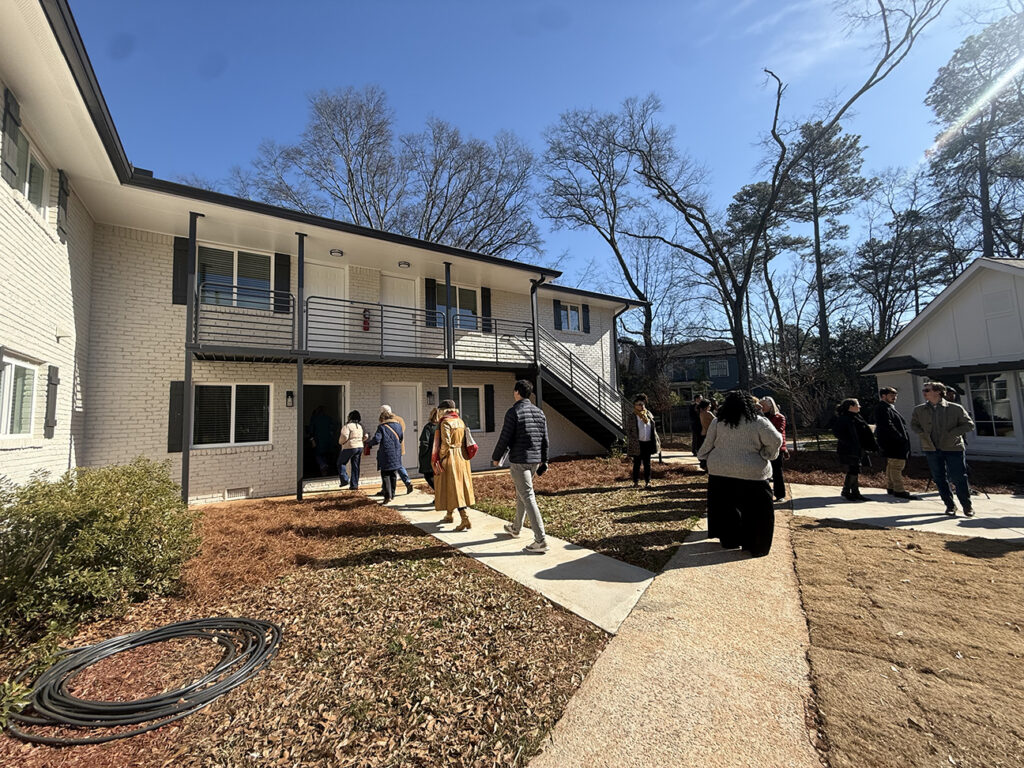
Nestled in a quiet, suburban neighborhood outside of Atlanta, The Oaks is part of Wellroot Family Services’ Transitional and Independent Living Programs serving current and former foster youth ages 18 to 21. The newly renovated Decatur property has capacity for up to 29 youth who get to live rent-free.
Anwar Hogan lived in the complex for about a year while it was being refreshed. He entered foster care at age 16 after his father and a brother died.

The Georgia State University business major describes himself as a “simple” guy who loves basketball and dreams of owning his own clothing brand. He moved out of The Oaks last year when he turned 21, as is required by the program, but still maintains close contact with his life coach.
The Oaks felt closer to a home than anywhere else he had known, Hogan told those gathered for Wednesday’s ribbon-cutting ceremony. He had a nightly curfew and staff checked in on him regularly each day. Still, he said he felt independent enough to “make his own decisions.”
During this time, he earned his GED, got a job and built savings without the burden of paying rent.
“I’ve never been in a place where I felt loved,” he said on Wednesday. “I felt like family here. I didn’t feel judged.”
The project builds on statewide efforts aiming to improve outcomes for youth aging out of foster care.
In Augusta, construction is currently underway for 25 tiny homes that will expand housing options for this population.
And next month, lawmakers and child welfare leaders will meet with officials from the federal Department of Housing and Urban Development to discuss how the state can do a better job making use of a federal housing voucher program for foster youth.
Last year, a Georgia Senate committee found that the state is falling short in providing housing, academic and job support to teens exiting the system. The committee’s final report recommended expanding access to the public housing vouchers and stronger transition planning.
“If you think about an 18-year-old, their parents are probably helping, minimally, pay rent or they’ve been able to find an apartment with a group of friends. These young people don’t have that social connection, and it’s very hard to find affordable apartments. Many end up homeless.”
— Allison Ashe, Wellroot
With roughly 600 youth aging out of Georgia’s child welfare system each year, youth advocates say the need for housing is urgent. Among those who have experienced foster care, 35 % lack stable housing and 37% are unemployed, according to the state’s recent report. Having grown up without a traditional family, many youth leave care without the support or life skills they need to succeed as adults.

“If you think about an 18-year-old, their parents are probably helping, minimally, pay rent or they’ve been able to find an apartment with a group of friends,” Wellroot CEO Allison Ashe said Wednesday. Her faith-centered nonprofit is one of the state’s oldest child welfare organizations. “These young people don’t have that social connection, and it’s very hard to find affordable apartments. Many end up homeless.”
Wellroot has housed aging-out foster youth in the three-building complex since 2022. Prospective residents for The Oaks are referred by the Division of Family and Children Services. Instead of being charged rent, they are required to regularly put aside money that can only be accessed after leaving the program.
The bright two-bedroom units come fully furnished and include whimsical touches such as velvet magenta throw pillows and ceramic leopard lamps.
But The Oaks provides more than just shelter, Ashe said. A communal space that lies at the center of the complex includes a large living room and laundry and kitchen facilities. Here, residents meet with coaches to work on life skills such as cooking and financial literacy, and develop school, career and future independent living plans.
The communal area is also where Ashe hopes the young residents will create their own sense of family.
“It will be where we hold Thanksgiving, Christmas — all of our holiday celebrations,” she said. “That’s just going to be really the hub of activity for the property. First and foremost, to me, that is where they build community with each other.”
The renovation was funded through a mix of private and government dollars. Rep. Hank Johnson helped secure $1.2 million dollars for the project in 2023. The refurbishment, which included a new roof and the upgraded interiors, totaled $2.6 million.
“This facility is exactly what they need to be able to come, not under hard supervision, but under loving care, and transition into being able to take care of themselves,” Johnson said during the Wednesday ceremony.