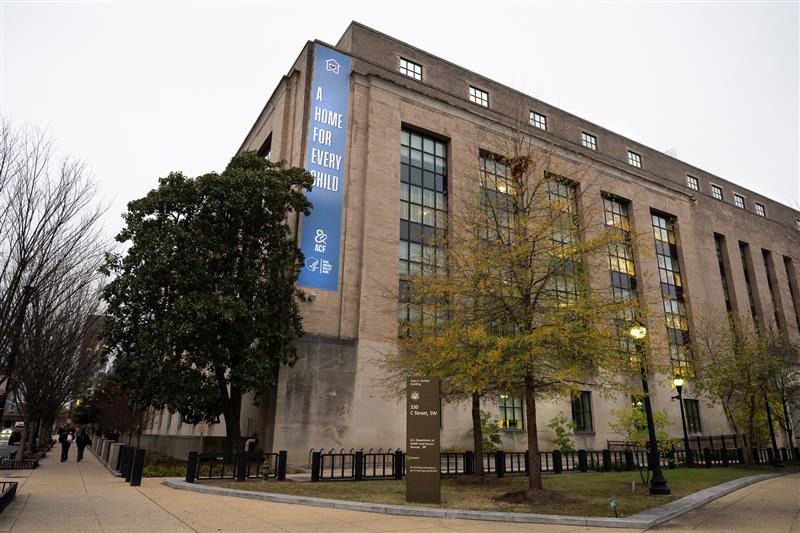

Since a 2018 policy change, states have claimed hundreds of millions of dollars to bolster representation for parents and children in foster care

In the span of one year, the federal government has dramatically expanded its funding for attorneys in the nation’s foster care courts — bringing new heft to legal arguments on whether families should be separated, where kids should be placed and if parents’ rights should be terminated.
Between 2018 and 2023, 31 states had drawn down at least $300 million in legal services funding under Title IV-E of the Social Security Act, an Imprint analysis found. That figure marks a significant uptick from the year prior, when 25 states had received $168 million.
The growth in funding for dependency and family court lawyers representing parents and kids in foster care is a result of a quiet 2018 change to a federal policy manual, crafted in part by David Kelly, a former ranking administrator with the U.S. Children’s Bureau. Kelly agreed with advocates who have spent years arguing for the money to provide what his agency would later describe as “high-quality legal representation at all stages of dependency proceedings.”
A pending federal rule would elevate the provision by including it in government code, and expanding the legal services to relative caregivers, tribes and families struggling with conditions that could result in a child welfare investigation.
In an interview this month Kelly said he is gratified to see how the new policy has worked.
“This is really good progress,” he said. “It’s encouraging.”
But he added a note of caution, pointing out that nearly half of all states are not seeking the additional entitlement funds. Kelly wants the federal government to provide technical assistance to states and to see improved legal offerings expanded nationwide.
“An awful lot more can be done at the federal level,” he said.
‘A culture shift’
The 2018 policy change allowed states to use Title IV-E funds for up to half of the cost of providing legal services to parents and children in foster care, or at risk of being removed from their homes. Historically, these federal foster care and adoption entitlement funds could only be used to pay for lawyers representing local child welfare agencies.
Federal officials cite research showing the impact quality lawyering can have in foster care cases — including the prevention of unnecessary foster care entries, increases in family reunification and significant savings to taxpayers.
But access to legal counsel has been spotty nationwide. There is no federal law guaranteeing attorneys for parents in family court. And while the Child Abuse Prevention and Treatment Act requires that someone “shall be appointed to represent the child” and their best interests in court, there is no federal funding tied to the mandate, and their representatives can be volunteer court-appointed special advocates or guardians ad litem, rather than lawyers.
And not all states have stepped up to foot the bill, or to draw down the newly available federal funds.
That has given child welfare agencies “more muscle” in court, said Allison Green, a legal director at the National Association of Counsel for Children. It took decades of advocacy work to convince state and federal officials of the importance of an “equal playing field,” she added.
“There was hesitancy because it was a culture shift to fund your adversary,” Green said.
Jey Rajaraman, a longtime parent defender who’s now an associate director of the American Bar Association’s Center on Children and the Law, sees the new funding as part of a larger shift nationwide in the approach to high-stakes child welfare cases. There is an increasing understanding in the field that accusations of poverty-related neglect drives the majority of foster care removals — not severe physical or sexual abuse — and that children are best served with added supportive services within their families.

The new funds available for parents and kids’ lawyers followed closely after passage of the Family First Prevention Services Act, which provides federal IV-E dollars for services aimed at preventing foster care removals.
Putting steady funding streams behind these policies represents the government investing in “the moral cost” of the child welfare system, Rajaraman said. “And over time it will change the way the system looks and feels for families.”
Different state approaches
The recent investments in legal representation vary among states. Some are hiring more lawyers and support staff to decrease caseloads and allow attorneys to spend more time with clients outside of the courtroom.
Others are providing legal advocacy to families before a court petition alleging abuse or neglect is filed in court, an attempt to head off cases in the early investigation stages before a foster care removal is being weighed. At least 11 states have begun using federal funds to provide this “pre-petition” legal support, including Colorado, Illinois, Iowa, Louisiana, Massachusetts, Michigan, Minnesota, New York, Pennsylvania, Utah and Wisconsin, according to the Children’s Bureau.
Iowa Legal Aid has been piloting pre-petition work in four counties. The state Department of Health and Human Services refers families to the public service firm for free assistance when they believe the help could keep the family out of the foster care courts. In 2018 alone, the firm helped 118 children avoid such court involvement, according to the Family Justice Initiative.
Since 2018, California has received $138 million from the newly available matching funds, the largest amount nationwide. In that state, legal service providers are required to employ at least two practices that improve both in-court and out-of-court advocacy, such as increasing attorney salaries to improve retention, hiring additional attorneys to reduce caseloads and increasing the use of social workers, investigators and peer advocates within legal offices, according to the state’s Judicial Council, the administrative arm of the state courts.
At the Children’s Law Center of California — which represents 25,000 children in Los Angeles, Sacramento and Placer counties — tapping into the new funds has helped cut caseloads by 43%, from roughly 200 clients per attorney to 115. The center has also expanded its multidisciplinary approach by hiring case managers who provide more in-depth social work and investigatory support than lawyers typically have time for.
The changes allow attorneys to be more responsive to clients and be more prepared in court, bringing new information to cases that may have otherwise been missed, said executive director Leslie Heimov. Meanwhile case managers advocate for clients outside the courtroom and support them emotionally, ensuring kids stay in school and get their needs met.
And with lighter caseloads, lawyers are freed up to do their jobs, Heimov added.
“When the attorneys aren’t in a constant triage mode and running from one case to the next, they really have time to dig deeper,” she said. “They’re able to work with the county agency to develop a better case plan to make sure that we’re utilizing the right services.”
The federal support has also freed up funding at Heimov’s firm for other initiatives — in this case “pre-petition” advocacy for parenting current and former foster youth who could be at risk of losing their children to foster care.
“It’s been a huge benefit across the state; small, medium and large programs have been able to make really important improvements in the way they deliver services,” Heimov said of the new federal funding. “It’s making a big difference.”
Expanded access on the horizon
In recent months, the federal government has been considering a formal rule change that would expand eligibility for the legal services fund, in addition to further codifying its terms. If finalized, the new rule would pay for legal representation for relative caregivers, tribes and legal advocates in fields outside of the dependency and family court systems. Currently, a family must have an open child welfare case to be eligible for federally funded representation.
The assistance is a “necessary and critical” part of meeting the government’s responsibility to make, at minimum, “reasonable efforts” to prevent foster care removals, Kelly said, which are so often linked to poverty and challenges such as housing insecurity.
The proposed change bears an estimated cost of just under $3 billion over 10 years.
Kelly and others hope that more states will take advantage of the funding when the formal rule is adopted.
“I think it’s really going to reaffirm that this is a bipartisan, agreed upon best practice,” said Green of the National Association of Counsel for Children, “and that it is here to stay for child welfare.”
Senior Editor John Kelly contributed to this report.