By expanding the federal child tax credit in the recent stimulus package, Congress offered American parents unprecedented financial support: up to $3,600 for each child younger than age 6, payable monthly, and up to $3,000 for each older child.
The one-year measure — which Democratic lawmakers hope to make permanent — could cut child poverty in half, from 14% to 7.5%, according to researchers at Columbia University’s Center on Poverty and Social Policy.
It’s “the most consequential investment for children” in the decade since the Affordable Care Act was passed, said New York Assembly member Andrew Hevesi (D).
Now, he and other New York legislators want to go even further to support families. On Tuesday, Hevesi and State Sen. Jeremy Cooney (D) held a virtual press conference to announce a bill that would permanently expand the Empire State Child tax credit to cover an estimated 107,000 children who do not currently benefit. Lawmakers hope to pass the last-minute bill as part of the new budget, which must be finalized in agreement with the governor by the end of the month.
The bill would create an annual benefit of up to $1,000 for each child younger than 4 — who are currently excluded from the tax credit — and increase the benefit for older children by half, to $500. The state’s very poorest families, those with no income at all, would also gain access to the benefit under the new bill, as would families that include undocumented household members.
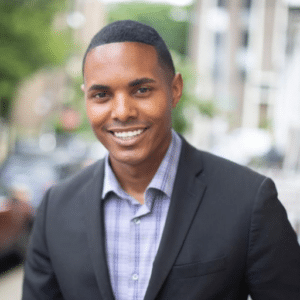
Supporters note that the bill would provide relief to struggling families all across the state. First-term Congressman Ritchie Torres (D), who represents the South Bronx, said expanding the child tax credit would do more to lift his constituents out of poverty than any other single policy.
At the same time, State Sen. Cooney projected that the bill would cut the child poverty rate in his hometown of Rochester from 48% to 44%. That’s still “ridiculously too high,” he added, but it would be a start.
“Advocates for children and ending the cycle of poverty know that there’s a lot of talk, and not a lot of action,” Cooney said. “But this is the action — this is an opportunity to make a real difference.”
In New York, 1 in 5 children live in poverty, and for Black and Latino children, the rate was nearly 1 in 3, according to census data. A 2019 report commissioned by Congress found that child poverty leads to lower future earnings, worse health and higher crime, ultimately costing the U.S. economy between $800 billion and $1.1 trillion per year.
The scale and reach of the statewide proposal has the potential to rapidly surpass the impact of decades of piecemeal philanthropic efforts to help families escape the cycle of generational poverty, said Wes Moore, CEO of the anti-poverty nonprofit Robin Hood. The nonprofit has provided more than $70 million in relief over the course of the pandemic, much of it as direct cash assistance.
The campaign to reduce child poverty is personal for Rep. Torres, who grew up in public housing with a single mother earning minimum wage. He framed the new bill as a step toward giving all children an equal chance at a stable, healthy life.
“No child in America chooses to be poor — they are born into poverty, and that accident of birth has consequences that haunt them for the rest of their lives,” said Torres at the press conference. “We as a society have a choice: we can either condemn our children to a life of senseless suffering, or we can lift them out of poverty.”