Vulnerable children, youth and families are receiving more attention from state leaders in Minnesota these days.
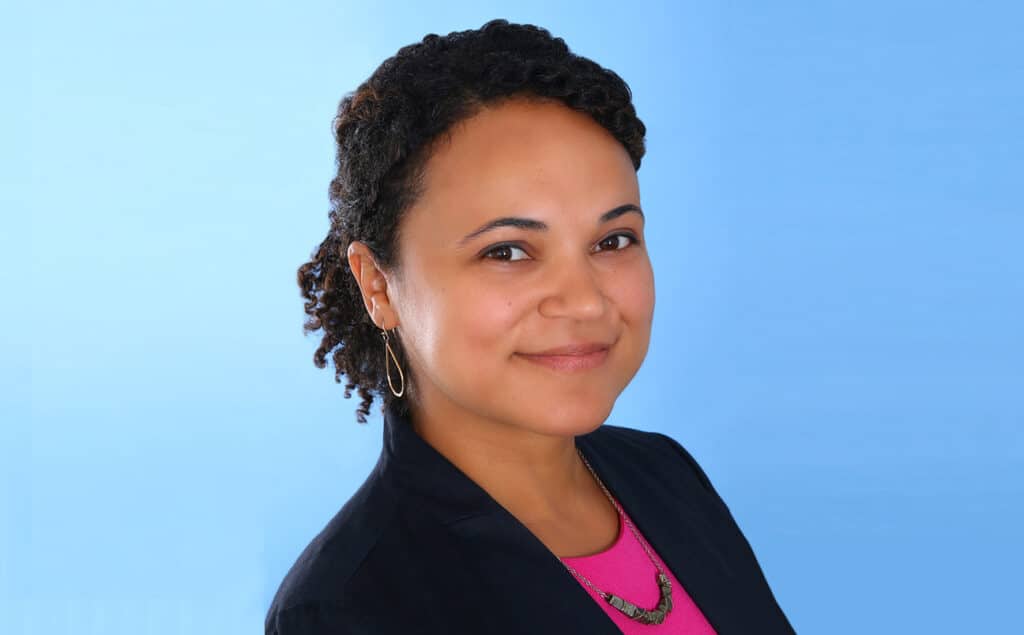
On April 29, Gov. Tim Walz announced the creation of the state’s first-ever Department of Children, Youth, and Families. And this week, he appointed Tikki Brown the incoming head of the agency that will oversee the child welfare system, child care and child support, public benefits for low-income families and services for homeless youth.
Brown, 46, is a veteran of state government with extensive experience managing social service programs. She currently serves as the assistant commissioner for Children and Family Services with the Minnesota Department of Human Services, where she has worked since graduating from the University of Minnesota in 2001 with a degree in psychology.
Brown has held numerous titles during her more than 20 years in state government, including leadership roles in programs promoting economic opportunities, employment, training and nutrition. She became assistant commissioner for the Department of Human Services in 2021.
Brown’s first day as commissioner of the new Department of Children, Youth, and Families will be July 1.
The governor’s office included multiple voices in its Monday press statement announcing Brown’s appointment — among them tribal leaders, a Children’s Defense Fund director, and youth and child care advocates. They stressed Brown’s decades of experience within state government, providing food, child care, housing and financial assistance to struggling Minnesota children and families.
Bois Forte Tribal Chair Cathy Chavers said she looks forward to “working with her to help make a difference in the lives of children across the state of Minnesota, especially those who need it most.” Chavers noted that “the knowledge and experience Tikki will bring to this position will be very helpful to tribes and the disparities we face.”
Mid-Minnesota Legal Aid attorney Jessica Webster, who represents the lowest-income state residents and marginalized communities, also praised Brown’s appointment.
“Her commitment to agency excellence is unmatched,” Webster said, “but perhaps most important to the families Legal Aid serves, we know she is committed to justice.”
When it is fully operational in July of next year, Brown’s new department will have 1,000 employees. At present, children and families are served through a variety of state agencies, including human services and the departments of education, public safety and health.
In an interview today with The Imprint, Brown said collaborating with communities brings her joy — “making sure their needs are being met at every level.”
This conversation has been condensed and lightly edited for clarity and length.
When we spoke three months ago, you described how important it was for the state of Minnesota to work to prevent foster care removals, rather than simply to respond to child welfare cases once they’ve been opened. What might that look like in your tenure as commissioner?
As I look at the opportunities with the Department of Children, Youth and Families, one of the exciting pieces is increasing leadership. We’ll have an assistant commissioner that’s solely focused on child welfare and child safety and permanency. I believe that will really help us move forward as a state and create additional opportunities to focus on some of the issues that need more attention, like foster care removals.
You’ve also described the need for “more transparent conversations and communication with families and children in the foster care system,” and more interaction on policies and procedures that affect their lives. How might that take place and what do you see coming out of it?
So one of our first orders of business with the launch of the new agency is to bring forward a new executive team. I am particularly interested in creating spaces in which we are in good communication about our policies — how that impacts people specifically, and how we can work together in collaboration to make some adjustments.
The other part of our work will be around a new strategic plan or vision. It’s in the beginning stages. One of my hopes is that we have a really robust process that invites our community partners and participants in so that we can hear from them.
“we should honor sovereignty with tribal nations and let them lead. From a state perspective, it’s up to us to make sure that they do have access and opportunity to the resources that everybody else does.”
— TIKKI BROWN
The latest version of the African American Family Preservation Act would broaden the extra protections of “active efforts” for all children disproportionately represented in the foster care system. That would mean virtually all children entitled to the ICWA-like “gold standard” of child welfare policies that prioritize family preservation. The bill remains at an early stage, but have you pondered what that might mean to children and families of color in Minnesota?
We’ve been in good conversation with the bill authors, and the community advocates as well, and we’ve provided a lot of technical assistance to the authors and the community partners. Some of that is around: what does that definition look like and what services are more necessary than others?
Nothing is set in stone right now, but I think there’s broad agreement that active efforts across our populations are incredibly important. We know it works with our equity cases, and we’re in support of increasing active efforts and adjusting our system to better meet the needs of folks.
Previous reporting by The Imprint has found that as many as one in three older foster youth identify as LGBTQ+. The federal government’s Children’s Bureau has finalized a rule this week ensuring that all placements must be free from harassment and mistreatment based on sexual orientation and gender identity. What reinforcement of this rule, if any, would you like Minnesota to achieve?
I missed that one but, I will say, some of my staff within the child safety and permanency unit has been working with a group of LGBTQIA+ folks around rights and safety. So not having read the rule, I can’t comment specifically on what that might mean. But from what you described, it sounds in line with some efforts that we have ongoing right now.
Native Americans in Minnesota are the most likely of state residents to end up in the child welfare system, and they are among the most impoverished in your state. Throughout your career, you’ve worked to deliver nutritional resources to White Earth and Red Lake Nations, the Bois Forte Band of Chippewa and the Lower Sioux Indian community. Given the intersection between poverty and the child welfare system, how will your past work inform your next job?
Yes, thank you! One of my main efforts is through a lot of learning from our tribal nations. I’ve had great folks within our Office of Indian Policy that have helped educate me, and part of that has been to look at some of our policies and legislative proposals where only some identified counties receive certain funds. So some of the work I’ve done in the past several years has been to expand that language to include our tribal nations so that they can have the resources and funding, as well as our county and community partners.
That’s really at the core of my belief on how we should honor sovereignty with tribal nations and let them lead. From a state perspective, it’s up to us to make sure that they do have access and opportunity to the resources that everybody else does.
“My questions as I go into this role have been surrounding how we make sure that people know about the services that are available to them — and what are we doing to make those connections easier for people?”
— TIKKI BROWN
Many of The Imprint’s readers work in child welfare-related fields across the country. What else would you like to share with them, as well as residents of Minnesota, about your vision for the future as commissioner of the Department of Children, Youth and Families?
I’m inspired and driven by the work done at Chapin Hall at the University of Chicago, especially with their research around how much poverty plays a role in child welfare. It’s something that I’m incredibly passionate about, having spent a lot of my life working in poverty and having lived experience as a child experiencing hunger, food and economic insecurity. That’s always at the forefront of my thinking, especially regarding the programs that we will serve.
My questions as I go into this role have been surrounding how we make sure that people know about the services that are available to them — and what are we doing to make those connections easier for people?
How will the public know that this change in state government was worth the time, effort and expense? What would you look at five or 10 years out as markers that the system is improved under the new department?
That’s one thing that we take really seriously, because this effort is large and it can be hard on employees as they are transitioning and adjusting. Having new leadership can be difficult and I’m conscious of the personal effort and strain that we’re placing on employees through this.
From a partner and community perspective, we want to make sure that there’s no disruption in services. But I believe our outcomes will be better and that can make this worthwhile.
It’s so rare that we have the opportunity to start something fresh and new, and that’s given us a chance to really examine how we are doing things and adjust them for the betterment of the folks that we’re serving. So I hope to have improved outcomes, but, as to what they are, I don’t know quite yet.
Nancy Marie Spears contributed to this report.