A class-action lawsuit has been filed against the Trump administration for abruptly ending a policy protecting immigrant children and youth who fled their home countries due to parental neglect, abuse and other maltreatment.
Those named in the Brooklyn federal court case represent an estimated 150,000 young people who have been granted a legal path to employment and citizenship in the United States — and now face the threat of deportation and an end to their livelihoods.
Immigrant youth and legal service providers are representing nine young plaintiffs identified by their initials in a 52-page court filing. They describe harrowing escapes from countries that include Guatemala, Honduras and Mexico, where they faced violence, neglect or abandonment. In each case, a juvenile court judge in the United States confirmed their stories, allowing the Department of Homeland Security to grant them Special Immigrant Juvenile Status, a designation created by Congress in 1990 as a path to citizenship.
That pathway has now been significantly narrowed by the Trump administration.
“To see them targeted in this way, it’s just really demoralizing and unjust,” legal counsel for the plaintiffs Rachel Davidson said in an interview with The Imprint. “At the end of the day these are children and young people who came here seeking protection, and the government promised it to them, and now they’re going back on their promise, and they’re seeking to deport them for no reason. It shocks the conscience, and it should wake everybody up to what’s actually happening in this country.”
In an emailed statement responding to a request for comment, Matthew J. Tragesser, a spokesperson for the U.S. Citizenship and Immigration Services, said his agency has a standard practice of not commenting on pending litigation.
— Rachel Davidson, National Immigration Project
“At the end of the day these are children and young people who came here seeking protection, and the government promised it to them, and now they’re going back on their promise. It shocks the conscience, and it should wake everybody up to what’s actually happening in this country.”
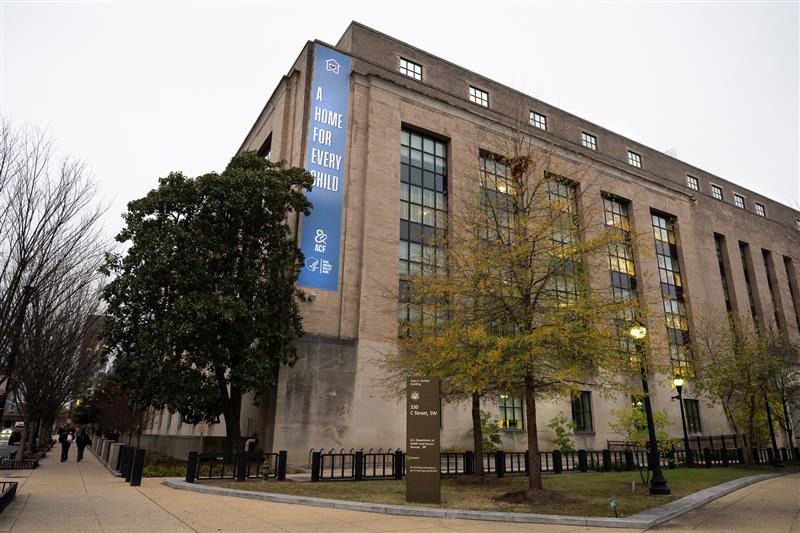
According to the lawsuit, the change in status began in April, when the U.S. Citizenship and Immigration Services quietly stopped providing a “deferred action” status to youth who the agency deemed special immigrant juveniles. That rolled back 2022 guidance by the Biden administration that allowed young people in this group to work and be protected from deportation while awaiting a visa.
Then on June 6, the U.S. Customs and Immigration Services released a new policy alert. It stated juvenile court findings that an undocumented child had been abused or neglected are not “sufficiently compelling” reasons to afford protection from deportation or permission to work.
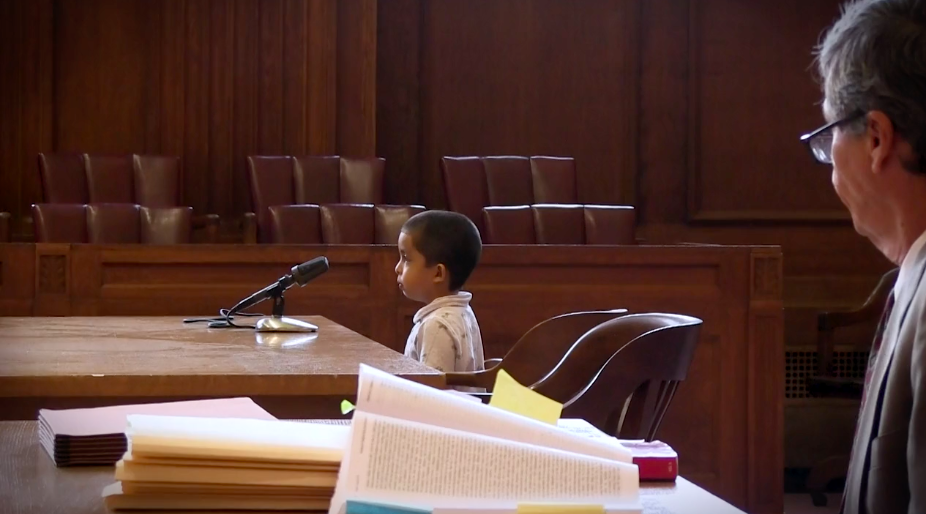
But the lawsuit filed in the Eastern District Court of New York in downtown Brooklyn contests that assertion, and alleges the department is violating longstanding immigration law. The lawsuit challenges the policy alert as “arbitrary and capricious,” calling it a violation of the Administrative Procedures Act — the key legal pillar for scores of lawsuits that have stymied many of the Trump administration’s abrupt policy decisions.
The young people named in the class-action suit arrived as teenagers as young as 13, most in the past four years. They are described in court filings as aspiring mechanics, lawyers, and dental hygienists who now face legal limbo.
One Guatemalan high schooler living with her older brother in New York City had her Special Immigrant Juvenile Status, or SIJS, confirmed in March. But the government’s recent decision has threatened her future.
“My dream is to become an astronaut. Without the protection of deferred action, I won’t be able to attend school and pursue my dreams, and I’ll live in constant fear of deportation,” the teenager identified in a press release as A.C.R said. “I was finally in a safe environment, but if I had to return to Guatemala, I would be very afraid of the violence and abuse from my mother and father.”
The plaintiffs include the nine named immigrant youth, and two leading immigrant advocacy organizations: Long Island’s Central American Refugee Center, and Oakland, California’s Centro Legal de la Raza. They are also represented by legal advocacy nonprofits including the National Immigration Project, Kids in Need of Defense and Public Counsel of Los Angeles, with pro bono corporate co-counsels from the firms Davis Wright Tremaine and Lowenstein Sandler.
The named defendants are the Department of Homeland Security and its Secretary Kristi Noem, and directors of Citizenship and Immigration Services Joseph Edlow and Terri Robinson.
Young people have been able to petition for Special Immigrant Juvenile Status if they were unmarried, 20 or younger, or under the supervision of an adult or the foster care system. Those eligible could claim that they were unable to reunify with their parents because of abuse or neglect, and a court had to rule that it was not in the child’s best interest to return to their country of origin. After a juvenile court judge approved the special immigrant petition, the young person could receive a green card when a limited number of visas became available.
About a decade ago, there was little time between the judge’s ruling and the approval of a green card. Since then, a backlog of cases has ballooned to 150,000. The wait to obtain legal status has grown from a few years to about a decade, immigration attorneys said.
President Donald Trump’s team has quietly and dramatically upended protections for immigrant youth amid a larger crackdown on immigrants. After campaigning on a program of mass deportation, Trump signed a historic tax-and-spending bill earlier this month that included billions of dollars in new funds for immigration enforcement officers and detention facilities.
.
— Plaintiff A.C.R., from the lawsuit filed on Thursday
“My dream is to become an astronaut. Without the protection of deferred action, I won’t be able to attend school and pursue my dreams, and I’ll live in constant fear of deportation. I was finally in a safe environment, but if I had to return to Guatemala, I would be very afraid of the violence and abuse from my mother and father.”
In a well-publicized appearance in San Francisco today, U.S. Attorney General Pam Bondi and Interior Secretary Doug Burgum toured the long-shuttered Alcatraz prison tourist site, which they vow to reopen to “house the most dangerous criminals and illegals,” Burgum told a reporter.
The end of Biden-era deportation protections for abused and neglected youth follows hundreds of workplace raids and brash shows of force in Los Angeles County. Since mid-June federal agents have conducted mass arrests targeting undocumented people at Home Depots, public parks and courts. U.S. Immigration and Customs Enforcement personnel and members of other federal agencies have also swept up citizens, leading to claims of racial discrimination and a lawsuit by local governments and a coalition of civil rights groups and immigrant advocacy organizations.
Kari White, an immigration attorney with the Children’s Law Center of California, said the loss of deferred action and work permits for youth lands as yet another blow — this time for children in the county’s foster care system who qualify for special immigrant juvenile status. Without the ability to work legally, it will be difficult for them to afford higher education, she said.
“We’re subjecting them to dangerous conditions, where youth are working under the table, being put into really unsafe situations where they can get hurt, experiencing wage theft and facing all kinds of labor exploitation,” White said.
There is no data about how many foster children in California have qualified for the special immigrant juvenile status, though about 1,200 foster children represented by the Children’s Law Center of California have some kind of immigration case, according to the nonprofit firm.
White said some clients might seek relief and work permits through other legal pathways, such as asylum and U and T Visas. However, not all youth currently in the special immigrant juvenile status program will qualify, and that legal process is arduous — requiring lengthy and detailed testimony about the trauma they experienced.
Reversing the 2022 Biden administration guidance makes the lives of immigrant youth in foster care more difficult in other ways as well. Work permits can be the only form of identification young people have, necessary for opening bank accounts, obtaining driver’s licenses and cashing checks for independent living placements.
Joel Frost-Tift, an attorney with Public Counsel in Los Angeles who works on these cases, said most of the young people he works with are “completely terrified.” Even a client who had recently been awarded a green card was too scared to pick up the document from the firm’s Koreatown offices in the wake of immigration raids.
“This has been completely devastating for these young people,” Frost-Tift said. “The Trump administration is trying to make it impossible for people to play by the rules. In the end, they want to make things so difficult for them that they’re forced to break the rules, and then they have an excuse to deport them.”