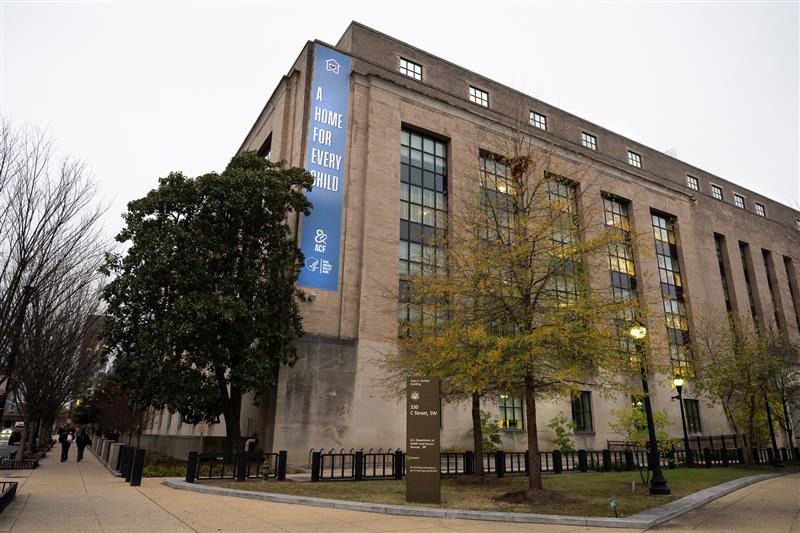

A lawsuit filed last week in a New York City federal court alleges the city’s child welfare agency repeatedly investigated a Brooklyn mother “without a court order supported by probable cause of abuse or neglect,” following a series of false reports to the child protection hotline.
The baseless reports over a three-year period were made by an unknown caller and relentlessly pursued by CPS workers, violating the constitutional rights of the Brooklyn mother and her young son, according to the legal filings.
“These reports are anonymously sourced and each contains similar demonstrably — and demonstrated to be — false allegations,” states the suit filed by Brooklyn Defenders Services and Crowell & Moring LLP. It further states that the city’s Administration for Children’s Services (ACS) “has determined each and every time that the allegations are baseless and unfounded,” but nonetheless pursued the investigations.
The mother’s name is identified in the lawsuit as “L.B.” to protect the identity of her son, now 10. The CPS investigations “have severely disrupted their family and school life,” the suit alleges, causing mother and son “severe and ongoing harm, distress, and anxiety.”
In an interview, the mother said the child welfare agency’s actions felt “malicious.” The experience left her feeling she let her son down, and she worries that the multiple investigations of false claims will have harmful long-term effects.
“I wasn’t able to protect him like a mother,” she said. “Especially when he had to come home and cry to me that the kids were teasing him, saying: ‘ACS are gonna come and take you.’
“I just felt like I failed him.”
“They do these indiscriminate coercive investigations, which go far beyond what’s necessary to keep children safe — and instead cause harm.”
— Jessica Marcus, Plaintiffs’ attorney
A spokesperson for New York City’s Administration for Children’s Services told The Imprint that her agency is unable to publicly discuss individual cases. She added that city workers are legally obligated to investigate all reports referred by screeners at the Statewide Central Register of Child Abuse and Maltreatment (SCR) — and under current law, those referrals can include anonymous reports.
But in a noteworthy response to the broader concerns raised by L.B.’s lawsuit, she conceded that statewide reforms to the “front door” of the child welfare system are needed.
“Reducing unnecessary reporting will reduce unnecessary investigations,” the spokesperson stated in an email. “The State should conduct a full review and assessment of SCR practice and policies, as well as mandated reporter laws, and then take actions (legislative or otherwise) to address.”
The city spokesperson added that the review should include “looking at how the SCR itself accepts and rejects calls, how operators explain other ways to access services, and then publicly sharing this data.” She called on the state to assess current mandated reporter laws, such as those making it a crime for some professionals not to report suspected maltreatment “and whether the standard to make or accept a report should be changed.”
In closing, she said: “we believe the State should look at the SCR’s policies and procedures for weeding out false and malicious reports, so that families are not subjected unnecessarily to investigations.”
Jessica Marcus, a court-appointed lawyer for L.B, found this line of reasoning inadequate.
“ACS cannot shirk its responsibility to respect the constitutional rights of families during its investigations by shifting blame to the State,” she said.
Anonymous hotline calls
The lawsuit, filed Nov. 15 in U.S. District Court, was first reported by the investigative news outlet ProPublica, following a related investigative story published last year with NBC News.
The plaintiffs seek an injunction preventing the city child welfare agency from searching L.B.’s home and from “interrogating” Kyle at his school without a court order. They also seek “reasonable compensatory and punitive damages” as well as “any other appropriate relief to remedy ACS’s violations of Ms. B and her son’s rights under the Fourth and Fourteenth Amendments.”
L.B. states in court documents that her troubles began early one January morning in 2021, following the first of several anonymous hotline calls that her lawyer called “outlandish” and “preposterous.” The caller falsely alleged that L.B. “had additional minor children, that she worked in a strip club, that she lived with her children in a bar, and that she had minor daughters whom she sold to adults for sex,” her lawsuit states.
Court filings show that at the time, the only minor child she had was her then-7-year-old son and she worked at a residential facility for developmentally disabled children and adults.
L.B. said in an interview that the child welfare agency was never able to find out who the person making false claims about her was, and she remains unsure.
“It’s the kids that are going through the real trauma.”
— lawsuit plaintiff L.B.
Still, as is standard in child maltreatment investigations, CPS investigators showed up at her door accompanied by police officers. The workers also engaged in another common practice that is increasingly under scrutiny: CPS entered L.B.’s home without a warrant. In its investigation, ProPublica and NBC News found the city agency obtains court orders to enter homes in less than 0.2% of child welfare investigations.
Fearful and intimidated by an agency that can remove their children, most parents do not know — and are not informed — that they do not have to let CPS workers into their homes without a court order, which involves agency staff taking the extra step of presenting preliminary evidence to a judge before returning to the home. These unannounced in-person investigations can include looking in the refrigerator and kitchen cabinets, inspecting bedrooms and other personal spaces and interviewing neighbors and relatives.
The lawsuit calls out the harm of another investigatory tool among workers seeking information on children’s safety: L.B.’s son was interviewed at school — where his peers could find out — and he was asked to lift his clothing so the worker could check for bruises.
“It’s the kids that are going through the real trauma,” L.B. said of these types of inquiries.
The investigations ultimately cost her one of her jobs. Court documents state that amid the CPS investigations, L.B. had to take leave from work when her son’s pediatrician diagnosed him with anxiety, and recommended she stay home from school with him. That led to a job suspension in February 2021, after her employer “told her that she could come back only if the agency concluded that the allegations were unfounded.” She was reinstated once the issue appeared resolved, but let go again when a new round of investigations began. She now has a job with less pay and no benefits — unlike the one she lost.
“Due to ACS’s continued investigations, which made it impossible for Ms. B. to do her job, Ms. B. was terminated by her employer,” the lawsuit states. “She was out of work for months.”
The right to refuse entry
There are growing calls state and nationwide to reform the early stages of the child welfare system, which disproportionately ropes in Black families like L.B.’s.
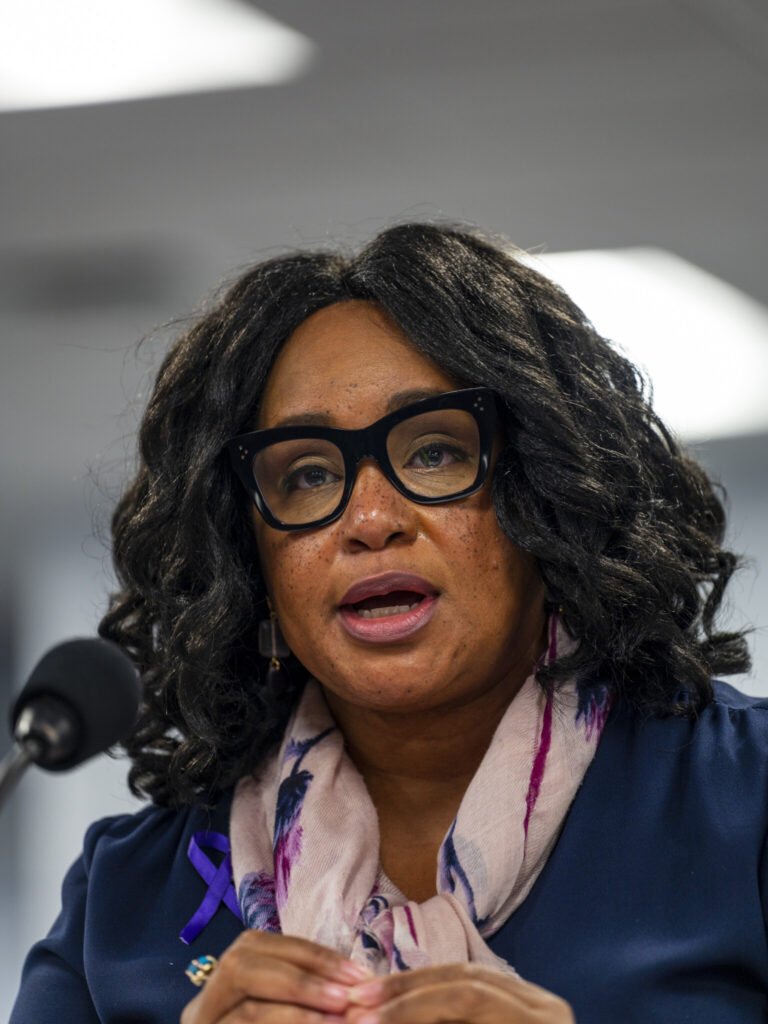
Earlier this year, Lisa Ghartey Ogundimu, then a deputy commissioner of the New York’s division of child welfare and community services, criticized “a staggering increase of abuse and maltreatment reports that not only are unwarranted in the first place, but in many cases were based solely on race and poverty.”
In attempts to narrow the number of families entangled in unwarranted calls, the nation’s most sizable states, California and Texas, have passed laws requiring hotline callers to provide their names to CPS screeners. And in Texas, CPS workers must inform parents they have the right to refuse entry without a court order.
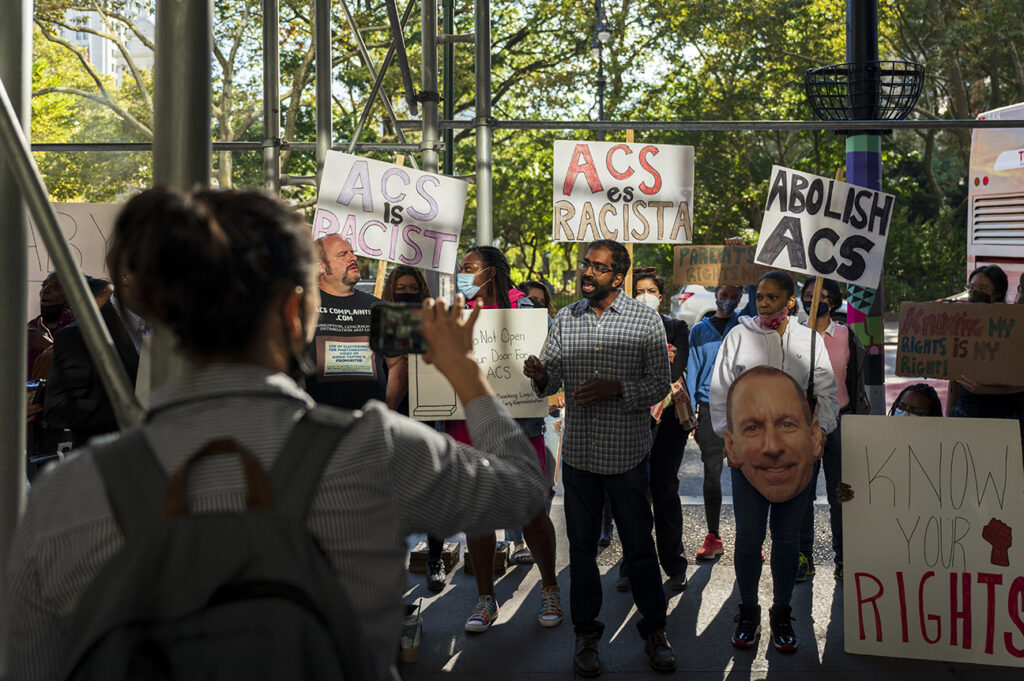
In New York, parents and advocates have called for similar changes for years.
Public officials are beginning to take heed.
A New York City spokesperson said anonymous reports — which have a lower substantiation rate than most other child maltreatment reports — have dropped from 15% of all reports in 2019 to a current 5%. She attributed the change to years of local advocacy efforts and more careful screening at the state hotline.
And last month, local officials launched a pilot program in select neighborhoods in the Bronx and Brooklyn, requiring CPS workers to hand parents an information card informing them of the right to refuse entry and advising them that they can call a lawyer at any point of an investigation.
But to date, statewide reforms have failed to pass.
“We believe the State should look at the SCR’s policies and procedures for weeding out false and malicious reports, so that families are not subjected unnecessarily to investigations.”
— ACS Spokesperson
Proposed legislation authored by state Sen. Jabari Brisport would require child protection investigators to inform parents of their rights upon first contact — including the right to refuse a social worker’s entry into their home without a court order. The bill has twice failed to pass both houses of the Legislature.
The Anti-Harassment in Reporting Act would require that every caller to the state hotline provide their name and contact information, which would be kept confidential. It died in committee in 2018.
‘This child has already suffered trauma.’
L.B.’s lawsuit states that two family court judges have denied the agency’s requests for court orders to enter L.B.’s home and “rebuked ACS for its conduct.”
One of the judges ordered the agency to refer the case of “malicious reporting” to the Kings County District Attorney for potential prosecution, since it is illegal to make a false report to the child protection hotline. The judge also ordered ACS to end the investigation, and to place a note in the electronic files so “that if subsequent calls are made they are to be treated very carefully, because this child has already suffered trauma.”
The judge noted: “Showing up in the middle of the night is traumatic; taking off kids’ clothes is traumatic.” Although the court acknowledged the child welfare agency’s need to follow rules, it cautioned that rules must be adjusted when “following them is more likely to do harm than uncover any concern.”
L.B.’s attorney Marcus called these practices unconstitutional, and says she has seen them play out numerous times, more often than not when investigations involve families of color. And most parents aren’t aware of their rights when CPS comes knocking.
“It’s their process,” she said. “They do these indiscriminate coercive investigations, which go far beyond what’s necessary to keep children safe — and instead cause harm.”
Roughly one year after the reports began, L.B. learned of her rights through a colleague. She said she felt enormous relief knowing she had the power to say no to CPS if the worker did not have a court order. Still, she feels fearful about when the caller could strike again.
Her hope in filing the lawsuit, she said, is that it will increase awareness and empower women who are being similarly harassed — especially single mothers.
“I wish I knew this before, because maybe, just maybe, it would have caused less damage to my son,” L.B. said.
Children and families need nonprofit news.
Nonprofit news needs you.
Donate today to support The Imprint in 2024.