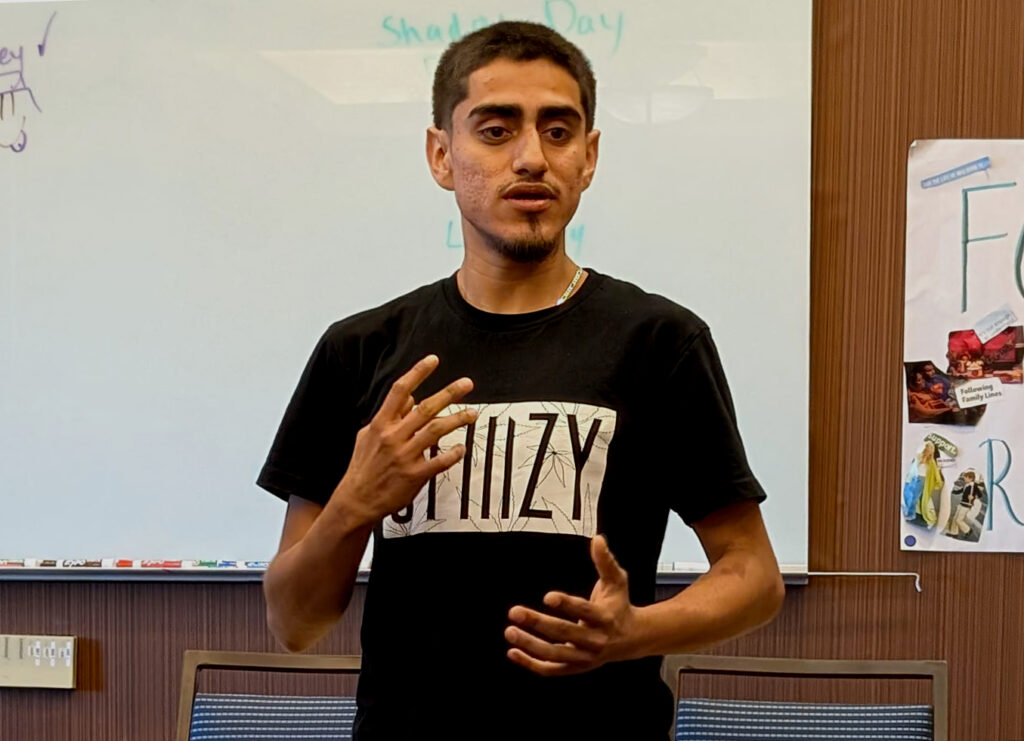
A failure to appear in court for a years-old traffic citation led to youth advocate Axel Pecero’s arrest by Burbank police — and brought him to the attention of ICE.
Part one of a two-part series. Read part two here.
Axel Pecero was lost.
It was a warm and clear August night, just hours before the sun would rise, and he was wandering an unfamiliar part of Los Angeles with little money and a dead phone.
But the worst was yet to come.
By the next day, Pecero would become one of the thousands of undocumented people swept up in the Trump Administration’s immigration dragnet.
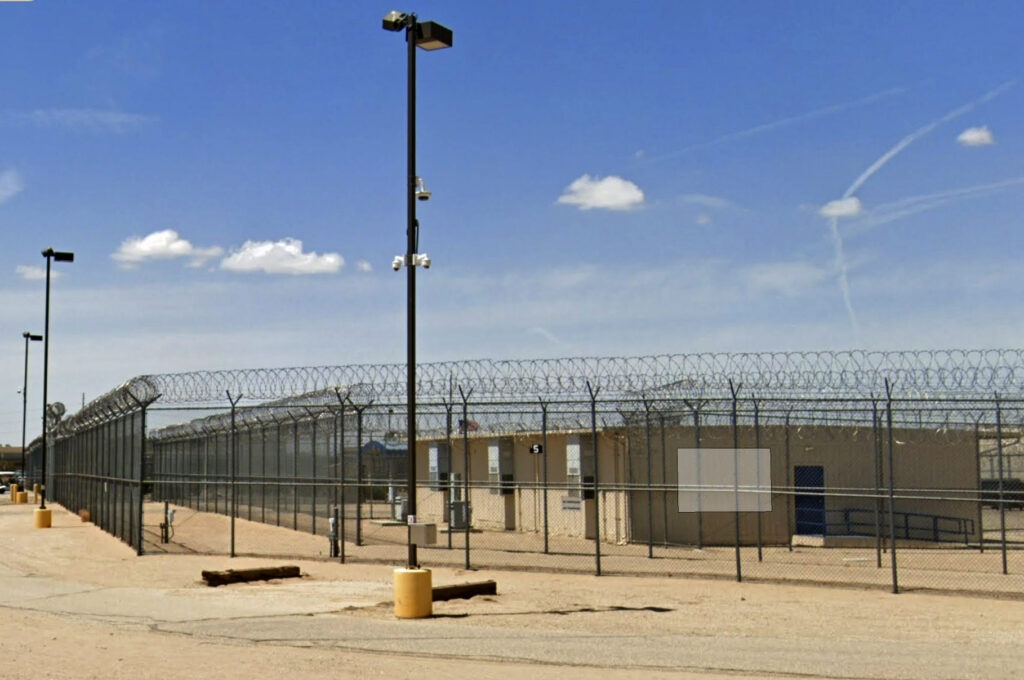
Since Aug. 6, Pecero has been in the custody of the U.S. Immigration and Customs Enforcement. The 25-year-old former foster youth and father, who was brought to the United States from Mexico as a small child, is being held at the Adelanto ICE Processing Center in San Bernardino County and faces possible deportation.
Over the past few years, Pecero has worked as an advocate for young people involved in the foster care and juvenile justice systems. Dozens of letters of support for the South L.A. man have been submitted to the court on his behalf.
Pecero hopes the letters and the efforts of his immigration attorney will prevent him from being sent away from the only country he has known as home.
“I’m really hoping that the judge is able to see that I’m working on my education,” Pecero said from Adelanto in a 30-minute phone interview with The Imprint. “I want to be able to stay here with my son and continue living my life.”
He has watched other detainees being shackled and whisked away in the middle of the night by ICE agents, their shirts emblazoned with the word “Deportation.”
In the call, Pecero described the series of missteps and decisions that brought him to a deserted Burbank street on a dark night and placed him in the crosshairs of the nation’s unprecedented crackdown on immigrants.
In the weeks following his detention at Adelanto, a notorious facility known for its poor conditions, Pecero has cycled through feelings of frustration and helplessness, he said. He has watched other detainees being shackled and whisked away in the middle of the night by ICE agents, their shirts emblazoned with the word “Deportation.”
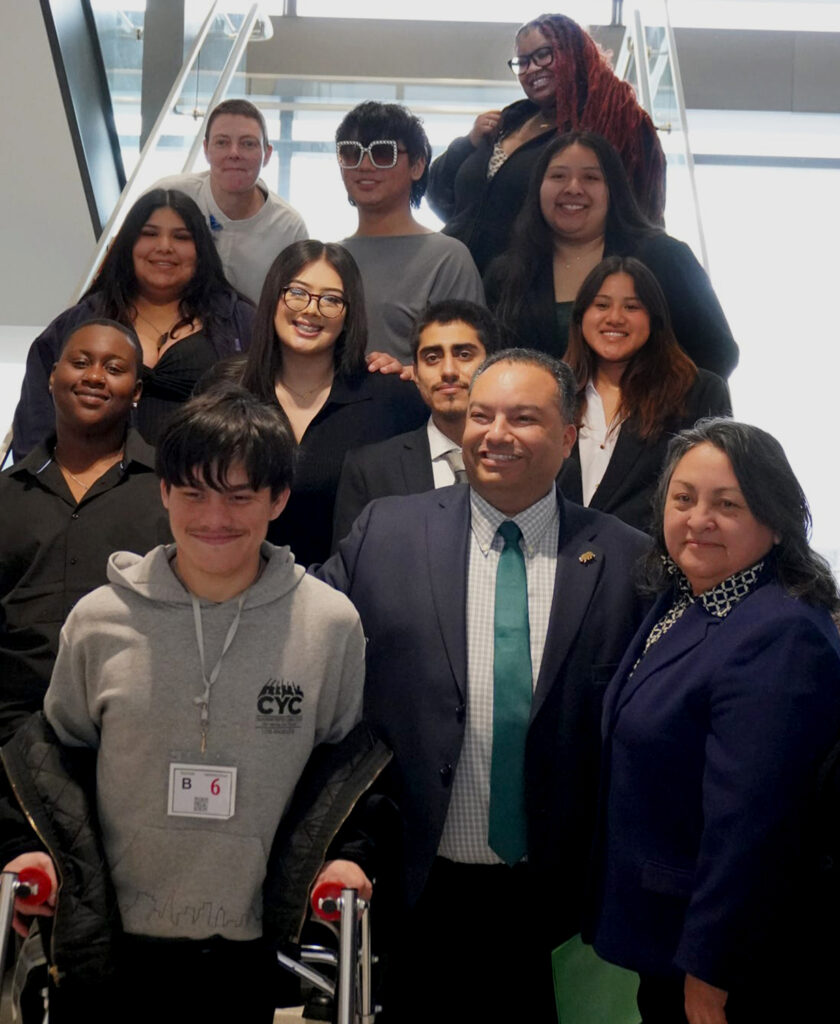
Life was just beginning to click into place for the former foster youth as he settled into his mid-20s. After years of upheaval and instability, he is today a proud father who dons suits to testify for foster youth at the state Capitol. He has earned a reputation as a dedicated advocate. He was in the process of trying to leave his mistakes behind and clear his record.
Now he wonders: Will all of the effort that he’s made in recent years to get off the streets and change his life be undone?
“No matter how much I thought I was American — I wasn’t,” Pecero said. “I really hope I have the opportunity to solidify the foundation for the life that I want to lead.”
His current predicament illustrates how missteps that others might attribute to youth can yield enormous consequences for the undocumented amid the current administration’s aggressive immigration operation.
On Aug 5, the night before he wound up in ICE custody, Pecero went to Hollywood to meet a friend and see a band perform. He had traveled from Burbank, about 16 miles away, where he was attending a work conference on youth with substance and behavioral health issues.
Around 9 p.m. he decided to head back to his Burbank hotel. He had an early morning commitment, he told his friend; he was participating in a training session for organizations serving young people in the child welfare and juvenile justice systems.
He rode a bus back to Union Station in downtown Los Angeles where he hoped to take a commuter train to Burbank. But once there, he realized he had miscalculated — he didn’t have enough money for the fare. His only option, he said, was to take several local buses to reach his hotel.
The first bus never arrived. He waited for a different one but it didn’t show up for another hour. It was 3:30 a.m. when he finally arrived at his next stop. Rather than wait for a bus that wasn’t scheduled to come for yet another hour, Pecero decided to walk the rest of the way, he said.
But now he had another problem. His phone battery was running out of power.
“Are you on probation or parole?’’
By the time he made it back to Burbank on foot, Pecero’s phone was dead. Without a navigation app, he had little idea where he was.
He found himself in an industrial part of the city, near the airport, he said. He trudged along San Fernando Boulevard, thinking that everything would turn out all right if he could just make it back to the hotel in time for his morning training session.
He was hopeful. He felt he was getting closer.
Then a bright beam of light sliced through the night and fell on him.
“Are you on probation or parole?” a voice boomed out from the darkness.
Pecero told the men in the police cruiser that he was neither. He told them he was lost. He asked for a ride to his hotel.
The voice demanded his identification, and now, he said, it sounded hostile.
“Am I under arrest?’’ Pecero asked. “Am I being detained?”
The Burbank police officers told him, “No,” so Pecero told them he would keep on walking. He asked for directions to the hotel.
Then it happened. He was pushed against the police car and handcuffed, he said. The officers had run his name and found an outstanding warrant related to an unpaid traffic ticket he received for driving without a license in 2021. The arrest warrant was issued after he didn’t show up for a court date on the matter.
It was a little after 5 a.m. when Pecero arrived at the police station. He was fingerprinted, jailed and promised, he said, that he would be released “soon.’’ Hours later, he walked out of the Burbank jail.
Two Homeland Security officers were waiting for him.
“At that moment, I felt my heart drop,” Pecero said.
On the other side
It all felt so surreal.
Days earlier, Pecero had passed several U.S. Marines stationed outside a federal building surrounded by demonstrators protesting the immigration raids and sweeps taking place across the city at schools, Home Depots and worksites.
“No matter how much I thought I was American — I wasn’t.”
— Axel Pecero
Now, he was on the other side of the tempest, awaiting transport to the Adelanto ICE Processing Center, a detention facility that lies about a two-hour drive from downtown Los Angeles.
What stung most, Pecero recalled, was the casual banter between the two ICE agents waiting with him. As the seriousness of his predicament pressed more heavily on him with each passing moment, the agents traded wisecracks about the number of people they had picked up that day. They bragged that they were going on another “money run” later that day to detain other immigrants.
“I would hope my life is not like a pawn in somebody’s game or just extra money in somebody’s paycheck,” Pecero told The Imprint.
Meanwhile, back at the Burbank hotel where he’d been staying, Pecero’s colleagues were worried. He hadn’t shown up for his training session. No one knew where he was.
Tasha Norton-James, a trainer with the organization running the event, brought her concerns to hotel staff and asked to enter his room. Inside, they found his possessions, but no sign of Pecero. No one knew what to think until his brother arrived at the hotel later that afternoon with news of the arrest and detention. The brother had come to collect his belongings.
Norton-James is among Pecero’s friends and supporters who find it troubling that Burbank police stopped Pecero in the first place, when he was simply walking on a city street.
And they don’t understand how a man with traffic-related misdemeanors fits the profile of those the federal government has said are the targets of ICE operations — “the murderers, the MS-13 gang members, the pedophiles and rapists,” that Department of Homeland Security spokeswoman Tricia McLaughlin referred to in a statement last July.
“They’re supposed to be picking up the ‘worst of the worst’ criminals, but they detained Axel, who’s making this world a better place,” Norton-James said.
A ‘normal’ childhood
Pecero arrived in the U.S. when he was 3, brought to Los Angeles by his grandmother. He lived with an aunt and uncle until his parents arrived from Mexico, he said.
When Pecero was 8, his mother returned to Mexico. He remained in the U.S. with his father, but at 16, moved in with an aunt to escape his father’s abuse, he said.
Pecero never formally entered the county’s child welfare system. Instead, he lived with his aunt under an informal arrangement referred to as “hidden foster care.’’ As an unlicensed caregiver, his aunt wasn’t eligible for county resources and support that other relatives and foster parents receive.
At this point in his life, Pecero says he lived like any other typical teen in the U.S. — attending high school and crazy about basketball. Friends recall that he couldn’t pass by a pickup game without asking to join in.
“Growing up, I always thought I was normal,” he said.
But after graduating in 2018, Pecero went from one unstable housing situation to another. Eventually he wound up living in his car.

Two “cite-and-release” cases during that time continue to have far-reaching repercussions for him. In 2020, a joyriding incident led to four misdemeanor charges, including being in possession of a stolen vehicle, court records show.
In March 2021, Pecero was charged with a misdemeanor for driving without a license. It was a warrant for failing to appear in court for that case that led to his recent arrest.
Both cases are on hold while he is being held in Adelanto, though the latter case has escalated dramatically. Because Pecero was in ICE detention and failed to appear for a court date in late August, his initial $10 bail amount now carries a $100,000 bench warrant.
California State Sen. Caroline Menjivar — who is familiar with Pecero’s case and is advocating for his release — said youthful missteps like this should not lead to imprisonment and possible deportation. In an interview, she said she sees parallels in Pecero’s life experiences to her own. She also had run-ins with the law as a young person.
But she said she believes making mistakes is a normal part of growing up, and noted research showing that the area of the human brain that governs impulse control and decision-making doesn’t mature until well after the teenage years.
“They’re supposed to be picking up the ‘worst of the worst’ criminals, but they detained Axel, who’s making this world a better place.”
— Tasha Norton-James
And traumatic and destabilizing events like family separation and homelessness — both of which Pecero experienced — can disrupt development and narrow choices, Menjivar and his other supporters say.
“I recognize that he missed his court appointment, but he was an unhoused foster youth,” she said. “What do we expect from somebody who we turned our backs on? What do we expect when we do not provide the resources for him?”
Finding family
Learning he was going to become a father is what pushed Pecero to seek stability, he said. He saved $600 to rent a room in a house and move out of his car. He saw a flyer for Los Angeles’ Trade Tech community college and qualified for a scholarship that covered classes and housing there.
While attending college, Pecero learned about the advocacy work being done on behalf of foster youth by California Youth Connection. The nonprofit’s mission and sense of community spoke to him. He decided to join.
“They really just took me in, like the family that I didn’t have,” he said.
Over the past two years, his advocacy has grown to include projects with the Los Angeles County Office of Education — work that has taken him from Sacramento to Washington, D.C. Sometimes he would bring his son, now 4, to community meetings and conferences. He called the boy his inspiration.
“Before my son, I didn’t really have any set goals,” said Pecero. “I’ve really tried my best to change, and to be somebody for my son.” He hopes to become a social worker one day.
Now, roughly 80 miles separate father and son, and Pecero’s future rests in the hands of an immigration judge who will determine whether he will be allowed to stay in the country.
In the meantime, he has found a purpose and a rhythm to his days at Adelanto by helping other detainees. He uses his fluent English and Spanish skills to translate documents for others. He collects commissary money for birthday gifts for detainees — a diverse group that includes people who speak Arabic, Mandarin and Punjabi.
He’s also begun writing as a way to pass time and take his mind off his situation, he said.
The title of his first essay: “The life of an immigrant who thought he was an American.”
Tomorrow: Foster youth advocates, lawmakers and friends campaign for Axel Pecero’s release.