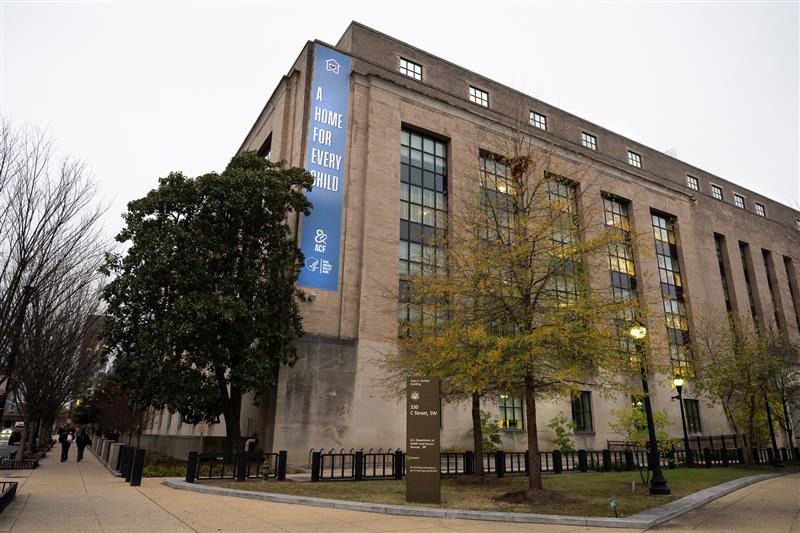


“This is an area where we can do better, and must do better,” Assistant Secretary of the Administration for Children and Families Alex Adams said at a high-profile event Monday.
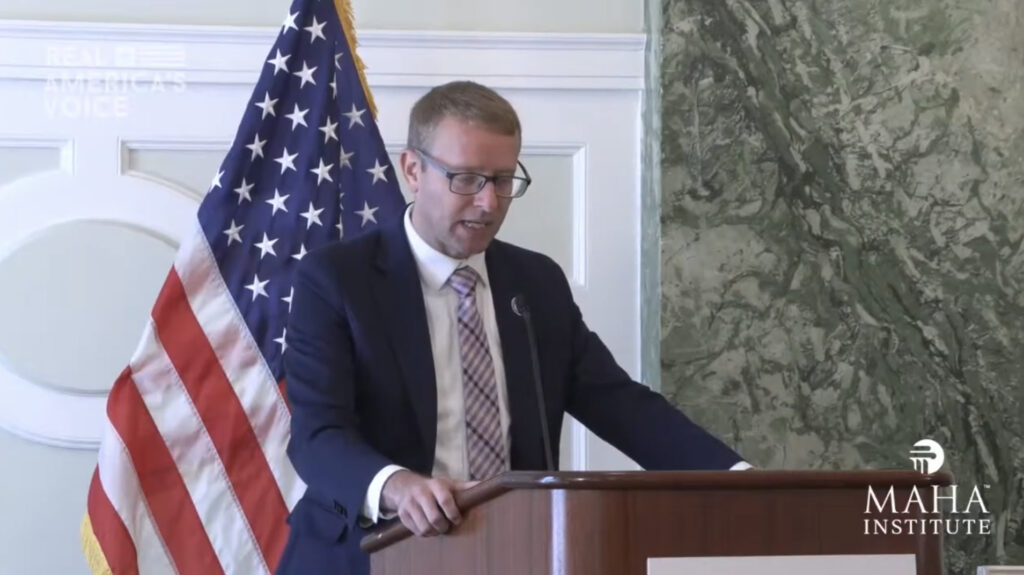
At a gathering of federal health and human services officials on Monday, the nation’s leading child welfare official pledged to heighten focus on the problem of overmedicated foster youth.
Convening at a White House-adjacent hotel with members of a grassroots movement against psychiatric drugs, Alex Adams, assistant secretary of the Administration for Children and Families (ACF), described a forthcoming shift in his agency’s strategy for overseeing prescribing practices. He also announced a summer convening of state Medicaid and child welfare officials to discuss issues overlapping both systems, including psychotropic medication use for foster youth.
“This is an area where we can do better, and must do better,” Adams said.
Psychotropic medication ranges from common stimulants for attention-deficit disorder to antipsychotics designed to treat bipolar disease and schizophrenia in adults. The latter drugs can cause debilitating side effects such as uncontrollable tremors and severe weight gain. While antipsychotics help some patients with severe mental illness function in daily life, there is little evidence of the long-term efficacy or safety of such medications for children.
In an investigative series published last spring, The Imprint examined all 50 states’ foster care medication policies and related class-action lawsuits across the country. Despite the high risks for children, the reporting revealed spotty enforcement of federal requirements that state agencies monitor psychotropic prescriptions for foster youth.
Congress created those requirements in 2011, with bipartisan legislation. Three years later, senators vowed to continue to “play offense” on this issue, and the Obama administration proposed a massive $750 million investment in curbing the use of psychotropic medication in foster care.
But on Monday, Adams noted that foster youth have “significantly elevated behavioral health needs,” and cited recent research showing that 40% have received some behavioral health diagnosis. As a result, in some states, this population of young people — who experience instability and trauma before, during and after their time in foster care — are still prescribed psychotropic medication at 2.7 to 4.5 the rate of other low-income children on public health insurance, Adams said.
“Let me be clear. ACF’s goal is not to eliminate medication,” he said. “It’s to ensure that when medication is used, it is appropriate, it’s coordinated, and it’s part of a comprehensive plan.”
—Alex Adams, assistant secretary for the administration for children and families
Monday’s high-profile event took place below chandeliers in the marbled Crystal Room at the Willard Hotel in downtown Washington, D.C. It was hosted by the MAHA Institute — short for “Make America Healthy Again” — which supports Health Secretary Robert F. Kennedy Jr.’s agenda of opposing longstanding vaccination policies and mental health medication. Other speakers included Laura Delano and Cooper Davis, a married couple who are key figures in what The New York Times has described as a growing “online DIY subculture focused on quitting psychiatric medications.”
The event was focused broadly on “mental health and overmedicalization.” It began with four young adults who spoke in graphic and emotional terms about feeling they’d been “chemically lobotomized” by heavy, yearslong medication regimes, which they referred to as “chemical castration” and being “maimed by the industry” of drug manufacturers.
In contrast, Adams repeatedly emphasized that medication has to play some role for foster children.
“Let me be clear. ACF’s goal is not to eliminate medication,” he said. “It’s to ensure that when medication is used, it is appropriate, it’s coordinated, and it’s part of a comprehensive plan.”
While most children enter foster care due to parental neglect, and a smaller share for physical abuse, Adams noted that in his previous job as Idaho’s human services chief, 18% of foster kids entered the system because they suffered from mental health or substance abuse challenges.
He added that his agency was having high-level discussions with the U.S. Centers for Medicare & Medicaid Services, run by Dr. Mehmet Oz, to obtain better state-by-state data on psychotropic prescribing, “So ACF can more objectively intervene in states for data that shows weak practices.”
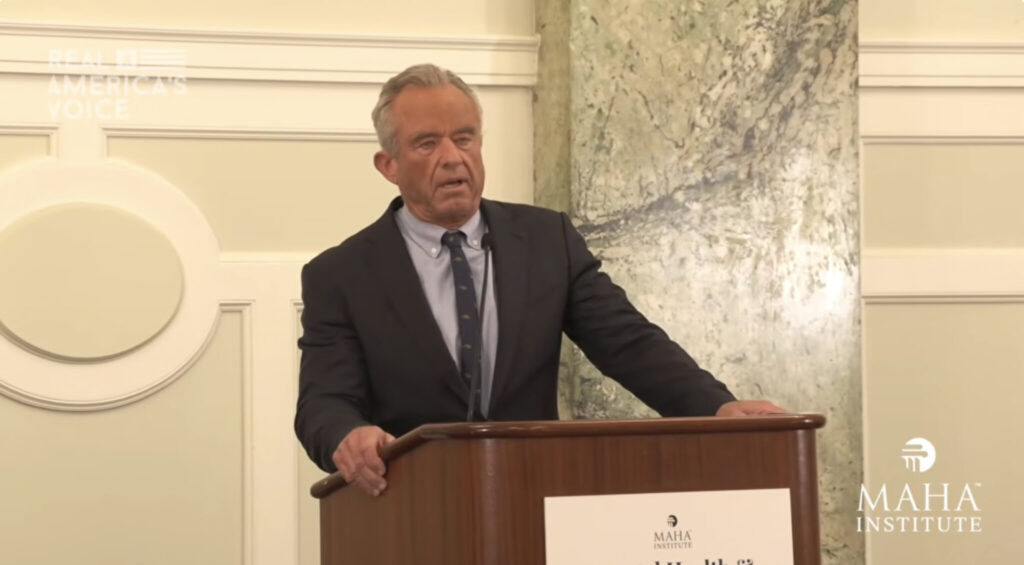
The nation’s top health official, Kennedy, Jr., addressed the crowd after press time, but a series of panels throughout the day featured a mix of officials working under him, and activists and dissenting doctors who have been sharp critics of the medical establishment. The head of the MAHA Institute, Mark Gorton, introduced Kennedy as “a leader championing the fight against health system corruption,” including “the forces sickening Americans” and “a corporate predatory medical system.”
Many members of the health establishment, though, including former Centers for Disease Control and Prevention leaders and other public health authorities have accused Kennedy of promoting dangerous health policies. He has been grilled by Democrats and some Republicans in Congress about his lacking support for measles vaccines amid a surge of deadly measles cases in children nationwide, among other controversies.
One of the child psychiatry field’s leading advocates for reducing reliance on psychotropic medication with foster youth, Dr. Christopher Bellonci of Harvard Medical School, said he watched Monday’s livestreamed proceedings with trepidation. He said he appreciated Adams’ acknowledgement of the role medication can play in a more comprehensive behavioral health treatment plan, and the renewed federal dialogue about capturing better data on states’ prescribing.
But Bellonci, a distinguished fellow with the American Academy of Child and Adolescent and Child Psychiatry, also worries that the complexity of “deprescribing” and tapering children off medications will be reduced to soundbites, and that the broader MAHA movement could veer into a dangerously anti-medication direction.
Bellonci said there are “elements of truth” among some outspoken anti-medication activists, even those who hold fringe views.
“We need to listen to the experience of our patients while also continuing to understand when and how deprescribing makes sense and then how best to taper young people off medications when it is safe and appropriate to do so,” he said.