Hotels aren’t meant to be homes. But for many working families in metro Atlanta, they are the only option.
A recent report released by Georgia State University’s Center on Health and Homelessness found that more than 4,600 adults and children in DeKalb County rely on motels and hotels as a last-resort shelter. These families make up one of the county’s largest unrecognized homeless populations, the study states.
Roughly 45% of the 200 families who agreed to be surveyed reported that they have lived in hotels for the past one to five years. But as many as 16% reported they had been living in hotels for even longer.
“That, to me, was one of the most shocking things that I saw,” said April Ballard, a public health assistant professor who led the study.
The Georgia State researchers found the number of families without stable housing is 25 times higher than what was reflected in DeKalb County’s most recent homeless assessment released in 2025.
“It’s a really tricky situation to be in because you technically have a roof over your head, and even though this is an inadequate space, that is almost held against you.”
— April Ballard, study leader
Previous tallies haven’t captured the full picture regarding families, researchers said, because the federal definition of homelessness focuses on people without regular, adequate nighttime residence — and families living in hotels do not meet those criteria. As a result, they’re excluded from homelessness data and federally-funded resources such as emergency shelter, rental assistance and permanent housing programs.
“This specific population, it’s a really tricky situation to be in because you technically have a roof over your head, and even though this is an inadequate space, that is almost held against you,” Ballard said.
On Wednesday, a coalition of lawmakers and housing advocates highlighted the hotel homelessness crisis during a press conference inside Georgia’s Capitol. The Healthy Housing Day event was sponsored by Rep. Mary Margaret Oliver.
Michael Waller, executive director of Georgia Appleseed, a nonprofit law center, shared the story of “Miss Green” — a Clayton County grandmother raising her grandsons in a two-star extended stay hotel.
Battling health struggles, Miss Green resorts to asking for money on the street to pay the $60 daily rate, he recounted. Each night, she washes the boys’ clothes in the bathroom sink and cooks dinner out of a “single, dirty microwave” shared by the entire floor.
“Miss Green is doing everything in her power,” Waller said. “She loves her boys fiercely.”
But he said families like these need more support from the state, adding that Georgia only spends .02% of its total budget on housing programs.
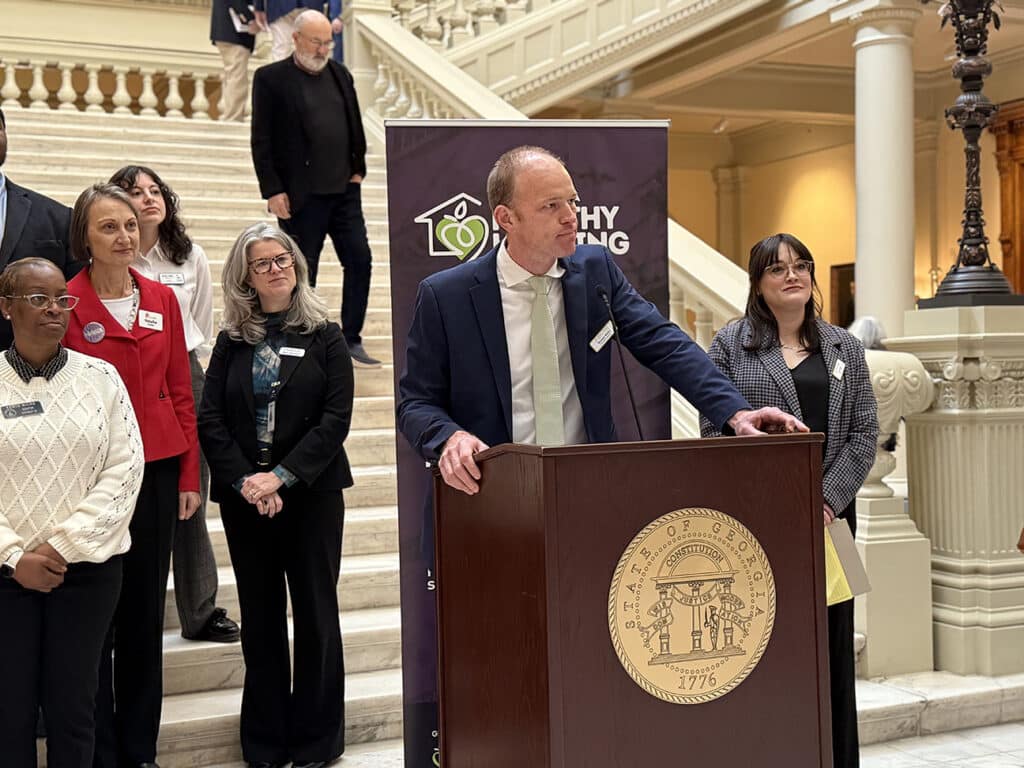
At Wednesday’s press conference, tax incentives provided to not-for-profit housing developers were among the ideas offered to address the issue. State Sen. Kim Jackson said she is backing several housing-related bills this year, including Senate Bill 414, which would prohibit landlords from charging hidden fees after a property is rented. When rent winds up being higher than a family initially expected, it can cause a strain, she said.
“There are legislative solutions available to us,” Waller told those gathered. “There are ways to make housing safer; there are ways to make it more affordable and make it more stable. We’re talking about families who are working hard and playing by the rules.”
‘It’s not normal:’ How hotels become homes
Report co-author Joy Monroe joined other community advocates in the push to have the county fund the hotel study. Her nonprofit Single Parent Alliance and Resource Center has helped more than 500 Atlanta families achieve housing stability since the pandemic, as part of a regional, multi-agency motel-to-home program.
In doing this work, Monroe has been well aware of the reality documented in the study. Over the past few years, she said, “I just kept thinking, ‘Why aren’t we up in arms about the way these families are living?’”
“Once they move into a hotel, they’re trapped. They can’t save any money.”
— Joy Monroe, study co-author
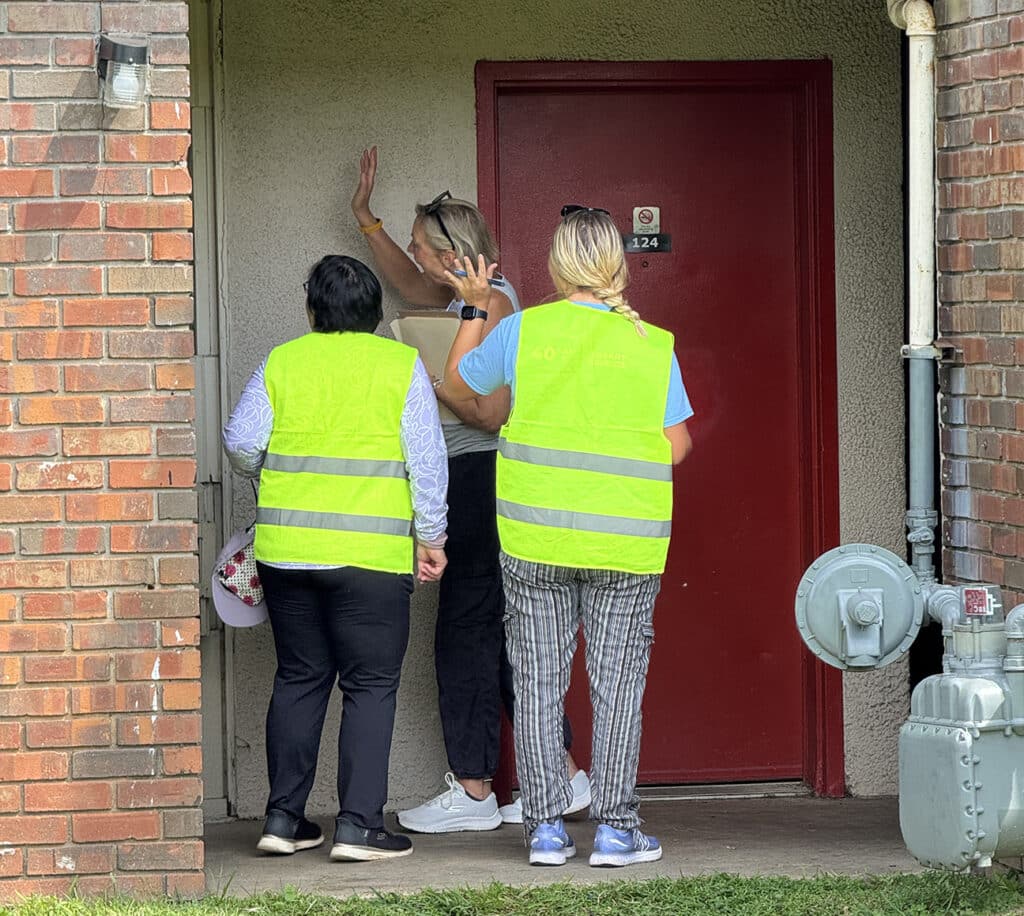
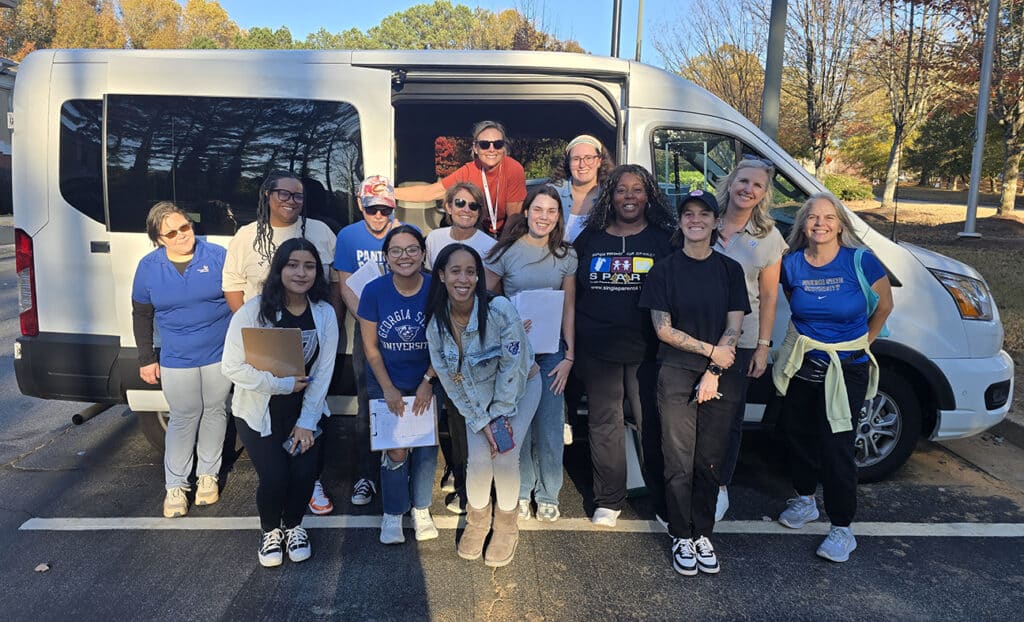
Monroe’s nonprofit received received $119,000 from DeKalb County for the study, which was the first of its kind to be conducted in the county. Armed with pizza and necessities like diapers to give away, they knocked on more than 3,000 doors at 50 hotels to collect the data.
“We’d all pile into this 15-passenger van, and we’d knock on every single door and introduce ourselves,” Ballard said. “Families were pretty open and willing to talk to us. But we had to be very clear, and say very fast, that we weren’t a health inspector or child protection to make sure people felt comfortable.”
The researchers found families living in budget and extended-stay chains as well as privately owned hotels. They did not disclose the properties’ names to protect the families’ privacy.
They found households as large as eight people packed into a single room. Most were headed by single, working parents — disproportionately Black women.
The final report describes the various circumstances that often land families in hotels. They include evictions, rent increases, job loss, domestic violence and family conflict. Medical debt, criminal records, the unexpected sale of rental properties and major life crises, such as illness and death, are also factors.
What families don’t realize, Monroe said, is “that once they move into a hotel, they’re trapped,” Monroe said. “They can’t save any money.”
The cost of hotel living is excessively high. Families reported spending nearly 80% of their income on their rooms. The report noted that the average monthly hotel costs $1,852 — about $60 more than the average rent for a two-bedroom apartment in DeKalb County.
But securing housing presents its own insurmountable challenges for families, including strict income and credit requirements and the high upfront cost of security deposits and first month’s rent, the report states. Affordable units are also scarce.
“There’s such difficulty, such limited opportunity, such limited programming to actually get out of the circumstances,” said Shannon Self-Brown, a study author and a public health professor who directs Georgia State’s Center on Health and Homelessness.
While hotels have quietly developed into a form of housing in the region, they still fail to meet basic living standards, according to the study. Families reported widespread health and safety concerns, including broken locks, missing smoke detectors, excessive noise, and exposure to crime and violence. Nearly one-third of residents reported mold, and almost half reported insects or rodents.
Children residing in these hotels are growing up with little to no adequate space to do homework, play or rest, the report states.
The researchers presented their findings during a Jan. 6 DeKalb County commissioners’ meeting. Their recommendations for solutions included recognizing extended-stay hotels as a housing instability category, investing in family-specific housing support with hotel-motel tax revenue, and loosening restrictive capacity limits for smaller apartments.
“This study was designed to provide real data so we can see the true scope of the problem and devise solutions that can work for these families,” Monroe said. “They try to make it as normal as possible, but at the end of the day it’s not normal, nor is it healthy.”