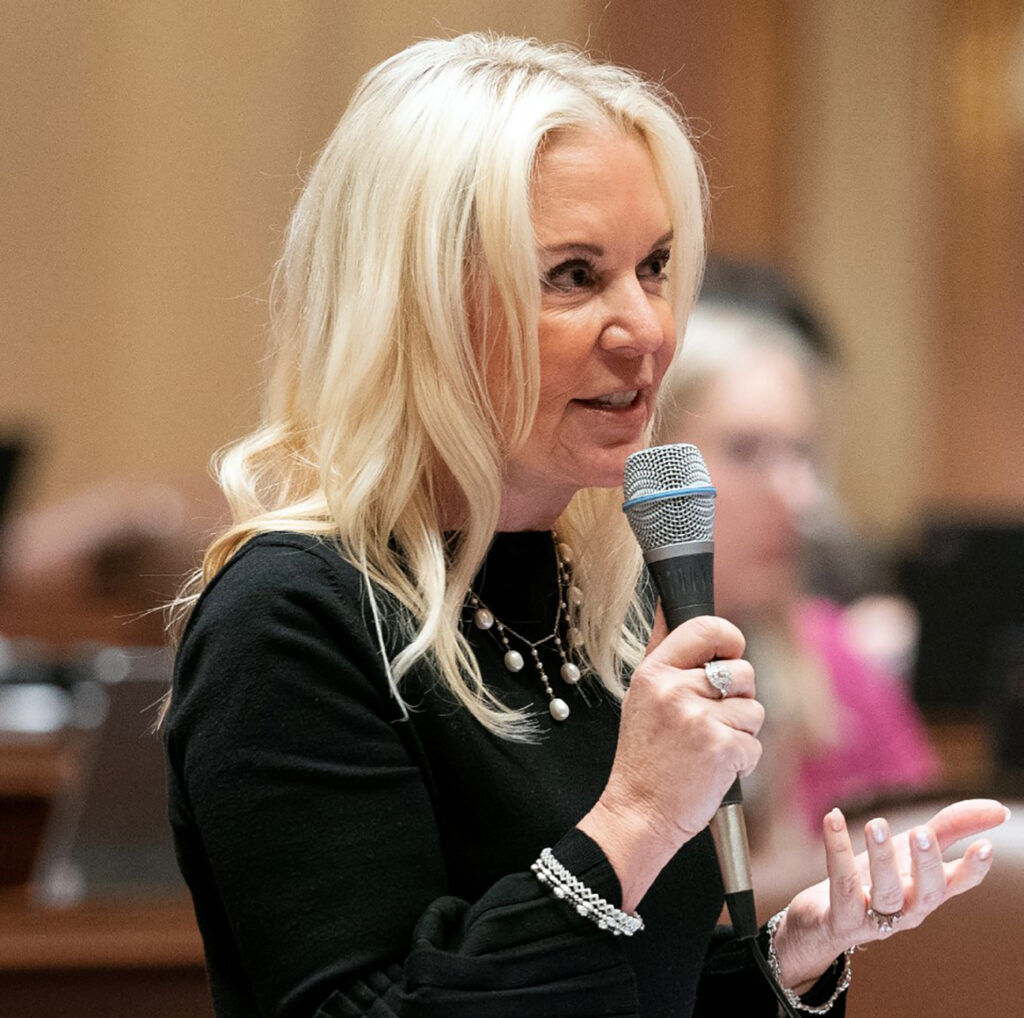
Latoya Joyner, a New York Assemblymember and former adoptee who has championed the cause of biological family connections after a foster care separation, announced her resignation earlier today.
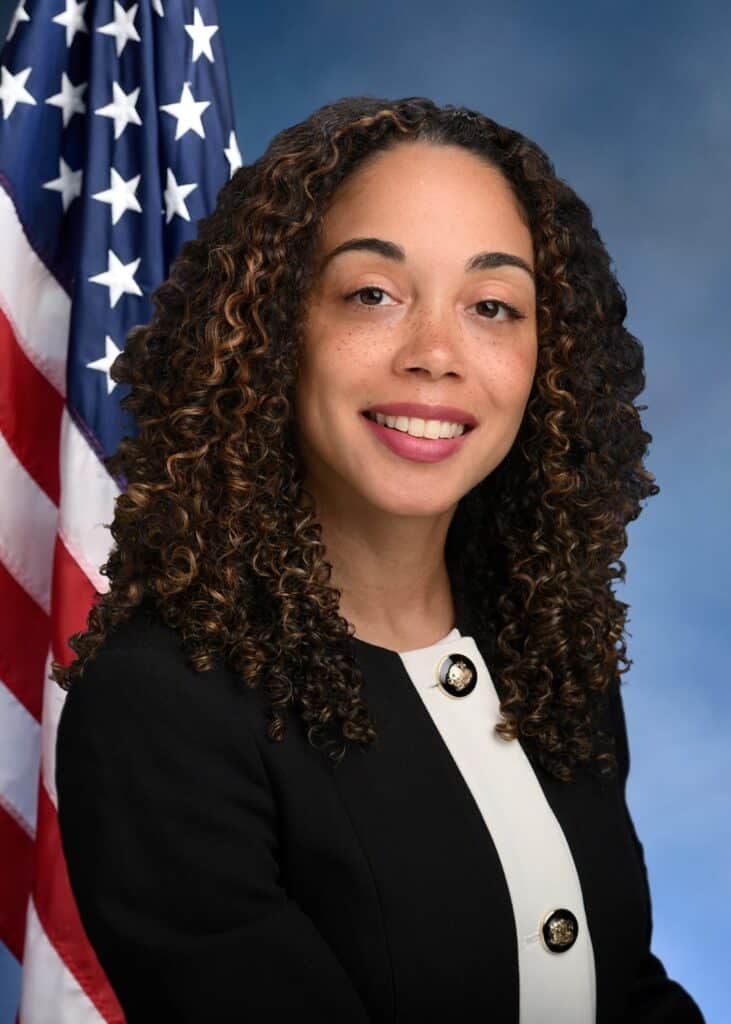
“After careful consideration and with much difficulty, I have decided to bring this chapter of my life to a close,” she wrote in a press statement. “Effective Monday, Jan. 8 at midnight, I am resigning from office.”
Joyner, a Democrat, thanked her constituents and legislative and community partners, but was vague about her reasons for leaving. A spokesperson for her office failed to elaborate, beyond the general reason given in the statement: “While I am leaving public service, I am pursuing an exciting new opportunity that will allow me to continue serving our community and state in fresh ways,” Joyner said. “I’m confident this next endeavor will offer valuable personal and professional growth, ultimately enabling me to contribute even more effectively in the future.
Joyner’s assembly seat will be filled through a special election likely held in the spring.
The 37-year-old was elected to statewide office a decade ago, representing the 77th Assembly district, which encompasses numerous communities in the Bronx.
Joyner is a former court attorney for a New York City civil court judge, who has spent her public service career focusing on education, tenants’ rights, domestic violence prevention and assisting seniors and the disabled. She received a law degree from the University at Buffalo Law School, where she served as an associate editor for the Buffalo Journal of Gender, Law and Social Policy. During law school, she interned with the New York State Division of Human Rights in the Bronx, where she assisted in investigating housing discrimination claims.
As an elected official, Joyner has also advocated for legislation to improve the foster care and juvenile justice systems, appearing at public events alongside activists seeking systemic reforms.
“I find her to be a hard-working, committed, upstanding, responsible, and honest person who served,” said Joyce McMillan, a prominent New York activist and founder of JMAC for Families, who has worked with Joyner on legislation. “It is sad to see her go.”
In a 2021 op-ed for The Imprint, Joyner and co-authors Sen. Jamaal Bailey and attorney Dawne Mitchell argued for legislation that ensures legal counsel for children who are arrested.
“The vast majority of youth waive their Miranda rights, failing to fully comprehend the long-term consequences of this decision,” they wrote. “Those who are privileged enough can hire a lawyer who can invoke their rights before an interrogation. But the predominantly Black and brown youth who rely on public defenders do not meet a lawyer until arraignment. They are subjected to coercive police interrogation tactics unprotected.”
The #Right2RemainSilent legislation is currently pending in the state Legislature.
Joyner’s resignation follows soon after the failure of the Preserving Family Bonds Act, a version of which has been vetoed three times by two successive governors.
Under current law, if a termination of parental rights is involuntary and the adoptive parents are unwilling to cooperate with a birth parent’s wishes, they have no legal pathway to stay in touch with their children.
Joyner’s recently vetoed legislation, co-authored by fellow Democrat Sen. Jabari Brisport, would have permitted any party involved in a family court case that concluded in an involuntary termination of parental rights to request a hearing on the matter of re-establishing contact. Children, foster parents, pre-adoptive caregivers or foster care agency representatives would have the ability to petition the court for such contact.
Under the legislation, judges would have had the final say on whether continued contact would be appropriate, based on the child’s best interest. The judge would have also determined the suitable form of communication, be it in-person visits, phone calls, letters or simply sharing photos. Contact in cases where family courts have ruled a child was severely or repeatedly abused by a parent would have been excluded, and in all cases, children 15 and older would have had to consent to contact with parents.
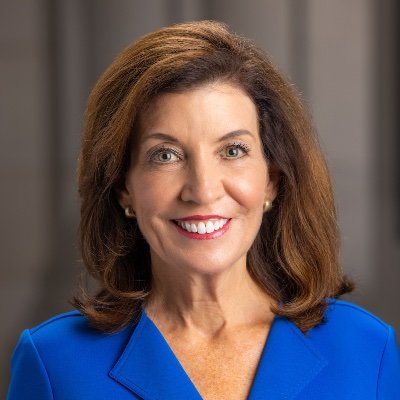
But in her Dec. 8 veto letter, Gov. Kathy Hochul said adoptive parents should have autonomy “to determine if and to what extent their child should continue to have contact with their birth parents.”
But some bill supporters — who have included family court attorneys, adoptees, parent activists, foster youth and child welfare professionals — haven’t quite given up. In recent weeks, they’ve called on Joyner and Brisport to override Hochul’s veto through a supermajority vote. While the legislation has passed the Senate and Assembly three times since 2018, Hochul as well as former Gov. Andrew Cuomo have objected to its passage.
Activists plan to rally in Albany next week to protest Hochul’s decision on the Preserving Family Bonds Act — focusing in part on growing support for open adoptions. In a statement released this week, a coalition of organizations in support of the bill announced their support for an override, saying the governor’s veto, “disregards the number of Black, Latine, and Indigenous children who are permanently separated from their families of origin as a result of the state’s foster system.”
The statement continued: “We strongly believe that such an override is both appropriate given the immense support for the legislation, and critical, given the growing consensus that openness in adoption can be vital for children’s healthy development.”
Such a move is rare and hasn’t happened in years. The governor has vetoed multiple bills this year — to the Democratic-led Legislature’s dismay — but Assembly Speaker Carl Heastie told Capital Tonight this week that veto overrides are “nuclear options and you would hope to never get to that point.”
Joyner, whose tenure now in its final days, appears not to be taking such action. A spokesperson today said pursuit of a supermajority override of the Preserving Family Bonds Act would be “unlikely from her office.”
Lawmakers have until Jan. 9 to set any legal challenge to the governor’s veto in motion.
Advocates and children’s lawyers have highlighted scholarly research showing how beneficial continued contact can be for the stability of adoptive families, as well as the importance of preserving emotional bonds between kids and their biological kin.
In a 2019 New York Times article, Joyner described being raised by a loving adoptive family, after her biological parents lost custody of her. But she also said she lost out on valuable time with her biological mother, who died just six years after the two reunited after she became an adult.
“You don’t want to cut that contact off,” she told the Times. “That’s very traumatic.”