
A bill broadening biological parents’ ability to contact foster and adopted children has long been sought in New York, where advocacy to prevent family separation is widespread.
Three times, state lawmakers have passed legislation that would have allowed state residents whose parental rights have been terminated to reach out to their kids. And repeatedly, the proposed laws have been struck down — by former Gov. Andrew Cuomo in 2019 and in 2021 by Kathy Hochul, the current governor.
As of Wednesday, the Preserving Family Bonds Act is back on Hochul’s desk and she has 10 days from that day to sign or veto the legislation.
Under current law, family court judges cannot order contact between children and their families of origin after an “involuntary termination” of parental rights. But if a parent has voluntarily surrendered their legal rights to parent a child, they can make an agreement with a pre-adoptive foster parent to remain connected. Those agreements can be ordered and enforced by a family court judge.
If a parent did not voluntarily give up their rights to a child — and was instead stripped by the courts of parental rights — that process is not available.
The current version of the Preserving Family Bonds Act would allow any party at an involuntary termination proceeding to ask a judge for a hearing on whether it would be in the best interest of the child to have continuing contact with family. The child, foster parent, pre-adoptive caregiver or representative of a foster care agency could participate, and judges would rule on any objections and decide on continuing contact based on the child’s best interest. The judge would also determine the appropriate form of communication — such as in-person visits, letters, phone calls or an exchange of photos.
Under the proposed legislation, the contact between parent and child would not be allowed in cases where family courts have ruled a parent had “severely or repeatedly abused the child,” or in cases where a child over the age of 14 does not give consent.
“for children, even though their parents may not be equipped to be full-time parents, that doesn’t mean that children don’t have strong attachments to their families.”
-Theresa Moser, staff attorney with the Legal Aid Society’s juvenile rights practice
Opponents of the bill include the Adoptive and Foster Family Coalition of New York, whose members have warned against its potential for “unintended consequences.” In a letter urging the governor to veto the Preserving Family Bonds Act, coalition leaders argue that adoptive and foster parents lack an equal legal voice in family court proceedings that are weighing contact. And they described the difficulties that can arise when adoptive parents’ authority is curtailed, such as when a family is considering relocating for a job. Could “the former parent block the relocation by virtue of the right of visitation?” they wrote.
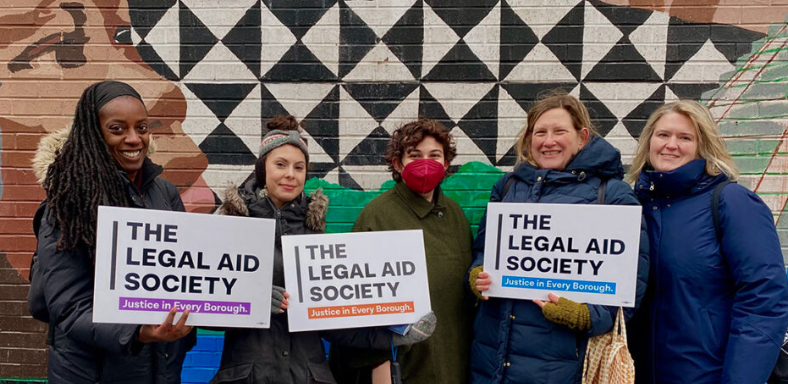
To better understand the details and prospects for the current bill, The Imprint interviewed Theresa Moser, a staff attorney with the Legal Aid Society in New Yorks’ juvenile rights practice. Moser, who represents children in the foster care system, described the urgent need for this legislation, and the positive social, psychological and cultural impacts it could have.
Without such protections, Moser said, “relationships with the biological parent, extended family members and sometimes the siblings” can be disrupted, as well as “an understanding of their culture and history.”
This conversation has been lightly edited for length and clarity.
This bill is called the Preserving Family Bonds Act. Why do you believe your child and youth clients need and deserve the right to contact their parents, even when their custody rights have been terminated by the court due to allegations of abuse or neglect?
The critical reason is that for children, even though their parents may not be equipped to be full-time parents, that doesn’t mean that children don’t have strong attachments to their families. A judge can decide that a parent isn’t equipped to take care of their children. But that doesn’t mean that they can’t have a positive role in their child’s life and that their children view them that way.
I’ve had very few clients who never wanted to have contact with their parents again. Children have genuine, strong attachments with their parents, their communities and their extended families that don’t just go away because a judge decides that it’s not in the child’s best interest to be parented by that person any longer.
Research now shows that it’s helpful for children as they grow older — and have a lot of questions about their origins and their extended families — to continue to have contact, and that it can be beneficial to the stability of the adoptive family.
It’s clear why attorneys representing parents in family court cases would back this bill allowing contact between biological parents and their children. Can you outline why attorneys representing children at your firm are also hopeful Hochul will sign this legislation?
It is important to be able to do that and have a court order that says it’s OK — especially older clients, who sometimes sneak around behind the backs of their foster or adoptive parents because they want that contact.
It’s a real struggle that they feel like they have to make a choice, and they shouldn’t have to. Sneaking around can be disruptive to the foster or adoptive family and cause tension, which we don’t want either.
Versions of the Preserving Family Bonds Act have been vetoed by two governors in recent years. Gov. Kathy Hochul’s rejection last year stated that the legislation didn’t offer adoptive parents “full rights” or “finality” in the creation of their new families. What do you think the prospects are for the legislation this year — and has anything changed about its substance?
I would say that the world we’re living in is changing and there’s more openness toward continuing contact between children and their families of origin.
I’m hopeful that Gov. Hochul will have an opportunity to learn a little bit more about how the bill would work in practice, and understand how important it is for children.
This is a bill that’s not just about parents’ rights. It’s about focusing on what is truly in the best interest of children, achieving permanency for children. If we want adoptive families to be safe, stable and not disrupted, one of the ways we can do that is by ensuring that children have everything they need — including for some children having contact with their families of origin.
Do you have any concerns about the impact of these interactions that are likely to be highly emotional? If this bill passes, could the meetings upset the kids terribly? Or could they upset the biological parents, who then feel even more powerless?
It’s unlikely that these types of contacts would be traumatic or emotionally disruptive and that the court would end up ordering post-termination contacts in cases like that.
It’s more likely that courts will end up ordering contact orders in cases where there are already strong bonds between the child and their biological parents.
Contacts after the termination of parental rights may be emotional. In cases where those bonds do exist, it would be far more traumatic to the child and parent to say, “Your legal rights are severed. There’s to be no more contact.”
That would be more emotional and traumatic than the contacts themselves.
When children are in foster care, and their parents’ rights haven’t been terminated, they have visits. And maybe it’s emotional to say goodbye at the end of a visit, because they don’t know when they’re gonna see them again or things like that. But that kind of trauma happens when there are those strong bonds. And when they’re severed abruptly, it is much worse.
What can you say about the fear or concern adoptive parents may feel when children want to contact their biological parents who have lost custody rights due to the most severe cases of abuse or neglect?
First, the bill would not permit a family court to order ongoing contact with a parent who has been found to have severely or repeatedly abused their child. In other cases, I would say it’s understandable for adoptive parents to have strong emotions about their children’s relationships with their biological families. The hearing this bill provides would be an opportunity for adoptive parents to express their concerns so that they can be considered by the judge. And, again, these types of contacts would only be ordered after there’s been a hearing and the judge determines that any objection to continuing contact is unreasonable and that contact would be in the child’s best interest.
As parents, we have to make sacrifices for our children. One of the challenges of being a parent is sometimes having to put your child’s needs ahead of your own. I would hope that an adoptive parent would be able to do that when their child wants to maintain connections to their roots.
Critics have feared this legislation could compromise the finality of adoptions. Is that a valid concern?
I don’t think it is. The bill gives a one-time opportunity to request this hearing in which the court could decide whether or not to grant a contact order. It can only happen when the court decides whether to terminate parental rights. It’s not something parents could come back to court and ask for.
For a period of about 10 years in the early 2000s, it was the law that courts could make these types of orders. We know from experience that families did not keep coming back to court.
Children and families need nonprofit news.
Nonprofit news needs you.
Donate today to support The Imprint in 2024.