
As a teenager, Makeda Lacking spent countless nights sleeping on park benches during Minnesota’s freezing winters, or riding public transit all night trying to stay warm. Occasionally, she found a friend who let her sleep on the couch. Sometimes she was forced to camp.
“If I was sleeping in the park, there was a group of four or five of us and one person would stay up looking out for us and we would take turns,” she recalled.
In an interview, Lacking, now 34, said her strict, religious parents kicked her out of the house after she told them she was gay. She was just 17. She bounced between youth shelters and was forced to drop out of high school.
But Avenues For Youth, a Minneapolis nonprofit that has served the homeless for 30 years, found her a place to stay and helped her re-enroll in school. She graduated on time, is finishing her college degree at Augsburg University in social work and was hired at Avenues, first as a youth counselor and now a program manager.
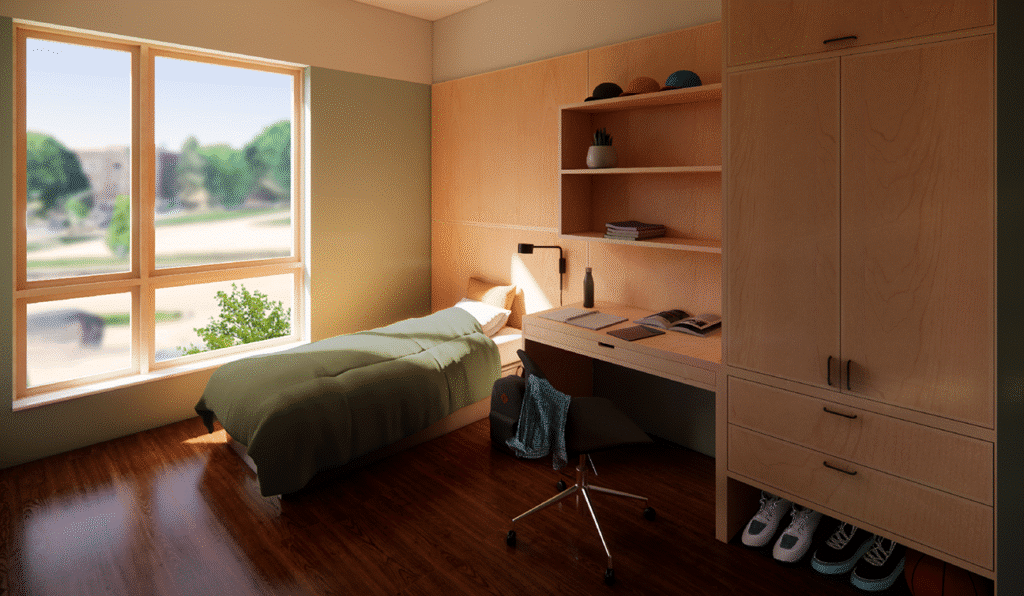
In April, the organization broke ground on a $24 million project in Minneapolis. The building will provide beds for 20 homeless youth, plus two emergency beds available for three or four nights. A separate wing with eight affordable apartments will address longer-term needs when the project is completed next year.
The expansion comes amid growing uncertainty for groups serving Minnesota’s homeless youth population, concerns echoed by national homeless youth advocates.
Interviews with some of the state’s top service providers reveal threats to funding amid the Trump administration’s attempted slashing of federal spending on low-income children, youth and families. Trump’s proposed budget released in June would eliminate Job Corps training for young adults, and eliminate dedicated funding for homeless elementary school students.
The president has also made the elimination of diversity, equity and inclusion programs central to his second term in office, through executive orders, and agency guidance. Local governments and nonprofits that receive federal funds — including Minnesota youth services providers — have been ordered to remove any and all references to race and gender from their applications for federal funding, according to the state’s Youth Services Network.
“If I was sleeping in the park, there was a group of four or five of us and one person would stay up looking out for us and we would take turns.”
— Makeda Lacking, Avenues for Youth
Nonprofit leaders like Hanna Getachew-Kreusser, executive director of the St. Paul-based Face to Face Health and Counseling nonprofit, remain steadfast about their objectives. The group aims to “address the inequities youth face, combat systemic racism and other forms of oppression, and help young people as they pursue their aspirations despite the barriers they experience,” its website states.
“We’re going to stay true to our core mission,” Getachew-Kreusser said. “Yes, we operate under the administration, but it’s also about how do we put the focus on the young people and how do we get their story out.”
A new temporary home for MN’s homeless youth
Roughly 5,000 young people under age 24 have nowhere to sleep on any given night across Minnesota, according to Avenues for Youth, with 50% to 70% in the Twin Cities area.
A recent report by the Minnesota nonprofit Foster Advocates revealed that 80% of former foster youth have experienced homelessness in Hennepin County by age 24. A high percentage were LGBTQ+ teens kicked out by parents who rejected them. Nearly half of Minnesota’s homeless youth come from a home where a family member is struggling with addiction or domestic violence, according to a 2023 study from the Wilder Foundation.
The state only has beds for less than a quarter of them, said Katherine Meerse, executive director of Avenues For Youth. Her group is working to build that capacity, amid growing need driven by housing and cost-of-living prices and a post-pandemic reduction in public benefits.
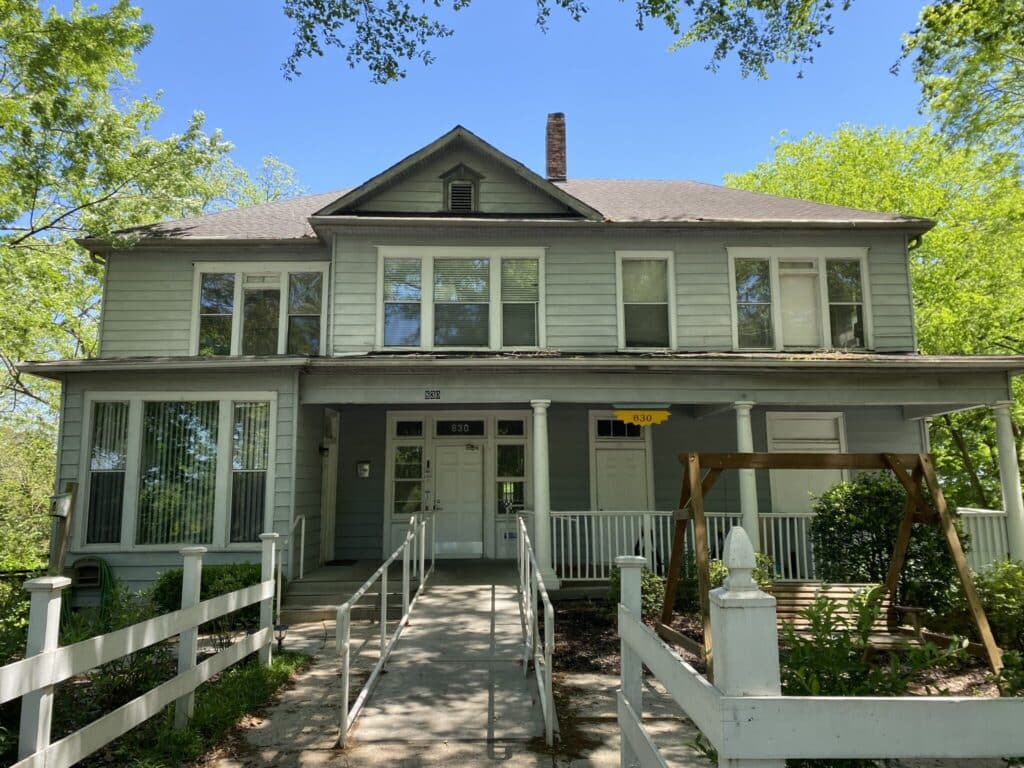
The nonprofit’s current facility was built as an orphanage in the 1930s and still feels like an institution, said Meerse. It’s been reconfigured over the years, from a headquarters for the Black Panthers to an underground nightclub — but was not built with any “trauma-informed design.”
Seventeen youth currently live on the second floor and share two bathrooms. A few others reside on the same floor as the staff offices, offering little privacy. That is less than ideal.
“We saw how having them in each other’s rooms exacerbated undiagnosed mental health issues,” Lacking said. “Having that extra space to breathe and assess their own situation and know that if they go out of their room, there will be communal living where they feel supported, is key.”
Funding for the organization’s new facility was secured before Trump took office; the nonprofit is looking to the private sector to raise the final $1.25 million to complete the project, set to open next summer.
But other projects and services for Minnesota homeless youth have reported recent disruptions, and directors of community-based groups fear they may have to further reduce services and lay off staff if federal grant applications are rejected in the future.
“How do they communicate welcome to the marginalized communities they support, when that same language is being targeted?”
— Corey Magstadt, Youth Services Network
Corey Magstadt, director of Youth Services Network, a statewide coalition of homeless youth support agencies, estimates federal funding comprises between 20% and 30% of many nonprofits’ total budgets.
In recent weeks, the federal government has added additional requirements and red tape to this year’s application for runaway and homeless youth services funding. For example, Magstadt said a letter of endorsement from law enforcement would have been accepted for past applications, but now, potential grantees must have a signed Memorandum of Understanding with law enforcement. And the window to complete applications this year was well below the standard 60 days, leaving organizations scrambling to complete and submit this month.
Some programs have already been halted.
In June, the Department of Labor announced it was pausing Job Corps nationwide, including the Hubert H. Humphrey Job Corps in St. Paul, which housed and trained more than 150 teens. Staff and students were told to vacate by month’s end, leaving many youth scrambling for housing.
Magstadt said another Minnesota provider that he declined to name lost roughly $200,000 this year and $600,000 for next year.
Meanwhile, executive directors of homeless services agencies statewide are in ongoing strategy meetings with the Youth Services Network. Members say grant requests that include references to gender, sexuality, race and “at-risk” youth have been flagged and sent back for removal in order to be considered. Nonprofits will have to wait until the next grant cycle opens to see if the reworded applications will be approved.
“These are all core values to our member organizations, so they are having to make difficult decisions about the language they use on their websites and social media,” Magstadt said. “How do they communicate welcome to the marginalized communities they support, when that same language is being targeted?”
Rising needs
One 17-year-old girl who asked not to be named frequents a drop-in center in St. Paul when she has nowhere else to go. She said her mother is an alcoholic who kicked her out of the house when she was only 13. For years, she lived in a co-ed homeless shelter with her dad. Now, the high school student tries to stay with friends or with her older sister.
“The shelter was scary,” she said, adding that she worried constantly for her safety and feared she was sleeping next to pedophiles and other dangerous adults. “I felt abandoned.”
The teenager is among those who could find more permanent housing when Avenues for Youth opens its new facility. Until then, she visits a day center called SafeZone, run by the nonprofit Face to Face Health and Counseling.
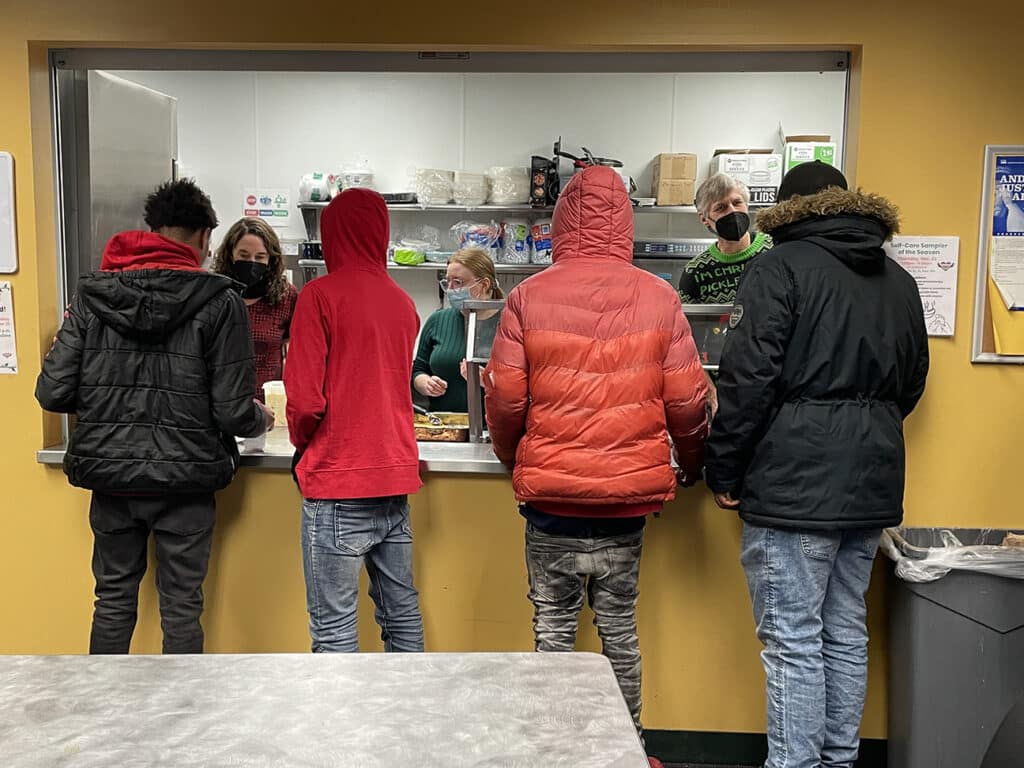
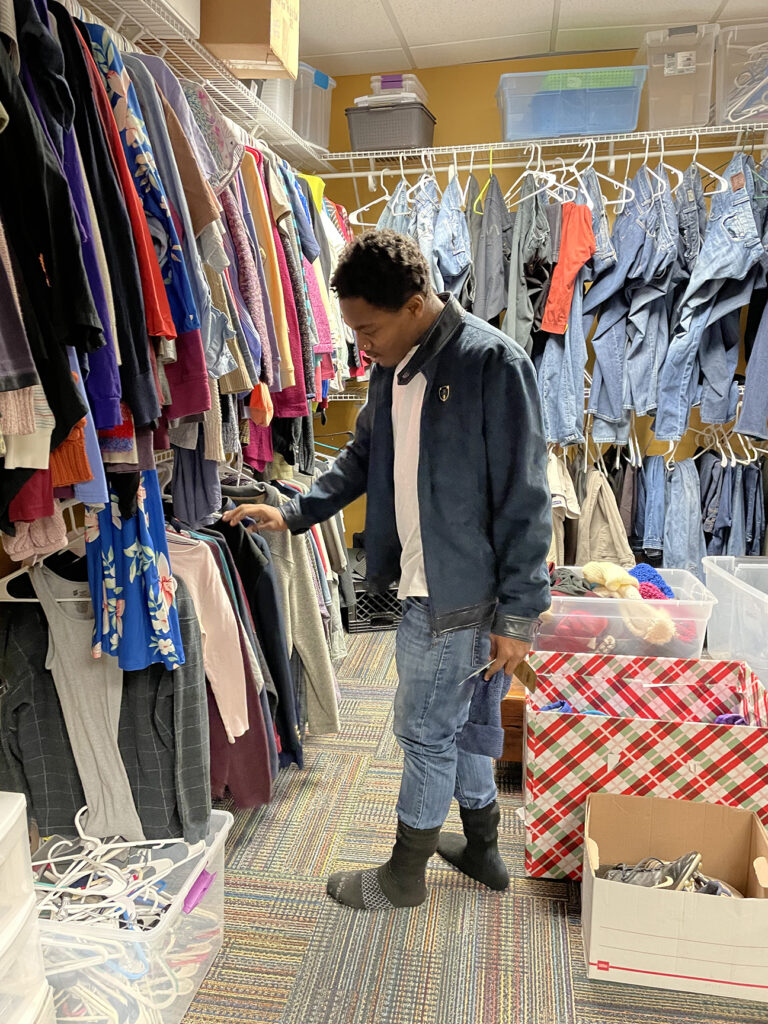
The drop-in serves three meals a day and has a giant rec room with couches and a TV. Art therapy, a clothing closet, help with emergency housing and an on-site nurse are among the offerings. A separate clinic provides medical care, including care for pregnant teens and babies along with mental health services.
She often eats and showers at SafeZone’s drop-in center and works with a caseworker who helps with daily challenges like securing bus passes so she can get to work and school. Since then, she landed a job at a clothing store and is excelling in high school, she said.
The teenager is among the 5,100 youth ages 11 through 24 Face to Face served. But the group says the need is growing. They’re now seeing 60 newcomers seeking services each month, a number that has tripled in recent years. Many are 14- and 15-year-olds.
When SafeZone’s day center closes at 6 p.m., some of the youth will return to adult shelters. But many prefer the streets over shelters, where fights break out, things are stolen and many sleep on mats in one large room, said Rachel Greenwald, director of youth and family services at Face to Face.
Instead, “we give them a tent and a sleeping bag,” she said, “and they choose to ride transit all night or stay in an abandoned building.”
While they fear for the safety of the youth they serve, providers like Getachew-Kreusser remain in awe of their resilience.
“All they need is access to resources and opportunities,” she said. “And that’s what we’re here to provide.”