Nearly 200 children currently living in New York’s shelters for the homeless descended on a summer carnival in the heart of Manhattan this morning, later enjoying a catered lunch and plenty of ways to express their creativity.
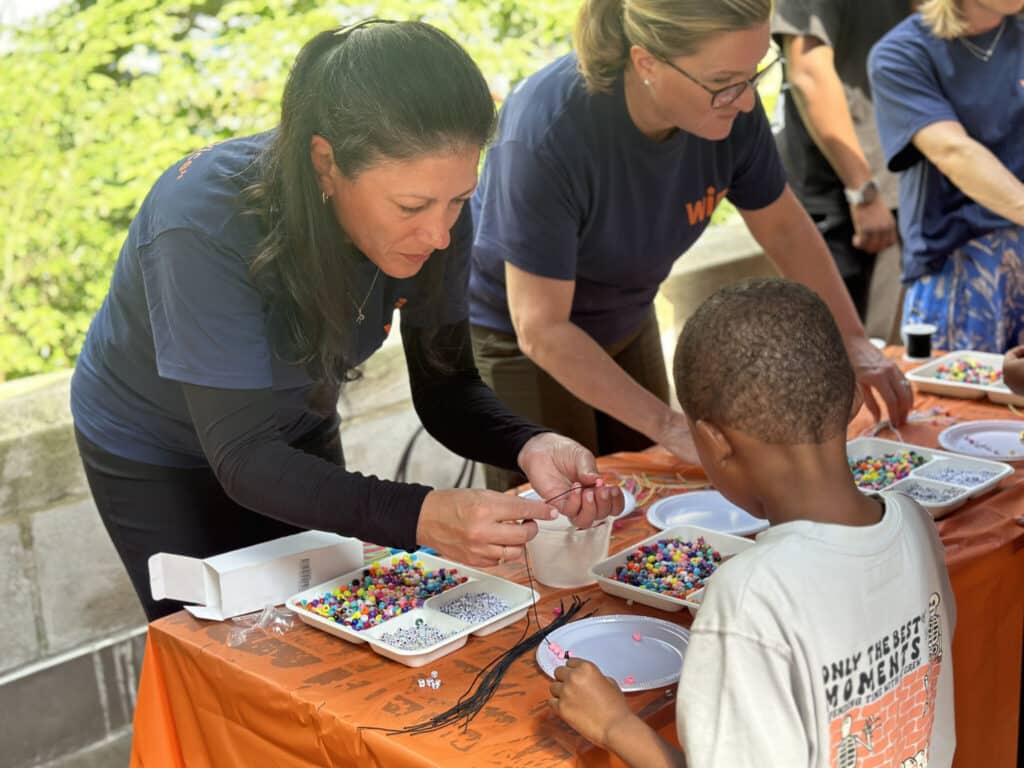
Two boys tussled with balloon swords near the kids lined up at booths offering face painting, sparkly temporary tattoos and personalized bracelets. Pop music burst from speakers that towered over the crowd, including parents pushing strollers and kids with sticky faces who danced with abandon in Inside Park at St. Barts. They clutched giant sticks of cotton candy and slurped snow cones to cool off in the midday heat.
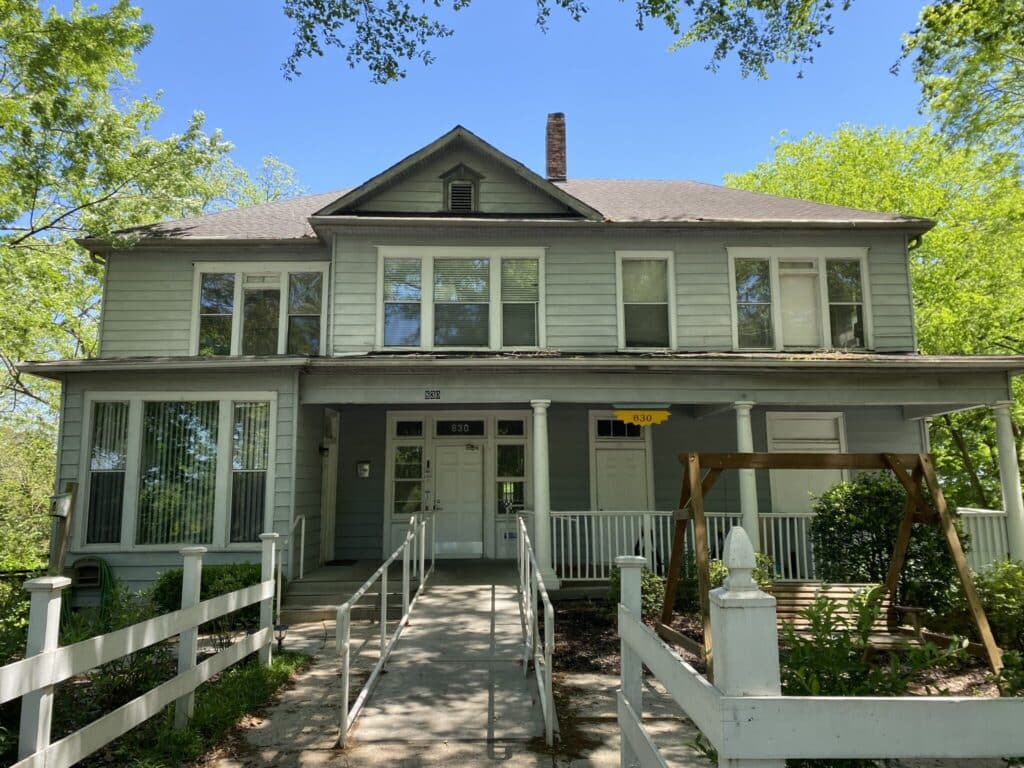
The carnival event is one of the last summer activities for children held by Camp Win, a program run by a nonprofit that is New York City’s major provider of shelter and supportive services for homeless families with children. The organization Women In Need, known simply as Win, runs recreational and educational activities throughout the year, encouraging interest in the arts and sciences through visits to museums, adventure parks and the theater.
Camp staff say the programming guarantees many of the roughly 6,200 children living in Win’s shelters each year have a safe community to return to, especially when they don’t feel like they fit in at school.
“This is definitely something good to have for the summer before school starts,” said Briana Marin, a 19-year-old mom who entered one of Win’s shelters two months ago.
She will soon start looking for more permanent housing. But amid all her struggles, the day of fun and some summer help with her 2-year-old son is a welcome relief. He showed off a glittering gold Mario tattoo on his arm, as Marin chuckled over his obsession with another camp activity: knocking down a pyramid of cans.
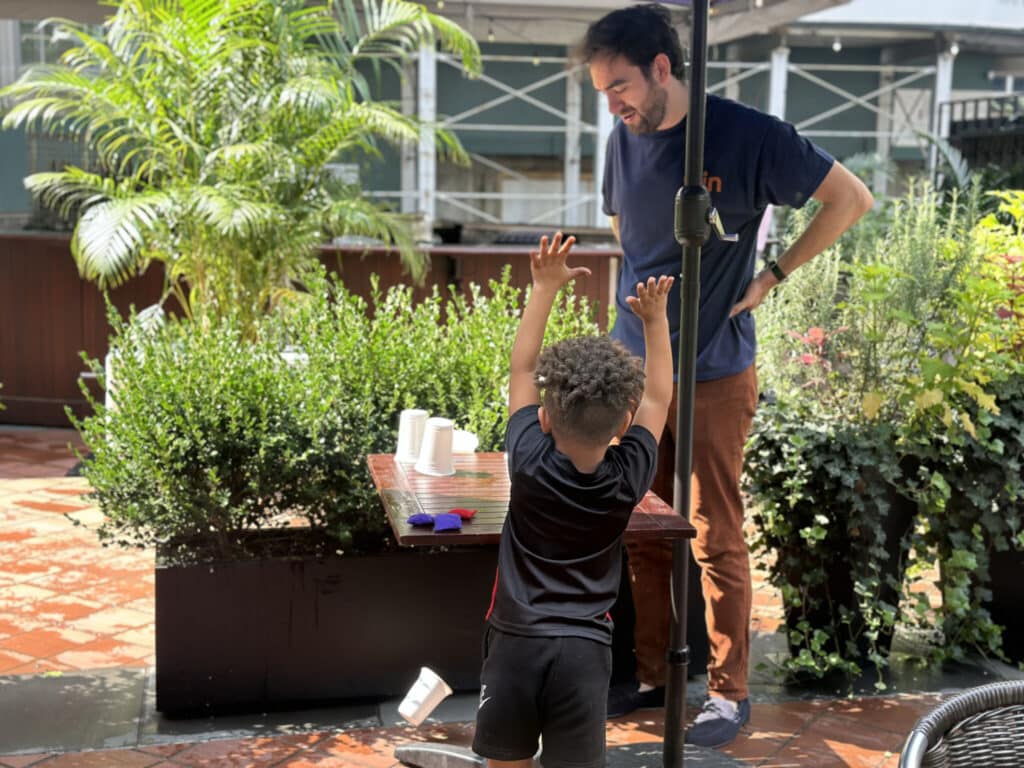
“A lot of times, kids in shelters are bullied. They’re singled out. Other kids know that they’re in shelter,” said Diana Santos, chief program officer at Win. “We provide a space and a time and an experience for children that all share that same experience of being homeless.”
That allows them to form special friendships, she added, where they are “not being judged because of their situation.”
Data released by the nonprofit Advocates for Children of New York show that roughly 119,000 homeless students lived in New York City during the 2022-23 school year, a 10-year high that comprises more than 11% of public school students.
Much of the increase in residents at Win’s shelters reflects the recent influx of migrant families to New York arriving from Latin America, African and Asia, with large numbers coming from Venezuela. This month, The New York Times reported that more than 210,000 migrants have come to the city since 2022, describing it as “a two-year influx that has strained government resources and the city’s openness to immigration.” Mayor Eric Adams calls the present situation a state of emergency that will cost the city billions of dollars, the paper reported.
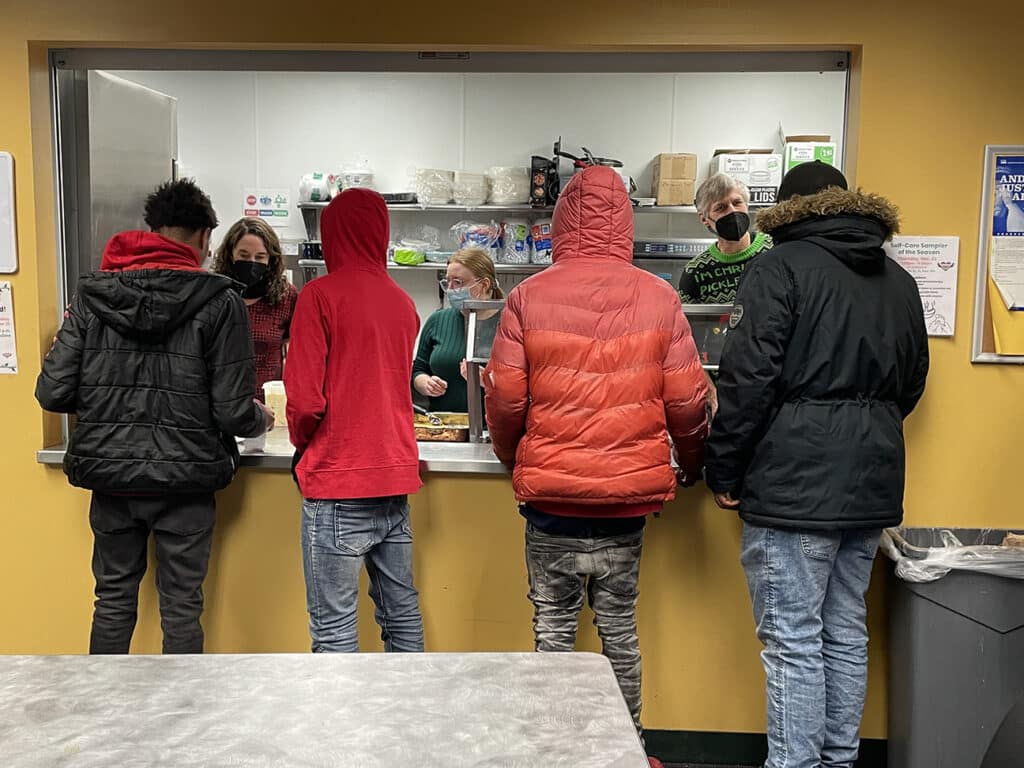
City workers help asylum seekers enroll their children in school and find immigration lawyers. And nonprofit staff at Camp Win do their part. In addition to helping keep up educational opportunities outside of school, they work to accommodate the breadth of their needs through a linguistic and culturally relevant lens, be it food, clothing or other vital services.
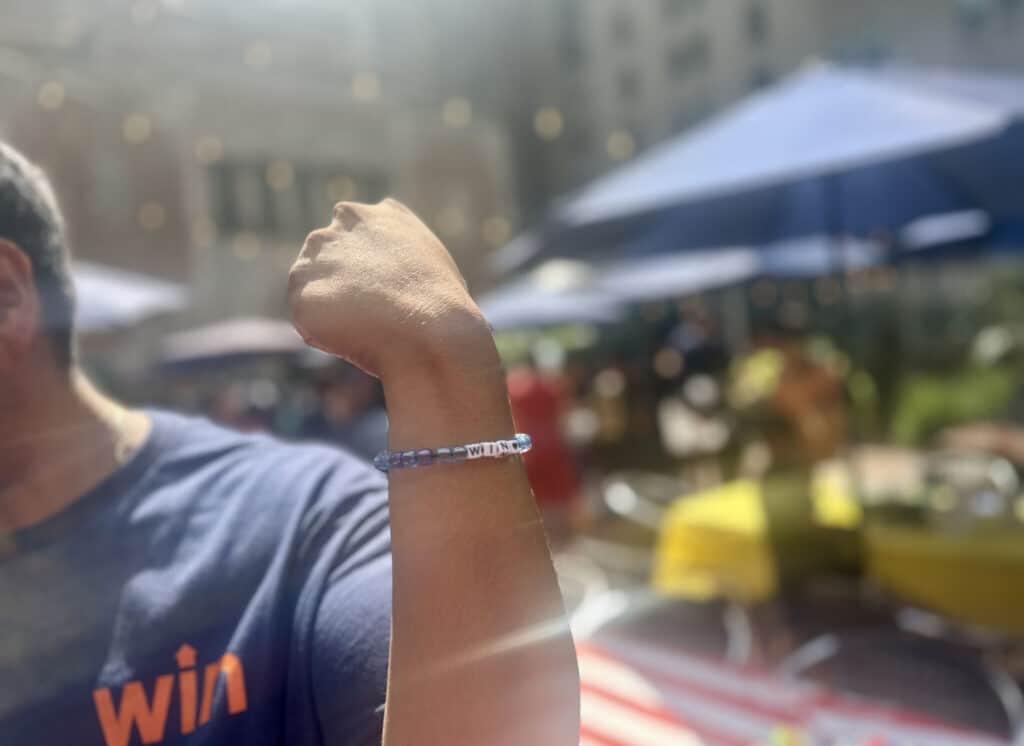
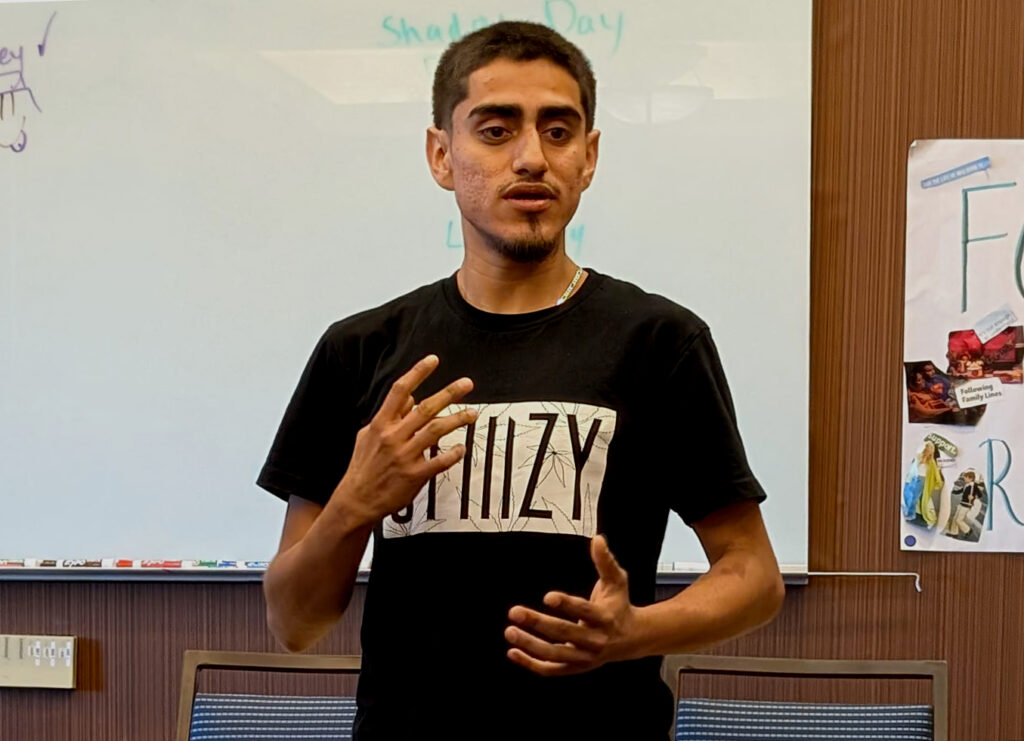
Andy Gonzalez, a volunteer services coordinator from the Bronx who speaks Spanish with the families, said he is often struck by the instant impact of simply closing the language barrier for families who have lost so much and can feel overwhelmed and terrified of their current destabilized prospects.
“It goes a long way,” Gonzalez said. His work brings him deep satisfaction, he added: “It’s more than just a job for me.”
Most parents served by Win face challenges with substance abuse, mental health, domestic violence or a combination. As children, many also grew up in shelters or the foster care system, so transitioning to adult life as young parents is difficult, Santos said. The average length of stay for families served by Win programs is 10 to 13 months, and she’s proud of how few return. A recent analysis by the organization found that almost 90% of families remain stably housed two years after leaving a Win shelter.
“For a lot of people that are in shelters, it’s systemic issues that have brought them into the system,” Santos said. “Our aim is to break that generational back and forth — through education, through support, through being able to find better education and increase their capacity to be able to get jobs.”
Child care services and activities, like those offered at Camp Win’s annual summer carnival, give parents a chance to breathe and focus on learning to apply for permanent housing or jobs. The camp has been held each year in the city since 1985, as part of the 41-year-old service group’s array of offerings.
Volunteer Tara O’Reilly, working the bead-and-paper mask booth today, noted still other benefits.
“It’s so fun to help the kids get creative and have the opportunity to boost their confidence a little,” she said.