For decades, the Child Abuse Prevention and Treatment Act has been the bedrock federal law in the United States addressing child neglect and abuse. But members of Congress say it has not adequately filled the gaps in care for Indigenous children and families, who are more likely than other groups to experience traumatic childhoods.
While specific parts of the law known as CAPTA clarify tribes’ eligibility for federal funding, they receive little of this money.
A federal law reintroduced Tuesday aims to change that.
The American Indian and Alaska Native Child Abuse Prevention and Treatment Act would amend existing law to require that tribes are prioritized for CAPTA funding.
Specifically, it increases the percentage of such funds that must be set aside for tribes and tribal organizations, separating them from the set-aside that exists for migrant-focused programs. The bill would amend federal law to separate the pots of money tribal and migrant communities receive, increasing tribal set aside funds from 1% to 5%.
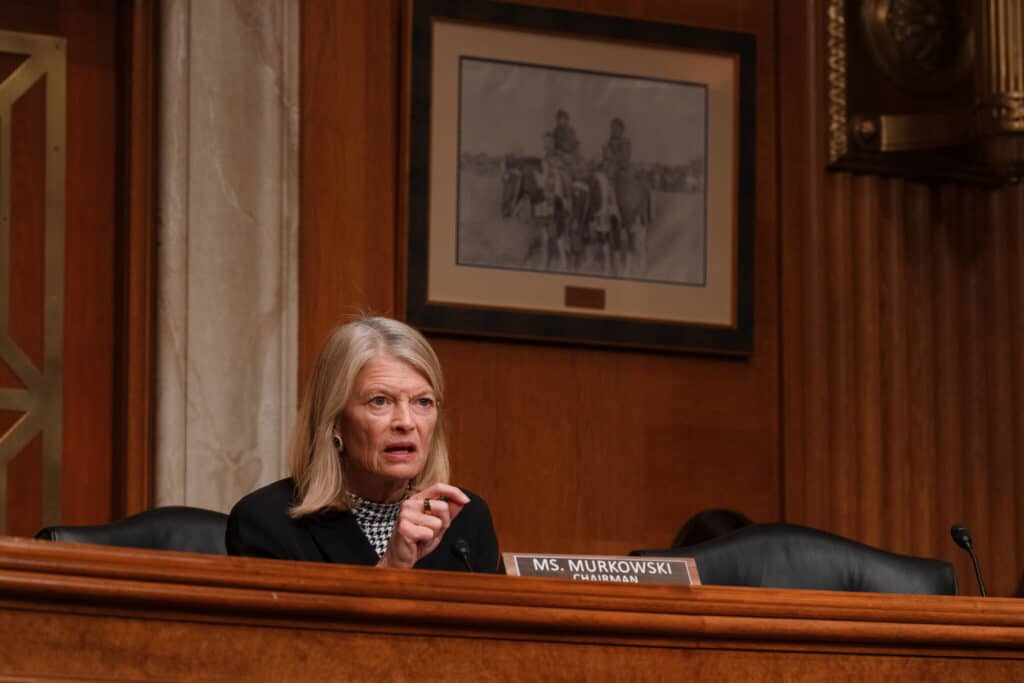
“As federal programs that support vulnerable communities continue to face uncertainty, this legislation is as important as ever,” Sen. Lisa Murkowski of Alaska, one of the lawmakers sponsoring the bill, said in a press statement. “This legislation will help make sure prevention funding reaches Tribal communities so families can access culturally appropriate services and children can grow up safe, supported, and connected to their communities.”
Massachusetts Sen. Elizabeth Warren and Arizona Rep. Adelita Grijalva are also sponsoring the bill. It is supported by the National Indian Child Welfare Association, Navajo Nation’s Division for Children and Family Services, the National Congress of American Indians and the Child Welfare League of America.
This is the third time the bill is being brought before Congress. It was first introduced in 2019 by Grijalva’s father, Rep. Raúl Grijalva, and reintroduced in 2021 by Murkowski and Warren.
In the revision of CAPTA introduced Tuesday, tribal communities would receive funding that is equitable to the amount states and other rural and urban areas receive.
CAPTA requires the Secretary of Health and Human Services to equally distribute CAPTA funds among states, geographic areas, and rural and urban areas. The proposed bill would clarify that tribes should be included in the decision-making criteria when funding is being considered for distribution.
Since the establishment of the federal CAPTA in 1974, the 574 federally recognized tribes have received a small fraction of the federal funding available. According to Murkowski’s press office, that has hampered the development of innovative programs and has “left tribal communities with unstable and inadequate funding for child abuse and neglect prevention programs, which are key in reducing out-of-home foster care placements and strengthening families to be able to keep their children safely at home.”
In a press statement, Rep. Grijalva called out the historical injustice.
“For decades, tribal nations have been asked to do more with less — forced to compete for scraps of federal funding while their communities have faced historic disinvestment. That is unacceptable,” Grijalva said. “This bill delivers long-overdue resources for community-led solutions, strengthens prevention efforts, and finally treats tribal nations as the sovereign partners they are.”