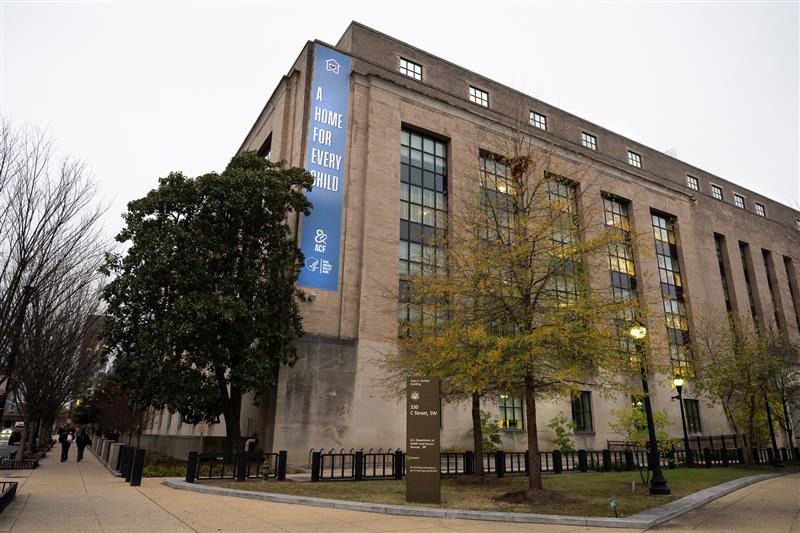

California is adopting scores of new programs meant to prevent entries into foster care, but achieving that goal is hampered by several obstacles, a new report suggests.
The state’s Legislative Analyst’s Office — a nonpartisan office that provides fiscal and policy analysis to the California Legislature — issued a brief on the topic last month. It assesses the state’s progress in implementing a 2018 federal law that provides money to states to help families at risk of foster care removal stay together.
The Family First Prevention Services Act allows child welfare agencies to use Title IV-E Social Security Act funds to pay for evidence-based services to prevent child maltreatment, such as mental health care, substance use treatment and in-home parenting education.
A limited set of specific programs are eligible, and strict criteria govern who may be considered for them.
In 2021, state leaders set aside $222 million for counties to set up new foster care prevention programs, according to the report authored by legislative analyst Gabriel Petek. Since then, 51 counties and two tribes have received funds to set up programs that use 10 services approved by the state.
But these efforts are hindered by several challenges, Petek found.
One issue is that some program models counties rely on and find effective are not federally approved, and thus are ineligible for federal funds.
Examples include pairing parents with “cultural brokers” who have personal experience with the child welfare system and can help Black, Indigenous and Latino populations navigate county services and interactions with social workers. Despite a successful track record so far, such programs cannot be reimbursed with federal funds.
“Services beyond the scope of federally eligible programs will need to be funded entirely by state/local sources,” Petek notes, given that Title IV-E reimbursement requires $1 of local funding for every $1 of federal funding claimed. But in California, “counties’ initial capacity to provide a local funding match is unclear.”
What’s more, while the state encourages counties to use 10 evidence-based practices from a federal clearinghouse, some counties told the Legislative Analyst’s Office that the interventions aren’t aligned with their local prevention needs or their diverse populations.
“Given the significant overrepresentation of these groups in California’s child welfare system, counties noted that this lack of culturally specific services could potentially limit the effectiveness of programs for these populations,” the report reads.
Other issues identified include the capacity of approved providers to take on more cases from the child welfare system, accounting challenges and ensuring agencies properly implement programs as designed.
The report identifies several opportunities for the state Legislature to ensure the federal funding opportunity can “benefit as many at-risk families across the state as possible.” These include pursuing services not currently in the federal clearinghouse, finding ways for the state’s Medicaid program to cover more prevention programs, supporting culturally relevant approaches and enhancing technical assistance.