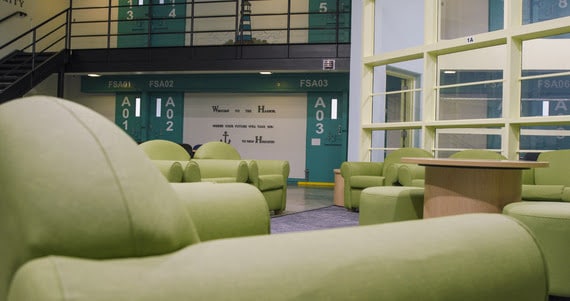
In an upbeat June 13 press release, the Washington State Department of Children, Youth and Families announced it had “welcomed the first cohort of young men to Harbor Heights, the state’s newest juvenile rehabilitation facility.”
At Harbor Heights, youth ages 18 to 25 can gather on clusters of avocado green armchairs and couches in common areas, and receive “behavior therapy, peer counseling, and workforce development.” Inspirational messages adorn the unit walls: “Welcome to the Harbor where your future will take you to new heights!” reads one, a lighthouse and anchor added for nautical flair.
The messaging belies the somber reason the new site within a far larger 2,000-bed adult prison has opened in Aberdeen.
It’s a controversial setting for young adults in need of treatment and rehabilitation. But Washington officials say moving youth to the facility is necessary, due to overcrowding at the state’s only maximum-security youth prison, known as Green Hill School.
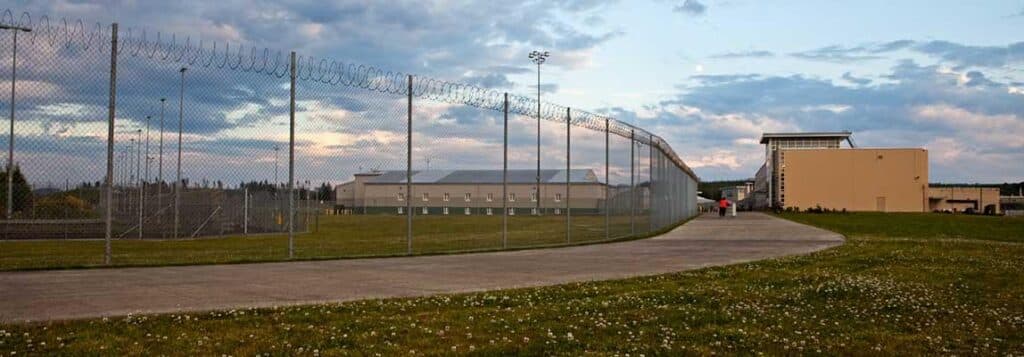
“Though the facility is located on the grounds of the Stafford Creek Correctional Center in Aberdeen,” state officials said, Harbor Heights will be run by the state’s child welfare agency and have “its own visitation area, medical services, and recreation field. The young men will not interact with those in the custody of the Department of Corrections.”
The initial transfer of eight Green Hill youth begins to address a yearslong crisis at the beleaguered detention center, which has been plagued by overcrowding, staff abuse and dangerous living conditions. Last summer, the youth prison in rural Chehalis designed for 180 residents housed 240. Several Green Hill staff have been arrested for sexual misconduct on the job, inciting fights among detained youth and selling drugs inside the facility. Four young people there overdosed in four days in December.
“This is not going to solve the overcrowding issue at Green Hill. This is a critical must to help relieve some of the pressure for right now, but we know that we are going to continue to need additional capacity.”
— Tana Senn, Department of Children, Youth and Families
Due to staff shortages, teens and young adults have been locked in their cells for extended periods, at times as long as 21 hours a day, according to court filings. An 18-year-old identified as M.L. described young men “screaming and crying to use the bathroom.”
To relieve the overcrowding last year, the Department of Children, Youth and Families (DCYF) sent some Green Hill residents into the adult prison system. But within two weeks a Thurston County Superior Court judge quickly ordered them back, ruling that the move “has disrupted the Green Hill residents’ education and access to rehabilitative programming, and placed them at risk of violence in the adult prison system.”
Since then, state leaders have continued to pursue the path of placing youth ages 18 to 25 in adult prisons run by the Department of Corrections. Despite pushback from youth advocates, Tana Senn, who heads the state department in charge of juvenile rehabilitation, said opening space inside an adult prison was a way to relieve the Green Hill crisis “as fast as possible with as least amount of money as possible.”
Green Hill remains over capacity, with 216 youth currently housed there, according to the Department of Children, Youth and Families.
The new 46-bed facility, known as Harbor Heights, is located on the grounds of the Stafford Creek Correctional Center, a 1,936-bed minimum-, medium- and maximum-security state prison for adults.
Harbor Heights will be independently operated by Senn’s Department of Children, Youth and Families, which runs the state’s Juvenile Rehabilitation program for young people through age 25 who have been convicted of crimes “that reflect the profound violence, neglect, trauma, addiction, and other challenges they faced before they ever reached our doors,” the department’s website states.
The state agency overseeing adult corrections will function as a “landlord,” corrections chief Tim Lang said at a recent press conference. Harbor Heights Superintendent Kendrick Rochelle added that the new facility will also benefit youth who remain in a less-crowded Green Hill School.
“Harbor Heights will give young people and staff some breathing room at Green Hill to work on the treatment they need,” Rochelle stated.
At the new facility, officials pledge to provide an array of “curated programming,” including cognitive behavioral therapy, peer counseling and cutting-edge job training. Frontline staff trained in “trauma-informed” methods will help young people “heal from trauma and learn skills to regulate emotions.”
Residents at Harbor Heights will have access to televisions in all rooms, virtual reality headsets, tablets for education and video calling, emailing and texting family members, Nancy Gutierrez, a spokesperson for the department, said in an email to The Imprint. A vocational program will use virtual reality to teach automotive industry skills. Youth will have access to enhanced therapeutic activities like “healing circles,” and will be able to pursue peer counseling certification through the Credible Messenger mentorship nonprofit.
“Harbor Heights is an investment in our young men, providing new opportunities, new hope and the space to grow,” Senn said in a press release.
Senn noted at a press event May 29 that the Legislature prioritized the young men of Green Hill despite the state’s fiscal woes and a “cuts budget” this year.
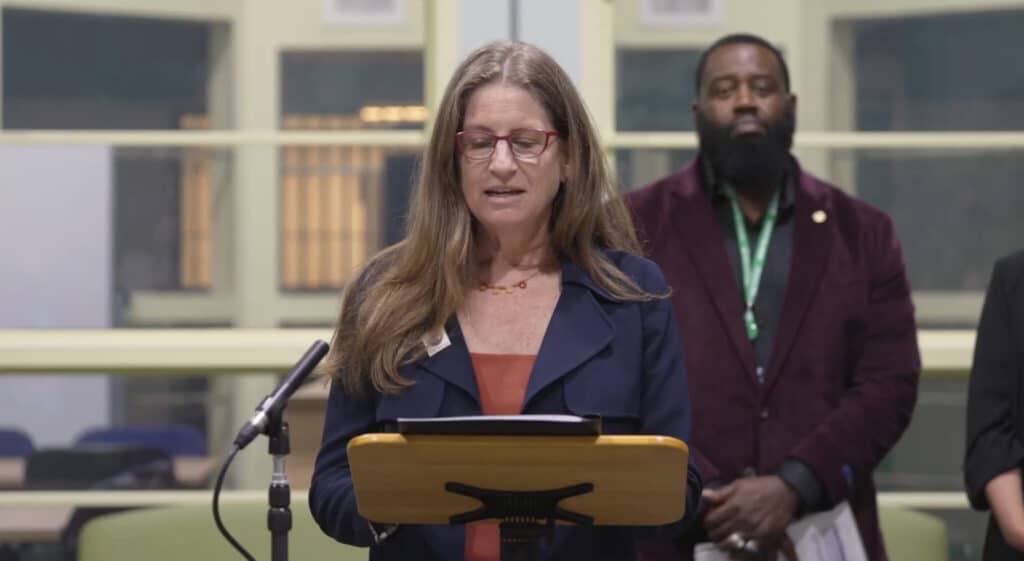
“Juvenile rehabilitation didn’t see those cuts, because this is such a critical investment in our young people and such a need for both our young people and our staff to have more options,” she said.
Family members and youth advocates have opposed moving Green Hill’s residents into adult facilities, leaving young adults who are supposed to be in a treatment-oriented, rehabilitative setting housed within a punitive-oriented adult prison.
“We know that there must be relief for the overcrowding at Green Hill, however, we are concerned that the transfer of youth to Harbor Heights is shortsighted and draws resources from meaningful and evidence-based investments in programming and services that could keep young people closer to community,” said Karen Pillar, interim executive director of the nonprofit TeamChild. “We would prefer to invest in the supports that youth need to be successful and avoid incarceration.”
Pillar’s nonprofit focuses on improving conditions for incarcerated youth, and has long raised concerns that the Juvenile Rehabilitation (JR) division within Senn’s agency fails to provide meaningful education or help with mental health and substance abuse struggles.
In December, the group hosted a virtual rally with the families of incarcerated youth alongside fellow Washington advocacy group Kids are Kids, lambasting the state’s plan to open the juvenile unit inside an adult prison.
TeamChild’s website says they are “working to hold DCYF accountable to make rehabilitation a realistic outcome for every young person in their custody at JR facilities.”
The Department of Children, Youth and Families reports that its staff explored dozens of sites across the state to address overcrowding challenges at Green Hill. The Aberdeen adult prison was selected because the youth facility could be opened on its campus within a matter of months without extensive renovations, it was the most cost-effective compared to other options, and it allows for family visits, officials said.
But so far only eight young adults have been taken from Green Hill, and more solutions will still be needed.
“This is not going to solve the overcrowding issue at Green Hill,” Senn said. “This is a critical must to help relieve some of the pressure for right now, but we know that we are going to continue to need additional capacity.”