A class-action lawsuit filed last week in a Nashville federal court alleges “barbaric” violence at Tennessee’s juvenile detention facilities, describing young people with disabilities who are routinely assaulted, confined to isolated cells for months, blasted with pepper spray and denied rehabilitative health care and education.
The 114-page complaint names three formerly incarcerated Tennessee youth, their parents, and other “similarly situated” young people with disabilities as plaintiffs. It details a litany of specific cases that reflect the “horrific experiences of youth trapped” in state custody, according to a group of public interest attorneys.
Among them:
- A girl identified as Jane Doe was put in shackles and dragged across a floor before being put in solitary confinement. The survivor of sexual abuse had a documented history of mental health issues when she was pepper-sprayed and left naked in a cell.
- Fifteen-year-old J.T. endured four violent attacks from peers before ending up in isolation for months, where he slept on a bare bed frame surrounded by cockroaches, mold and urine.
- A facility staffer paid 10 to 12 incarcerated youth with ramen packets to beat up M.G., after he allegedly talked back in an argument. Lawyers for the detained youth said the staff member watched the fight, smiling and clapping and doing nothing to intervene. The practice occurs so frequently it’s known as “putting noodles on their heads,” lawyers state.
The suit detailing these allegations was filed last week in U.S. District Court by Disability Rights Tennessee, the California-based Youth Law Center, and the private law firm Sanford Heisler Sharp. The firms argue that Tennessee has violated the Americans with Disabilities Act; the Eighth Amendment, which prohibits cruel and unusual punishment and the Fourteenth Amendment, which provides protection from excessive force, violent conditions and a lack of health care.
In an interview, Disability Rights Tennessee Legal Director Jack Derryberry said beyond the deplorable conditions and inhumane treatment outlined in the legal filings, the state did not make accommodations for youth with disabilities, and has not provided appropriate assessment, education, healthcare and rehabilitative services. He estimated that between 65% and 85% of youth in Tennessee’s juvenile justice system have some kind of disability, based on national estimates.
“Tennessee has failed to provide safe environments for young people with disabilities in the juvenile justice system. Instead of addressing the trauma that so many of these youth have, they’re only compounding it many times over.”
— Jack Derryberry, Disability Rights Tennessee
“Tennessee has failed to provide safe environments for young people with disabilities in the juvenile justice system,” he said. “Instead of addressing the trauma that so many of these youth have, they’re only compounding it many times over.”
The State of Tennessee, the Department of Children’s Services and its Commissioner Margie Quin and Department of Education Commissioner Lizzette Gonzalez Reynolds are named as defendants in the lawsuit.
Amy Lannom Wilhite, a spokesperson for the state’s Attorney General Jonathan Skrmetti, acknowledged the lawsuit but declined to comment.

More than a dozen states across the country face lawsuits that cite abusive conditions inside juvenile detention facilities. In New York, Maryland and Oklahoma, they center on the sexual abuse of incarcerated young people by facility staff, in some instances cases that date back decades. Other lawsuits in North Carolina, Kentucky, South Carolina, Illinois, Louisiana and elsewhere call out the use of solitary confinement, poor conditions and physical abuse.
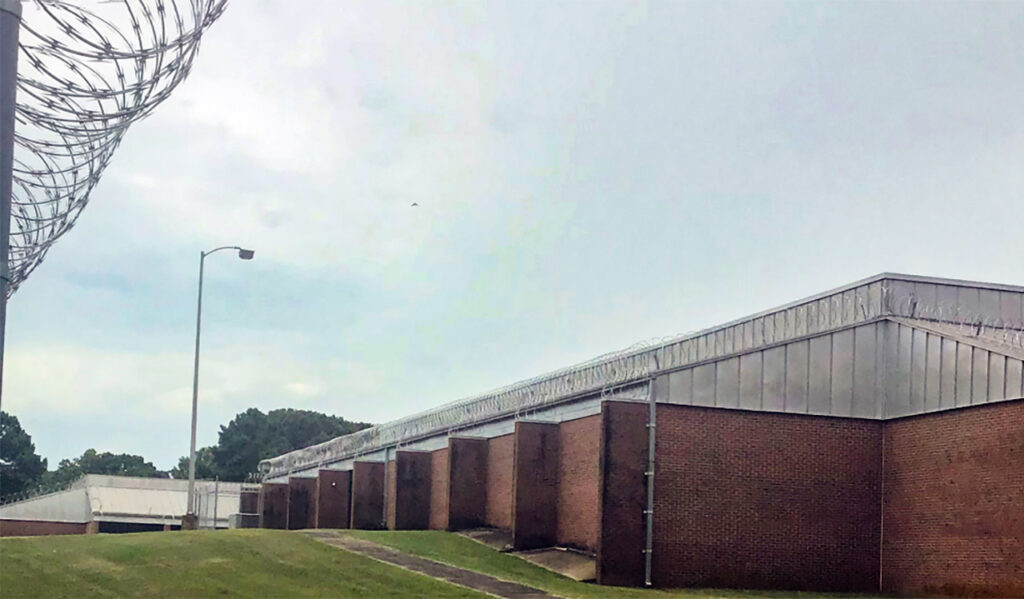
Tennessee has 17 juvenile detention centers for pre-adjudicated youth, one youth prison and three secure facilities that are licensed as residential programs and operated by private contractors, according to plaintiffs’ attorneys. The issues inside these facilities housing young people ages 13 to 18 who have committed crimes are not new.
In 2022, the Tennessee Comptroller of the Treasury released a performance audit of the Department of Children’s Services, finding failures of management, oversight and staffing shortages that led to children being kept in “unsafe situations” in the juvenile detention facilities the agency oversees. The report also found children’s services had failed to comply with provisions of the Prison Rape Elimination Act in most of its facilities. The 2003 federal law requires routine reporting, prevention training and screening for sexual abuse.
Disability Rights Tennessee and the Youth Law Center have been documenting conditions inside Tennessee’s juvenile justice system for the past three years. In 2022, they released a report, Designed to Fail: A Report on Wilder Youth Development Center, that documented violence and maltreatment at the state’s youth prison. Later that year, the two groups released Families Not Facilities, which included recommendations for addressing trauma and promoting healing, in part through more community-based mental health services for young people and their relatives.
The services are desperately needed, attorneys for youth say. At a 2022 legislative hearing, a state official revealed that 86% of young people in state custody had previous contact with child welfare services stemming from childhood abuse and neglect.

Brian Blalock, senior directing attorney with the Youth Law Center, said the lawsuit illustrates that Tennessee’s “child-serving systems” are “catastrophically in a state of disarray right now.”
Advocates say when youth are detained for crimes, their traumatic pasts are exacerbated by abusive staff, who deploy disciplinary tactics that violate state and federal laws. Many young people also receive little education or access to mental health care.
“Instead of accommodating or treating their disabilities, Defendants punish Youth for their symptoms, using violent and abusive measures like solitary confinement, pepper spray, and peer-on-peer violence as behavior management tools,” the lawsuit states.
And despite a state prohibition on the use of solitary confinement for “administrative convenience” or retaliation, youth with histories of trauma spent months alone, often for relatively minor misbehavior, attorneys argue. A boy named J.W., they wrote, was sent to solitary for laughing. The court case references another boy who was confined to a cell for 23 hours a day as punishment for refusing to stop watching TV, yelling and throwing clothes. As a result of months-long stints in isolation, one young person became suicidal; another tried to rip his hair out.
The lawsuit also alleges that staff members set up fights among youth, in some instances bribing them with ramen and cannabis and egging them on. Those actions resulted in beatings that caused significant physical and mental harm, court filings state.
Pepper spray use is also out of control in privately run facilities that contract with the state, the complaint alleges. At the Middle Tennessee Juvenile Detention Center in 2021 staff used the chemical restraint 48 times each month. A boy identified as C.K. was pepper-sprayed for “autistic meltdowns” and denied medical care for three hours, the lawsuit states.
Tennessee facilities have also come to rely too heavily on psychotropic medication to control behaviors, with too little oversight, said Youth Law Center attorney Jasmine Miller.
In addition to immediately halting the abuse of young people held in state custody, she said Tennessee officials must begin properly assessing youth when they enter custody, in order to tailor medical and mental health care that meets their needs. She also said the state does not currently keep statistics on the number of youth with disabilities and who require special education services — another vital gap in proper care.
“When staff don’t have any idea about a young person’s behaviors and how to manage them, the only sort of thing that people can think of to do is to lock children in solitary confinement,” Miller said. “And that is really disturbing.”