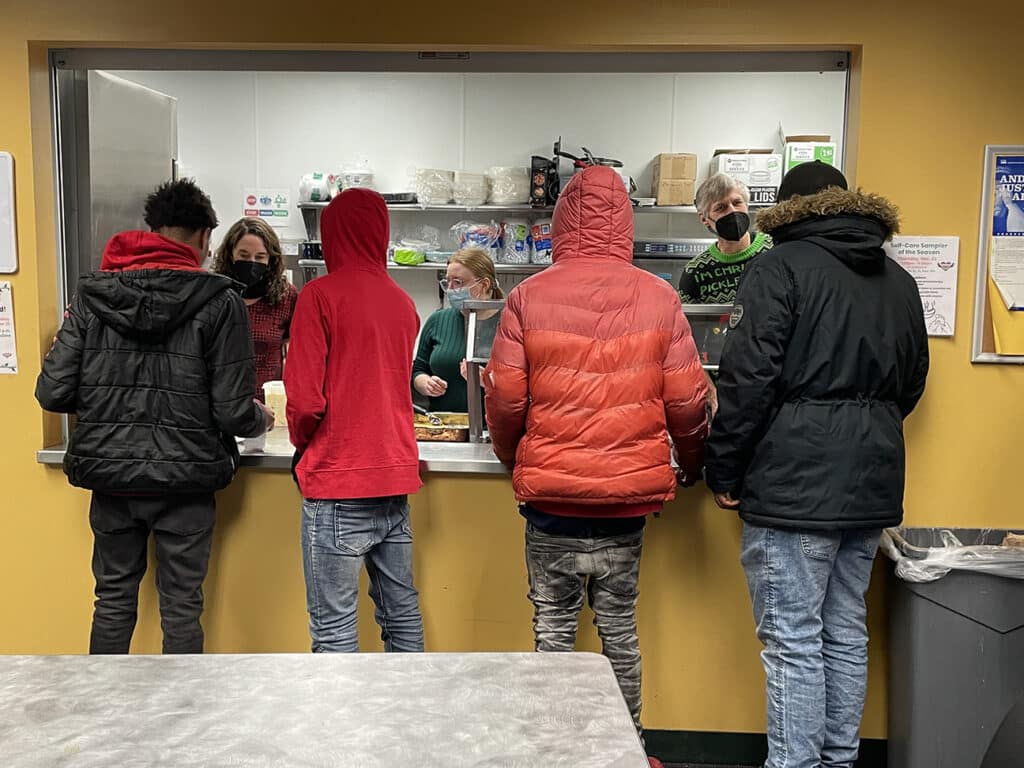


After being kicked out of her mother’s house three years ago, Alia Rosa Taylor moved between New York City homeless shelters. At one Bronx shelter, she watched two women stab each other during a fight over a bed. At another, she got food poisoning. For a few months, she and her partner Ky’ree Taylor slept on the floor of a storage unit in Brooklyn, in 90-degree heat. A friend who worked in the building had snuck them in.
Alia Rosa, now 25, thought her housing troubles were over after she secured an apartment with a city-funded housing voucher. But then Ky’ree lost his job. Rent and utility bills began piling up. The cycle of instability began again.
At the time, a pilot program that provided one-time, direct cash payments to young adults on the verge of homelessness helped them narrowly avoid eviction.
“We really thought we were gonna lose the apartment we had, but it gave us a three-month window to find work,” Ky’ree said. “It showed us that there are kind people out there that do want to help.”
Between March 2024 and January 2025, the national nonprofit Point Source Youth and partner organizations provided payments averaging $3,700 to young adults across the country like the Taylors. There were 345 participants in the group’s pilot program, ages 16 to 27.
Point Source Youth followed up six months later with researchers from Johns Hopkins Bloomberg School of Public Health and reported the findings in March: After receiving the cash assistance, roughly 93% of pilot participants had not entered shelters or local homelessness services, according to data tracked by the federal Homeless Management Information System for the Point Source Youth study.
The vast majority of pilot participants, 83%, were Black, Indigenous or People of Color, identified as BIPOC.
Fifteen participants were interviewed for the March study. They said the cash assistance gave them a sense of dignity and helped them focus on education, work and parenting. The community groups that distributed the funds were also able to connect them to “mental health services, food assistance, job support, and recreational activities, which helped relieve stress and focus on long-term goals,” researchers report.
Avoiding trauma
Young adults in Georgia, New York, California, Texas, Michigan, Arizona and Oregon received the one-time payments. The Atlanta-based program saw the most promising outcomes, according to the Point Source Youth report. Of the 45 youth who received assistance, none were identified in local homelessness data three and six months later.
The study has not been published in a peer-reviewed academic journal. Two social work researchers who reviewed it for The Imprint noted that due to its design, the study did not prove conclusively that the cash benefit caused the positive results. But they said the findings show promise for a novel approach to youth homelessness prevention.
The program was modeled after Washington’s state-funded Homelessness Prevention and Diversion Fund. Launched in 2020, it provides one-time cash assistance to youth aged 12 to 24 at risk of homelessness. A 2025 report found that over 90% of those served remained stably housed.
“We really thought we were gonna lose the apartment we had, but it gave us a three-month window to find work. It showed us that there are kind people out there that do want to help.”
—Ky’ree Taylor,
Point Source Youth participants work with nonprofit staff to identify causes of their housing instability and develop a housing plan. They receive the cash through various methods, including direct deposit, checks or pre-loaded debit cards, typically within 48 hours of applying. Amounts are tailored to each participant’s personal needs. In interviews, most youth stated that they planned to use the money for housing and relocation, utilities, transportation, groceries, debt payments and savings.
On April 30, Point Source Youth expanded the cash assistance program to 1,000 more youth living in California, New York, Hawaii, Maine, North Carolina, Oklahoma, Michigan and Oregon.
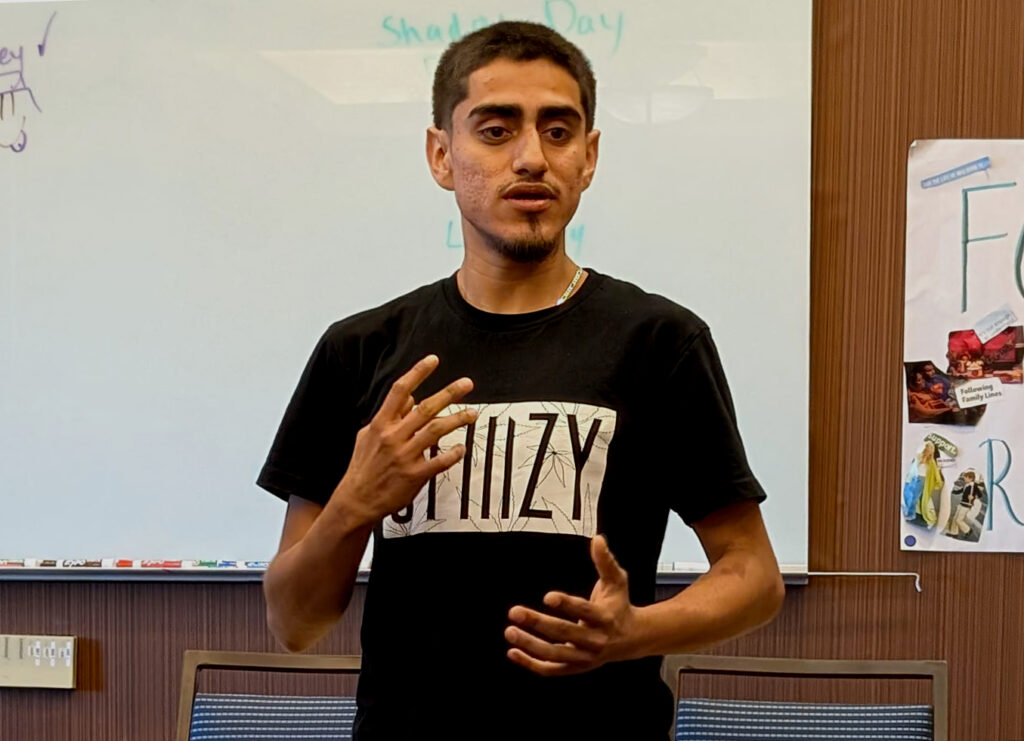
Ky’ree, 23, heard about the pilot program through his therapist’s office.
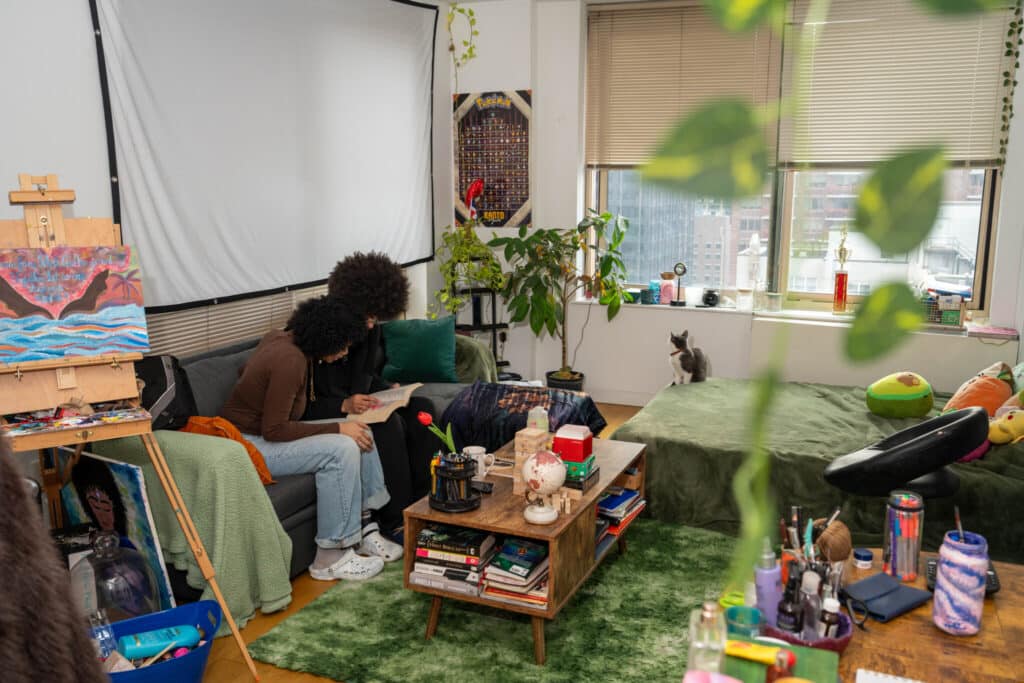
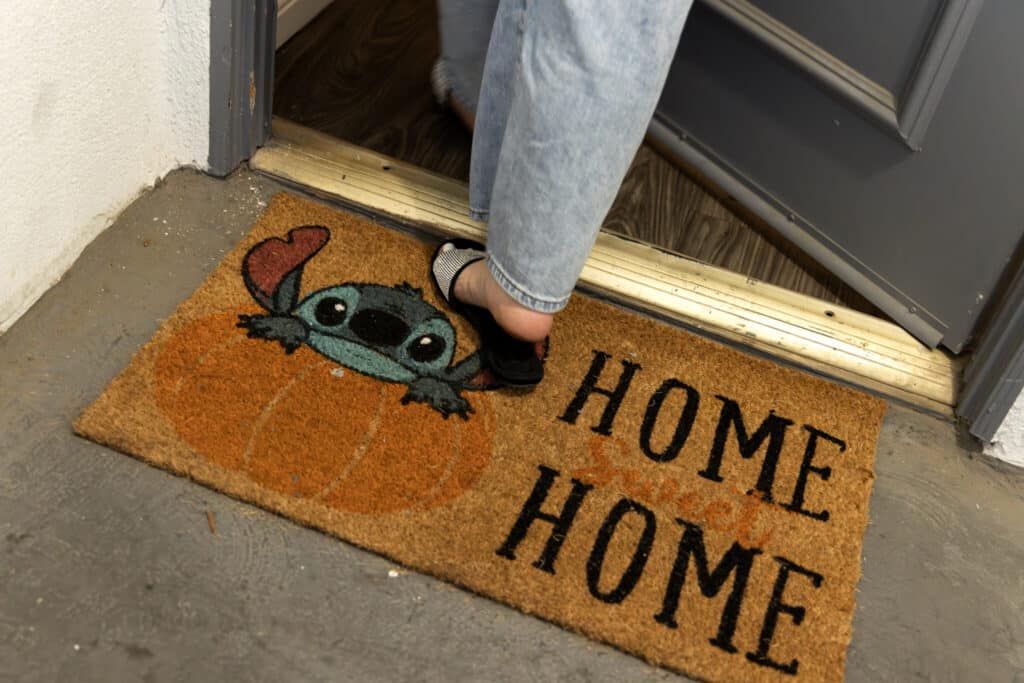
The money the newly married couple received, $3,700 each, didn’t just help them pay rent — it helped them create a home, he said. They bought a desk, bookshelf, and plates and utensils to replace the disposables they’d been using. They also bought a bed and got rid of the tattered, taped-up air mattress they had shared.
Larry Cohen, executive director of Point Source Youth, said direct cash transfers help avert the far higher public costs of chronic homelessness.
“You’re going to spend it on emergency rooms, you’re going to spend it on shelters, and then you’re going to create future homeless adults,” he said, “because once people experience traumas of homelessness, it’s hard to get out and repair those traumas.”
Those most likely to face homelessness — LGBTQ+ youth and aged-out foster youth who lack family support — can also be spared further trauma.
The adult shelter system is a “terrible place for highly vulnerable young people and historically marginalized folks,” Cohen said. “We know that they’re disproportionately represented in the homeless system, and so stopping them before they enter that system is even more important.”
More dire outcomes may also be avoided, said Garrett Mason, an Atlanta-based Point Source Youth consultant. The immediate support can offer an alternative to riskier survival strategies.
“That could be sex work, selling drugs, robbing a place or asking somebody in their life who potentially could not have their best interest in them,” Mason said. “It’s so powerful to be able to say: ‘You don’t have to do those other things. Here’s what you need.’”
More data needed
There are no-strings-attached, guaranteed basic income programs across the country serving low-income parents, aging-out foster youth and other vulnerable populations. But the effectiveness of such programs has been debated among social work researchers. A 2020 international study published in the journal Children and Youth Services Review, for example, found that many studies on youth homelessness strategies are poorly designed and rely on thin evidence.
The Point Source Youth pilot is unique in that it provides a one-time cash infusion specifically aimed at preventing youth homelessness.
Benjamin Henwood, a social work professor at the University of Southern California who has studied cash assistance, sees the potential of such programs.
But he noted limitations in Point Source Youth’s study: Since the nonprofit did not use a control group, it can’t be determined whether the positive outcomes can be attributed solely to cash assistance. Due to low response rates, researchers did not analyze 3- and 6-month survey responses, which would have provided a more complete picture of participants’ outcomes. And Henwood said the government database the study relied on does not capture some forms of housing insecurity — such as couch-surfing or living in a hotel.
Nonetheless, he called the early results “pretty promising.”
“It’s just a question of what more could we have learned if they stayed in touch with a larger proportion of their sample,” he said.
Former foster youth Catherine Calvillo, 24, found out about Point Source Youth through a local housing and mental health services provider. After its initial pilot, the nonprofit started a smaller, similar program in Los Angeles, handing out no-strings cash grants to more than 100 youth. As part of that initiative, Calvillo received $4,000 on a bank card last October. At the time, she had never seen that kind of money in her life.
For months, Calvillo and her boyfriend struggled to keep up with rent on their two-bedroom apartment and pay for gas. They maxed out credit cards and skipped meals to get by.
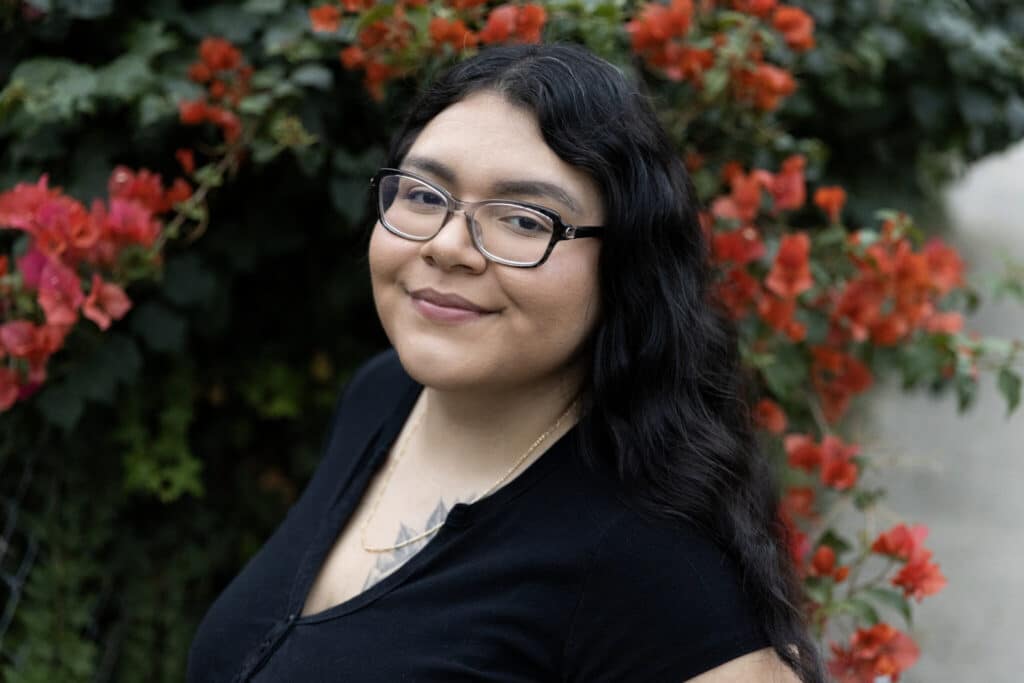
The couple was able to use the money to put down about two months’ rent and pay $2,000 in overdue car registration fees. For the first time, they stocked up the fridge, creating a more stable home for Calvillo’s partner’s young daughter.
In foster care, every aspect of Calvillo’s life was tightly controlled — with social workers dictating when she should eat, sleep or clean her room. The new financial support gave her independence.
Roughly nine months later, the apartment is fully furnished. Calvillo studies at the couple’s new dining room table. She re-enrolled in a criminal justice program at Pasadena City College. Previously, she had taken a break from her studies to work full-time.
“It literally was such a big domino effect, this simple little lump sum,” Calvillo said. “I’ve been really able to grow and find peace, and I think that’s the first time I can say that in 24 years of my life.”