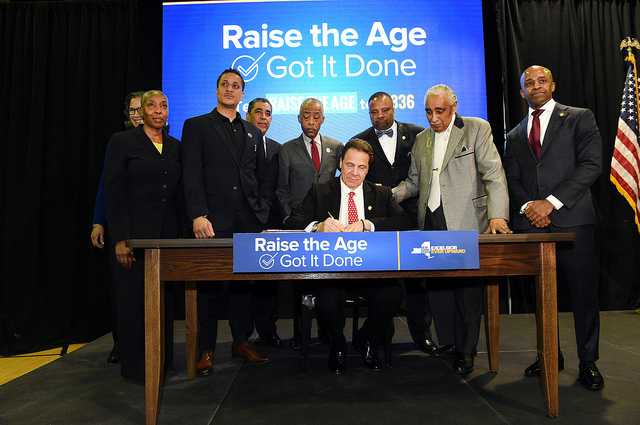
New York lawmakers and the governor signed off on a final state budget last weekend that includes an additional $250 million for the state’s Raise the Age initiative, which draws 16- and 17-year-olds out of the criminal justice system and provides them with services to deter future criminality.
But the expected annual funding comes amid growing concern that legislators have not fixed an ongoing problem in the state: the inability to access the funds that have already been allocated. The ever-growing pot of more than $1.6 billion that has yet to be spent on youth in need. New York City is currently ineligible for Raise the Age funds, and counties have expressed ongoing frustration about having to wait for reimbursement from the state for services previously rendered.
“We are disappointed that despite the best efforts of our champions in the Senate and Assembly, these changes were not included in the final Budget,” the Raise the Age NY Coalition announced last week. The coalition called on Albany leaders “to ensure the equitable and urgent investments we need to support young people and community safety.”
New York’s final $237 billion fiscal year 2024-25 budget addresses housing as Gov. Kathy Hochul’s top priority, but also allocates sizable amounts to address the ongoing migrant influx, beleaguered hospitals and tenant protections.
The budget changes the way marijuana is regulated, offers greater access to prenatal leave for expectant mothers and attempts to tackle retail theft and attacks on shop clerks. In yet another sign of the far reach of Israel’s ongoing war against Gaza, there are dozens of new offenses that can be prosecuted as hate crimes.
The budget also includes increases for the Child Tax Credit, cost-of-living adjustments for human service workers, and increased funding for the legal representation of parents in child maltreatment cases.
Since fully taking effect in 2019, each year the state budget has included $250 million for the Raise the Age reform. Under the initiative, counties outside of New York City create plans to provide early intervention, crime prevention, and alternative-to-detention services, which they submit to the state’s Office of Children and Family Services for approval and reimbursement.
Raise the Age services can include an array of programs that draw in community-based agencies as well as probation departments offering things like mentors, counseling, multisystemic therapy, after-school activities and electronic ankle monitoring. This array of options is intended to support teens who would otherwise have been funneled into far more punitive adult courts, jails and prisons.
This month, a spokesperson from the Office of Children and Family Services said that 52 plans have recently been approved — the majority of New York’s 62 counties. Testifying before state lawmakers in January, the child welfare agency’s former Acting Commissioner Suzanne Miles Gustave pledged to improve outreach.
But nonprofits and local governments alike complain that the pass-through funding is not reaching those most in need. The Raise the Age Coalition — representing roughly 100 law firms and youth justice research and policy organizations — reports that of the total $1.5 billion that has so far been allocated, only $440 million has been spent.
This year, the coalition sought a legislative fix to the problem that centers on providing more timely funds from the state. Earlier in the budget cycle, the proposed Youth Justice Innovation Fund appeared promising, receiving support in the Assembly. The fund would have carved out $50 million of the $250 million annual expenditure, allowing community-based organizations to apply directly for Raise the Age funds.
“We must streamline the delivery of these already appropriated funds to the community organizations closest to our youth,” Sen. Zellnor Myrie told Politico last month in support of the solution.
Lawmakers in both houses also agreed that New York City should become eligible for Raise the Age reimbursements from the state, which to date have not been available.
Youth justice advocates have informed lawmakers and Gov. Hochul of the success of the 2017 reform. While juvenile arrests have spiked since the pandemic, a March letter to the governor by 91 nonprofits flagged state data showing arrests for the most serious juvenile offenses remained 68% lower in 2022 than in 2013.
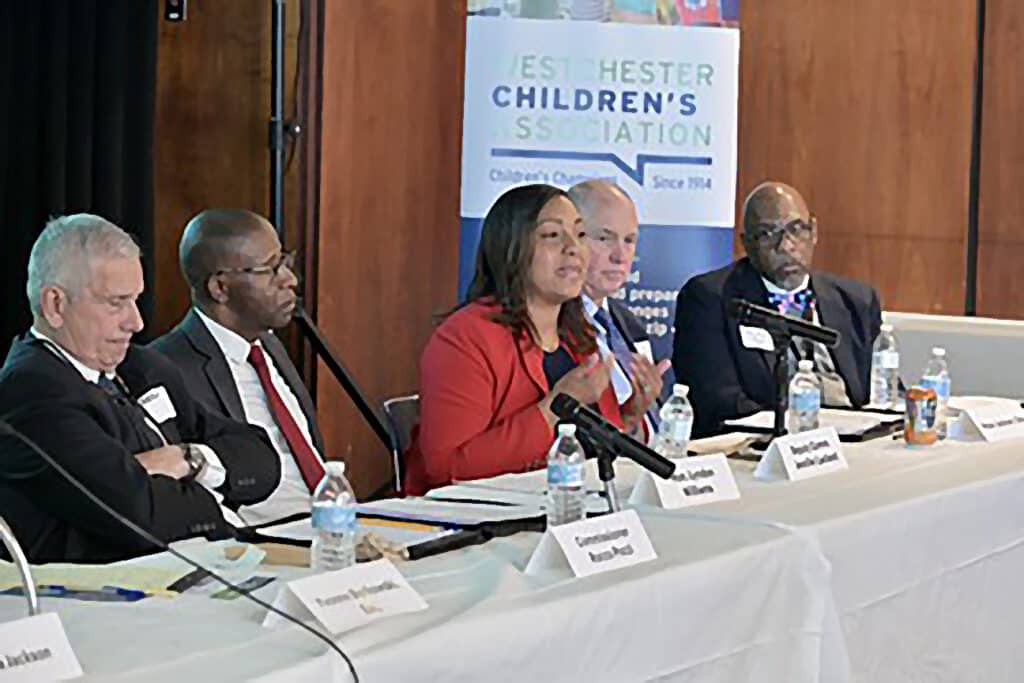
Law enforcement officials and youth justice advocates from Westchester County shared their successes with Raise the Age in a panel last month. Angel Gray, policy manager at the Westchester Children’s Association, said her county has put its funds to good use — paying for diversionary programs and other services that have resulted in 90% of felony cases involving youth under 18 being removed to family court or probation from the adult system.
Rocco Pozzi, Westchester’s probation commissioner, credited community groups for helping keep youth out of detention and providing greater opportunities for them to turn their lives around.
“It really goes to show that it’s not only the governmental agencies that strive to try to keep the numbers down,” Pozzi said, “but it’s also you folks that run the programs.”