
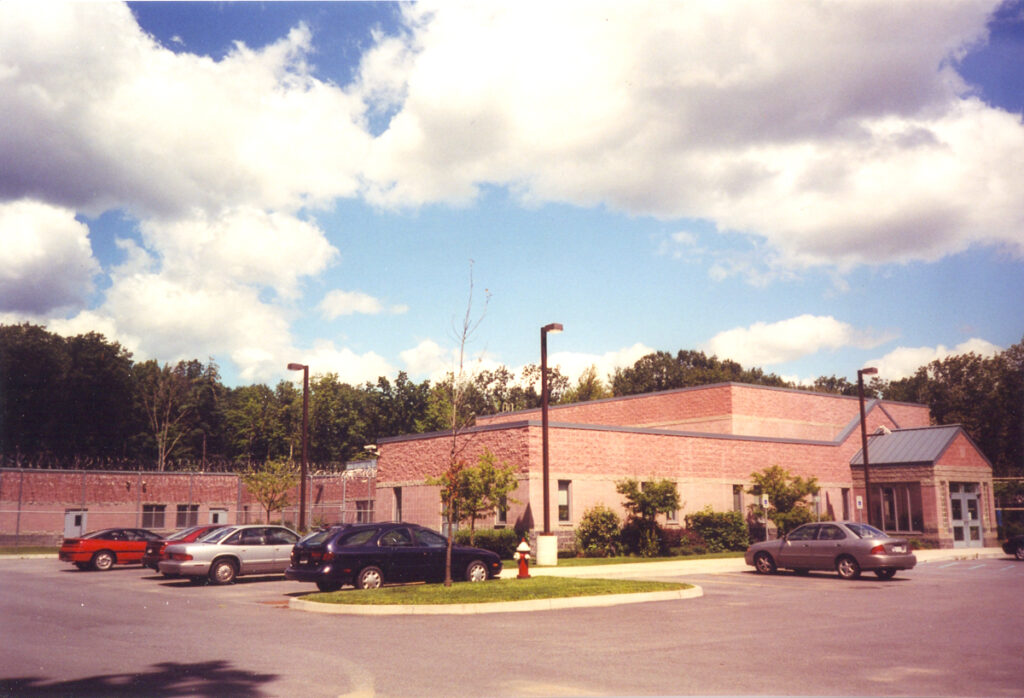
An Albany, New York-area juvenile detention facility where a teenager died late last month had been under heightened state supervision this year due to violations of staffing and maintenance requirements, among other safety issues.
In February, the facility was ordered to “immediately open visitation and address cleanliness issues,” and to report staffing levels three times daily to state officials. Those reports were to include how the medical, educational and recreational needs of the youth were being met, according to statements by facility officials in public meetings earlier this year.
Meanwhile, a recently departed director told a local paper this weekend that the Capital District Juvenile Secure Detention Facility is “an absolute mess.”
Last week, The Imprint reported on the case of the 19-year-old who was found unresponsive on Oct. 27 at The Capital District Juvenile Secure Detention. Police have reportedly stated they do not suspect foul play, but autopsy results and a cause of death have not yet been publicly released.
The 24-bed facility housing youth ages 13 to 20 is operated by the nonprofit Berkshire Farm Center & Services for Youth, administered by a board of officials from four counties, and overseen by the state’s Office of Children and Family Services (OCFS).
A Berkshire Farm spokesperson could not be reached by press time, but in a statement last week said the agency is “deeply saddened over this loss,” and added: “Our thoughts are with the youth’s family during this time.”
Minutes and recordings from this year’s public meetings show the board of directors for a consortium of four county governments — an administrative body called Capital District Youth Center, Inc. — has discussed multiple concerns that state officials identified during site visits in early 2022. At the board’s most recent meeting on Oct. 19, eight days before the teenagers’ reported passing, officials raised concerns about who would take children to off-site medical appointments. The facility bathrooms were described as “abysmal,” and classrooms as unsafe.
Some of these violations were first reported Saturday by The Albany Times Union.
Public records also show numerous facility staff left their jobs or called in sick throughout the pandemic. Family visits for the detained youth — human connections considered vital to their well-being and central to New York’s strategy for preventing reoffending — were suspended due to pandemic protocols well into this year. Staff were “working on getting the youth out of their rooms on a more consistent basis,” as one Berkshire Farm representative told the county board in March.
“We’ve been getting creative,” said Lucas Jacobs, an executive for the nonprofit. He noted that the facility was also stepping up weekly cleaning efforts and hiring, and planning a major renovation. “One of our assistant directors has been doing calisthenics right in the hallway with the kids when we don’t have enough staff,” Jacobs said.
A former director who also spoke at the meeting described one teenager, who had to be hospitalized three times and placed on suicide watch.
Last year, reports published by numerous news outlets documented how life for detained youth changed during the pandemic: a drastic reduction in programs and education, and the curtailing of visits with outsiders. In Puerto Rico, The Imprint reported with The Miami Herald that self-harm incidents among youth had skyrocketed during social distancing protocols. In New York, this outlet reported that state-run juvenile justice facilities reported widespread “suspected” COVID-19 cases, but rarely reported testing for the virus.
Meanwhile, court backlogs resulting from limited public access during lockdowns have extended lengths of stay for incarcerated youth.
Still, the death of a teenager in custody is rare. U.S. Department of Justice data show that eight detained youth died across all states between October 2017 and October 2018.
The Albany Times-Union newspaper was the first to report the death of the teenager in the Albany-area pretrial facility. On Saturday, the paper published a follow-up story that quoted the most recent director there, Dominic Ruggeri, who warned of dire conditions inside the secure detention.
“That place is an absolute mess — the Geneva Convention wouldn’t let kids stay there,” Ruggeri told The Times-Union, referring to the international treaty covering treatment of war prisoners.
The paper reported Ruggeri — who “agreed to part ways” from his former employer last Tuesday — was hired to fix many of the issues the state identified earlier in the year, but he was placed on administrative leave after six weeks due to a human resources complaint. Ruggeri declined a request for comment from The Imprint.
“We’re trying to get a lot of things corrected that should have been addressed,” Ruggeri said at an October board meeting, in his introductory remarks describing his vision for the facility.
Asked Tuesday to respond to the weekend reports of staffing and safety violations at the facility, the Office of Children and Family Services released a statement similar to one it had offered a week prior: “The New York State Office of Children and Family Services is deeply saddened by the death at the Capital District Juvenile Secure Detention Facility,” said Solomon Syed, the deputy commissioner for public information. He also noted the ongoing investigations by local police and two other state agencies.
But justice advocates have expressed outrage and distress over the teen’s death, which is now being investigated by the Town of Colonie’s police department, the Justice Center for the Protection of People with Special Needs, and the State Commission of Correction.
“When I heard about this young man’s death, I was absolutely devastated,” said Alice Green, an Albany-based civil rights activist and executive director of the Center for Law and Justice. “That is not something that should be happening in our community or in a country.”
The Capital District Juvenile Secure Detention Facility opened in December 1997 under a first-of-its kind agreement between four county governments, which formed a public nonprofit to finance its construction. Berkshire Farm is contracted to run the facility day-to-day, with oversight by the county board, and multiple state agencies. County records show that youth brought to the facility primarily come from neighboring Albany and Rensselaer counties.
At the March county board meeting, Mark Castiglione, the executive director of the Capital District Regional Planning Commission, suggested the extra oversight the state had put in place at the Albany facility, known as a “performance improvement plan” or “PIP,” was not unusual for the field. He could not be reached for comment before publication.
“Berkshire Farm is not unique in being put under a performance improvement plan by OCFS at this point,” Castiglione said. “Agencies across the state who are experiencing staffing shortages have been under performance improvement plan, which essentially amounts to additional oversight and monitoring by the agency of the operator.”
Adilia Watson contributed to this report.