
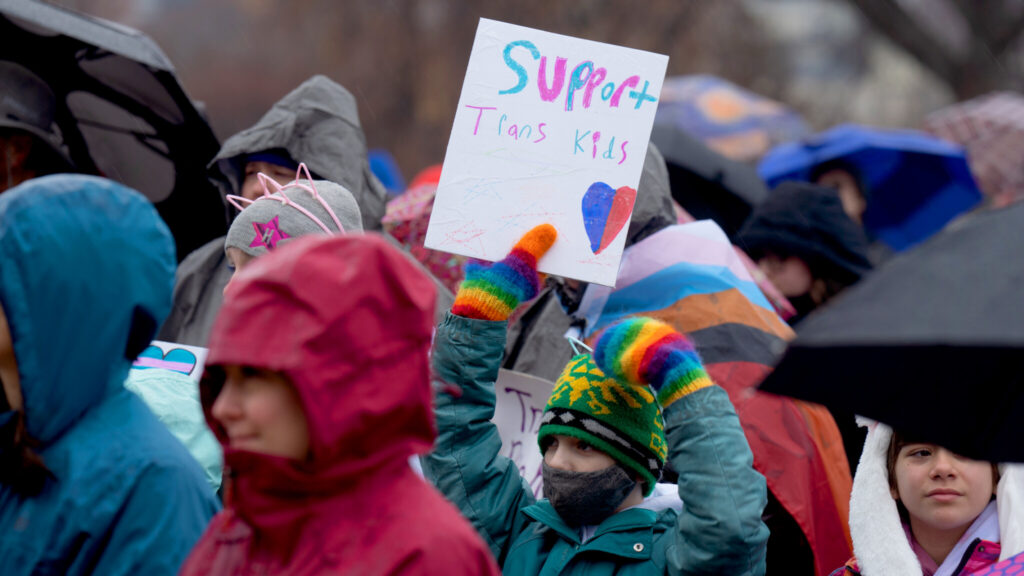
Amid the barrage of White House directives over the past month, the executive order released on Jan. 28 has parents and supporters of trans youth in Minnesota particularly unnerved.
In the missive, the Trump administration falsely equated gender-affirming care — endorsed by the American Academy of Pediatrics and the American Medical Association — with “chemical and surgical mutilation” that amounts to child abuse. It’s a head-spinning turnaround from such guidance just three years ago, when Joe Biden’s White House announced that denying access to gender-affirming care amounted to a violation of federal law.
“How long will we be safe?” asked Hannah Edwards, the mother of a transgender teenager and executive director of Transforming Families, a peer-led support group for trans and non-binary youth and their caregivers. “It’s scary.”
Over the past decade, Edwards said she saw the nation moving in the right direction. But Trump’s directive has stirred fear that the U.S. is backsliding. She’s seeing more parents and youth flock to her group for support.
On a recent Monday, Edwards led a meeting on Zoom for families interested in relocating to Minnesota, a state where trans youth seeking gender-affirming care are protected by law.
“We had 25 families in attendance,” she said. “They called from Texas, South Dakota, Iowa and Florida — to name a few. They’re hoping that Minnesota will remain a safe space for trans youth and their families.”
Trans state lawmaker urges calm
In early 2023, Gov. Tim Walz declared his state a refuge for trans youth seeking gender-affirming health care — a spectrum of closely monitored services, ranging from mental health support to the age-appropriate use of reversible puberty blockers and hormone therapies.
Minnesota state law protects transgender people, their relatives and physicians from legal repercussions for participating in such medical care, and prohibits state agencies from cooperating with other states where gender-affirming care for minors is outlawed or considered child abuse.
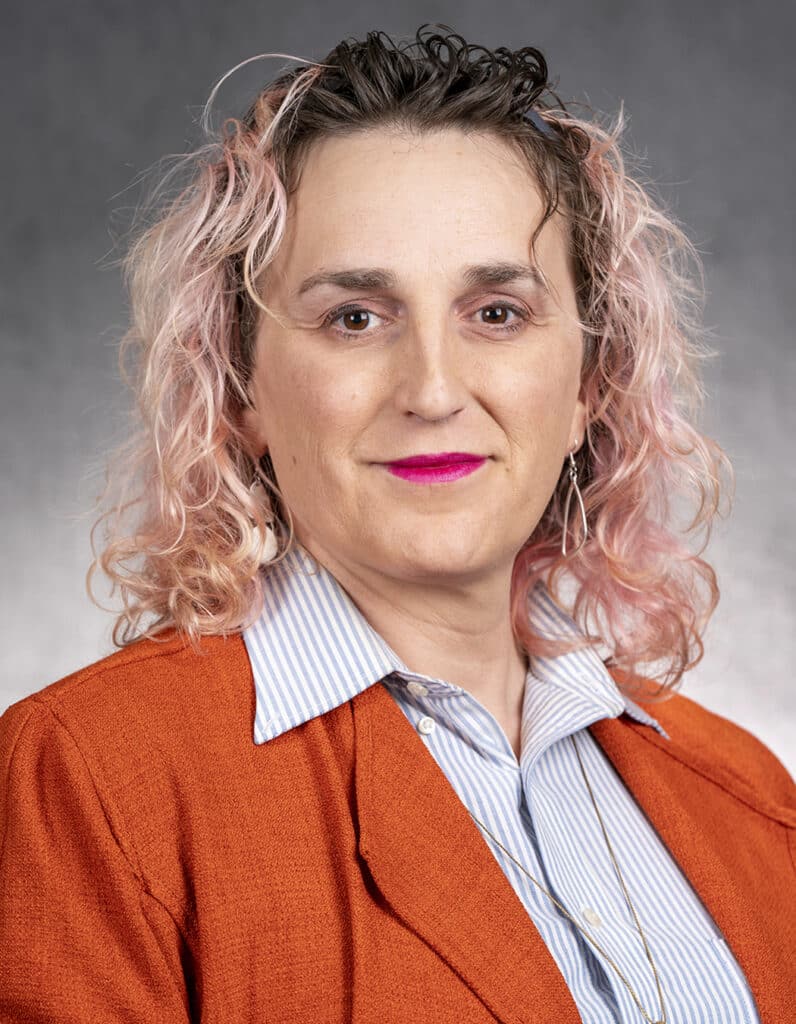
In an interview, Minnesota Rep. Leigh Finke — who authored the Minnesota legislation — said despite the threatening climate, it remains intact. Prior to the bill signing, hundreds of people rallied in support of the sanctuary law, meant to protect youth and caregivers who travel to Minnesota to receive gender-affirming care, and the physicians who provide it.
Although the January order from the White House calls for “appropriate action to end child-abusive practices by so-called sanctuary States,” Finke said there is no immediate impact on state law.
“The order is intended to make providers feel fear,” Finke said. “The goal is to make them pre-comply with the directive by ceasing to offer gender-affirming care to youth.”
Finke said when Trump issued his order last month she was shocked.
“I wasn’t shocked that they were taking action on trans kids’ healthcare,” she said. “I was shocked because we didn’t know it was coming.”
One day before, the president had attempted to ban trans people from serving in the military, noting “adoption of a gender identity inconsistent with an individual’s sex conflicts with a soldier’s commitment to an honorable, truthful, and disciplined lifestyle.”
When he went after trans youth, Finke added: “It felt like, ‘Please, don’t beat on us anymore, because we’re already suffering so much.’”
Despite such assurance, Kat Rohn (they/she), executive director of OutFront Minnesota, said the directive will shape the way communities in Minnesota, and across the nation, experience public life.
“It’s already been tremendously damaging to individuals’ feelings of personal safety,” Rohn said. “But it’s also hurting the organizations and institutions we rely upon for care and support. We’re all being buffeted by this harmful rhetoric, and we’re facing funding cuts and threats of prosecuting health care professionals for providing treatment.”
Since the election, Rohn said they’ve seen an uptick in calls to the helpline run by OutFront — an LGBTQ+ advocacy organization based in the Twin Cities. Callers reach advocates who are there to listen and suggest services and resources. Call volume has spiked 25% to 30% in the weeks since the directive was announced, Rohn said, and clients’ concerns have become increasingly complex.
“We’re seeing more people fleeing abusive relationships, while also navigating urgent health care concerns,” Rohn said. “Mental health crises are surging, alongside a widespread sense of fear within the community.”
Rohn added that the language used in the directive — especially the phrase “chemical and surgical mutilation” — is designed to sow hatred. “This is not how we speak about ourselves,” she said. “Nor is it the kind of language we find in law, medicine and sociology. It’s meant to marginalize, harm and diminish the LGBTQ community, particularly trans people.”
Members of those communities were already feeling fear at what the Trump administration intends to do. This directive, in addition to two others — one that attempts to ban trans people from serving in the U.S. military, and another that recognizes only two genders — confirmed those fears, Rohn said. “The administration is clearly signaling that they will continue to marginalize, and even criminalize LGBTQ folks. Especially trans youth, who were already experiencing significant mental health concerns.”
Reaction nationwide
As in Minnesota, 17 states — including California and New York — are sanctuaries or have passed shield laws to protect trans youth seeking gender-affirming care, in recent years.
Still others have been aligning themselves with the Republican-led assault on trans rights — including Texas, Iowa, Missouri and Wyoming. In 2022, Texas called for parents who seek gender-affirming care for their kids, and the doctors who provide it, to be penalized for child abuse. Last year, Wyoming Gov. Mark Gordon signed a bill banning physicians from performing gender reassignment operations on youth.
And last month, the Associated Press reported, hospitals in Colorado, Virginia and Washington, D.C., paused their gender-affirming care for trans youth, while they evaluate the president’s order. Since then, hospitals in Massachusetts and Maryland have joined that list, according to the American Civil Liberties Union.
As a result, Trump’s Jan. 28 order unnerved an already besieged group in Minnesota. According to a 2019 study published by the Centers for Disease Control and Prevention, transgender students are more likely than their peers to report violence, victimization, substance use and suicide risk.
“The administration is clearly signaling that they will continue to marginalize, and even criminalize LGBTQ folks. Especially trans youth, who were already experiencing significant mental health concerns.”
— Kat Rohn, OutFront Minnesota
Pushback came swiftly in the state. On Feb. 7, Minnesota Attorney General Keith Ellison, alongside attorneys general of Washington and Oregon, filed a federal lawsuit to halt the White House executive order, which could lead to the loss of federal funding for hospitals that provide gender-affirming care to youth.
“Our children deserve so much better than to be targeted, intimidated, and denied medically necessary healthcare by the President of the United States and his billionaire cronies,” Ellison said in a press statement. “President Trump’s executive order is not only illegal, it’s mean-spirited and deeply hurtful, so I’m filing a lawsuit to end it.”
Days earlier, New York Attorney General Letitia James warned hospital leaders in her state that compliance with the order and failure to treat minors in need of health care would violate legal protections against discrimination.

“Electing to refuse services to a class of individuals based on their protected status, such as withholding the availability of services from transgender individuals based on their gender identity or their diagnosis of gender dysphoria, while offering such services to cisgender individuals, is discrimination under New York law,” James stated in her letter.
Christy Hall, a senior staff attorney at the Minnesota-based Gender Justice — an advocacy group that specializes in gender and inequity-related litigation — has spoken publicly about the need for physicians to follow existing law.
“They should know that nobody outside the executive branch is required to follow those orders,” Hall said. “When I look at that order, my first thought is: ‘How on earth could they possibly implement this?’ Because I don’t think it’s legal.”
What of the families?
In the run-up to Trump’s second inauguration, Edwards and her fellow advocates encouraged parents and caregivers to take care of legal documents like young people’s name changes on social security cards and passports.
“We’re lucky to live in Minnesota, where we can still access gender-affirming care,” Edwards said. “That choice is between my husband and I, our daughter and our doctor. It’s not something the state will step in and stop.”
These days, she’s struck by her dual roles — as a parent of a trans youth, and as an advocate for others she serves at Transforming Families.
“I’m fighting to protect my family,” she said. “At the same time, I’m helping others find the resources they need to do the same.”