
Voting drives are underway as California’s March 5 primary election approaches. Mailboxes are stuffed with glossy flyers, robo texts are landing on cell phones, and lawn signs are planted in countless front yards.
Less seen by outsiders are the ramped-up efforts in juvenile halls statewide. In living units and cell blocks up and down the state, new participants in democracy are being particularly sought out this year: Young people who committed crimes as juveniles and remain behind bars this historic election season.
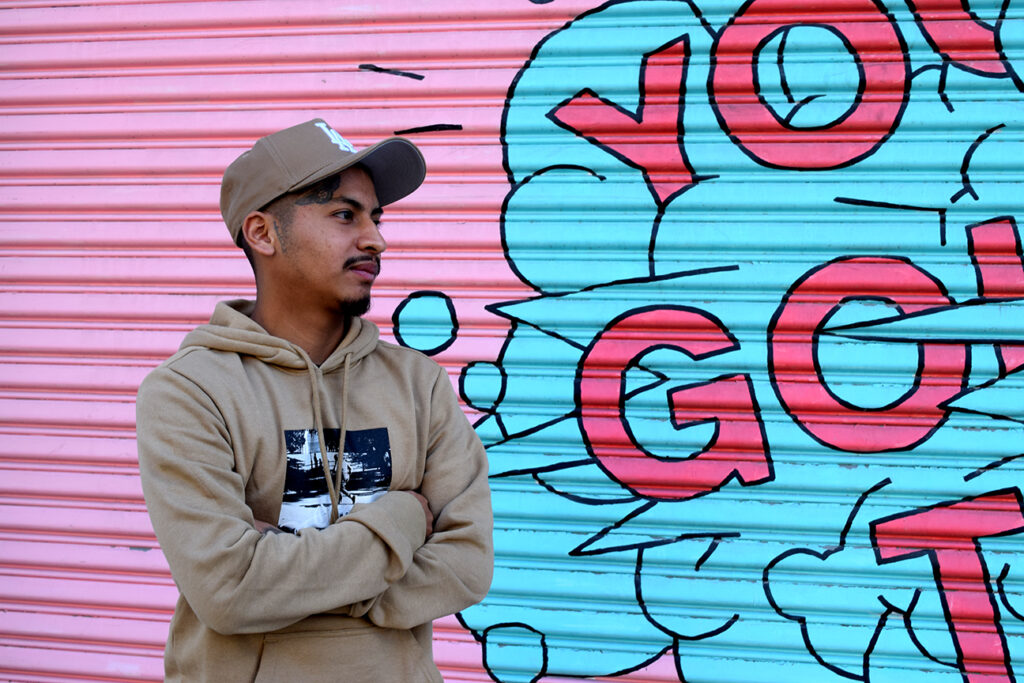
“It means a lot to know that your vote counts,” Steven Saavedra, 22, of South Los Angeles, told a reporter. In 2020, at age 18, he became the first in his immigrant family to vote. At the time, he was incarcerated at the Barry J. Nidorf Juvenile Hall and would soon head to a state Division of Juvenile Justice facility.
Saavedra said he never expected he would ever be able to vote. But he now credits the experience with helping him learn about politics and “opening up a bigger picture for me.”
More and more youth like Saavedra are among those being handed ballots. Last year, after the state shut down its youth prison system, hundreds of young adults were moved in order to serve lengthy stints at local juvenile halls. Facilities like these once only housed children under 18, typically for weeks or months at a time.
The shift has required local probation departments to tailor their services to meet the needs of young adults — adding opportunities such as attending college classes, learning a trade and, increasingly, making sure their votes are counted.
These days, justice activists and advocates statewide are engaged in a growing campaign to include incarcerated youth in voting outreach efforts.
“When we involve incarcerated people in decisions that are directly impacting their communities, we are transforming the landscape of power,” said Mitchelle Woodson, legal director with the San Diego-based Pillars of the Community, a group that organizes voting services for incarcerated people in California.
State law has long clarified the right to vote for any incarcerated person who is not held in a federal or state prison. And California election code requires probation departments to identify voting-eligible youth and help them register.
This year, with an expected faceoff in November between incumbent President Joe Biden and former President Donald Trump — who faces 91 criminal charges in four ongoing court cases — the stakes could not be higher this election season. Nothing short of this country’s future as a democracy is on the ballot, as is the U.S. role in conflicts raging across the globe, from Ukraine to Gaza. Climate and economic crises have sparked large-scale migration through U.S. borders, amid an increasingly out-of-control flow of misinformation on social media platforms fueled by artificial intelligence.
While the expected presidential showdown between two aging white men in an increasingly diverse state looms large, this year’s election in California will also decide a Senate seat and scores of important down-ballot races.
This year’s election comes on the heels of several record-setting cycles where the youth vote has reached turnout levels not seen for decades, including in 2020, when young people overwhelmingly favored Biden.
But a recent poll by the Institute of Politics at Harvard Kennedy School poll shows that fewer young people plan on voting in 2024, and that respondents trust neither presidential candidate on critical issues like the conflict in Gaza.
Approaches to voting drives in juvenile halls vary statewide, but on the whole they are assisted by California’s reliance on vote-by-mail ballots. Probation departments have long supervised 18-year-olds finishing out juvenile sentences, as well as those with ongoing court cases. But these days, hundreds more youth housed in county detention facilities are eligible to vote — and must be assisted in doing so.
The promotion of voting behind bars was bolstered in 2016, following passage of state legislation clarifying that people in jails and under community supervision are still eligible to vote. Chapters of the American Civil Liberties Union and community-based organizations have since ramped up outreach and voting support to help young people in detention register and vote.
In advance of California’s March 5 primary, the San Francisco-based Youth Law Center created a leaflet that reminds young people, family members, advocates and probation staff about the voting rights of incarcerated youth.
Tamar Alexanian, one of the center’s staff attorneys, said misunderstandings about such rights often prevent young people from exercising their right to vote. Too often, myths prevail that state residents who are currently or have been incarcerated are ineligible.
But Alexanian is among those clarifying the law: In California, only people in federal or state prison are prohibited from casting a ballot.
“Some of those misconceptions are particularly hurtful and confusing for those trying to exercise the right to vote for the first time,” Alexanian said. “Youth with juvenile cases never lose their right to vote.”
But there are barriers. Among them: poor access to voter registration forms and missing information required to register, such as driver license and social security numbers.
And then there are people’s attitudes toward politics and participation in an election — challenges in general among the young, but issues that can be particularly acute for the incarcerated population.
A young woman who recently left Los Angeles County’s juvenile justice system said she believes that officials and advocates need to understand more fully how young people are impacted by the dehumanizing conditions of juvenile detention facilities, and how easily disaffected one can become.
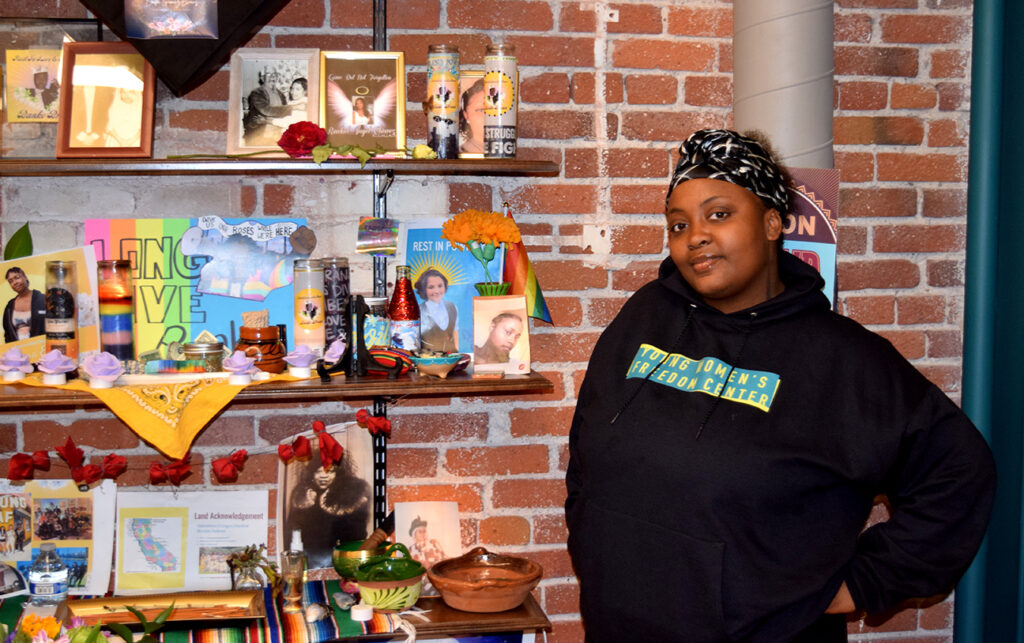
For most of her life, Mimi McCowan had never understood the point of voting. The 22-year-old grew up in the Los Angeles neighborhood of Mid-City, where gangs and violence were prevalent. McCowan was first arrested at age 14. She spent several years cycling in and out of county juvenile halls and a juvenile detention camp — before ending up in the adult county jail.
“I was never a big fan of voting because nothing seems to change in my community,” she said in an interview. “Even after all these elections, my community is still struggling.”
But eventually, McCowan’s views would change.
Efforts to engage young voters behind bars in California counties encompass a range of approaches, some led by probation departments, others involving community-based organizations and local government agencies.
Alameda County’s probation department has partnered with the League of Women Voters to work inside juvenile halls, providing civic engagement, ballot information and registration assistance. In some cases, volunteers with the nonprofit group have stayed in touch with young voters after they leave the county’s custody, to help make sure they receive their ballots at new addresses, a 2021 ACLU report found.
In San Francisco, the county Department of Elections has partnered with a special unit of the Sheriff’s Department to deliver ballots and voting services at local jails. Now the agency is providing similar services to young adult voters incarcerated at the San Francisco Juvenile Hall.
“Through these programs, we can ensure all eligible San Franciscans involved in our justice system have the opportunity to participate in elections,” Department of Elections Director John Arntz said in a recent press release.
Before the last presidential election, teachers and staff at Los Angeles County’s Barry J. Nidorf facility helped register incarcerated youth. Staff even set up a mock voting booth where young people filled out mail-in ballots, offering them a realistic sense of the voting experience.
McCowan now works as an intern with the Los Angeles chapter of the Young Women’s Freedom Center, and she said her views on ways that young people can serve their community have expanded. Earlier this month, McCowan, along with peers from the center, testified before a state oversight agency, urging them to close down two L.A County juvenile detention facilities that have long struggled to provide healthy and safe conditions for the predominantly Black and brown youth they house.
She has recently started to rethink her perspective on voting, thanks to discussions she’s had at the center. The group released an L.A. County voter’s guide in 2022, filled with descriptions of government offices, candidate information and inspirational quotes from famous social justice activists like Fannie Lou Hamer and Josephine St. Pierre Ruffin.
This year, the group is preparing a statewide voter’s guide. And research into local races has driven McCowan’s enthusiasm for the work. In her community, incumbent Los Angeles County District Attorney George Gascón will face off next week with a crowded field of 11 opponents.
McCowan said studying the candidates’ different policy perspectives — and learning about Gascón’s proposals to provide more mental health services as an alternative to locking people up — gave her new insight.
“It changed my perspective on voting a little bit because I’m like, okay, DAs are not always the bad guys,” McCowan said. “I think I may have to put a little vote out now.”