
In a typical mix of longing and rage reflected in the New York teens’ lyrics, one boy recently crooned: “When you went away, what a bond to break.”
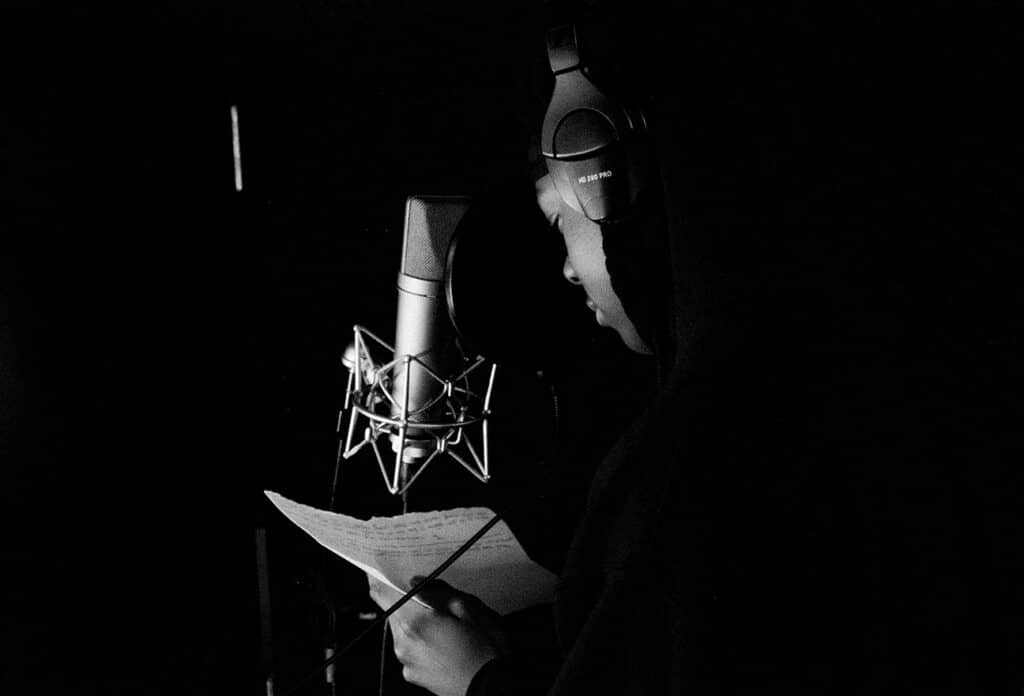
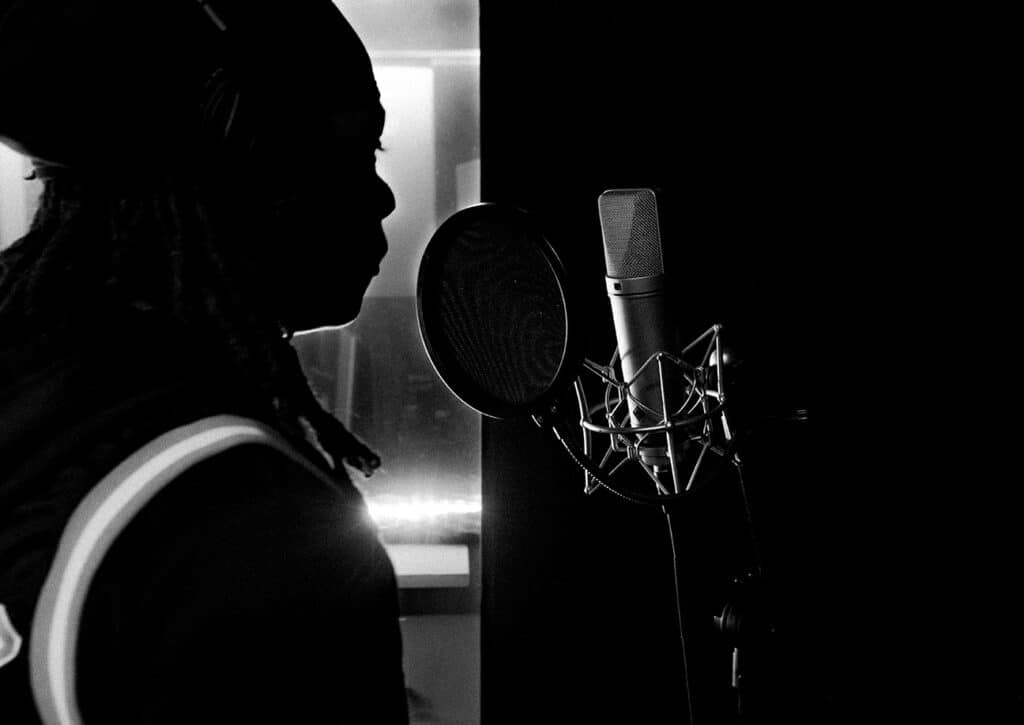
With its array of mics, headsets, keyboards and mixers, a dimly lit Buffalo recording studio offers welcome relief for the teens who visit regularly from the nearby minimum-security juvenile facility just a half-hour away.
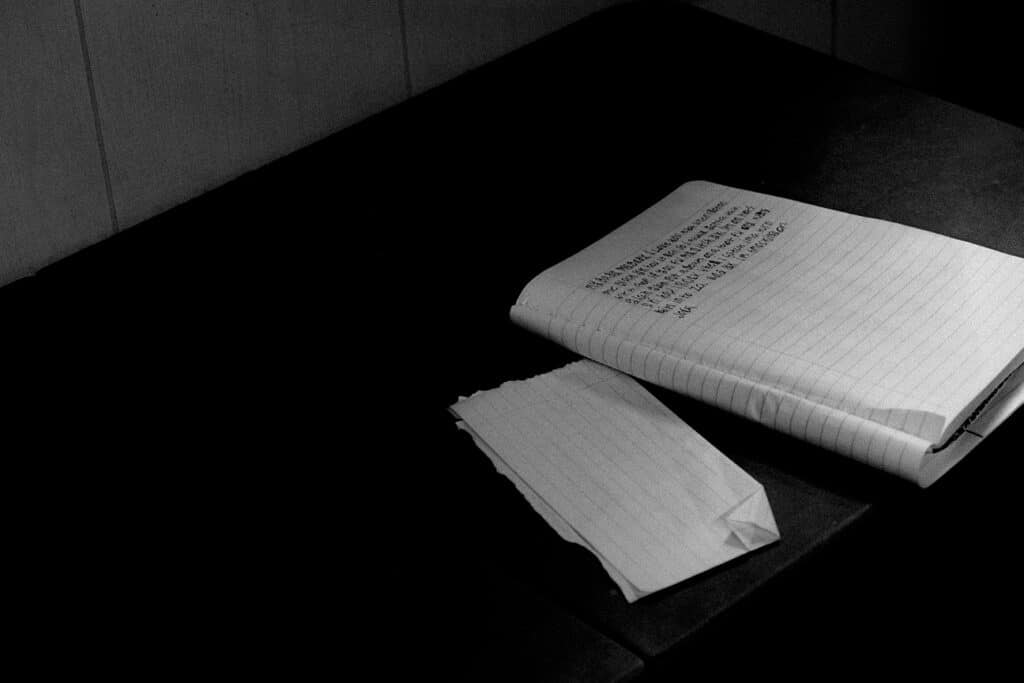
On a February evening, an 18-year-old with a notebook full of lyrics in hand stepped up to the microphone before launching his rap:
“Dad’s back to back/Yeah he going to the feds/F— the system, they ain’t tryna tell me where to be/Just where to get.”
The chorus veered from his anger to his profound sense of loss.
“When you went away/What a bond to break/I be missin’ you.”
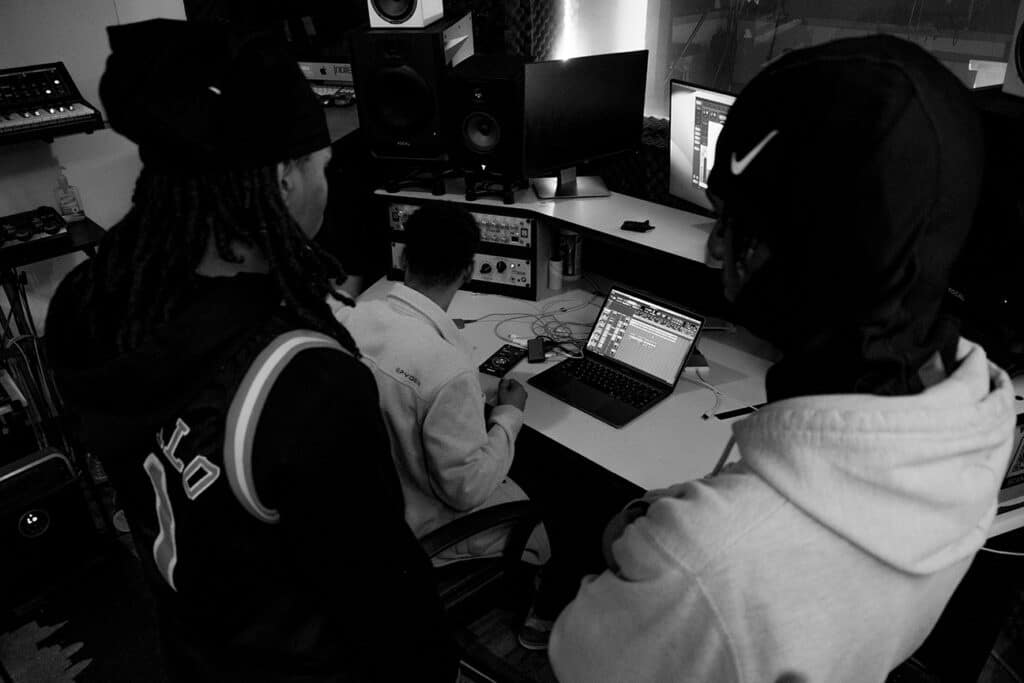
Two teens nodded to the beat, watching intently from the control booth. Each had their turn, 15 precious minutes to record their emo, trap and drill songs during the much-anticipated trip outside Gateway Longview Residential Treatment Center.
Since 2021, Bridge Studios NY owner Brennan Hall has welcomed Gateway Longview residents, donating free studio time and the guidance of volunteer producers and sound engineers hoping to facilitate their free expression, rehabilitation and hopes for the future.
Hall said his motivation was to “make a space for troubled youth that needed that creative outlet.”
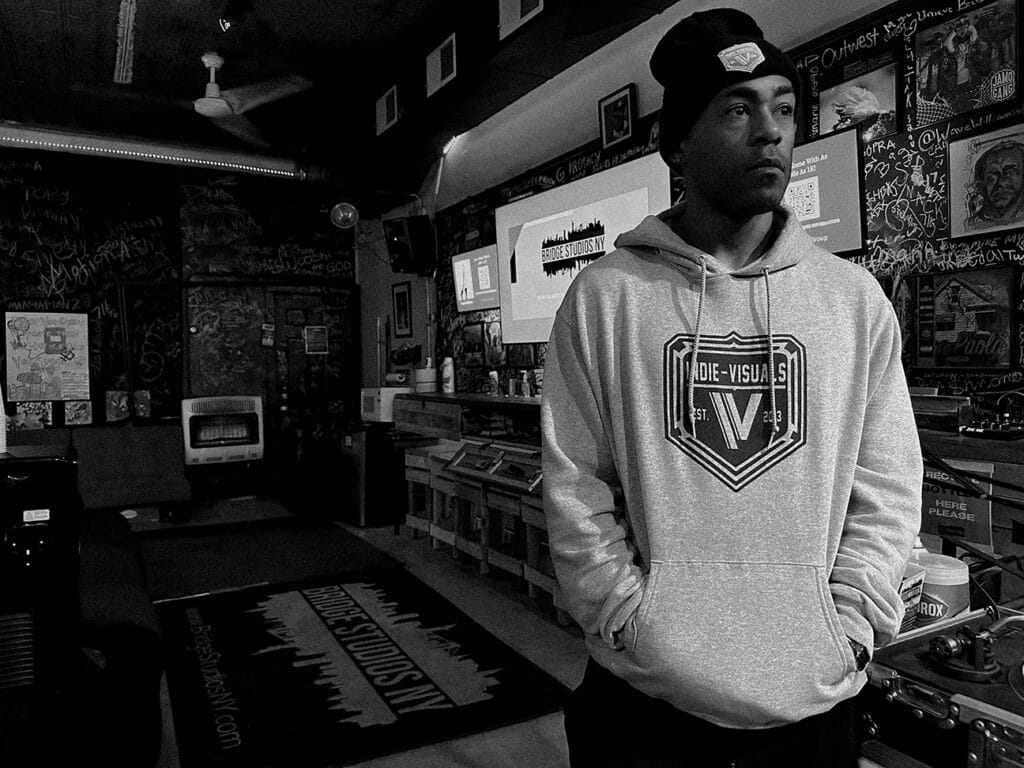
Last fall and earlier this year, The Imprint listened in, hearing from young people ages 13 through 19 about recording at Bridge Studios, and how music helps them get through life in a detention center. Gateway Longview residents have committed low-level crimes or come through the foster care system, with backgrounds leading to social, emotional and behavioral challenges.
The Imprint is not naming the youth in this story to protect their privacy.
Their music reflects the early trauma they’ve experienced due to gun violence, family separation, the death of loved ones and parents hauled off to prison. Many of the lyrics include profanity that is not being reprinted. But the underlying themes are clear: Soaking up harm, and inflicting it. Loss and love. The fragility and confusing nature of interpersonal relationships. Incarceration, and guns — a lot about guns.
“They’re going to feel where I’m coming from. They’re going to feel my pain.”
— Teen rapper visiting Bridge Studios ny
Teens with access to arms is an ongoing concern in New York, described by the state’s Division of Criminal Justice Services Commissioner Rossana Rosado in a public statement late last year: “For too many New Yorkers, especially teens and young adults, gun violence is a daily reality,” Rosado said, noting that the fix can happen in programs like the one run out of the humble Buffalo recording studio. “While our local law enforcement and community partners have made significant progress in this fight, we need to do more to support programs and services that provide young people with opportunities to learn, grow and thrive.”
The youth visiting Bridge Studios said writing lyrics and rapping is therapeutic and key to processing their feelings. The teen who crooned about missing a loved one said music helps “with my mental health and how I’m doing.” It also helps him sort out relationships.
“Sometimes I be in my feelings, and sometimes I be angry and talking about people,” he said. “Like, I be dissing people.”
He said he’s had close friends and family pass away. And when he hears them being disparaged, his music offers a comeback as well as solace.
“They’re going to feel where I’m coming from,” he said. “They’re going to feel my pain.”
A 17-year-old echoed that theme.
“My mother passed away, and I had no other way to cope with the pain,” he said in a September interview. “So I started rapping.”
The teenager has loved music since he was 12, he said. But after being sent to supervised residential facilities, he began to take the interest more seriously. Juice WRLD was a particular inspiration.
The late rapper, a favorite among youth in the system, is legendary for becoming a near-instant sensation, however brief, after he posted songs in high school that were recorded on his cellphone. The melodic hip-hop tunes are described as both sweet-sounding and raw in their lyrical tussle with the weighty topics of death, fame and drugs.
The teen in Buffalo said the legendary rap artist — who died in 2020 of an accidental drug overdose at age 21 — inspires him because “he made me feel like I wasn’t alone.”
He quickly added: “I want to put the same impact on other people, with a similar flow.”
Gateway Longview, located in the suburb of Williamsville, can house up to 37 youth in its residential program. Mirroring the broader New York justice system, they are mostly Black and brown kids from Erie County and surrounding western New York communities. One youth said they’d been placed at the facility for crimes including car theft, criminal mischief and ultimately violating probation.
Gary J. Rouleau, a vice president at Gateway Longview, said in a statement to The Imprint that “the goal is for youth to stabilize and move to a more appropriate setting” — preferably within six months.
But average lengths of stay range from six months to a year.
While placed in the residential facility, they are encouraged to participate in group therapy sessions and behavioral health programs. The teens visit the recording studio roughly once a month.
“My mother passed away, and I had no other way to cope with the pain. So I started rapping.”
— 17-year-old visiting Bridge Studios ny
“In their free time, they’re constantly writing or listening to music,” said Michaela Eisenhauer, Gateway Longview’s manager in charge of enrichment activities. “That kind of is what unites them all, the music itself.” She described it as “a coping mechanism.”
In September, the group was energized. From the recording booth to the lounge, they wrote feverishly in notebooks and rehearsed their raps under the glow of purple light bulbs. Some eagerly paced behind the producer, asking repeatedly when it would be their turn to enter the sound studio. They chatted up the producers, freestyled, spun discs on a turntable and listened to music on MP3 players. Some were “getting sturdy” — dancing together in the New York City drill music style.
A 15-year-old boy who said he admires the hip-hop group Migos asked an engineer to make his recording “auto-tuned to the top.” Facility staff said the young teen had spent the past week describing his excitement about the upcoming day at Bridge Studios.
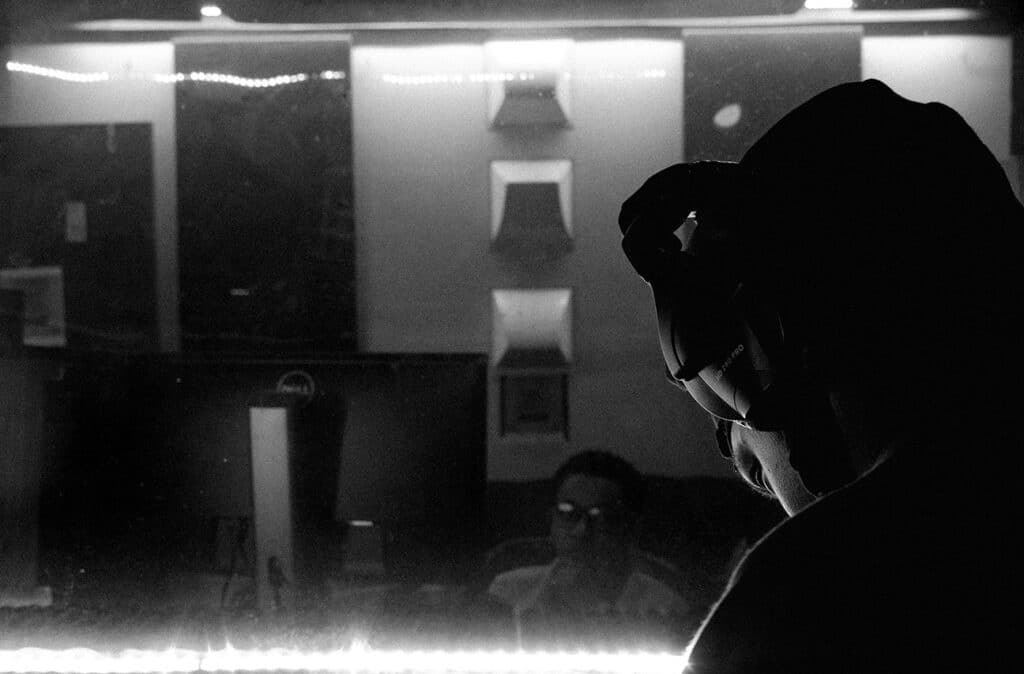
Attendees in February sat quietly on couches, one contemplating whether or not their lyrics were all that good.
Except for a brief pause during the pandemic, the donated two-hour studio sessions have taken place regularly for the past three years. Gateway Longiview has since acquired a $25,000 grant from the Stenclink Family Charitable Fund, allowing Hall to develop educational material and build a music studio inside the facility’s adjacent school outfitted with laptops, speakers, microphones and keyboards. That project is still underway.
Hall values this accessibility. His approach is to “let the artists be artists.” He doesn’t want to “impose on their art or creativity” by directing content. That means when the boys’ raps reference violence, curse words and misogyny, the adults supervising them don’t intervene. But Hall said youth who make multiple trips to the studio sometimes change the language they choose to use — particularly after they’ve had time to listen to their recordings after the sessions.
For decades, researchers and scholars have shown that young men of color are more likely to engage in therapeutic treatment when it involves hip-hop and rap, because of the art forms’ cultural relevance in their lives.
Lincoln Land Community College Assistant Professor Alonzo DeCarlo — a psychology and clinical social work professor, and former Detroit juvenile probation officer — is the first to use the term “rap therapy” based on published quantitative studies examining its impact in a clinical setting. DeCarlo conducted his doctoral research in 1999 with incarcerated boys at the Wayne County Juvenile Detention Center in Michigan and non-incarcerated students using elements of rap music as a component of a group psychotherapy setting.
“They were not listening or didn’t seem receptive to the psychiatrist, social workers, or the psychologist,” DeCarlo recalled, “no matter what they said.”
“Findings were unequivocally in favor of the RAP therapy as a tool for advancing prosocial behavior.”
— Researchers Alonzo DeCarlo and Elaine Hockman
The Wayne County research involved adolescents selecting their favorite rap songs, with no restrictions on their choices. Next they were instructed to analyze the songs through the lens of specific topics including “female gender abuse, anger management, impulse control, reasoning, morality, responsibility and identity.” The 2003 study, co-written by Elaine Hockman and published in the journal of Social Work With Groups, has been frequently cited. It compared the responses of adolescents who committed violent crimes, those accused of more minor “status offenses” like truancy, and high school students with no criminal history.
“Findings were unequivocally in favor of the RAP therapy as a tool for advancing prosocial behavior,” they concluded.
Board-certified music therapist and University of Kansas Associate Professor of Practice CharCarol Fisher found something similar. Fisher spent over 10 years offering hip-hop music therapy to young people seeking treatment in a Missouri residential facility. Her work focused on allowing the youth to express themselves — but she also sought to to understand why so many of their lyrics reflected themes that were often seen as negative or offensive.
“Something is there that would provoke you to say these things,” Fisher would tell the youth.
Yet like Hall, she didn’t scold or try to control the stories of young artists in therapy. Instead, she encouraged them to reflect on their choice of words in journaling and listening sessions of their recordings. Eventually, they began “censoring themselves,” Fisher said.
“It is irresponsible to have these groups and not talk about the content in some way,” she added. “But through all of that, they needed to use the music of their culture, and that’s what hip hop is — the culture.”
In the Buffalo studio, teens rushed to make the most of their last few minutes before heading back to their facility, offering thanks to the producers for volunteering their time. They snapped instant photos smiling together.
On his way out in late September, an 18-year-old stared intently at pictures lining the studio walls, soaking up the image of legendary rappers who had passed through — artists such as Conway the Machine and Benny the Butcher.
The teen has since been moved to a higher-level, more secure detention facility where trips outside aren’t possible. But six months ago, he had set his sights on a different path.
Staring at the images he said matter-of-factly: “I’m gonna be up here one day, mark my words.”