
Youth Voices Rising New York Op-Ed Contest 2024 — First Place
Listen to the author read this piece:
In America, the foster care system’s tentacles, entwined with those of the prison systems, reach far beyond its boundaries, ensnaring both the incarcerated and their families in a suffocating grasp. The staggering number of children who lose a parent to prison is more than just a statistic; it is a collective cry of disrupted childhoods, fractured families, and unhealed wounds. For many of these children, the absence of a parent sets them adrift in a world fraught with dangers and devoid of stability, often leading them to the very fate they feared — incarceration. According to an investigation conducted by The Kansas City Star, out of about 6,000 prisoners surveyed, 1 in 4 respondents were involved in the foster care system. In some cases, foster care children had been shackled and chained during transport even though they had never committed a crime. The foster care system, which is meant to serve as a refuge, too often becomes a pipeline to more mistreatment, higher rates of PTSD than Iraq war veterans, miseducation, suicide, and prison.
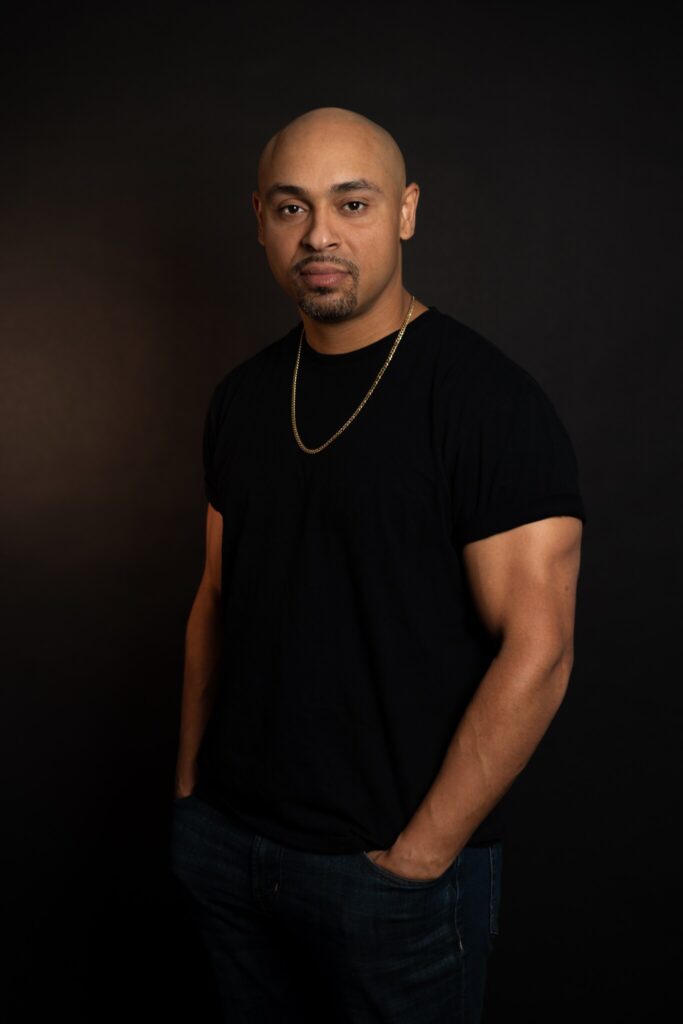
I was one of those children. At 3 years old, I was torn from my mother’s care, forced to wander through the foster care system’s perverse and abusive labyrinth disguised as child welfare. Her absence left a gaping void in my heart, a void that no amount of foster homes or caseworkers could fill. By the time I was 16, that void had consumed me entirely, and I began to navigate this world lost, afraid and, yes, very angry. I turned to the streets because the young boys and girls who were outside were also angry.
The streets are a cauldron where the embers of rage simmer and boil, turning into a spectacle to be revered. Reverence sounds beautiful for a boy who never experienced the love of family. Reverence from the streets should not have been what validated me as a young person, but it did. At the age of 16 years old, as a foster boy, I found myself facing a life sentence for second-degree murder and first-degree robbery. My mother was also incarcerated. The bitter irony was that I finally had my mother in my life, but it was in the last place I ever wanted to be — with either of us behind bars.
My mother became the mother I needed her to be when we were both prisoners. Locked away on Rikers Island at the same time, we were not co-defendants, nor were we together. Yet, this shared experience marked the first time in my life that she was truly present for me. Since I was 3 years old, she had been absent, leaving me to navigate the cold and often cruel foster care system alone — a journey that far too many children in America are forced to endure. About 1.5 million children in the U.S. experience the trauma of losing a parent to incarceration — a loss that leaves indelible emotional scars and, for many, sets them on a path toward a future behind bars themselves. Yet, for the first time, my mother was there for me in a way I had never known. She wrote me love letters and poetry, and, through those words, she introduced me to the transformative power of the arts. It was her encouragement that kindled my own love for writing, a love that would grow and sustain me through the darkest of times — 20 years in prison. This newfound connection between my mother and myself became a lifeline, a way for us to bridge the vast chasm that years of separation and silence had chiseled between us.
One day, while I was writing a poem to my mom on my bunk, two counselors noticed me. When they asked what I was working on, I told them it was a poem for my mother. One of the counselors asked to read it. From that moment, something special began to blossom. Joanna and Mark, the counselors, encouraged me to start a poetry group with them. They introduced me to the soothing sounds of Buddha Bar music and to a woman named Carol, who had a deep love for Kahlil Gibran. I became the leader of our poetry group, even pushing other prisoners to join, sometimes with a bit of friendly and forceful persuasion.
We named our group “Future Souls.” What began as letters to my mother blossomed into meeting some people who cared about me like Joanna and Mark, and writing poetry that explored our deepest feelings and experiences. We enriched our work by reading poets like Kahlil Gibran, Jimmy Santiago Baca, Rumi, Keats, Allen Ginsberg, and, of course, Tupac. “The Rose that Grew from Concrete” was the perfect title for my version of life. Tupac and the rest of the poets I was reading were on to something. I immersed myself in their rhythms and patterns, trying to emulate their style. Then, I would write my mother poems inspired by what I had learned. Kahlil Gibran quickly became my favorite because his book, “The Prophet,” resonated with me, speaking to my own experiences.
My mother became the mother I needed her to be when we were both prisoners.
jose perez
Writing love letters and poetry was forging a different kind of path for me. For the first time, I felt my mother truly become a part of my life. Her compliments on my writing made me feel seen, and those love letters sustained me in ways I hadn’t known I needed. Each word she wrote nourished my soul, as if she cradled me in her arms with every stroke of the pen. Through our letters, she revealed parts of herself she had never shared before. The intimacy of our exchange became a path toward healing — mending old wounds and soothing the scars left by our separation when I was so young. My mother eventually went home. Yet, because of the foundation she laid through her love for the arts, I emerged from prison 20 years later with three college degrees, a certification as a dog trainer, a gold-certified Alternative to Violence facilitator, a career as a professional actor, and recognition as a published poet. Today, I work as a Program Strategist for the Children’s Defense Fund in New York. My mother gave me everything I needed — love, guidance, and a nurturing presence that helped me tap into my potential.
All my mother ever needed was an opportunity. While our love brought us together in crisis, the system stole seven out of nine children from my mother, stripping her of her parental rights without ever acknowledging her humanity or her right to dignity and respect. My mother deserved support to reclaim her children, not the traps that kept them out of her life and some of them in prison. The irony is that the system, designed to protect, ultimately fails even more profoundly than the parents it judges unfit. The foster care system versus my mom: Who is really unfit here?
What pains me is that, despite everyone knowing how dangerous foster care can be, society still considers it an acceptable option. The foster care system, which is supposed to be a safe haven for children in need, too often becomes a gateway to prison. In the U.S., children in foster care are far more likely to be incarcerated than their peers. They are less likely to graduate from high school, more likely to experience homelessness, and more likely to find themselves entangled in the criminal legal system. I was one of those statistics — a product of a system that failed both me and my mother in countless ways. I don’t know why this system still exists.
Despite the system’s cruel and inadequate policies that inflicted further harm on my mother, it was through her love, expressed in letters and poems, that I found a path to healing. She never judged me for my actions, nor did she demand explanations. I had grown enough to understand the weight of my own choices. My mother embodied love, while the foster care system embodied pain, hatred, and abuse. Unlike the system that failed me, my mother sought to empower me. Her love letters and poetry were the expressions of a deep, unconditional love I had only dreamed of finding within my family. In stark contrast, the foster care system’s shadow continues to loom over my life even at 39 years old. If life were a game, the system triumphed over my mother in a brutal, fatal encounter. My mother passed away without ever having all her children together in one room. Our family remains estranged, the bonds broken since I was taken away.
I still remember the name of the agency that removed my brother and I from my mother’s care — Miracle Makers. I remember not because they lived up to their name, but because I kept waiting for them to fulfill their promise. Eventually, I realized they had. My mother is dead. She died on a hospital bed some days after I was able to visit her while wearing a prison uniform she was all too familiar with and in the very same shackles she wore at one point. My siblings and I are strangers. We don’t call each other for dinner, know each other’s favorite things, or share family vacations. We’ve never even shared a meal together. The system wanted us separated, and it succeeded. In the battle between my mother and the child welfare system, the system claimed a devastating victory, utterly destroying my mother and our family. Flawless victory.