
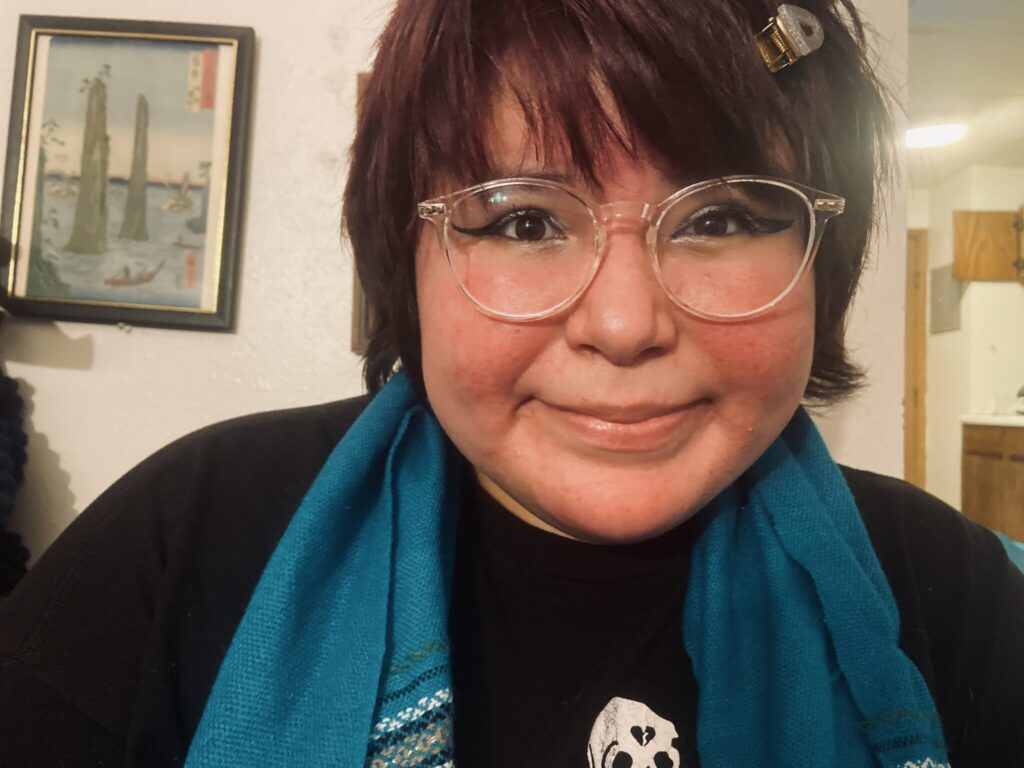
Foster care is generational in many Native American communities. It started with the residential Indian boarding schools. Since then, we have been overrepresented in the foster care system nationwide, according to the National Center for Juvenile Justice. A lot of people don’t know this, but this is another form of genocide. It’s known as “cultural genocide,” and I’ve experienced it in foster care. Due to my experiences in foster care, I forgot how to dance in powwows, as well as other traditions, teachings and stories.
Now as an adult, I’m trying to relearn everything that I lost and everything I knew as a child. I often feel like I don’t belong or that I’m an imposter due to having to relearn everything in my culture. I was really close to my maternal grandmother growing up, and when I went into foster care, I lost that relationship due to being distanced in a group home. For my so-called “safety,” the group home refrained for two weeks from telling me that my grandmother died and thus prevented me from going to her funeral services. I felt so heavy in my heart because I learned most of my culture as a child from my grandma. I was hoping when I left foster care, I could turn to her for guidance, but I lost her instead.
Foster care has also been intergenerational in my family due to my father experiencing foster care and being adopted from the child welfare system. He also experienced various group homes as a teenager. My father never would have wanted what he experienced to be my experience. A lot of our elders never would’ve wanted this. I never would’ve had to be put in foster care if the system helped my mother. People don’t know but our children are still being taken from us just in a different way now. Poverty is being confused as neglect in the Black, Indigenous, and people of color (BIPOC) community. Our cultural norms are being viewed in a white perspective and are being seen as abusive instead. Colonization put us on the reservations, and we live in poverty. Rather than helping us thrive in our communities, our children are being taken away due to poor conditions, the very conditions that white America put us in. It’s a never ending cycle.
I love the color of my skin. I love my brown eyes and my culture. I love my community and my fellow Anishinabe people. I attended a powwow for the first time in six years as an adult last year with my partner. I remember feeling so alive hearing the music and seeing my people dance. It felt so honorable and beautiful. The thing I love about my culture and my people is that everybody is welcome to come to our powwows and see us dance and listen to our music. All people — from every race, class, nationality, age, sexuality, gender identity, and with any disability — are welcome.
My message to any Indigenous and Native American youth in foster care is that your brown skin is absolutely beautiful, and your culture is absolutely worth learning even if it’s later on. There will be many people ready to teach you with welcoming and accepting open arms. It’s never too late to learn about yourself and to embrace everything with open arms. It’s never ever too late. We, as humans, are constantly learning things even when we’re elders. And if nobody believes in you, I believe in you!