
Relatives play an essential role for children in foster care, looking after them when they can’t live safely at home with parents, and keeping extended families intact when the government intervenes. But when they appear in the family courts amid lawyers representing case workers, parents and children, they typically stand alone, with no attorney to guide them.
New York lawmakers are now considering a fix. A pending bill would create a Kinship Legal Network, enhancing advocacy and representation for relatives who say they’re often sidelined when vital decisions are made about children caught up in the foster care system.
“Kin need to engage in concurrent planning from day one — they must work to help the parents and children maintain a healthy relationship, have frequent contact, and work towards reunification — but also consider and plan for all the child’s permanency options if the child cannot be safely returned home,” the pending bill states. “Kin need an attorney whose role is to advise them, ensure that they are aware of their rights, and help them navigate the system.”
Versions of the Kinship Legal Network bill have been attempted in the Legislature since 2019, but failed to progress. The current language proposes an $8 million fund overseen by the state’s Office of Children and Family Services. The money would be distributed to nonprofit legal groups who can represent the interests of kin in family court hearings, or in seeking vital public benefits and services for the child in their care. The bill also requires data collection and a biannual report to monitor its progress.
Ensuring that kinship caregivers have lawyers, it states, “will provide for more balanced adjudications that produce the best outcomes for children, without undermining parental rights.”
In interviews, legal experts familiar with the child welfare system pointed to some concerns about the pending bill. They fear it could drain resources from a poorly funded legal system for low-income families, and in some instances make accused parents’ battles in court even tougher. In court, kinship caregivers’ positions are at times aligned with the parents’ interests, but other times they have their own views about where the children should live.
“We need parents to be powerful, to provide a check and a balance on state intervention,” said Josh Gupta-Kagan, a law professor at Columbia University who specializes in the topic. He pointed out that providing legal assistance to kinship caregivers — particularly in the early stages of cases when family reunification is still an option — could make it tougher for a mother and father to gain custody if their interests did not align.
“If we make it easy to give the kinship caregiver an attorney in that case, it reshapes the power balance.”
Supporters of the new fund point to the critical role relatives play in the foster care system. State and federal laws prioritize them for temporary placements, guardianships and adoptions. And social science research shows improved outcomes for children removed from home who move in with people who know and love them, rather than strangers.
Caregivers within kinship networks are typically low-income grandparents, but they can also be aunts and uncles, adult siblings, or “fictive kin” — friends, neighbors, teachers, coaches or religious leaders. When called upon to take children in crisis into their homes, they also assume financial burdens and the complex navigation of child welfare and court systems — without legal help.
Kin face other legal issues, distinct from the concerns about custody battles raised by Gupta-Kagan: they often have no guidance on how to access childcare benefits, or face difficulties obtaining a foster care license due to a years-old criminal charge. Suddenly thrust into a child’s life, they may need assistance on how to take charge of medical and educational decisions.
The New York bill references support from the American Bar Association, which recently urged the federal government to narrow new legal funding for kin to those who seek “to challenge a denial of a foster care license, seek benefits assistance, or advocate for a child’s educational plan.”
Other states have pursued similar assistance, including Pennsylvania and Washington. In 2019, Washington lawmakers passed a bill and created a “kinship care legal aid coordinator” in the state’s Office of Civil Legal Aid.
For the first time nationwide, the federal government has also offered to help. Under a new rule that took effect last month, states can be reimbursed for the cost of legal representation provided to low-income kin caregivers — in addition to the parents and children who receive court-appointed attorneys.
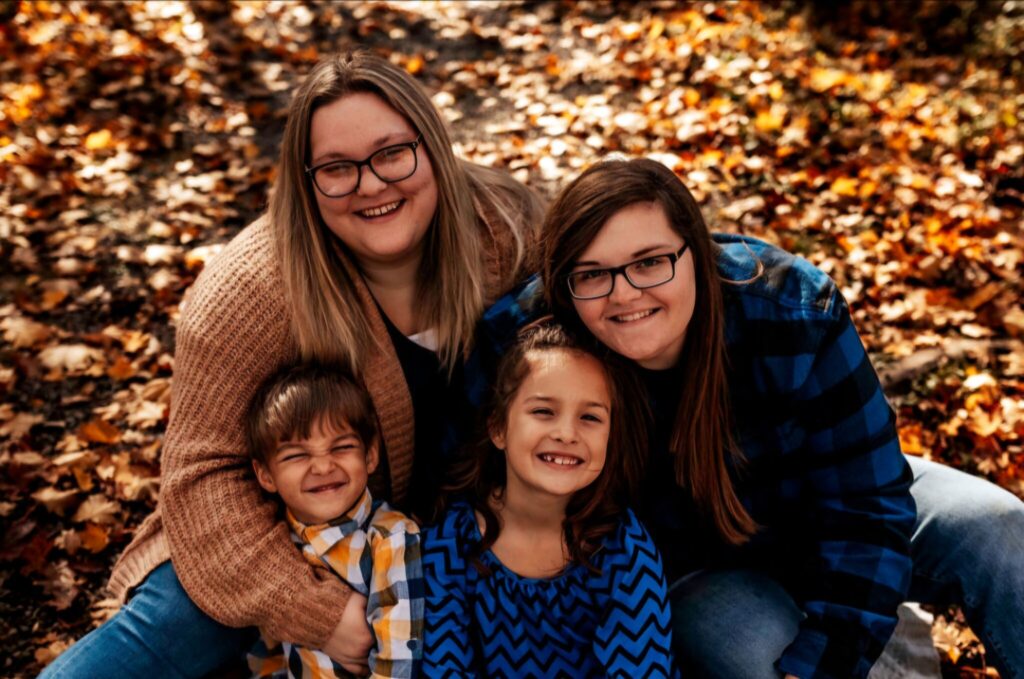
The funding is not available to relatives who seek to be children’s guardians without being officially licensed as foster parents, however — relatives like Jenna Reeb of Niagara County. Reeb, 27, is among those rare relatives who received legal support from a pro bono attorney — representation that she said made all the difference in securing a permanent home for her niece and nephew.
Five years ago, the resident of Gasport took in her sister’s two young children. Caseworkers had determined the children were being neglected due to drug and alcohol abuse and domestic violence in the home.
In her recounting of the case, Reeb said she ended up fighting her sister and the children’s father in court for custody of her niece and nephew, who she believed would best be cared for in her home.
Raising the kids was a struggle on her minimum wage job working at a General Motors factory, and the additional expense of a lawyer was out of the question. But help eventually came from a caseworker, who referred Reeb to Sarah Hedden, managing attorney at the Center for Elder Law and Justice. Hedden answered all her questions, guided her through complex legal jargon, and helped Reeb ensure the children weren’t removed from her home and placed with strangers.
“I would have been like a fish out of water without a lawyer,” Reeb said. “Nobody in my family has ever gone through anything like this. I know, in the long term, I wouldn’t have been able to afford it, so the kids probably would have ended up somewhere else.”
The mother of the children, Reeb’s sister Julia Reeb, said she supports the intent of the pending legislation that would grant court-appointed lawyers to kin. But she described frustration with her sister’s attorney, who she said got in the way of her fully reunifying with her children.

“Her lawyer mostly treats her as if she is the birth parent rather than us,” Reeb, 25, said. “It’s beneficial for her, but not for parents that actually want their kids home.”
Julia Reeb said she petitioned several times to get her children back. Despite completing several court-mandated requirements, including therapy and parenting classes, she said the reunification process was held up by the children’s father missing appointments.
The sisters now share custody, but the children live with their aunt.
Relatives often face off with a bank of attorneys in the family courts. Low-income parents each have a court-appointed lawyer, as do children in most cases. The caseworker is represented by an attorney for the local child welfare agency. But if relatives want their own legal heft to weigh in on issues from reunification to best placements and children’s best interests, they typically have to pay for it themselves.
Family attorneys such as Hedden, whose legal justice center backs the pending New York legislation, say that creates hardship for relatives in the complex cases that reach the family courts. The deep-seated dynamics of the cases typically involve parents accused of failing to protect their children due to substance abuse, untreated mental health challenges and domestic violence — issues that have ripple effects in families.
“Kin who don’t have prior experience in the child welfare system, may inadvertently, though well-intentioned, make mistakes that jeopardize the child’s placement with them,” Hedden said.
The bill sponsored by New York state Sen. Julia Salazar aims to prevent some of those mistakes, which can result in disrupted placements simply because relatives don’t know they can push back against restrictive foster parent licensing rules, or seek help with upgrades to their homes.
“When a child is removed from their parents, not only is it often the most traumatic experience of their lives, but it is also traumatic for their kinship caregivers,” the legislation reads. “These caregivers are now caring for a child or multiple children with minimal resources and having to navigate a complicated and overwhelmed court system — usually without the assistance of an attorney.”
In other instances they are excluded from court hearings entirely, or fail to receive proper notice that they could show up.
Two critics of the legislation who are experts in the field agreed that kinship caregivers are vital to the proper care and treatment of foster youth. But they say supporting them should take place through proper social work and community-based groups serving their needs. They cite a number of concerns with the proposed legislative fix in New York.
As written, funding for the Kinship Legal Network would be overseen by the state’s Office of Children and Family Services, which they point out is the agency responsible for funding and overseeing county CPS teams that litigate against parents in family court cases. That could further stack the decks against parents in family court, where they are already at a deep disadvantage in legal proceedings.
They are also wary about the gaps in the bill’s current language, which leaves some of the thorniest questions up to the state child welfare agency. For instance, it does not specify when kin would be afforded an attorney: during a CPS investigation before a formal petition alleging abuse or neglect has been filed in court, or only at later stages of foster care cases.
Critics say the federal Family First Prevention Services Act of 2018 and state enhancements to the law already prioritize relatives and kin as the best option for foster children. Thus, a stronger voice in court is not necessarily the most urgent reform needed in a cash-strapped, overwhelmed system.
“I would have been like a fish out of water without a lawyer. Nobody in my family has ever gone through anything like this. I know, in the long term, I wouldn’t have been able to afford it, so the kids probably would have ended up somewhere else.”
— Kin caregiver Jenna Reeb
“We don’t budget enough money for advocacy for parents, who are the people most directly impacted by the system, or children,” said Jane Spinak, a legal scholar who worked in New York’s family courts for decades. “Yet now we want to take $8 million and spend it in an entirely separate system that may both undermine the rights of parents and children to be a family.”
One prominent supporter of the bill does not see it as unfairly tipping the scales of justice.
Rae Glaser, director of New York State’s Kinship Navigator program — which provides information and resources to caregivers — said in her experience of almost 20 years, relatives are typically not siding against parents trying to get their children back.
“Most are on board with a return to parent when it’s safe to do so,” she said in an email, adding that placement with kin has been “proven to be a protective factor in these children that often have high trauma.”
Salazar’s legislation is expected to be reintroduced as early as next month and considered for 2025.
Assemblymember Andrew Hevesi, chair of the Committee on Children and Families, sponsored the bill in the Assembly. He said in an emailed statement sent to The Imprint that funding legal representation for kin caregivers would assist in the vital role they play in foster children’s lives.
Numerous studies have shown that children removed from home who are placed with kin experience fewer school changes, remain better connected with siblings, and report better mental health outcomes than those sent to the homes of people they don’t know.
“When a child can no longer live with their parents, studies have found that the least traumatic transition is to be cared for by kin — be it a blood relative or fictive kin,” Hevesi said. “Our current network of supportive services for kin caretakers is inadequate and inconsistent across the state and it is our obligation to do more to support these families and children.”