Update, April 2: The U.S. District Court for the Northern District of California issued a temporary restraining order continuing the funds for legal representation to unaccompanied minors. The order will remain in place until April 16, unless the court chooses to extend it.
“The administration’s recent decision to deprive 26,000 unaccompanied children of access to attorneys puts these kids at even greater risk of human trafficking, exploitation, and other dangers,” said Wendy Young, president of Kids in Need of Defense, in a statement following the court’s order. “As this litigation plays out, we urge the administration to reconsider its initial decision and fully restore federal funds for this critical work now and in the future.”
Update, March 25: As we reported below, in late the Trump administration abruptly ended a $1.1 billion contract for legal counsel to unaccompanied minors arriving at the border in search of asylum protections. Then, days later, the administration reinstated the funds, which mostly flow through a nonprofit called Acacia Center for Justice.
But with the annual renewal of Acacia’s contract looming at the end of the month, the center received a notice of termination stopping the legal representation program. Acacia Executive Director Shaina Aber said the move “flies in the face of decades of work and bipartisan cooperation spent ensuring children who have been trafficked or are at risk of trafficking have child-friendly legal representatives protecting their legal rights and interests.”
Only one part of the contract with Acacia will continue: funds to conduct “know your rights” trainings with unaccompanied minors, because that is required under the Trafficking Victims Protection Reauthorization Act.
The Trump administration halted, then reinstated, funding for free legal help to unaccompanied minors seeking asylum in the United States.
The back-and-forth does not bode well for the future of counsel in an arena where, for decades, most children were expected to appear before immigration courts with nobody to argue for them.
Acacia Center for Justice, the nonprofit that oversees a matrix of dozens of groups providing this legal representation, received a stop-work order for the Department of the Interior and the Department of Health and Human Services. The organization’s $1.1 billion contract to provide counsel was slated to run through August of 2026.
“The administration’s decision to suspend this program undermines due process, disproportionately impacts vulnerable children, and puts children who have already experienced severe trauma at risk for further harm or exploitation,” said Acacia Executive Director Shaina Aber, in a statement on the administration’s action.
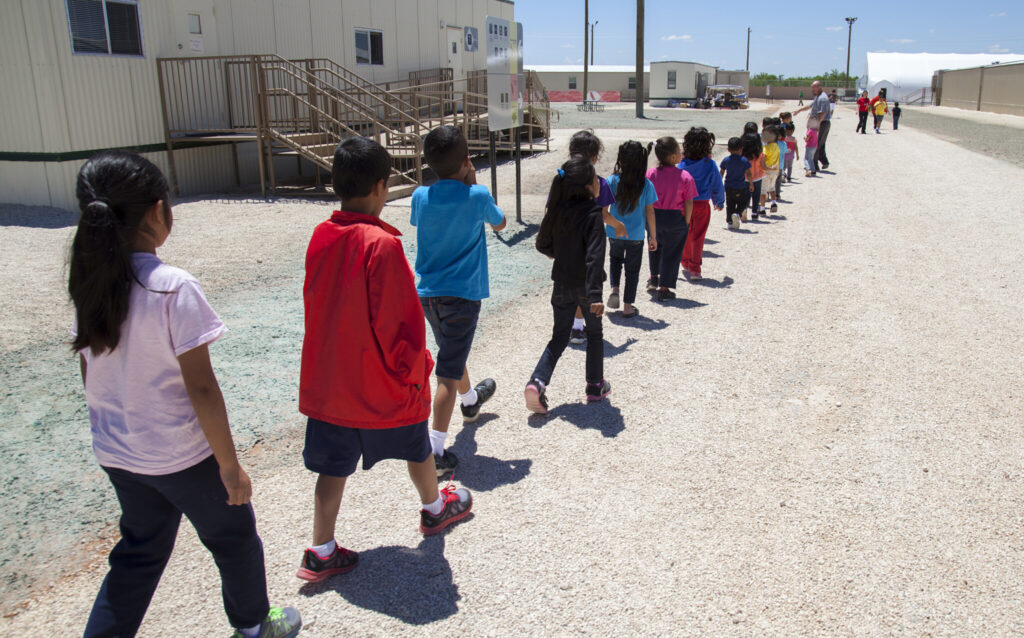
The Unaccompanied Children (UC) program was established under the Bush administration and facilitates the nation’s response when youth (mostly teens) from non-contiguous countries arrive at our borders in search of asylum protection or Special Immigrant Juvenile Status.
Once they are apprehended by the Department of Homeland Security, these youth are turned over to the custody of the Department of Health and Human Services, which provides residential care and other services for them while a suitable sponsor is found for them inside the country. Often, this will be a parent or some other relative that already lives in the United States.
This was a relatively modest federal program until 2014, when the appropriation for it ballooned from about $267 million to north of $868 million as the number of unaccompanied youth arriving mostly from Central America surged. By the 2022 federal spending deal, the program was slated for $8 billion, which included some backfill for the previous year.
That 2022 allotment was the first one that included a sizable amount of money for legal representation for unaccompanied children. While there had been some smaller demonstration projects, and some children whose families could pay for attorneys, most youth in the program were expected to go through the complicated asylum process without counsel.
The net effect of this was not shocking: many youth did not attend their court dates, essentially becoming undocumented, and many others showed up completely unprepared to actually prevail at one. At a 2016 hearing on the program, Sen. Dick Durbin (D-Illinois) introduced records showing that between 2012 and 2014, 73 percent of the children represented by lawyers were successful in making asylum claims. Fifteen percent of the kids who made claims without a lawyer were successful.
“Children with counsel are empowered with the information and assistance that ensures they not only are protected from dangerous circumstances in their community but attend their immigration proceedings and remain engaged with the court process,” Aber said, pointing out that 94% of children with counsel attend their immigration court hearings.
On Friday, the decision was rescinded. But the National Association of Counsel for Children (NACC) noted that the federal contract for this work is up for renewal at the end of March, and a federal spending battle is looming just weeks before that.
“NACC joins … other organizations urging the administration to stay the course and renew the contracts necessary to provide these vital services,” the group said, in a statement on Friday.