


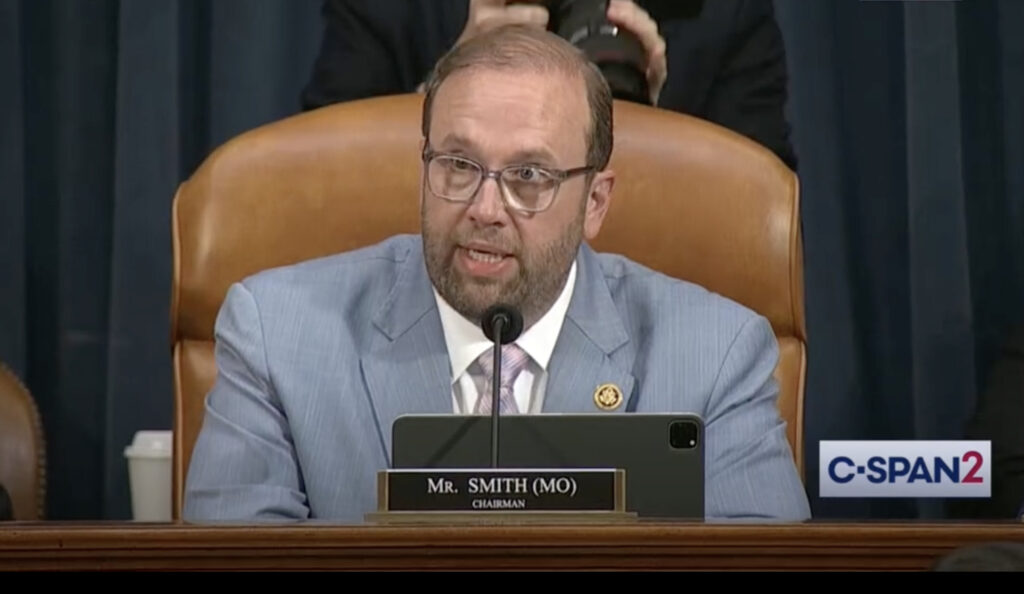
Calling for systemic changes to the nation’s child welfare system today, U.S. Rep. Jason Smith of Missouri recalled the story of a struggling family in the central part of his state. A mother and her four children lived in a shed on the outskirts of a national forest — with no heat, refrigeration or running water, the ranking Republican lawmaker recounted at a Capitol Hill hearing. What came next he views as a costly mistake on the part of authorities: breaking the family apart through the foster care system.
Smith, who has represented one of the poorest congressional districts for six terms, described how over the next three years, the mother managed to secure better housing. Nonetheless, a judge found the new accommodations “too cramped,” and permanently severed her parental rights.
Now Smith, chair of the influential House Ways and Means Committee, and other Republicans are working with Democrats led by Rep. Gwen Moore of Wisconsin on legislation that aims to stem CPS removals that arise from conditions of poverty.
In his opening remarks at today’s hearing on “modernizing child welfare programs,” Smith said their proposed legislation makes financial sense for the country as a whole. Taxpayers, he noted, spent more than $360,000 on the Missouri family of five’s case.
“Spending even a fraction of those funds at the front end could have provided this family with adequate housing, laundry and bathroom facilities, and assistance in obtaining and maintaining employment,” Smith said. “It also would have kept the children with their mother and spared them the trauma caused by separation.”
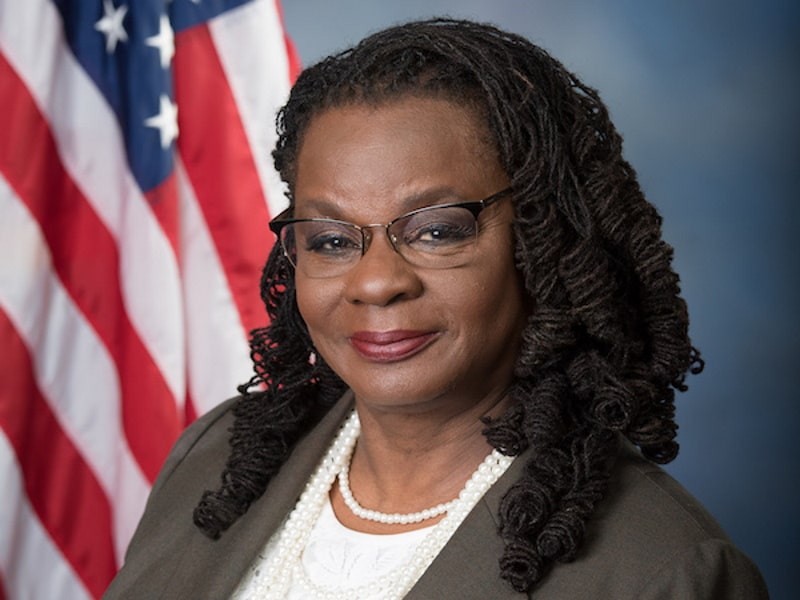
The Preventing Child Welfare Entry Caused by Poverty Act, introduced by Moore and Smith this week, would create new flexibility for states to avoid such outcomes, allowing federal reimbursements for spending on concrete support such as housing, transportation or nutrition assistance that helps parents before they’ve lost a child to foster care.
Moore has championed similar issues in recent years, with bills urging child protective services to better distinguish between poverty and neglect. In Moore’s home state of Wisconsin, one recent study found that three-quarters of investigated families received food stamps.
This week’s bill, the Milwaukee lawmaker said in a press statement, “builds on my ongoing efforts to redefine neglect in the child welfare system, so that families aren’t punished and separated solely for being poor.”
Advocates for youth and families as well as social science researchers across the country have had a similar mission, highlighting mounting evidence that financial support for low-income households can reduce cases of child abuse and neglect.
At today’s hearing, members of Congress also discussed abuse in residential treatment centers where many foster children are sent, citing a scathing Senate investigation of four private facility operators released last week, and a related report out today by a federal watchdog office. The Department of Health and Human Services’ Office of Inspector General found states are failing to adequately track child maltreatment in these group facilities.
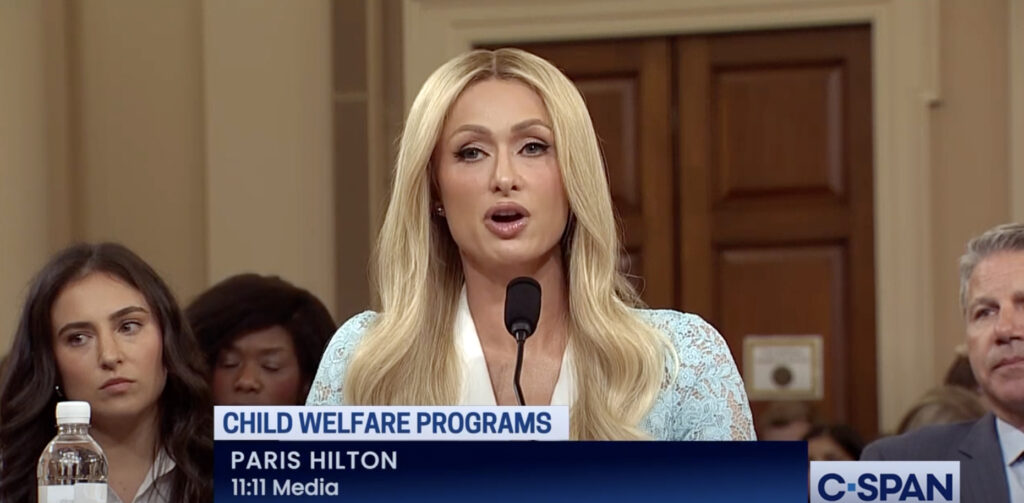
“For children who do end up in foster care, we cannot allow them to grow up in cold facilities that act like kid prisons,” celebrity media mogul Paris Hilton informed the committee. Hilton has spent years advocating for greater oversight of abusive residential centers referred to as the “troubled teen industry,” where she was sent in her youth.
“The treatment these children have had to endure is criminal,” she said, echoing comments made by another speaker, former foster youth and advocate Tori Hope Petersen. “These kids deserve to grow up in safe, family-centered environments.”
But the hearing today mainly emphasized “upstream” solutions to avoid foster care. Smith and Moore’s bill would make amendments to the roughly $300 million fund known as the MaryLee Allen Promoting Safe and Stable Families Program — a 1993 addition to nearly century-old child welfare provisions in the Social Security Act.
States and territories can currently use money from the program to pay for family preservation, services to support reunification from foster care, or for post-adoption support. In 2023, they received amounts ranging from $214,000 for the Northern Mariana Islands to $35 million for Texas, according to federal records. CPS agencies have spent the money on home visiting for young mothers, parenting classes, respite care for children and similar services.
The legislation backed by Smith and Moore would mark a departure from that traditional role for the federal government’s child welfare spending. For decades, policymakers have focused on paying for children’s care and custody after their removal, as well as for adoptions — not on avoiding removals in the first place. That began to change with a 2018 law that expanded prevention funding for families at imminent risk of foster care removal; it remains limited to a narrow set of intensive mental health and parenting programs.
This new bill would add more flexibility to spending through a smaller funding pool that can be tapped earlier after parents are accused of child abuse or neglect and become entangled with CPS and the courts. It enables states to direct the funds toward more concrete financial assistance to families that could prevent children’s removal from homes, including aid “related to housing instability, utilities, transportation, and food assistance, among other basic needs.”
But the bill would not address the erosion of the program’s overall budget, noted by one expert speaker at today’s hearing: expenditures through Title IV-B of the Social Security Act – which includes the MaryLee Allen program — have dropped by 14% over the decade, according to Rob Geen, a fellow at the Bipartisan Policy Center and board of trustees chair for the Dave Thomas Foundation for Adoption.
Title IV-B consumes a tiny fraction of the multi-trillion dollar annual federal budget and is often overlooked despite its popularity among advocates and child welfare commissioners, lawmakers noted Wednesday. But Ways and Means Chair Jason Smith said the “Preventing Child Welfare Entry Caused by Poverty Act” is just one of 16 Title IV-B bills the committee is examining this year.

Stories like these take time and many resources to produce. We can’t do this without support from our community. Donate today – any amount makes a difference.