Historically, the needs of LGBTQ+ youth in child welfare systems have mostly not been addressed or, worse, have been invisible to those charged with caring for them. Caregivers who have provided LGBTQ+-affirming living environments have often been deemed to be enabling of this “deviance,” and children have been removed from their homes as a result.
Firsthand accounts have underpinned the historical understanding of the issues and the experiences faced by LGBTQ+ youth in child welfare systems. These historical accounts provide insight into social workers’ discriminatory attitudes and beliefs in seeing LGBTQ+ youth as “deviant” or sinful. These stigmatizing beliefs and the subsequent administrative actions punished caregivers for being open about their identities and beliefs. Such practices led to the marginalization of this population based on exclusionary placement practices.

The result is that LGBTQ+ youth often remain hidden and invisible in residential systems because they have determined that many of the out-of-home systems where they live are not safe places. If they do come out, they often are not provided with the same quality of out-of-home care that is extended to their heterosexual/cisgender counterparts.
Several themes emerge from the data collected from narratives provided by other LGBTQ+ youth in various studies in the United States, the United Kingdom, the Netherlands, and Norway. The aggregated narratives from these data provide themes that are discussed below help understand the experiences of LGBTQ+ youth in residential settings.
Invisibility and hiding: LGBTQ+ youth in child welfare systems are frequently an invisible population. This allows administrators and staff to convince themselves that there are no LGBTQ+ youth in their systems. The majority of LGBTQ+ youth are silent and hidden witnesses to the negative attitudes of staff, administrators, and peers toward those whom workers believe to be LGBTQ+ identified. Most LGBTQ+ youth in child welfare systems receive— from multiple sources—the message: “Stay in the closet! We do not want to deal with this!”
Stress and isolation: As so many LGBTQ+ youth in foster care are forced to do, living in silence is the source of a high level of stress and isolation in their lives.
Multiple placements: Moving from one’s family to a child welfare setting is, in and of itself, a stressful and traumatic experience. Subsequent moves from one placement to another have been identified as a significant difficulty for youth in residential settings. The constant challenge of adapting to a new environment is unsettling, provokes anxiety, and undermines one’s sense of permanence. Unlike other heterosexual/cisgender youth in residential settings who move from setting to setting because of individual behavioral problems, LGBTQ+ youth report that their sexual orientation or gender identity/expression itself—not their behavior— leads to multiple and unstable placements.
Replacement and feelings of rejection: The majority of LGBTQ+ youth sense that they are not welcome in many residential settings where they have been placed. They perceive that they are reluctantly accepted into some placements and consequently feel isolated and have adverse reactions to their placement. When youths were met with acceptance and provided with care that suggested staff was competent in dealing with LGBTQ+ youth, they remained in the setting. Conversely, however, other youth reported that they left their placement once they realized they were not welcomed. Frequently, youth who leave placements become lost in the system, and their multiple placements create a sense of impermanence and drift.
Verbal harassment and physical violence: Many youth enter foster care because, at its best, it offers sanctuary from abusive family relationships and violence in their homes. However, with the constant threat of harassment and violence within the system, LGBTQ+ youth report they cannot feel wholly secure or confident. Although violence and harassment may be an unfortunate component of residential care from time to time for all youth, LGBTQ+ youth, unlike their cisgender counterparts, are targeted for attack precisely because of their gender identity/ expression.
Child welfare policies provide an administrative backbone for how their caregivers should treat youth involved in the child welfare system. While all youth should be affirmed in their sexual orientation and gender identity expression, LGBTQ+ youth in the child welfare system may have identity-specific needs related to safe and equitable living environments, access to gender- affirming health care, appropriate educational environments, and social supports. Thus, the needs of this population must be ratified in written policies and guides used by organizations that serve them.
In the absence of written policies prohibiting discrimination and protecting equitable out-of- home care for LGBTQ+ and gender-expansive youth, caseworkers, administrators, and caregivers with a limited understanding of the necessity of sexual orientation and gender-affirming care may approach their interactions with them in ways that are consciously or unconsciously discriminatory or marginalizing.
Establishing sexual orientation- and gender-affirming policies and practices on the organizational and individual provider levels is critical in a child welfare setting. For example, denying the importance of gender identity can lead to inadequate health care provision and abuse. All child welfare personnel should be aware of what policies (if any) exist within their organization regarding LGBTQ+ youth and critically examine the impact of translating these policies into praxis.
There are 37 states that provide protections for youth in the child welfare system through laws, regulations, or agency policies: 24 states and Washington, DC, provide protections based on both sexual orientation and gender identity, and 13 states provide protections based on sexual orientation only.
However, in several jurisdictions, policymakers have passed religious-based exemptions to intentionally discriminate against LGBTQ+ youth in their care. Due to the unpredictable and evolving climate of policy discrimination protections on a state level without a current federal mandate regarding the issue, service providers should take steps to prohibit LGBTQ+ discrimination within their organization, regardless of the federal or state climate.
In a recent Executive Order on Advancing Equality for Lesbian, Gay, Bisexual, Transgender, Queer, and Intersex Individuals, the U.S. Federal Government calls for states and child welfare organizations to take action to address the significant disparities that LGBTQI+ youth face in the foster care system, the misuse of State and local child welfare agencies to target LGBTQI+ youth and families, and the mental health needs of LGBTQI+ youth. This Executive Order holds promise for LGBTQ+ children, youth, and families affected by the child welfare system.
The issues encountered by LGBTQ+ adolescents and their families frequently are ignored and largely go unrecognized by many child welfare professionals—analogous to how the child welfare system has been deficient in addressing the specific needs of diverse ethnic and racial minorities. Understanding the impact of societal stigmatization of LGBTQ+ individuals and their families is crucial to recognizing and responding to the needs of this population.
Ensuring that youth who identify as LGBTQ+ have access to competent child welfare services is still an evolving discussion. The international campaign to secure protections for LGBTQ+ youth in child welfare systems has made significant progress in recent decades. Yet in many countries, LGBTQ+ youth in child welfare systems still face repression, invisibility, and even the threat of violence from the very individuals who are charged with “caring” for them.
Effecting changes in attitudes and beliefs in pursuit of competent practice with LGBTQ+ youth and their families can be improved in four key areas: (1) development of clear written LGBTQ+-specific policies; (2) development of initial and ongoing LGBTQ+-specific staff training for all levels of child welfare personnel; (3) clinical case consultation when professional staff need additional guidance or support, and (4) advocacy for youth in communities, schools, and youth-serving and health care systems.
In the absence of policies, professionals frequently rely on their own sometimes idiosyncratic wisdom to guide their practice. Social workers and supervisors need clear, written policies on how one is expected to practice with LGBTQ+ youth and their families. There are several examples of what constitutes a comprehensive policy statement and organizations should make use of what exists and adapt it to their localities needs rather than try to reinvent new policy statement.
As long as LGBTQ+ youth are isolated, rejected, and not served by the very systems that are ultimately designed to protect vulnerable youth, they cannot enjoy true relational health or feel as if they belong. Such inhospitable conditions negatively impact their safety, permanency, and well-being in profound ways.
It is within our power in child welfare systems to give them that acceptance and foster their belonging in a world that is and will often be challenging for them. All young people, including LGBTQ+ young people, deserve to have connection and belonging in their families, in their communities, and in child welfare systems, in very explicit ways.
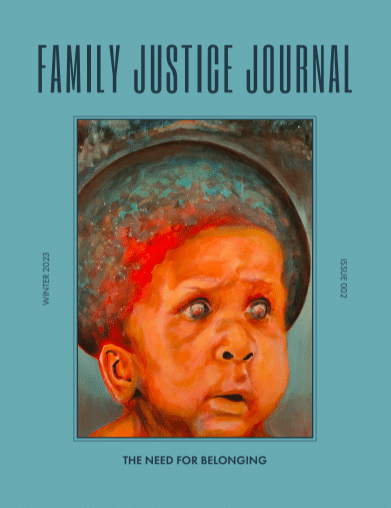
Note: This op-ed is an abridged version of Prof. Mallon’s essay for the Family Justice Journal.