As a preteen growing up on Detroit’s east side, I used to say I was “one demerit away from being written off” by society. Luckily, my English teacher, Ms. Liggins at Whitney Young Middle School, chose to believe in me.
She didn’t erase the consequences of my actions but rather showed me how to be accountable for them and believe in myself and my future. Earning my teacher’s trust planted a seed that stays with me today: The most effective leaders believe that the future can be bright, especially when the lights are dim.
Since middle school, and every day after, my life has been shaped by experiences that tested my values and beliefs. As an emerging adult, I watched my mother receive chemotherapy in a starkly class-stratified hospital, where Medicaid patients like her were treated in a sparse, clinical room while those with private insurance received care in a warmer, more therapeutic setting just down the hall. I experienced Scud missiles launched across enemy lines during Operation Desert Storm. I had the privilege of living and studying in South Africa as the fight for democracy prevailed against apartheid. I’ve spent time leading community-based organizations and as an administrator in the public child welfare system.
And in each of these settings, I’ve seen the power and resolve of families’ self-determination rise above policies and politics that worked against them.
Each of these moments strengthened the roots of my childhood belief: In times of uncertainty, the promise of a brighter future can become a brilliant North Star.
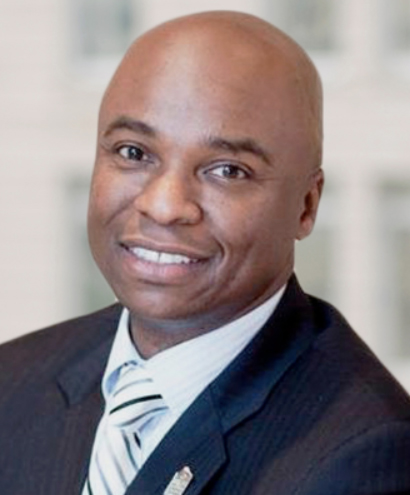
Today, that lesson could not be more pertinent, as those working in child- and family-serving systems face unprecedented strain. Across the country, human service organizations, from community-based nonprofits to child welfare agencies, are being asked to retrench their efforts, dilute their missions, and soften their convictions in response to political pressure. Some leaders have chosen to acquiesce and remain silent out of fear of retribution.
The experiences I faced as a child are the experiences that millions of families still face today. More than half of U.S. households cannot afford a $1,000 emergency expense, evidence that the margin for dignity has grown perilously thin. Around the country, the public programs that support families are being slashed, economic security feels more fragile and systemic racism prevails. Many families are juggling these challenges all at once, which is why we must look at the solutions through an interconnected lens.
Here at the Center for the Study of Social Policy (CSSP), we combine research with the experiences of families and communities most impacted by public policy to generate meaningful recommendations that are both practical and reimagine how public systems support families — ensuring they are more equitable and fair for all.
Given our line of work, I’ve had plenty of people ask me recently if this work is “worth it” — if there’s any hope of moving our North Star forward in such a polarized political environment. And as I’ve responded for the better part of 30 years, there’s only one way to go at a time like this: “Forwards ever, backwards never.”
Instead of retreating in a time of upheaval, the Center for the Study of Social Policy has chosen to stay true to our values, publicly releasing a strategic plan with racial justice at its core. Every family should have the concrete resources they need. Every family should have opportunities for good health — physical, mental and spiritual. Every family should have the rights, agency and resources needed to make decisions for themselves.
In our work, this looks like:
- Promoting strategies that advance culturally responsive services through our Culture is Healing work, where we conduct research and collaborate closely with community providers, state administrators and tribal partners. We turn those insights into policy solutions to promote culturally grounded, dignity-affirming services for children, youth and families — working to expand availability of these services in spaces that families trust.
- Fighting for an expansion of the child tax credit with parent leadership. CSSP was founded and co-chairs, along with the Children’s Defense Fund, the ABC (Automatic Benefits for Children) Coalition—a cross-cutting group of national, state and grassroots organizations working to create a child allowance, or a guaranteed minimum income for children. The coalition was instrumental in the 2021 Child Tax Credit temporary expansion under which child poverty fell to a record low that year, cutting child poverty almost in half.
- Spearheading a pediatric intervention to support families through Project DULCE (Developmental Understanding and Legal Collaboration for Everyone), an innovative model that promotes healthy infant development and supports parents during a child’s first six months. A trained family specialist joins the care team to help families address social needs and strengthen bonds with their baby. Through its interdisciplinary team, including medical, legal, mental health and early childhood experts, DULCE reduces family stress and fosters healthier beginnings.
Our strategic plan and our steadfast commitment to racial justice is not an act of provocation or naive optimism. It is a reminder of why this work matters, and why we must keep working to strengthen and reimagine America’s public systems, particularly given the strain they’re under. This is more important than ever, as we must meet the moment where families and systems are being asked to do more with less.
For leaders across child- and family-serving systems, this is a time to clarify, not compromise, our moral direction. Here are several principles that have guided our journey at CSSP and may help others navigating the same storms:
First, stay anchored by values to help you weather the storm. Times of uncertainty may require us to adapt, but that does not mean shrinking away from values. Now is not the time to concede your North Star or strategic plan preemptively. If your organization emerges from hardship intact but unrecognizable, that is a flimsy foundation for rebuilding in the future.
Second, some days might feel lonely, but you are not alone. In the current political climate, it can feel like we are operating under a microscope. Strategic decisions are highly consequential, and I understand the mental toll that can take. Find solace and solidarity in fellow child, youth and family justice leaders committed to forging ahead with mission-driven work.
Third, our solutions must be rooted in research and the experiences of children and families. When it is difficult to know what comes next, look to the communities you serve. For decades, we have worked in partnership with young people, families and community leaders who are closest to the issues we champion. We listen to stories and gather data to understand what is really happening in the community. This process of collaboration and co-creation leads to new systems that are truly created by the people, for the people.
Finally, systemic challenges require collective action. The challenges we face may continue to worsen before they recede. Holding firm in our commitment to a better future is not an act of defiance, and it is not false hope on display. When agencies, advocates and communities act in concert, aligning around shared values and outcomes, change becomes possible.
Erica Chenoweth, professor of public policy at Harvard Kennedy School, has shown in her research that bringing about political change takes only around 3.5% of the population actively participating in nonviolent civil resistance. A small group of people can change the world; when several small groups come together, they can change the course of history.
Yes, many of us are facing impossible choices, as are the families and communities we support. This is not the time to shrink. When others retreat, we must hold fast to our values and our belief that the future can be bright, even in uncertain times.