Pre-game, the Seahawks ran drills and absorbed last-minute coaching. “No, no, keep that route tight. One, two, three, four, then cut. As soon as the defender turns his hips, that’s when you go. He can’t recover once he commits.”
A thunderous chant erupted from the other side. The Chiefs entered, jumping and hyping themselves up for the championship game.
The boys were surrounded by mountains, fences and barbed wire.
For a few hours at Camp Joseph Paige, they weren’t defined by the juvenile justice system or a court file. They were Seahawks and Chiefs. Athletes with coaches, parents, rules, pressure, pride and a reason to believe they belonged to something good.
That is the power of play. I saw it at the Affirmative Athletics Atlas Bowl Championship, a flag football game for young people in Los Angeles County’s juvenile justice system.
Just outside the entrance, Rob from Affirmative Athletics greeted me.
“Thanks for coming,” he said. “This game has been a dream 20 years in the making.”
It was a proud day for the LA84 Foundation’s play equity coalition. Three years earlier, L.A. County’s Care First Community Investment process opened the door to a more positive, community-centered approach to youth development. The goal was to move beyond punishment alone and invest in prevention, diversion, healing and opportunity.
In the early funding rounds, sports and play were missing. Too many decision-makers treat sports as only recreation, when it can also be an intervention. Sports and play help young people regulate emotions, build trust, practice accountability and experience a sense of belonging.
The LA84 Foundation, which I have led since 2016, mobilized our play equity coalition, helped community-based organizations navigate the county’s budgeting process and made the case that sports and play belong at the center of positive youth development.
That advocacy helped unlock $15 million in new funding for sport-based youth development in Southern California. Affirmative Athletics eventually secured funding to build a sports program inside the county’s juvenile camps.
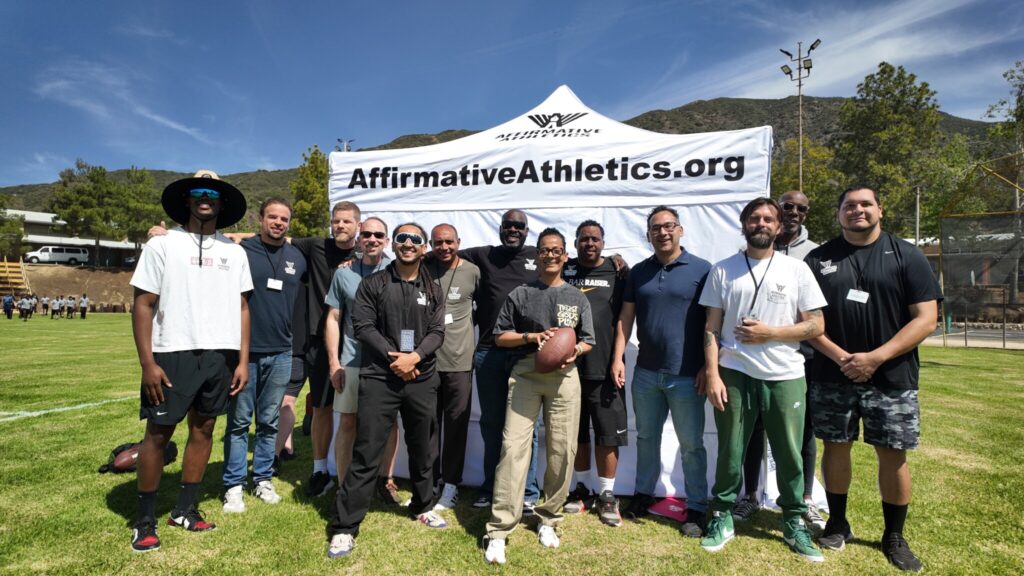
When we arrived at Camp Paige, we moved through security, including a metal detector and an electric gate. Affirmative Athletics had transformed the field. They brought the scoreboard, shade tents, first-down markers, referees, uniforms, cleats and flag belts.
When the boys donned their uniforms, they were no longer young people inside a camp. They were teammates playing for something bigger than themselves.
Parents filled the sidelines, and their joy was obvious as they watched their sons in a normal, familiar setting. A field. Two teams. A game. How long had it been since some of them had seen their boys this way?
The game delivered everything a flag football championship should: big plays, incredible stops, momentum swings, erupting sidelines, pacing coaches, cheering parents and young people learning how to handle pressure in real time.
The Chiefs trailed by 16 at halftime. They regrouped. The Seahawks kept fighting, but the Chiefs battled back and delivered two goal-line stands to win the game.
The deeper story wasn’t the score. It was play doing what it has always done.
The boys competed without losing control. They made mistakes and overcame adversity. They listened to coaches, trusted teammates, respected opponents, managed disappointment and stayed within the rules when emotions ran high.
That’s not flag football. That’s life. And for justice-impacted youth, these experiences matter.
Too often, systems ask young people to change without providing them with safe, structured spaces to build life skills: patience, trust, teamwork, accountability, perseverance and respect for boundaries. Play creates these spaces.
Several staff members highlighted what the program meant inside the camp.
“Game changer,” one probation officer said.
A female officer explained that the program gives the boys a positive incentive for good behavior.
Another officer talked about the trust the coaches built through consistency. “This is what our boys need,” one said. “Structure. Routine. Movement.” He added, “We still have behavioral issues, but this program has been a great way for these boys to regulate their emotions. It gives them something to look forward to.”
Play helps young people heal, grow, connect and believe in themselves again.
After the game, the Chiefs beamed, and the Seahawks sulked. Both teams met at midfield.
“Shirts on and tucked,” the Camp Paige director announced. He leaned toward the Chiefs and whispered what to say: “Great game. Thank you for playing.”
The boys lined up. High-fives followed. Some hugged. Coaches joined in.
Post-game, the Seahawks were hurting.
Rob nodded to me, “This isn’t over. We bring both teams together on Monday to talk about the game and their feelings. We give them time to journal. Then we run skills and drills to help them process what they went through. On Friday, we host a big banquet and barbecue.”
The real victory wasn’t the final score. It was the process: the season, the coaching, the trust, the parents on the sidelines, the staff and the boys who learned they could belong to a team, recover from mistakes and be seen for more than the thing that brought them here.
In youth justice, we talk about services, programs, outcomes, risk factors and systems change. All that matters. We need evidence, funding, accountability, infrastructure and public will.
We shouldn’t forget the simplest truths.
Play brings young people back to life. It gives them belonging. It gives families a reason to cheer. It gives coaches a way to mentor.
That is why play belongs in youth justice.